When you’re connected, you pause. You listen, and ask better questions. You observe your own patterns, and stop attacking or blaming others for theirs.
When you’re connected, you become a space of calm in a world of storms rather than another disruptive, destructive wave in a sea of chaos.
When you forget how to listen inward, when you stop grounding in self-awareness, you lose your anchor.
Check yourself before you wreck yourself. It’s not about being perfect. It’s about being aware.
Pause, and come back to yourself.
Reconnect, and become the clarity you’ve been searching for.
Remain connected, and become the clarity that helps to guide others home.
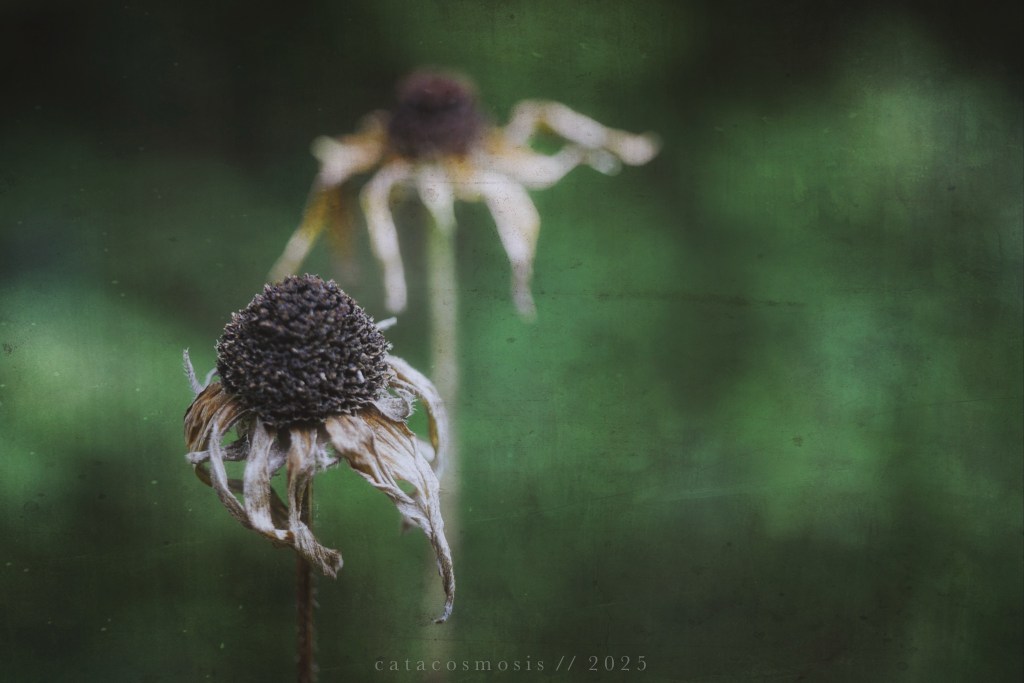
entry ten — scattered light, fractured grace: a quiet archive of light, loss, and what remains.
Black-eyed Susan (Rudbeckia hirta), a fading ember of late summer—graceful even in decay, still holding the shape of sunlight after the bloom has passed. Lumix GX7 + Panasonic Leica DG Macro-Elmarit 45mm f/2.8 ASPH. MEGA O.I.S., VSCO (A10PRO), Mextures (personalized texture formula: MEZPZZC), Lightroom Mobile (watermark only).
My mother always told me, in every possible circumstance a child might ever need encouragement, “Do your best, and leave the rest. It’ll all come right some day or night.”
It was a line from “Black Beauty, by Anna Sewell.”
She was a third grade teacher, a grammar Nazi, and a mother trying her damndest to connect with me and, well, do her best.
And, as ornery and difficult a young person as I could often be, she never knew that I believed her…
…even when I forgot I did.
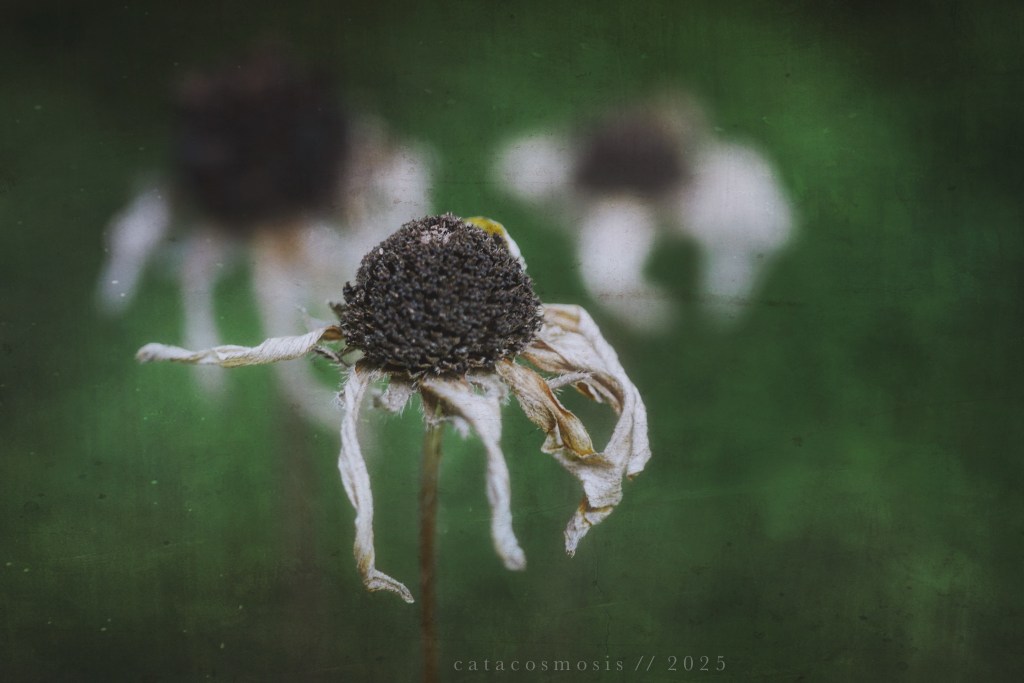
Black-eyed Susan (Rudbeckia hirta), a fading ember of late summer—graceful even in decay, still holding the shape of sunlight after the bloom has passed. Lumix GX7 + Panasonic Leica DG Macro-Elmarit 45mm f/2.8 ASPH. MEGA O.I.S., VSCO (A10PRO), Mextures (personalized texture formula: MEZPZZC), Lightroom Mobile (watermark only).
There was so much distance between us as I struggled through high school with her overbearing “sin obsessed” guidance, and she struggled to save my soul.
Even when the days were so long, when they bled into each other, and when the nights felt like punishments I hadn’t earned, as her brain and body were swallowed by Alzheimer’s.
Even when the thread broke, or maybe I cut it, when she died…I honored and nursed a clean, holy wound in the shape of freedom for both of us, from past grievances, from debts yet unpaid, from fear, from tension, from aching hearts and confused minds and the evils of that horrific disease.
Still, that line stayed, like a soft breath. Like a healing balm. Like the part of her that couldn’t leave, because it lived in me.
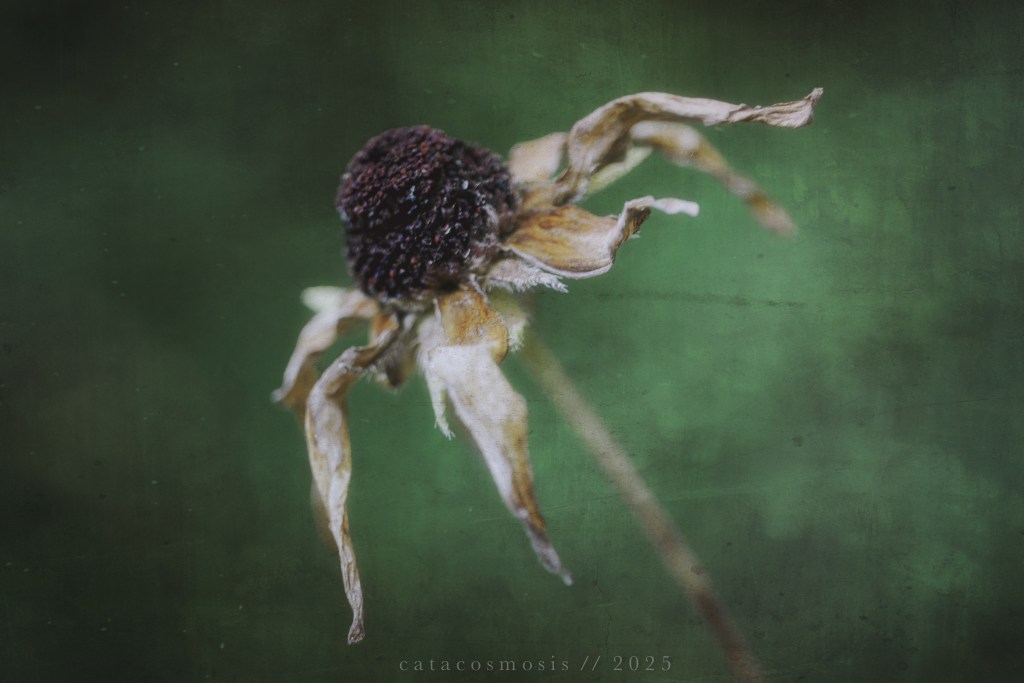
Black-eyed Susan (Rudbeckia hirta), a fading ember of late summer—graceful even in decay, still holding the shape of sunlight after the bloom has passed. Lumix GX7 + Panasonic Leica DG Macro-Elmarit 45mm f/2.8 ASPH. MEGA O.I.S., VSCO (A10PRO), Mextures (personalized texture formula: MEZPZZC), Lightroom Mobile (watermark only).
Do your best. Not more than that. Not perfection. Just presence. I tried, truly.
Leave the rest… The story. The tragedy. The one who couldn’t stay.
entry nine — scattered light, fractured grace: a quiet archive of light, loss, and what remains.
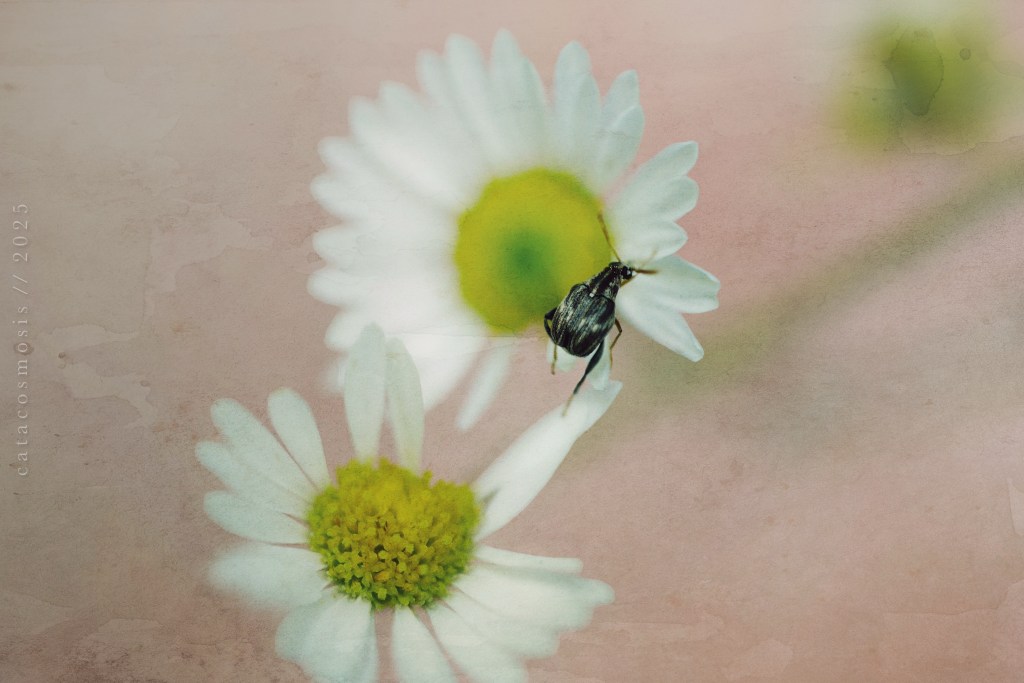
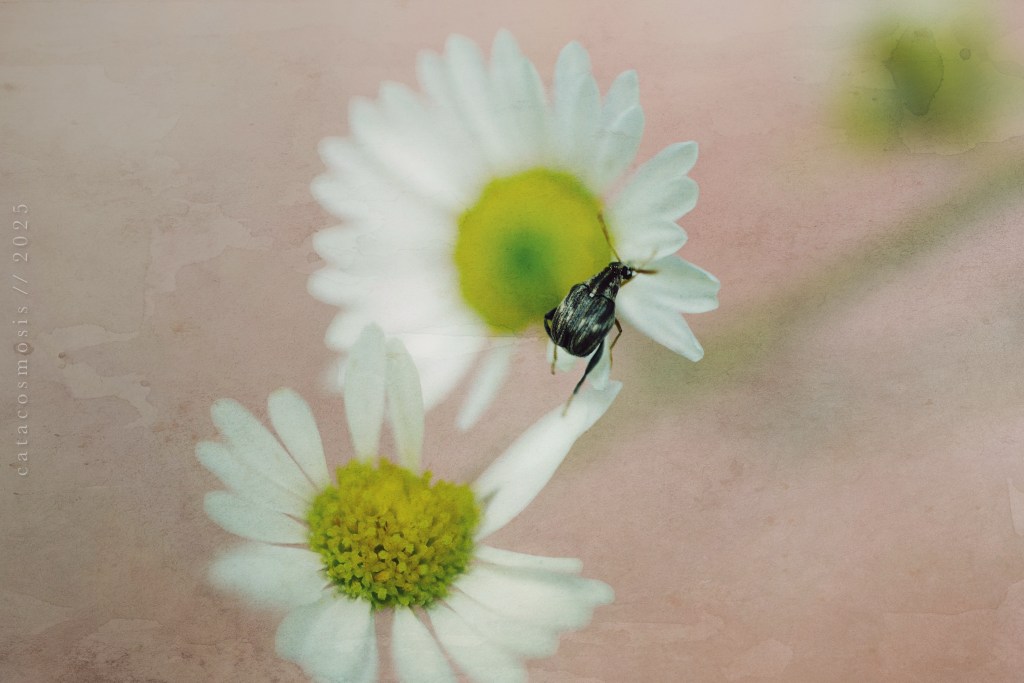
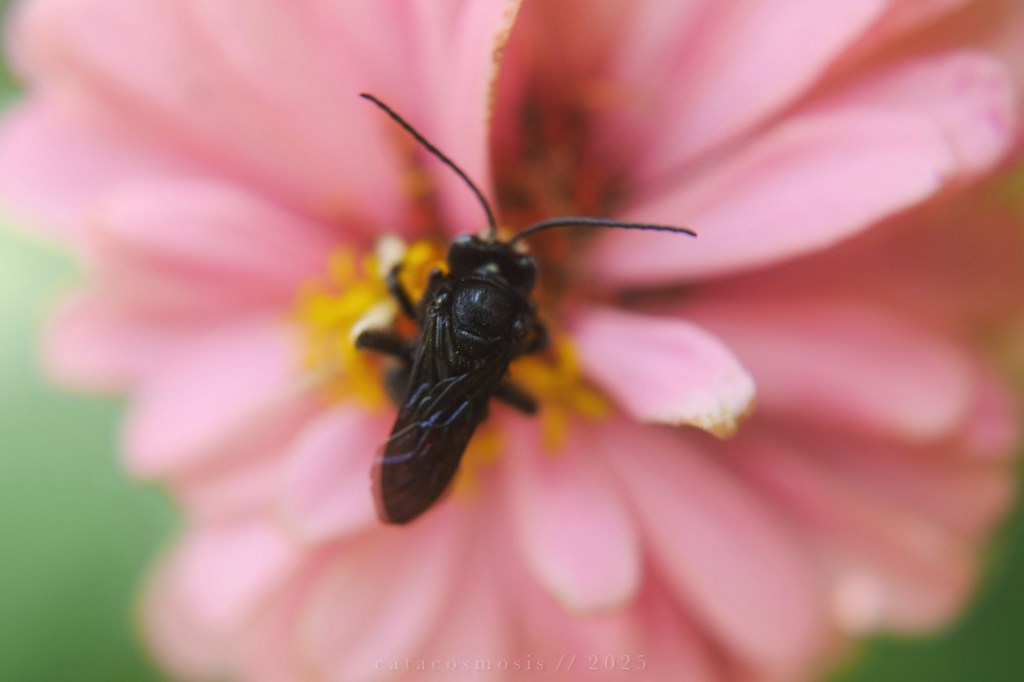
Weevil (Meibomeus musculus), a quiet laborer of the forest and the fields…carrying the weight of being, petal by petal. Vision: Lumix GX7 + Panasonic Leica DG Macro-Elmarit 45mm f/2.8 ASPH. MEGA O.I.S. Tools: VSCO (KP3), Mextures (personalized texture formula: QBHASZK), Lightroom Mobile (watermark only).
There is a kind of presence that doesn’t announce itself.
No sound. No shimmer. No need to be noticed. Just a body doing what it does.
Clinging to a petal, breathing the moment, belonging to the quiet. Sometimes, that is the work.
Not saving, not proving. Just being.
And somehow…it shifts the entire forest, the entire field.
For some souls, there is a burden in being seen —not the fear of visibility, but the ache of being misread when presence itself was the offering.
entry eight — scattered light, fractured grace: a quiet archive of light, loss, and what remains.
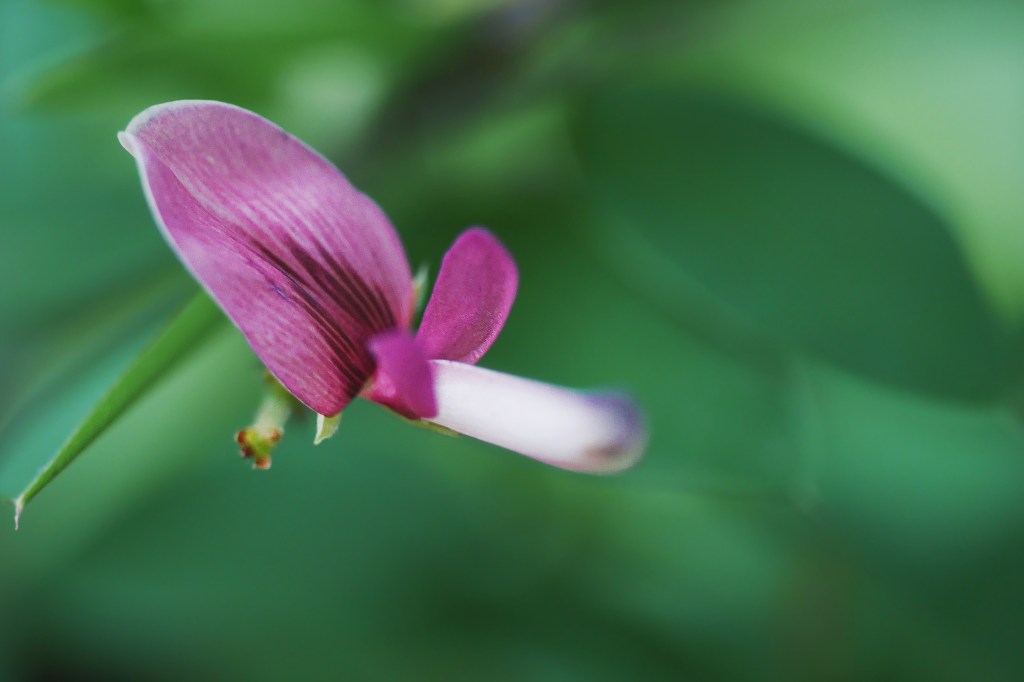
Bicolor Bush Clover (Lespedeza bicolor), a humble member of the wild clover family. Lumix GX7 + Panasonic Leica DG Macro-Elmarit 45mm f/2.8 ASPH. MEGA O.I.S., VSCO (HB3 PRO), Lightroom Mobile (watermark only).
Zooming in, pulling back, reframing… …it’s the practice of shifting perspectives. Cropping is discernment.
It’s important in photography, and in life.
Focusing closely. Examining the details. Leaning into the moment. Studying the layers. Trying different angles— then pulling back to take in the whole.
I do this with my art, my edits, my healing… …and my priorities.
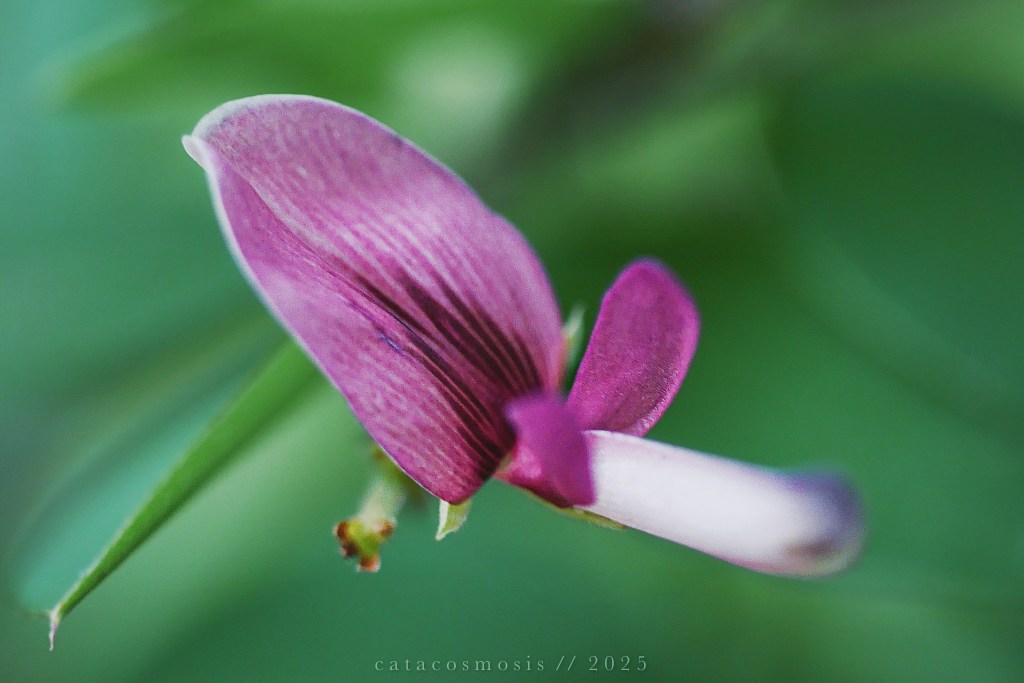
Bicolor Bush Clover (Lespedeza bicolor), a humble member of the wild clover family. Lumix GX7 + Panasonic Leica DG Macro-Elmarit 45mm f/2.8 ASPH. MEGA O.I.S., VSCO (HB3 PRO), Lightroom Mobile (watermark only).
Cropping, and discernment. Both are framing what matters— letting the noise blur into the background.
It’s not just a gift, not just a tool. It’s a process.
With practice, it teaches clarity through choice. Over time, it becomes discernment embodied.
Cropping alters perspective. It is learning to see again…
…as many times as it takes to actualize the vision.
I’ve been wanting to go back to my beginner photography roots…back to the tools that first taught me how to see. Not the Leica fixed macro. Not the Sony or Tamron glass. Not even the newer body. None of my inherited equipment. Just…my roots.
I used my fully outdated, beautifully obsolete LUMIX GX7—a replacement for my original GF3, long since gone—and its 20mm prime, with the same kind of macro filters that began and cemented my obsession with close-up work nearly a quarter century ago.
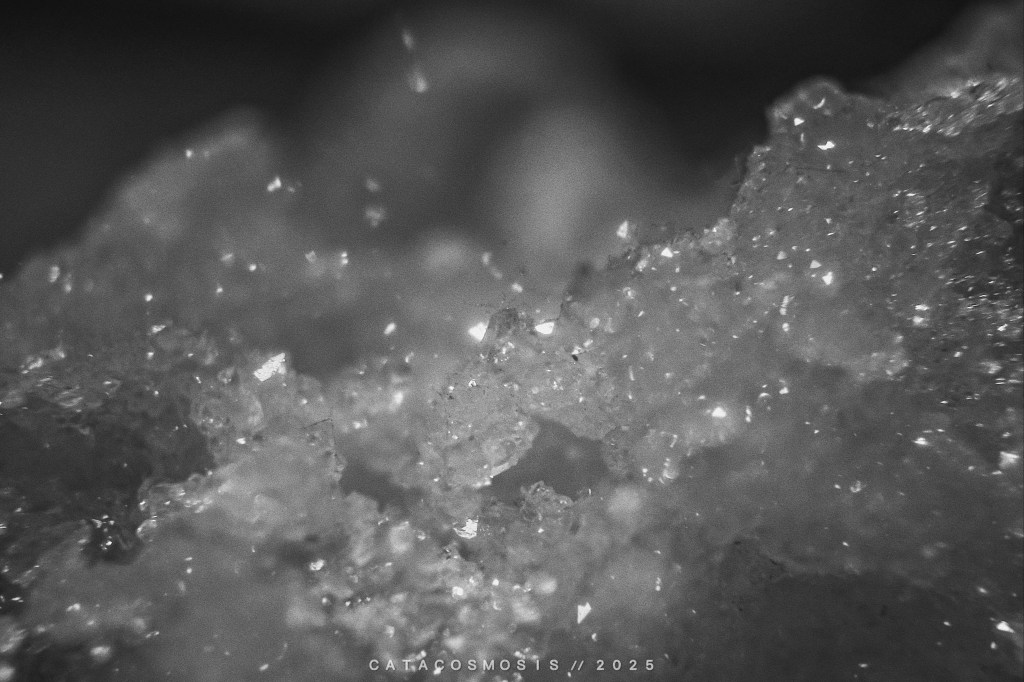
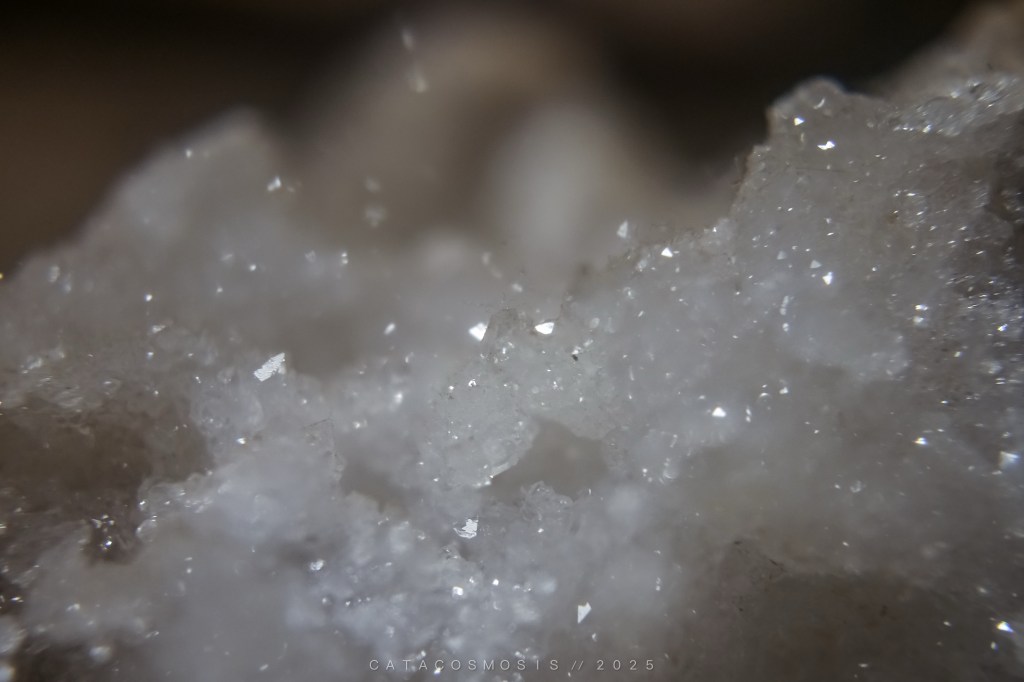
A while ago, we cracked this geode open with a hammer. No fancy saws, just risk and dumb luck here.
Original capture, using LUMIX GX7 + 20mm prime kit lens + stacked, simple macro filters (10, 4, 2, 1).
I suppose one should be more careful with nature, but nature is often far more careless with itself (and with us) than we would dare to be.
It takes that kind of recklessness to create rocks like this: extreme destruction, tons of pressure, and the long, drawn-out silence of time.
The first shot is a 2×3 crop of the original, watermark added. It radiates stillness, but also origin. Not just a photo of a mineral, but the witnessing of an unveiling. Beauty born not of perfection, but of extreme heat and cold, of force and risk, of patience and faith.
VSCO edit of original, using B5 Pro (further edits described below).
The second is a black-and-white VSCO edit: a touch of clarity, a whisper of bloom, a cool tint in the lightly raised shadows, and a layer of grain like cosmic dust.
But what is really there? What is the captured magic?
In the first, I see the quiet unfolding of a secret. Light caught mid-breath, nestled in silence, not trying to perform, but simply to be observed. Crystals shimmering like they’re whispering, not shouting. Softness holding the sharpness in tension. Truth in the raw moment of becoming.
In the second, I wanted to draw attention to the structure beneath the shimmer. The architecture of pressure. The monochrome strips away the sparkle to reveal something more elemental.
Less about beauty, more about bones. A lunar map. The scar tissue of a planet. A meteorite’s grain. A deep-space scan. A memory of rupture, filtered through time. A chorus of diamonds at the end of becoming, born of charcoal and starlight.
What do you see? Not with your eyes alone, but soul.
Soul vision. That’s what I see with most often. Especially now.
VSCO (SS1 Pro), Lightroom Mobile (watermark only).
Aperture
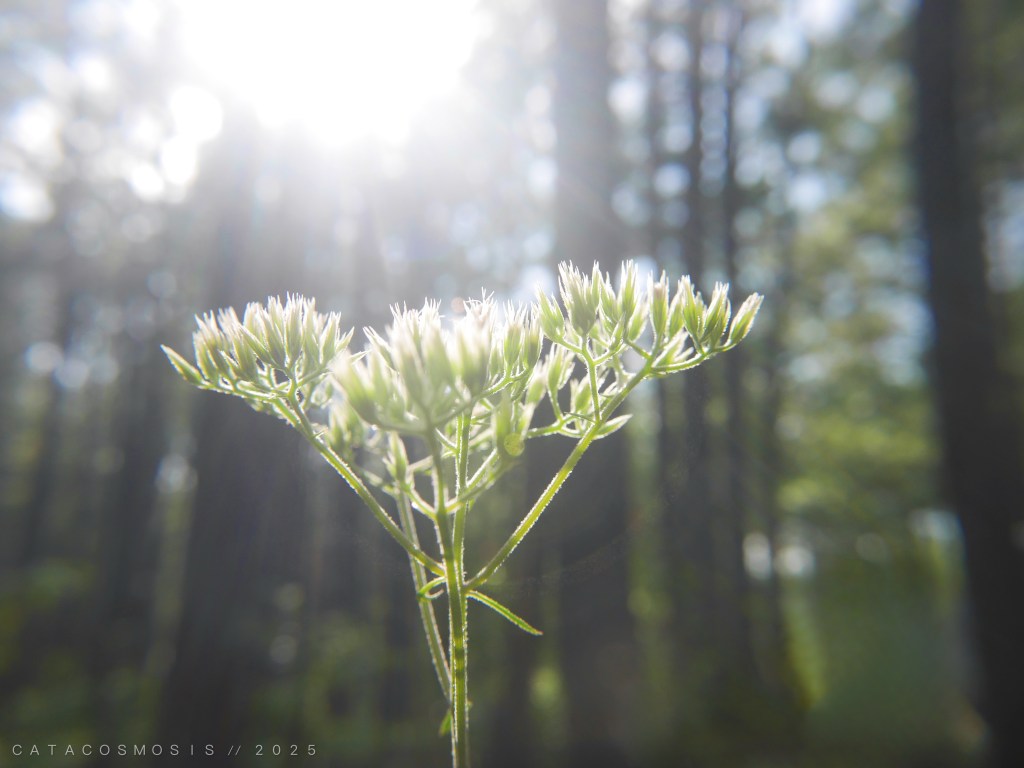
There is a kind of light that doesn’t just shine, but also fractures.
It breaks open the moment with something softer than silence and more honest than certainty.
You don’t chase it, you receive it.
This image wasn’t planned.
This frame wasn’t forced.
There’s a stillness even the flowers seemed to know, and reflect back to me.
It is not the stillness of silence, but of surrender.
Not of bracing against beauty or the process of becoming-in-progress, or of apologizing for taking up space mid-bloom…but of letting the light have its way.
I simply stood still long enough for the light to offer itself—scattered, wild, and full of grace.
I saw what was really there:
Buds preparing to bloom and light wafting in, yet also ambient and still.
The entire moment was an aperture through which grace entered, unbothered and whole, needing no permission.
And in that quiet moment, it became a mirror for all of us—one that perhaps none of us knew we needed, and that many would automatically overlook.
How often do we chase clarity instead of becoming it?
How often do we disturb ourselves, or disturb the world while attempting to distract ourselves, by blaming everyone else?
How often are those moments merely us trying to be louder than what already speaks through us?
There is no control in peace.
No performance in healing.
Only presence.
And in that presence, we disturb no one—not even ourselves.
We become the quiet offering.
We become the still center in a world unraveling at the edges.
Today, as I stood still in the midst of both internal and external war, peace didn’t arrive with fanfare.
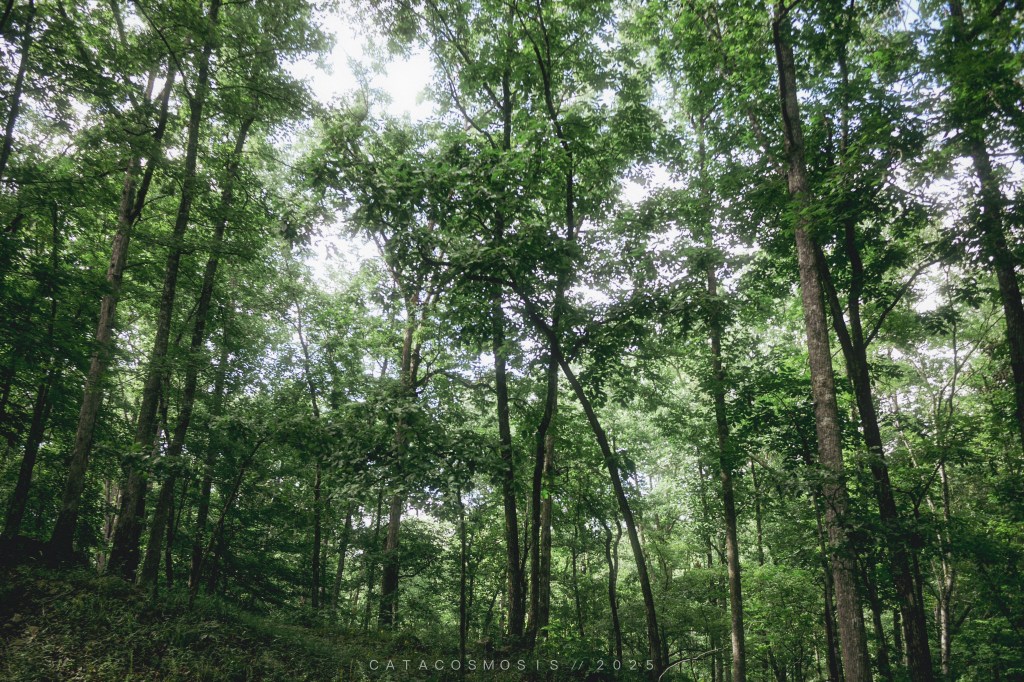
It arrived as fractured light through pine trees.
As a silent, oft unnoticed breath.
As a reminder that maybe the most sacred work is not to act, but merely to remain open.
Not to close.
Not to harden.
Not to explain ourselves into exhaustion, but to become aperture.
To simultaneously remain wide enough to hold what’s real and narrow enough to let illusion fall away.
And, to be balanced enough in both intellect and empathy to know the difference.
This is the answer: detachment.
Not from emotion, but from illusion.
It is not denial, not distance.
Rather, it is the quiet rerouting of both emotion and cognition back to stillness.
A return to clarity, not an absence of care.
And somehow, by not reacting, by not reaching, we find we are already held.
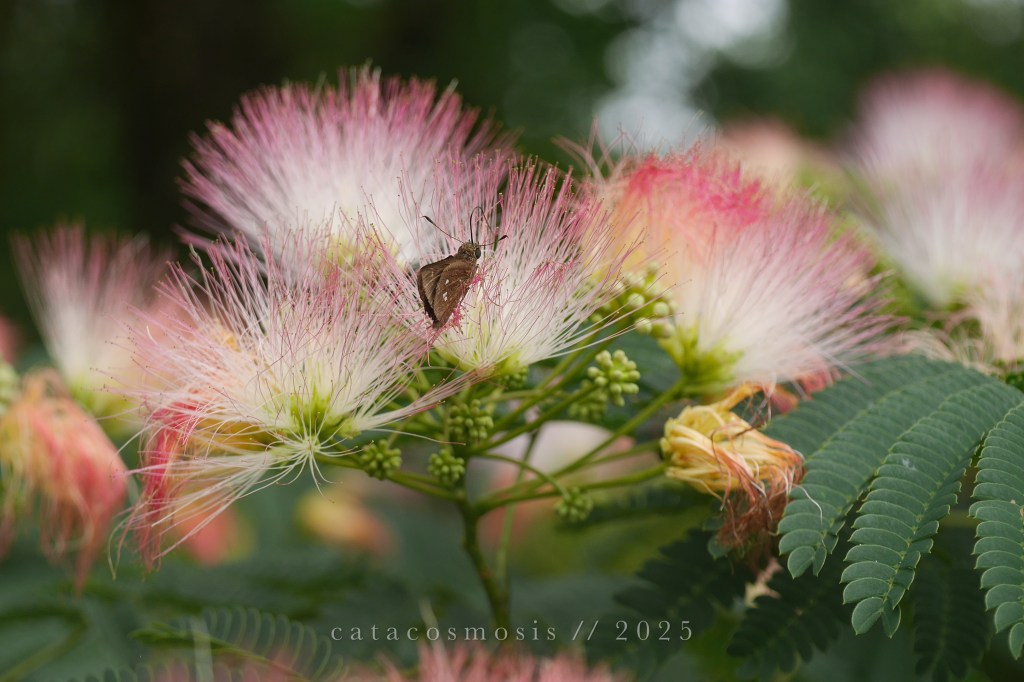
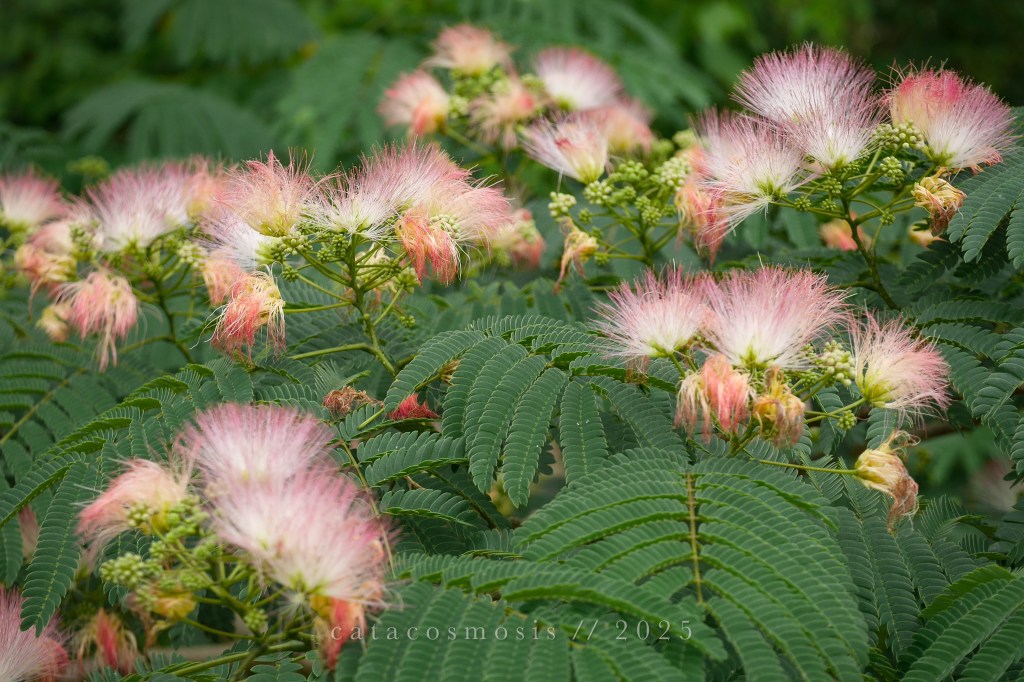
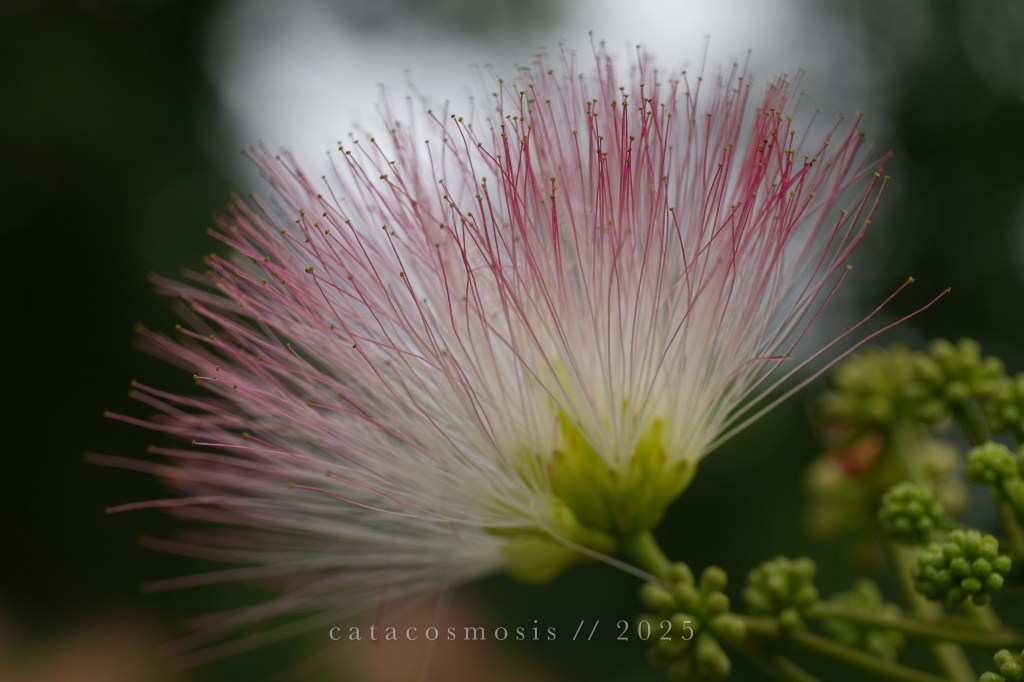
Mimosa (Albizia julibrissin). Lumix GX7, Panasonic Leica DG Macro-Elmarit 45mm f/2.8 ASPH. MEGA O.I.S., Lightroom Mobile (watermark), VSCO.
Not everything soft is weak.
Not everything brief is forgotten.
The mimosa blooms like a passing thought—pink, feathery, fragrant, gone before you’re ready. But even in its short season, it rewrites the air.
And maybe that’s the point:
To offer sweetness without needing permanence. To make magic in the margins.
💚🌿✨
Mimosa (Albizia julibrissin). Lumix GX7, Panasonic Leica DG Macro-Elmarit 45mm f/2.8 ASPH. MEGA O.I.S., Lightroom Mobile (watermark), VSCO.
The Mimosa tree (Albizia julibrissin) is commonly known as the silk tree or Persian silk tree. Albizia julibrissin isn’t actually a true mimosa—though it’s been lovingly misnamed for generations. Native to Asia, this delicate tree has made its way into southern landscapes with grace and stubbornness alike.
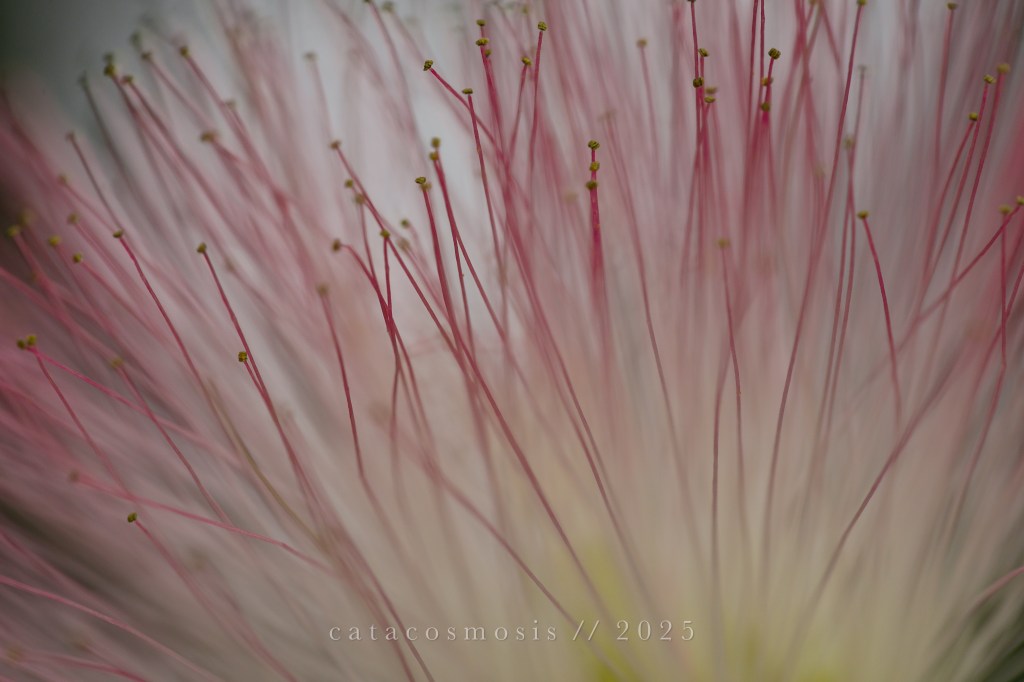
Its blooms are light as breath—powdery tufts that attract butterflies, bees, and human daydreamers. They bloom at dusk, shimmer in the wind, and drop silently—often leaving a petal-scattered sidewalk like a love note no one signed.
Mimosa (Albizia julibrissin). Lumix GX7, Panasonic Leica DG Macro-Elmarit 45mm f/2.8 ASPH. MEGA O.I.S., Lightroom Mobile (watermark), VSCO.
Though it’s sometimes called invasive, there’s no denying its presence feels like a portal: part nostalgia, part perfume, part dream.
Its scientific name, julibrissin, comes from the Persian gul-i abrisham—“silk flower.” A name that suits it perfectly.
Mimosa (Albizia julibrissin). Lumix GX7, Panasonic Leica DG Macro-Elmarit 45mm f/2.8 ASPH. MEGA O.I.S., Lightroom Mobile (watermark), VSCO.
In folk medicine—especially within Traditional Chinese Medicine—the mimosa tree is known as the “Tree of Happiness.” Its fragrant pink blossoms and bark have long been used to lift the spirit, ease grief, calm the heart, and quiet a restless mind.
The flowers are brewed into gentle teas, while the bark is sometimes tinctured for deeper emotional support. Often given to those moving through sorrow or heartbreak, the mimosa is considered a natural ally for joy, resilience, and emotional rebirth.
In my mid-20s, I experienced an interesting exploration of death as a subject in my work, professionally and creatively. Delving into the intricate realms of death became an unexpected but necessary journey. Originating from my research and work in psychology, the fascination found a niche in the recesses of my mind, dancing at a newly discovered crossroad: psychology and spirituality.
The illusion of immortality, a comforting notion in my youth, began to unravel, and a sobering awareness seeped in – a gentle reminder that time, despite our desires, marches on. This realization stirred occasional anxiety, yet it birthed within me an artistic sanctuary. While my “irl” associates and friends were rather put off by such a topic of discussion, it was given tangible validity within the “lovely dead stuff” community on Instagram.
Back then, Instagram thrived on genuine connections, nearly two decades ago during its inception. Communities flourished, spanning from technical visual elements, like layering textures and tones, to profound philosophical discussions embedded in art. It was within the latter that the “lovely dead stuff” tag/community found its home. While the platform’s landscape may have evolved, I suspect its essence endures, adapting to the shifting tides of philosophy and the world’s unfolding events.
The “lovely dead stuff” community, a haven for kindred spirits, provided a liberating space where my inquisitive mind and creative endeavors harmonized. In those formative years, it fostered an environment that not only embraced my curiosity but also guided me in the art of amalgamating thought and creativity. It became a conduit for transforming introspection into tangible expressions, a timeless journey that shaped both my understanding of mortality and my artistic identity.
During that formative time in my spirituality, I realized that the connections between psychology and spirituality were becoming a pressing issue in my still immortal mind — I think I wanted to, like many, freeze time and never die and there was this underlying current of consciousness beginning to happen to me that screamed, “you’re not as immortal as you think you are, young ‘un!”
It would sometimes create a lot of anxiety, those explorations, but I am so grateful that I found an outlet in the “lovely dead stuff” artistic community on Instagram. It was a liberating community that embraced all those levels of me (brain, heart, and soul) and helped me learn to employ them simultaneously for the first time in my life (I’d never been allowed that prior to that time in my life). I was able to create some tangible reality out of it all.
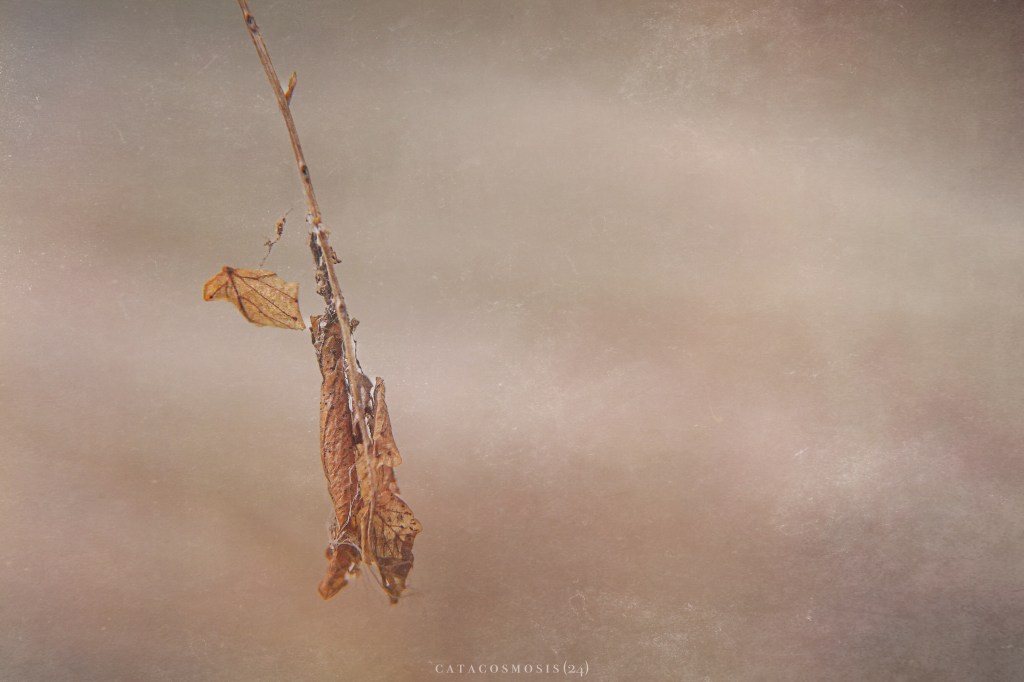
I was not expecting to revisit those memories or that topic today, but I found myself considering it as I “walked the yard” (a Dorie thing that some of you may remember) this morning in search of moss to photograph for a mixed media project I was working on to commemorate my mother’s birthday. Amidst the quiet canvas of nature, the stark contrast between the lingering death of winter and the emerging promises of spring captured my attention. Winter’s remnants, laid bare and hanging in the air, echoed the transient beauty of life’s inevitable cycles. Meanwhile, the subtle signs of spring’s awakening breathed new life into the scene, embodying the enduring spirit of renewal and the continuous dance between life and its inevitable counterpart.
It served as a poignant reminder that, like the seasons, our perspectives too undergo a perpetual transformation, each moment holding within it the delicate balance of both closure and new beginnings. Here’s to remembering and retrying forgotten editing skills, and to whatever comes next…
Happy birthday, Mama. Thank you for the lessons, and the love. I miss you…


 catacosmosis