Author: catacosmosis

  • Maintenance as a Creative | Not Broken, Just Built Differently

    Maintenance as a Creative | Not Broken, Just Built Differently

    There’s this list — never written down in one place, but always hanging over me like the hum of an old fluorescent light. It’s made of things that should be straightforward:

    • Back up the photos.
    • Untangle the art supplies.
    • Organize the sketchbooks.
    • Move the ideas from my head to a place they can breathe.
    • Put the words onto the pages.
    • Clean the brushes.
    • Organize the books.
    • Organize the ideas.

    But they are never straightforward. Not for me. Not for anyone whose mind has a thousand open windows and refuses to shut them just because the world prefers tidy blinds.

    Society has found a name for this: ADD. ADHD. Neurodivergence. The diagnosis may be true for some, but here’s what I believe — it’s not a flaw. It’s the original wiring of the artist, the philosopher, the restless creative soul. It’s the part of the mind that won’t collapse into the assembly-line cadence of “normal life.” And that refusal has always been a threat to the people who rely on compliance.

    This is why so many people who are miserable in the 9–5 grind feel like they’re constantly drowning. They fight from one day to the next just to keep their priorities in order, forgetting things, feeling scattered, wondering why life feels like a treadmill they can’t get off. It’s not because they’re lazy or incapable — it’s because they’ve been convinced, by family, by school, by the whole machinery of society, that their purpose is something other than what their soul already knows it to be.

    They’re creatives, not conformers. But they’ve spent their entire lives pouring all their energy into staying afloat in a stormy, chaotic sea they were never meant to swim in. And not only has the world’s rules kept them from living their purpose, they don’t even remember what that purpose is… and they certainly haven’t been taught how to manage or maintain reality as a creative.

    The problem is, the tools that work for type A people don’t work for type B people — and vice versa. But the world, the powers that be? They don’t want any creatives to thrive. Why? Because thriving creatives don’t line their pockets, and they can’t control what they can’t contain.

    By the late ’90s and early 2000s, the strategy had shifted. They started medicating us into focus, pressing Adderall into palms while preaching “Say no to drugs” in the same breath. It wasn’t just hypocrisy; it was the perfect kind of doublethink. They couldn’t get my generation — Gen X, especially — to trade curiosity for clock-punching, so they tried to sedate the wonder right out of us.

    It had started long before my generation. From the ’60s onward, every decade had its rebellion, but something about our era cracked the pattern wide open. We remembered how to slip back into our creative current, to say — without apology — that the system wasn’t built for us, and we weren’t going to rewire ourselves to suit it.

    The boomer generation fell for it enough to punch the clock and hold the grind in both hands. But my generation? The ones who were school-aged in the ’80s and especially high school/college aged in the ’90s, raised as latchkey kids, left to our own devices? We had just enough space to keep our own ideas and double down on our self-expression. We rejected the rhetoric outright, but we still had the foundational work ethic, the grit, the stubborn drive to show up.

    Unfortunately, that refusal was met with more control, more noise. By 2012, the hum had become a low, constant pressure. By 2016, the unexpected and unorthodox split the air like lightning, and nothing went back to sleep after that. By 2020 — and certainly by 2022 — largely thanks to Covid (which I will forever believe was a purposeful attempt to tighten the reins of control), the result wasn’t the obedience they hoped for. It was the opposite. People were waking up in numbers that mattered.

    And here we are.
    And here I am.

    Sitting with a computer that holds hundreds of gigabytes of uncataloged photographs, each one a memory or a moment, all of them waiting for me to find them a home, if not on someone’s wall then in beautiful posts they can enjoy on their computer screens. Art supplies scattered in a way that makes them impossible to ignore and yet impossible to start sorting. Projects that live half in the physical world and half in my head, where they multiply faster than any app or planner could contain.

    Digital tools have not tamed the chaos — they’ve only given it better hiding places. They’ve bred a new kind of loathing, a quieter form of procrastination and lethargy, one that makes the struggles of pre-technology life feel almost romantic in hindsight — like a fairy tale we didn’t know we were living, a beautiful dream we only learned to miss once it was gone.

    This morning, I pulled a book from my shelf. It’s been there since Ralph died:

    How to Be an Explorer of the World — Portable Art Life Museum.

    I haven’t opened it yet. The title alone feels like someone has tossed me a rope, and I’m still deciding whether to pull. Even without turning a page, I intuitively, automatically know — as every creative does — what waits for me inside. The “Art” in the title has been struck through and replaced with “Life” for a reason: because that’s what it truly is. A reminder that we’re not here to live as curators of someone else’s museum, dusting off exhibits we never chose. We’re here to explore — to step into new rooms, to rearrange them until they make sense to us, to claim the space as our own.

    And yet, here’s the truth I keep circling: maintenance is the perpetual loop where I always seem to get stuck.

    Not the dreaming, not the making, but the keeping. The tending. The part where you have to hold the door open for what you’ve already made so it doesn’t fall apart while you’re off chasing the next thing. Somewhere in the tug-of-war between vision and upkeep, I drop threads. And when enough threads fall, the rest of my life starts tangling with them — homeschooling, daily meals, the way the pantry and the jumble of household chores scribbled on random scraps of paper looks like a metaphor for my brain.

    This is the quiet battle no one talks about: how to keep creating without losing the things you’ve already created. How to tend your work without caging your mind. How to make room for the next idea without letting the last one turn to dust.

    For people like us, maintenance is never just maintenance. It’s a negotiation between the world’s idea of order and the wild way our minds are built to move. And maybe the truth is that we aren’t the ones in need of repair.

    Maybe the wiring was never the problem.
    Maybe it’s the world that’s broken.

    And what does all of this lead to? Yet another idea tossed onto the pile: maybe I should explore it in an in-depth series of articles here.

    Ha.

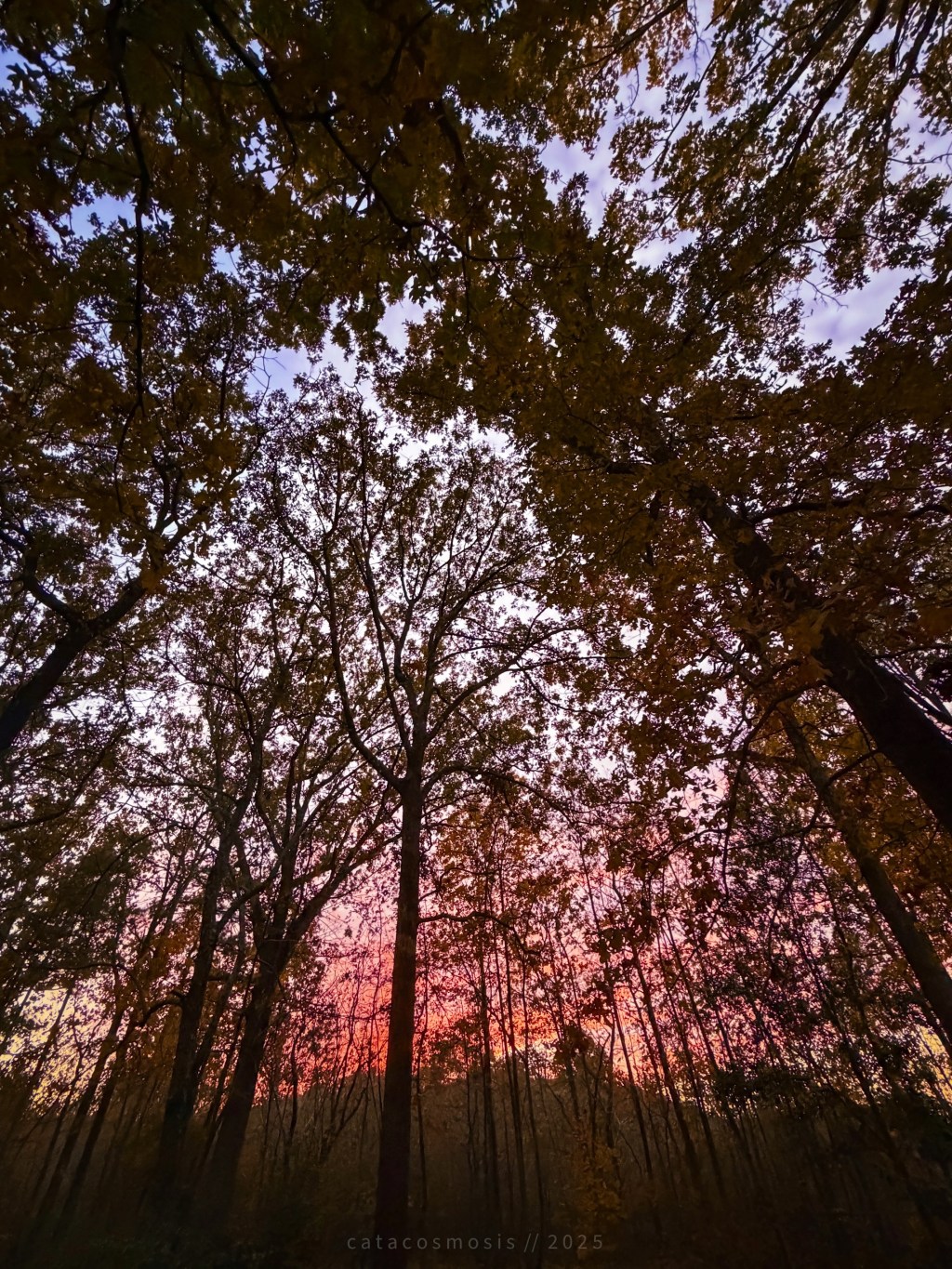
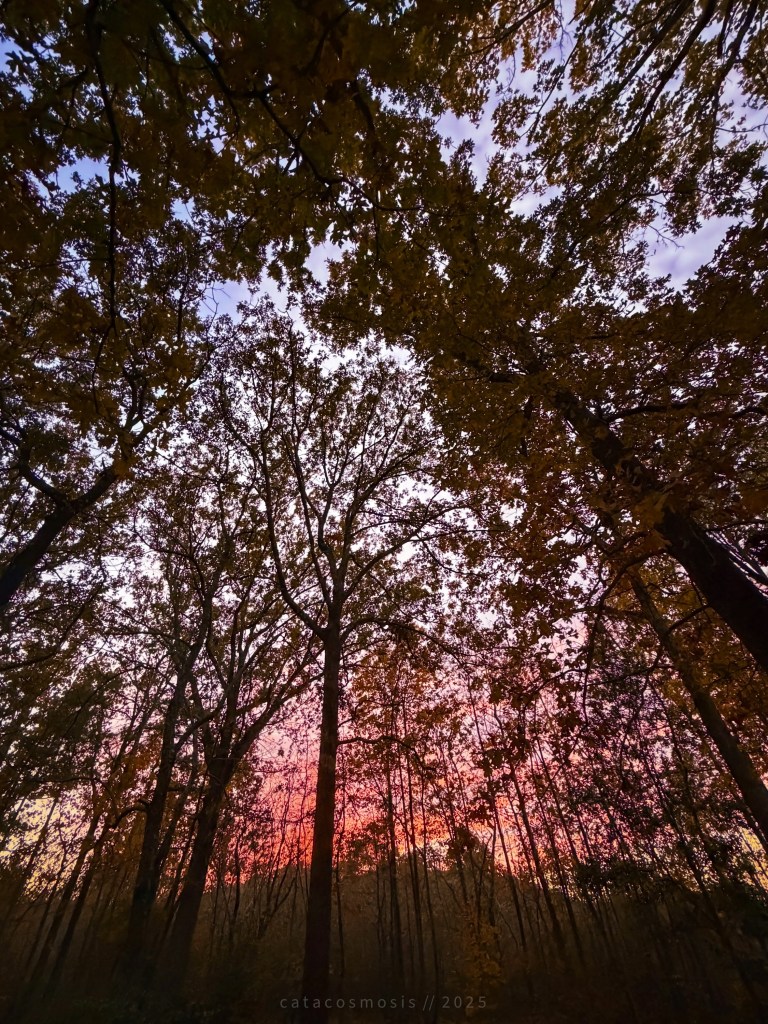
    For now, though, here’s a brief gallery of shots of my favorite tree — the oldest in my state, and one I’ve found myself referencing often lately. A couple are completely blown out. One feels especially dull to me. But while they may seem ordinary, even boring, to the casual observer, my passion for this incredible 400+ year-old short-leaf pine runs deeper than any skill or lens could ever capture.

    And that’s exactly the point — this tree is the living embodiment of what I’ve been trying to say above. The uncreative soul may never understand the pull, the quiet reverence, or the way beauty lives in the details that can’t be measured or monetized. But to those who do understand, no explanation is needed.

    I hope you enjoy these images as much as I enjoyed the process of shooting and processing them.

    xo.

    c.

  • The Line Is Always Open

    The Line Is Always Open

    A while ago, God asked me to step away from the noise. The purpose was not just to “rest,” but to enter true solitude. It wasn’t the kind of solitude that simply quiets the mind; it was the kind that strips away the need to convince, the compulsion to rescue, and the reflex to correct every error you see in the world.

    When you live in that stillness long enough, especially when you begin to examine how deeply and how long you have been misunderstood in your own life, you finally grasp why no one was truly listening. You begin to understand:

    The time for saving people by warning them and trying to teach them by telling them, begging them, or reasoning with them has passed. Just like with a child, there comes a time when you have to let them just keep screwing up until they learn. Experience is the only teacher that can accomplish anything fruitful.

    At some point, you realize your job is and always has been to just be the example and let them hate you or blame you if they wish. The time now, and the purpose, is to show up anchored in truth, walking forward for the sake of those who are searching.

    It is time to lead without any guarantee of who will follow, even if the path takes you to meet God alone. In the end, it all comes down to free will — and on the day you stand before Him, the only life and soul you will ultimately give account for is your own.

    There is no bureaucracy at the Pearly Gates, no worldly process to pass through. Character witnesses don’t exist there. Your actions, your choices, and the truth of your heart and relationship with Source will speak for themselves to the one and only true Judge, whose authority is absolute and divine.

    After months of this solitude, returning to public spaces feels different. The peace you find in solitude makes the digital clamor almost unbearable. You realize most people are not listening, not because they can’t, but because they don’t want to. They’ve been taught to fear the very silence that would heal them.

    Still, there are always a few — maybe only two or three in a sea of millions — who are listening for a different kind of voice. And for them, we show up.

    As I dipped a toe back into social media in recent weeks, I saw exactly why Source had been directing me as it had. Then, this morning, I saw a post on Instagram that reminded me exactly why I hesitate to return.

    It was a meme “conversation” between two cats:

    Cat 1: I don’t know who I am anymore.

    Cat 2: That’s okay, everybody feels that way sometimes — the universe doesn’t have a support line or customer service to tell you how to fix the problem.

    It’s clever on the surface, but the truth is: this is false.

    Yes, everyone struggles with knowing who they are from time to time — that’s life. But somewhere along the way, society began labeling that struggle as illness, defining solitude as unhealthy withdrawal (thereby denying people access to the solution), and filtering human experience through a narrow definition of “normal” set by a handful of powerful voices.

    And the part about the universe not having a “support line”? That’s the deepest untruth of all.

    The universe — God’s creation, and the divine voice within it — is always speaking. The language is there for anyone willing to learn it. The signs are constant. I know this because I have been hated for decades for striving to be a translator.

    The problem is not absence; it is illiteracy. Most people are not listening, or even looking, because they’ve been conditioned to tune in to the wrong frequency.

    Depression is not always depression, but many times (and this was my experience) the immediate response to anything that feels unpleasant is to label it as depression and drug people to Timbuktu and back again. Honestly? That is the reason many people can’t hear and don’t care to try. Not all — but so many.

    Lost is not always lost. Not every ache in the soul is a disorder to be medicated or pathologized. Sometimes it is simply disconnection from self and Source. The remedy is stillness, quiet, and the willingness to listen, and to then face and accept the truth — the very things people are told are “unhealthy” or “unproductive.”

    Society has been trained to fear solitude and invisibility, to measure our worth in noise and visibility. And then, when society meets those who have rejected that conditioning — who have done the work through blood, sweat, and tears — it labels them as “too deep,” “too intense,” or “problematic.” Society dismisses them because the truth they carry is rarely the easy answer the world wanted to hear.

    It’s willful ignorance, fed and nurtured by systems that benefit from a distracted, disconnected people.

    Those same systems encourage shallow comforts and praise the very mechanisms keeping us miserable. And when you break free, find balance, and refuse to play the game, you’re labeled extreme or hateful — when in reality, you are simply walking in the narrow space between reality and insanity.

    This was on my mind when I saw another post, one about the pressure of social media as an artist versus as a human being.

    My response was simple:

    I used to approach social media in the same way — letting the noise, the opinions, and the unspoken “rules” decide how and when I would show up. I carried the weight of strangers’ expectations until it felt heavy enough to crush my own reasons for creating.

    And then I realized: the ones who made me feel small were not here for the same reasons I was. They were chasing validation, purpose, or attention they didn’t already have. I already had those things. I was meeting my own goals, my own standards. When I stopped caring if they “got it,” the pressure disappeared.

    It is the same in life beyond the screen. Too many people are chasing money, status, and recognition, and too few are working from genuine passion or purpose. The work done from love will feed you. The work done to please others will drain you.

    That’s why these two posts — one about “not knowing who you are” and one about the pressure of showing up as an artist — are really about the same thing.

    The sickness of our time is not that we feel lost or uncertain; it’s that we’ve lost the ability, and in some cases the willingness, to listen to the truth that’s already speaking.

    If you can hear it, you don’t need a “support line” from the universe — you’re already, and infinitely, connected to it. If you can’t hear it, no human voice will convince you until you quiet the noise long enough to try.

    So for me? I keep showing up as I feel led to, as I hear God guiding me to. I keep sharing my experiences, through my photography, my art, and my voice, softly and quietly in shared expressions meant to be examples, not to convince the unwilling, but for the few who are listening and searching for a different kind of voice.

  • The Oldest Tree and the Newest Truth

    The Oldest Tree and the Newest Truth

    Yesterday, I went shooting. I collected over 1,500 photographs in a single morning.

    It’s been a long time since I’ve been that focused, that immersed in the creative energy that sustains me. It felt good to be so deeply aligned with The Flow—Nature’s and God’s flow, not mine, not anyone else’s.

    For hours upon hours, I alternated exploration and randomly sitting still with nature, and with my favorite tree—the oldest documented in my state—for a long time. I quietly observed every detail, inner and outer, letting my mind wander and my spirit settle.

    So long, in fact, the chiggers are still feasting on me. A worthy price, though, for what was finally made clear to me—the missing puzzle piece that’s been keeping me from being able to help others fully grasp my perspective when I talk about grounding and meditation:

    So many people deeply misunderstand meditation.

    Lumix GX7 + Panasonic Lumix 100-300mm Telephoto. VSCO (G6 PRO) + Lightroom (watermark only).

    It’s not about escaping the body, 3D reality, or floating above your life. It’s not about leaving. Healthy, true meditation is the opposite of escape.

    Meditation is about stillness, observation, and rooting in. It’s about grounding into the physical body, and the earth itself, consciously connecting with both.

    It’s about sinking into the body—not running from it. Anything rooted in “escape” isn’t meditation. At any spiritual or energetic level, escapism is a cop-out. Worse, it’s a lie.

    Meditation is about bringing the physical, mental, and emotional into balance so that rising energetically, emotionally, and intellectually becomes not only natural… but possible in the first place.

    This shift in understanding can (and will) change everything for anyone who is willing to open their minds and hearts enough embrace it.

    🙏🦋🕊️

  • Wilderness

    Wilderness

    Lumix GX7, Panasonic Lumix 100-300mm Tele-Lens. Handheld. Lightroom (watermark and contrast).

    The wilderness is the oldest, truest friend a human can have, both in body and in spirit.

    Lumix GX7, Panasonic Lumix 100-300mm Tele-Lens. Handheld. Lightroom (watermark and contrast).

    It teaches in silence.

    Lumix GX7, Panasonic Lumix 100-300mm Tele-Lens. Handheld. Lightroom (watermark and contrast).

    It speaks without words.

    Lumix GX7, Panasonic Lumix 100-300mm Tele-Lens. Handheld. Lightroom (watermark and contrast).

    It holds space for your becoming, your undoing, your return.

    Lumix GX7, Panasonic Lumix 100-300mm Tele-Lens. Handheld. Lightroom (watermark and contrast).

    And it is only “dangerous” when we forget to honor it, or refuse to learn from and respect it.

  • Coffee Thoughts | #1

    Coffee Thoughts | #1

    Saw an intriguing article about Waffle House this morning.

    I never frequented Waffle House. Not many people around here did, apparently—ours closed a while back. The building was recently torn down, the lot cleared to make room for yet another gas station…or maybe another drive thru ATM. I’m not sure.

    I ate there a handful of times over there, never much caring or giving it a thought. But now, strangely, I miss it. I find myself wishing I had the chance.

    It’s become a metaphor for a lesson life keeps offering, and most people keep ignoring: You’ll miss it when it’s gone.

    It’s true. You’ll miss a lot of things you once took for granted. I certainly do.

    Waffle House isn’t a major one—but it is a reminder.

    I miss my parents.

    I miss my best friend.

    I miss my spiritual teacher, and the person who gave me Alan Watts’ The Book for Christmas two decades ago—the gift that changed the course of my inner life.

    They’re all dead. Dementia and Cancer.

    I miss the dogs I’ve loved across decades, the ones who were more than pets—they were companions with souls.

    I miss the version of myself before my hysterectomy and menopause—before synthetic HRT dulled the edge of my vitality. I wish I had chosen a more natural route, even if it had been less convenient.

    I miss my child being a child.

    I miss the eras of my life that were stunning in their beauty, even though I didn’t see it at the time—too blinded by hardship to notice the glory braided into the struggle.

    I miss my opportunities—ones I didn’t recognize until they’d passed.

    I miss what it meant to be a woman before the world started reducing us to caricatures. Despite all the so-called “feminism” and “women’s rights,” it feels like women are more undervalued than ever.

    I miss being able to raise chickens and grow food without running into city ordinances telling me what I can and can’t do with my own land.

    I miss the forests and wild places I used to roam freely—now gated off for hunting clubs or planned graphite mines, despite the fact that nobody seems to be doing much hunting or mining.

    I miss when the weather was more stable, more alive.

    I miss a society that at least pretended to aim for peace.

    I miss healthy masculinity—not the social performance of “manhood,” but the actual divine masculine: rooted, mature, strong in spirit. The kind of strength both men and women are capable of carrying, choosing, embodying.

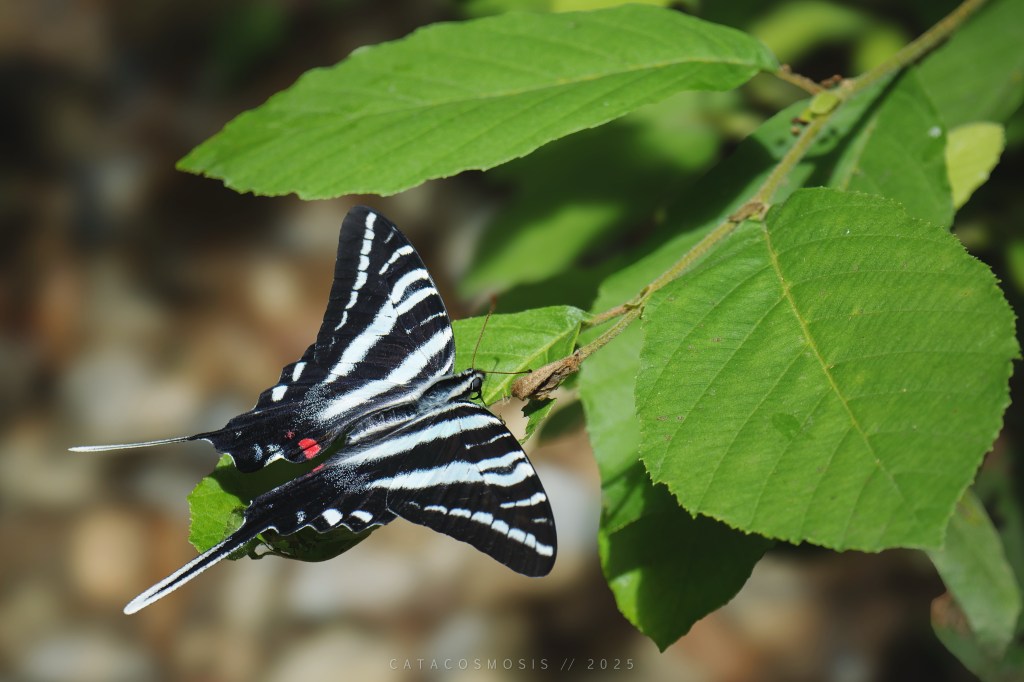
    I miss the wildlife. The abundance. The bees, the butterflies, the owls, the foxes, the birds, the bats. I don’t miss the mosquitoes, but I miss the balance they were once part of.

    When I look back over my life, I hear the same message whispered in memory, echoing through every loss:

    You’re going to miss it when it’s gone.

    I didn’t mean to miss it. I didn’t know I was actively, very literally missing it.
    But I did.

    My body. My femininity. My strength. My time. My freedom. Those are the things I miss the most where I am now.

    Don’t be like me.

    Do better.

    Let something as simple—even silly—as Waffle House become a gateway. A reminder. An invitation to gratitude.

    Live with more presence. Choose more wisely. Love more deeply.

    Speak more freely—not with opinion masquerading as truth, but with emotional intelligence rooted in what truly matters. Not just to be heard—but to be known. Let your words carry truth, not ego. Let them build bridges, not burn them.

    Be better, while you still can.

    It’s never too late…

  • Be Still and Know | The Truth Before the Peace

    Be Still and Know | The Truth Before the Peace

    Get still and be quiet.

    Stillness leads to loving thoughts. Loving thoughts lead to loving actions. Loving actions lead to peace.

    Stillness and quiet aren’t the goal. Together, they’re a doorway. Stillness creates the space for quiet to arrive. Quiet creates the environment for answers and understanding to materialize. But what shows up first might not feel quiet at all.

    What you meet in the quiet depends on what’s been locked inside. If your default state is anxious, chaotic, or angry, then stillness might feel like it’s amplifying that and quiet might sound like it’s yelling at you. But neither is the case. Stillness and quiet are just revealing what is making things chaotic or difficult, and giving you a space to understand those things so that you can genuinely sort them out.

    Stillness and quiet give us the opportunity to tame your own beasts, to take control of our own demons. This is what I mean when I reference “shadow work,” and it truly is necessary to experience the best version of yourself.

    Stillness and quiet reveal what needs to be healed. Continued stillness and quiet help you begin to heal whatever those things are, as you sit with them through introspection, prayer, and slowly shifting perspectives that lead to deeper understanding.

    It takes practice, and effort. Sometimes, weeks or months. Sometimes, years. It took you a lifetime to be conditioned and convinced that you’re who you think you are, most of which is a lie. Why would you expect to understand or overcome that in a single meditation session? Give yourself a break. Give yourself grace. God does…you can, too.

    You’re not “doing it” wrong if you find stillness difficult. You’re being given the sacred opportunity to feel what’s true without distraction. It takes time, and practice, to reach the peace beyond the noise. It’s not rainbows and roses. It can be gruesome. It can be literal war within. But it is the journey itself—the journey to that place of self-revelation and understanding—that becomes the goal, the purpose, and the truest solution to your concerns and your suffering.

    Rage, frustration, even self-loathing—they don’t mean you’re unspiritual or too broken to help yourself. They mean you’re carrying something too heavy to hold quietly. Stillness teaches you to listen to the noise around, and within, you—without becoming it.

    It teaches you to observe rather than to embody…which is the first step in putting down what doesn’t serve you, what isn’t yours to carry, what isn’t in your control, what isn’t your fault. That is surrender—whether you view it as surrendering to God, to peace, to stillness, or to whatever name you need to give it.

    Surrender is where we find wholeness. It is strength, not weakness. The greatest strength, I’ve come to understand. It is not giving up—it is giving over, releasing the grip of resistance.

    Even if you’re struggling, if you want to master yourself, then continue to try. “Unless, of course,” as my greatest teacher and dearest friend, Ralph, told me many decades ago, “you’d rather require more energy of yourself than stillness and quiet will ever require of you, only to fight the same battles you’ve been losing for however long, that are utterly controlling—and ruining—your life.”

    Continue to practice stillness and being quiet. Continue to meet yourself where you are. If you need help, many can help you—a teacher, a spiritual guide, or Source itself. Reach out. Ask for help. Don’t give up because it feels pointless or too difficult. Steadfastness is the key to any true success.

    Eventually, with compassion, with repetition, with breath and grace, those heavy, dark, negative, and painful feelings shift. They start to speak softer. And what’s underneath them—the longing to be loved, heard, and understood; the exhaustion; the soul underneath the survival mode—that’s when loving thoughts begin to rise, because you’ve learned to give those things to yourself. You’ve learned to become everything you always felt was missing.

    But you can’t skip steps.

    Stillness and quiet is not where peace begins. It’s where truth begins. Peace follows the truth, but you have to face and accept the truth, first.

    And that…requires stillness and quiet.


    Be still and know that I am God…

    Psalm 46:10

  • Focal Point

    Focal Point

    It’s as important as perspective. Perhaps even more so…

    We talk so much about perspective—about changing our view, reframing the story, finding the silver lining in the storm cloud.

    But sometimes, perspective doesn’t shift easily.

    Sometimes, circumstance leaves you standing exactly where you’ve always stood. The view is the same. The light hits the same edges. The shadows fall in familiar places.

    But even when the scene remains unchanged…the focal point doesn’t have to.

    Focus is a choice.

    A sacred, stubborn one.

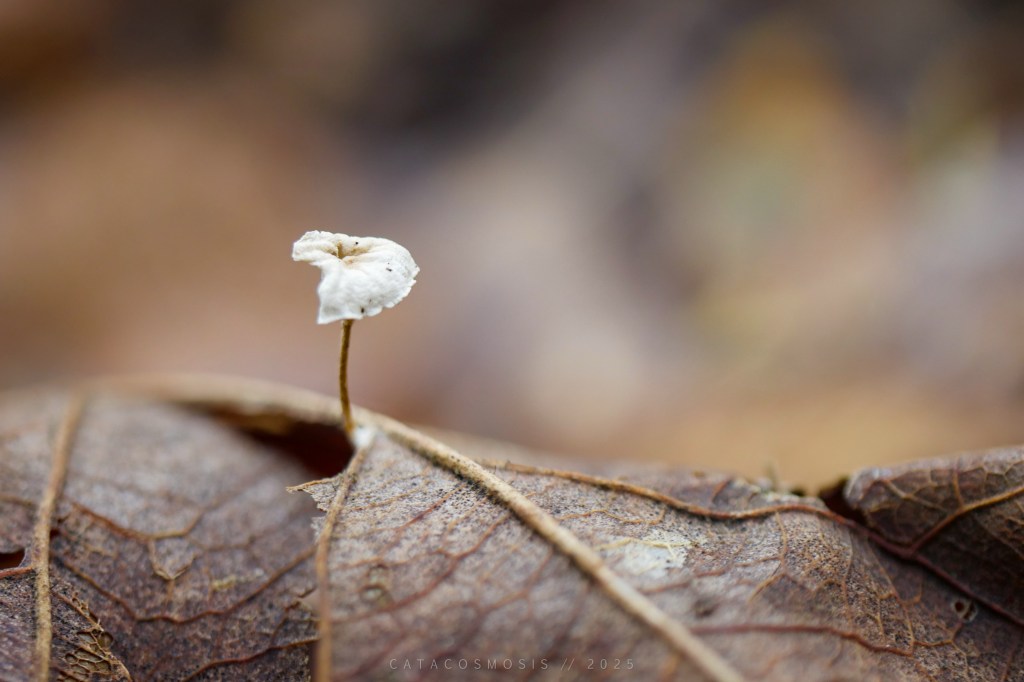
    It’s the difference between staring at the problem and noticing the petal behind it.

    It’s where your attention lands, and where your energy follows.

    It’s learning to zoom in on grace even when grief is still in the frame.

    In these frames, nothing moved.

    Not the flower. Not the light. Not the angle.

    Only the focal point changed.

    And with that subtle shift, a new vision — a new truth— came forward.

    Almost always—including in life, and despite circumstance—the best composition doesn’t come from changing the scene but from learning which part of it to focus on.

    catacosmosis // 2025

  • Lifted

    Lifted

    entry twelve — scattered light, fractured grace: a quiet archive of light, loss, and what remains.
    Lumix GX-7 + Panasonic-Leica DG Macro Elmarit 45mm f/2.8 ASPH. VSCO (A6 PRO) + DistressedFX + Lightroom (watermark only).

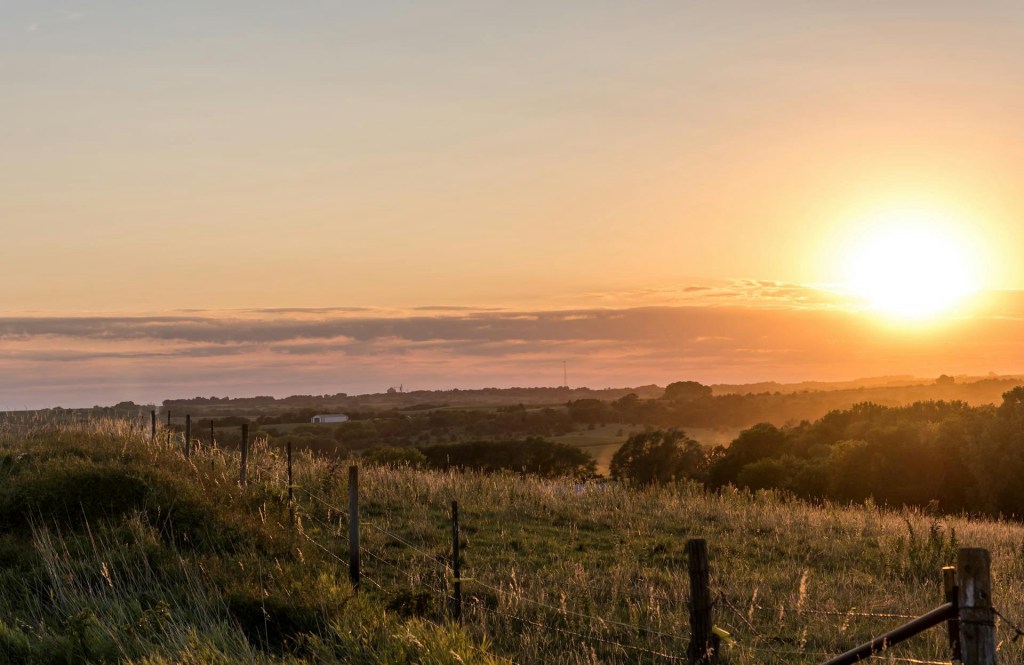
    There is a moment, early in a few blessed summer evenings, when the heat—the oppression—sighs and lets go.

    Not in protest, but in quiet surrender—the sun lingers, the sky softens, and a hush moves in with the rain.

    Steam rises like incense from the bones of the earth.

    You’ve felt that coveted shift.

    It’s not loud. Not showy. Just the heaviness loosening its grip on your ribs as breath returns without warning.

    This is how some battles end—

    Not with victory, but with survival.

    Not with a roar, but with a breeze.

    No fanfare—just rain through fractured light, and the ache leaving your body before you even know it’s gone.

    What remains?

    A field of yellow flowers—bent but blooming.

    Tired, but free.

    And air that smells like something holy—finally lifted.

    catacosmosis // 2025

  • Where Abundance Lives

    Where Abundance Lives

    It’s never been money or material success that has defined wealth for me.

    For most of my life, I chased meaning in moments loud enough to echo—grand gestures, perfect timing, outcomes wrapped in validation. But it was my most treacherous and grueling experiences—the ones that stripped me bare and rebuilt me from the soul up—that taught me something higher.

    They taught me to be still.

    To be quiet.

    To kneel at the altar of the subtle.

    A blurry cloud, simultaneously barely and boldly defining its own form, illuminated at just the right angle.

    Lumix GX7 + Lightroom (watermark only)

    A battered feather, found in the dead center of a forgotten dirt road, caught in evening light.

    Lumix GX7 + Lightroom (watermark only)

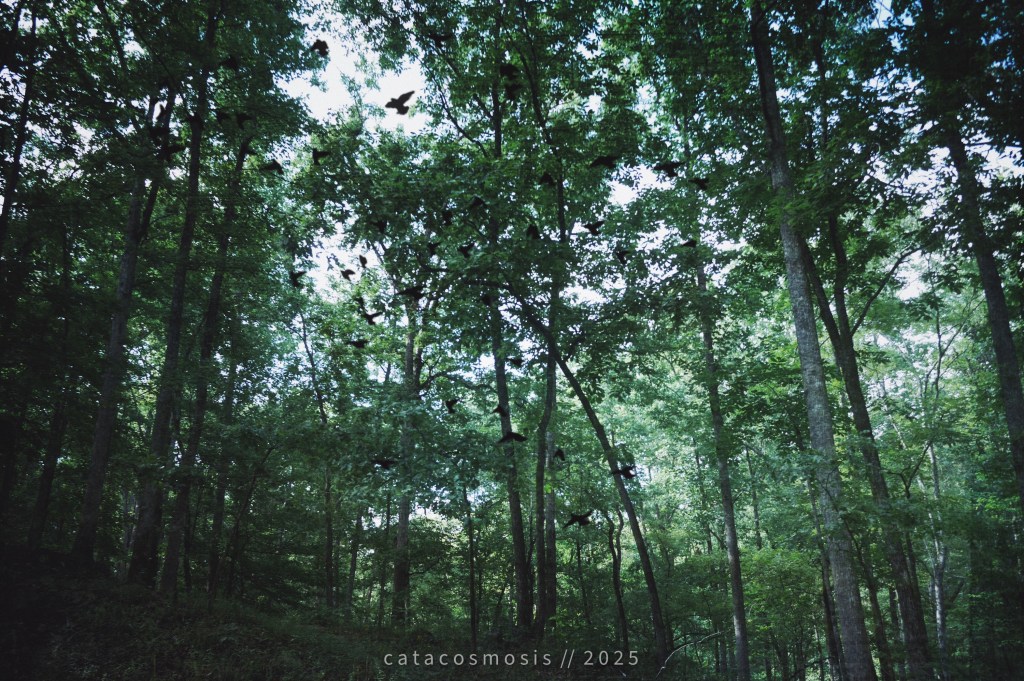
    The soft hush of trees at dusk, whispering the memories of the ghosts that still roam underneath them.

    Lumix GX7 + Lightroom (watermark only)

    This is abundance.

    There’s something sacred about catching these quiet offerings—the ones that ask for nothing but your presence. No performance. No hustle. Just your full attention. And I think that’s what I’ve been learning to fully morph into, slowly but surely, all my life.

    I’ve always been in love with nature, and over the past few years, I’ve begun to understand why—consciously, spiritually, viscerally:

    Nature doesn’t demand applause, but it offers everything to those who notice.

    Before caregiving and grief, nature called to me—quietly, consistently—and I always accepted her invitation to explore and to wonder. During caregiving, she became an escape. I retreated there as often as possible, weary and begging for rest that not even sleep could offer…and nature always obliged.

    Now? I don’t go to escape or to retreat, I don’t just visit. Nature meets me. Whether I’m deep in the woods or walking my yard…hiking a trail or running my neighborhood…now, I am always home.

    We live in a world trained to skim, to scroll, to monetize every breath of stillness. But this—this sky, this feather, this light that passes and never repeats—reminds me:

    Presence is the prize.

    It’s all around us, all the time, no matter where we are…but people don’t see it anymore. They no longer observe. Most have forgotten—that observation is a form of reverence. And reverence, when practiced daily, becomes a kind of homecoming.

    “Abundance is not found in money and material gain—at least, not for me. To me, it is found in nature’s unexpected surprises.”

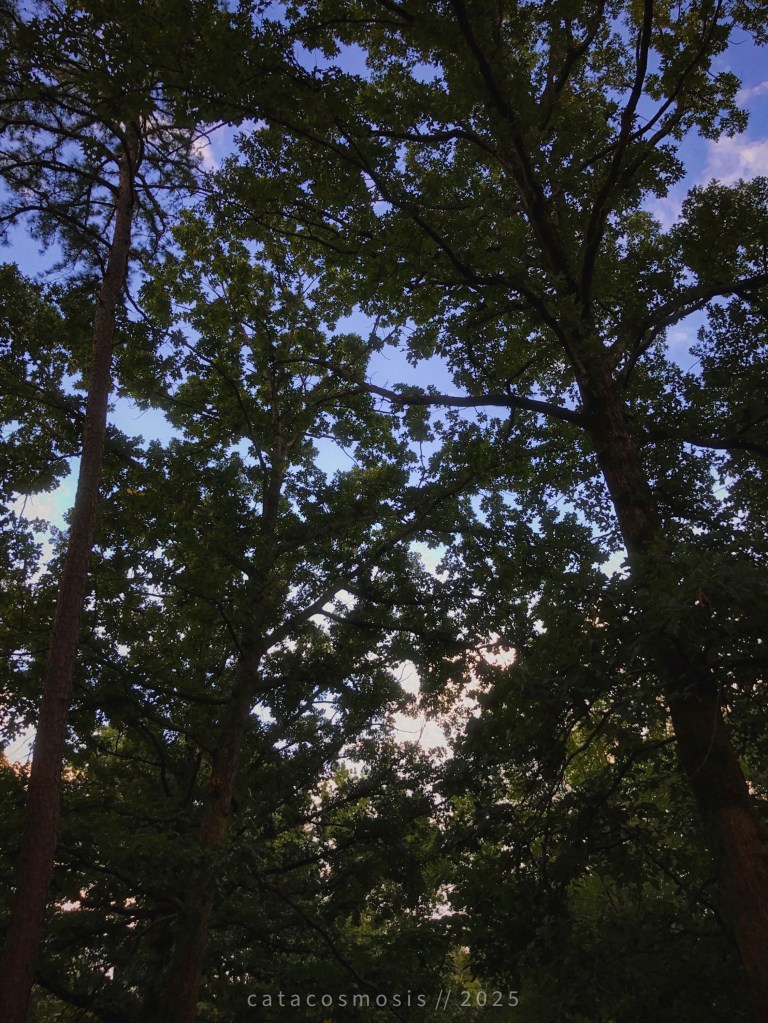
    I wrote that in my memory while standing beneath the canopy of trees shared above as it held the last light of evening. There was no one else there. No applause. Just me, and the divine choreography of stillness.

    In that moment, nature herself invited me to remind you:

    If you’re searching for proof that you’re loved, that you belong, that there’s meaning woven through even the hardest days—

    Look up.

    Look closer.

    Be still.

    The abundance you’re looking for is already here.

    It’s been waiting for your eyes—and your heart— to land on it.

    Be present.

    Pay attention.

    Be observant.

    Your presence in the present matters.

    It’s where abundance lives.

    🪶💜✨

    catacosmosis // 2025

  • The Art of Being Alive

    The Art of Being Alive

    The real you is not a puppet which life pushes around; the real, deep down you is the whole universe. (Alan Watts)

    📷 Lumix GX-7 + Panasonic-Leica DG Macro Elmarit 45mm f/2.8 ASPH
    🛠️ VSCO (06) + Lightroom (watermark only)

    The meaning of life is just to be alive. It is so plain and so obvious and so simple. And yet, everybody rushes around in a great panic as if it were necessary to achieve something beyond themselves. (Alan Watts)

    📷 Lumix GX-7 + Panasonic-Leica DG Macro Elmarit 45mm f/2.8 ASPH
    🛠️ VSCO (06) + Lightroom (watermark only)

    I stood in the green hush, face to face with a bloom so intricate it felt like a secret whispered by the wild. The passionflower doesn’t need to perform. It simply is. Unapologetically strange. Beautifully complex. Alive.

    📷 Lumix GX-7 + Panasonic-Leica DG Macro Elmarit 45mm f/2.8 ASPH
    🛠️ VSCO (06) + Lightroom (watermark only)

    I thought of the two Alan Watts quotes I’ve included above, and I thought of my dead loved ones. This is what I want to remember:

    📷 Lumix GX-7 + Panasonic-Leica DG Macro Elmarit 45mm f/2.8 ASPH
    🛠️ VSCO (06) + Lightroom (watermark only)

    That being fully present—here, now, in the middle of whatever hurts or heals—is enough.

    That passion isn’t always loud.

    Sometimes, it curls quietly out of the forest and dares you to look closer.

    This is what death has taught me about life.

    I’m really grateful I stayed, after they were all gone.

    🪽💜✨

    catacosmosis // 2025