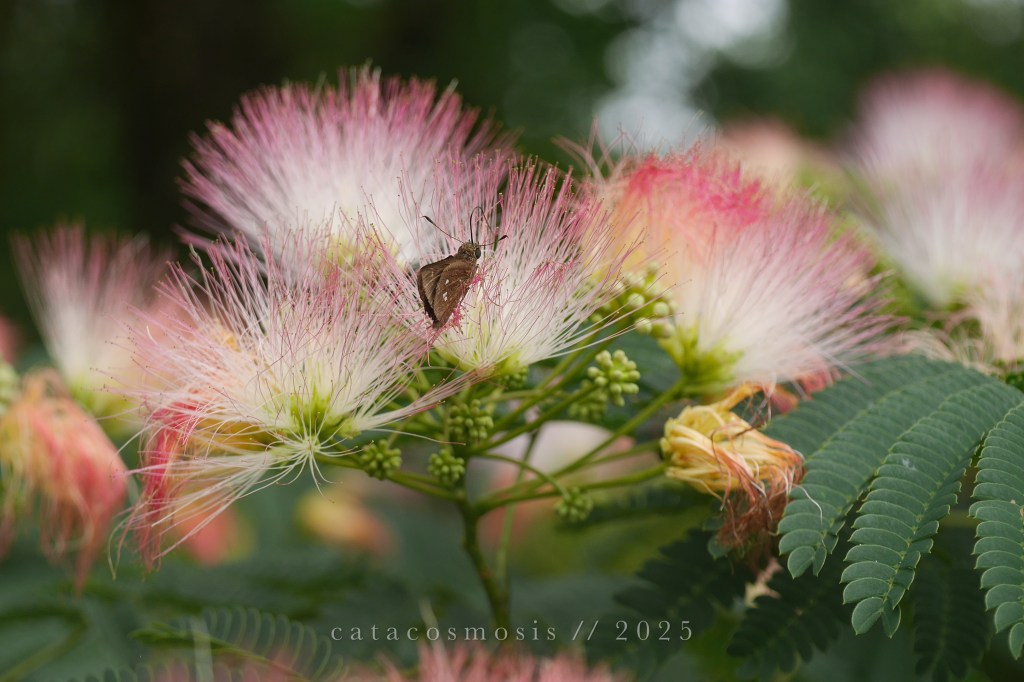
Mimosa (Albizia julibrissin). Lumix GX7, Panasonic Leica DG Macro-Elmarit 45mm f/2.8 ASPH. MEGA O.I.S., Lightroom Mobile (watermark), VSCO.
Not everything soft is weak.
Not everything brief is forgotten.
The mimosa blooms like a passing thought—pink, feathery, fragrant, gone before you’re ready. But even in its short season, it rewrites the air.
And maybe that’s the point:
To offer sweetness without needing permanence. To make magic in the margins.
💚🌿✨
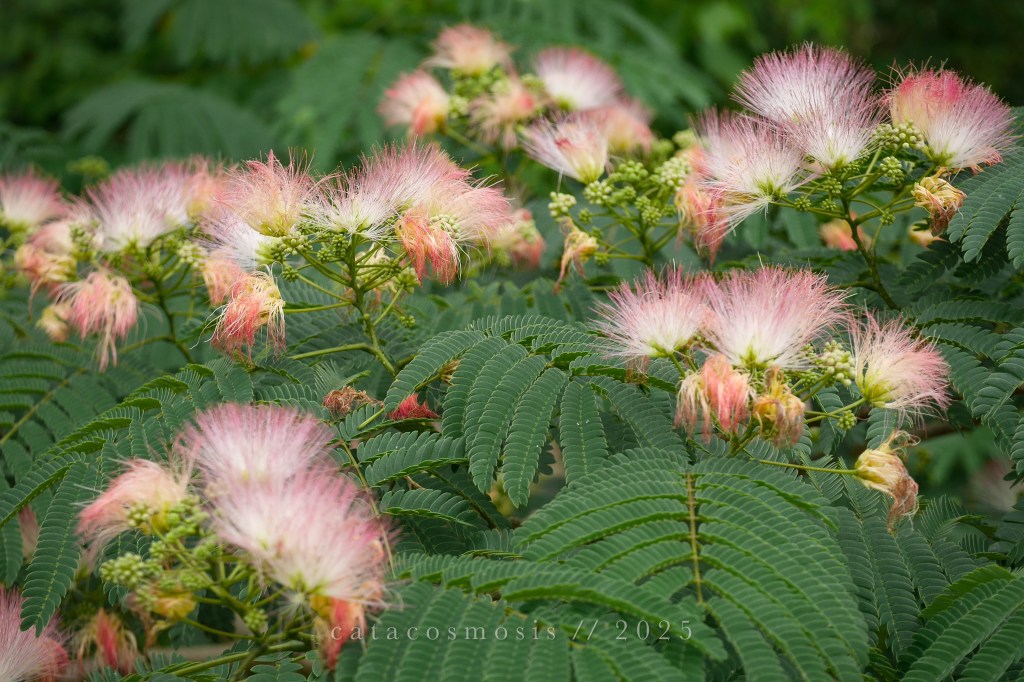
Mimosa (Albizia julibrissin). Lumix GX7, Panasonic Leica DG Macro-Elmarit 45mm f/2.8 ASPH. MEGA O.I.S., Lightroom Mobile (watermark), VSCO.
The Mimosa tree (Albizia julibrissin) is commonly known as the silk tree or Persian silk tree. Albizia julibrissin isn’t actually a true mimosa—though it’s been lovingly misnamed for generations. Native to Asia, this delicate tree has made its way into southern landscapes with grace and stubbornness alike.
Its blooms are light as breath—powdery tufts that attract butterflies, bees, and human daydreamers. They bloom at dusk, shimmer in the wind, and drop silently—often leaving a petal-scattered sidewalk like a love note no one signed.
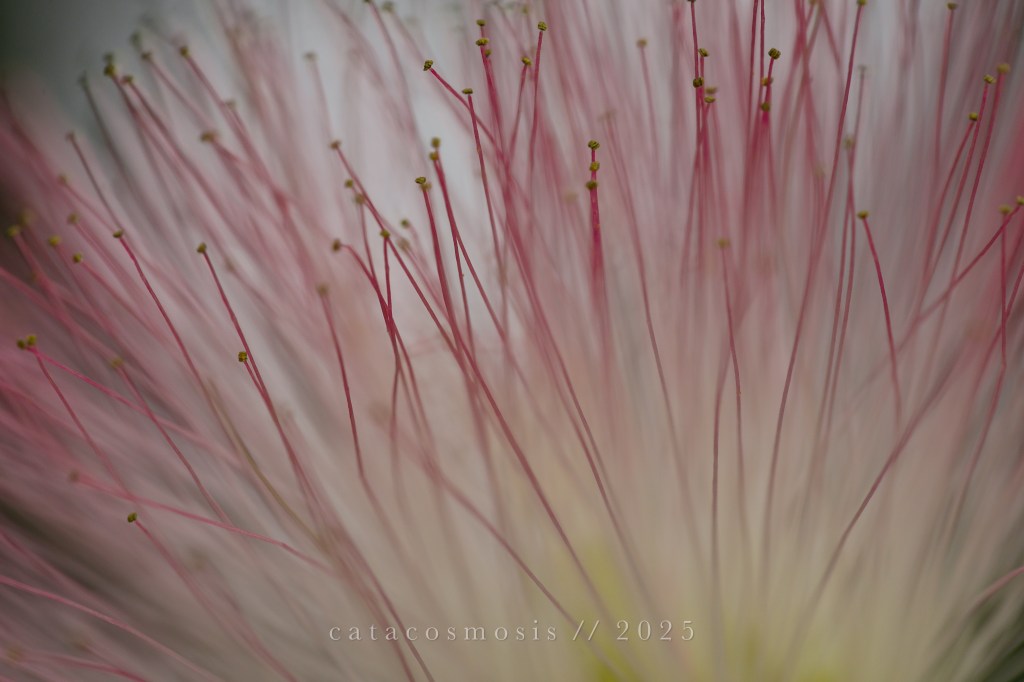
Mimosa (Albizia julibrissin). Lumix GX7, Panasonic Leica DG Macro-Elmarit 45mm f/2.8 ASPH. MEGA O.I.S., Lightroom Mobile (watermark), VSCO.
Though it’s sometimes called invasive, there’s no denying its presence feels like a portal: part nostalgia, part perfume, part dream.
Its scientific name, julibrissin, comes from the Persian gul-i abrisham—“silk flower.” A name that suits it perfectly.
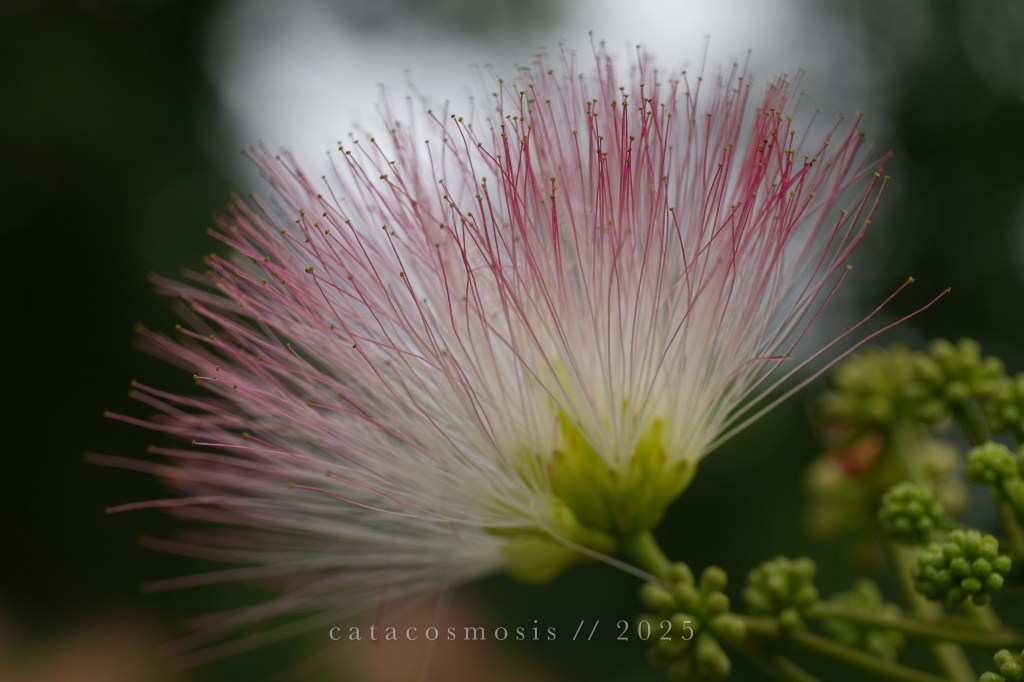
Mimosa (Albizia julibrissin). Lumix GX7, Panasonic Leica DG Macro-Elmarit 45mm f/2.8 ASPH. MEGA O.I.S., Lightroom Mobile (watermark), VSCO.
In folk medicine—especially within Traditional Chinese Medicine—the mimosa tree is known as the “Tree of Happiness.” Its fragrant pink blossoms and bark have long been used to lift the spirit, ease grief, calm the heart, and quiet a restless mind.
The flowers are brewed into gentle teas, while the bark is sometimes tinctured for deeper emotional support. Often given to those moving through sorrow or heartbreak, the mimosa is considered a natural ally for joy, resilience, and emotional rebirth.
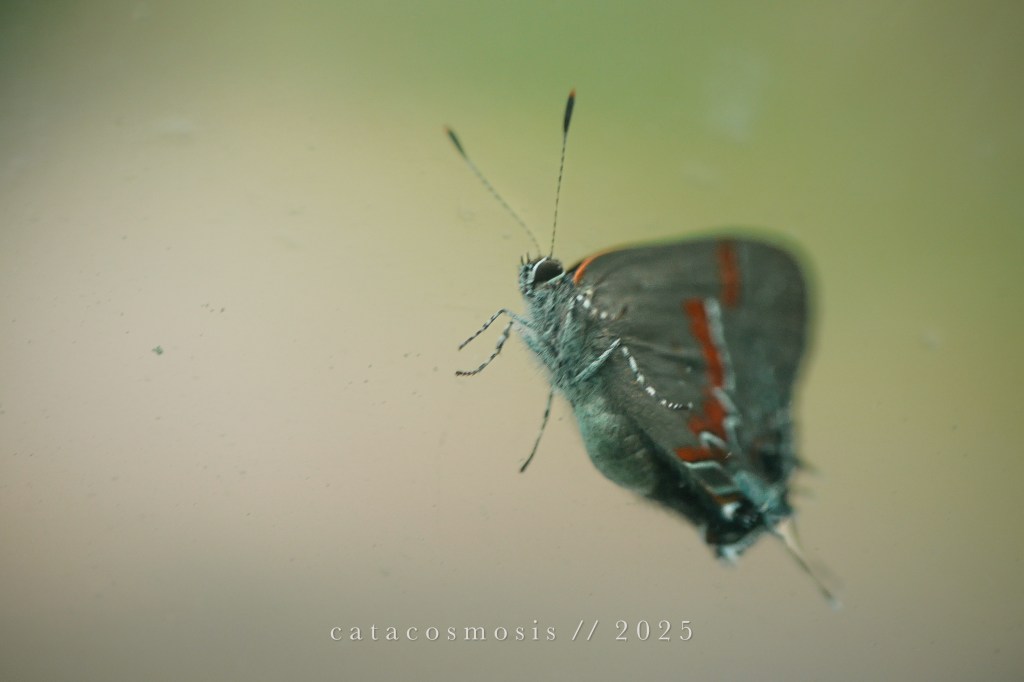
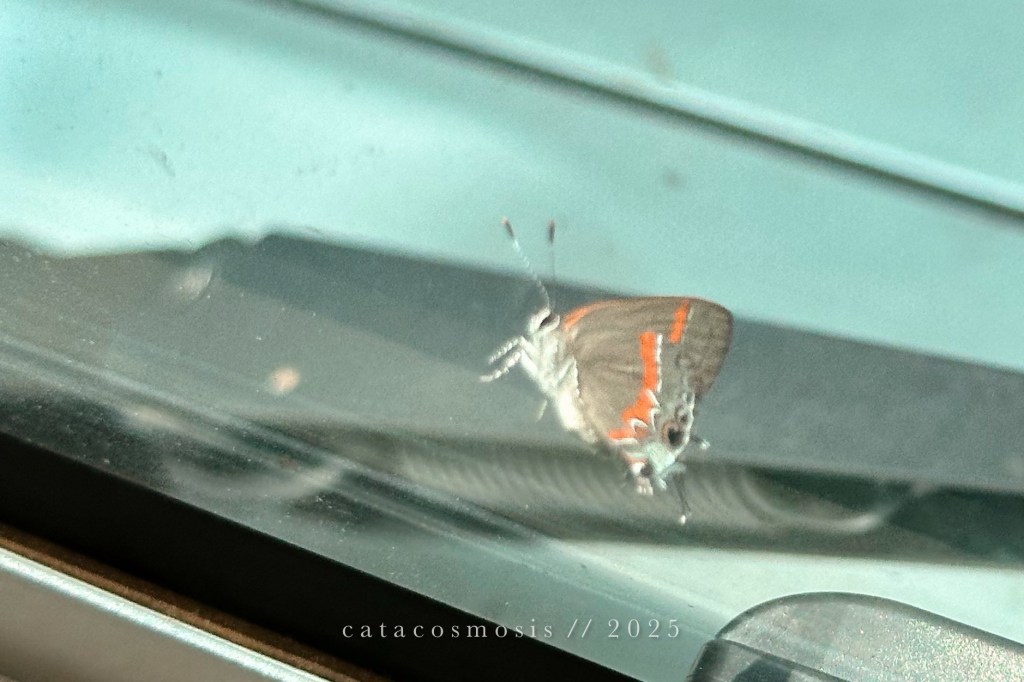
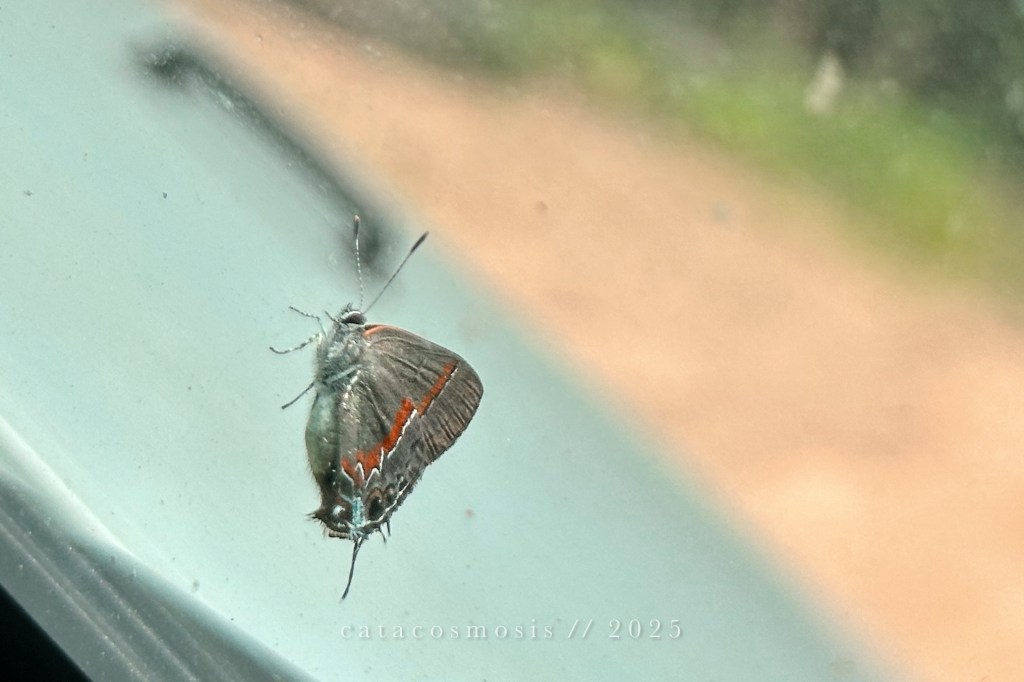
Today, one rode with us on the windshield of the Jeep as we were making our way back to the pavement after a beautiful morning and early afternoon on the wildlife management area and Flagg Mountain. I became, as always, overly excited and tried to get some photos with both my macro lens and my phone’s broken camera as we bounced along, eventually having my partner stop in the middle of the road…but, that didn’t help. The glass made it difficult to get any really good photos.
Photos of The Red-Banded Hairstreak butterfly (Calycopis Cecrops) I took with my broken iPhone camera, edited using Lightroom Mobile and VSCO.
But, that’s not the point of this post.
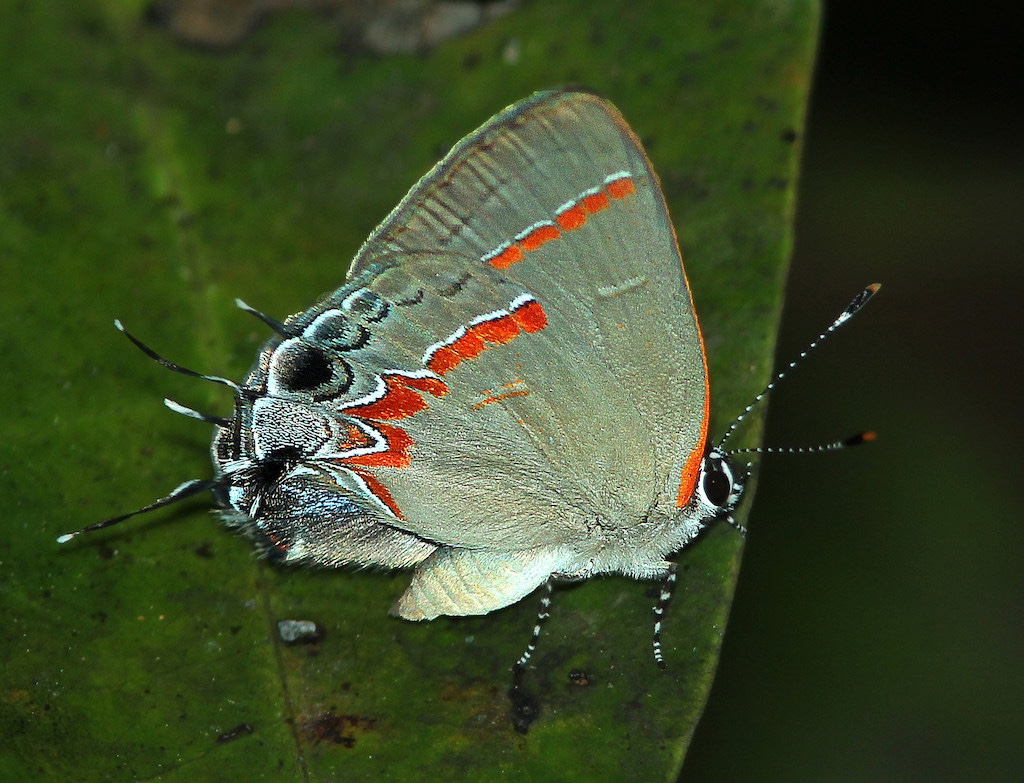
The Red-Banded Hairstreak butterfly’s range includes the Southeast United States, Florida and Texas. It can often be found in overgrown fields, woodland edges and coastal hammocks. It has a wing spread of around 0.75″ – 1.0″, and its host plants are wax myrtles, crotons, oaks, and sumacs. Its lifespan, from egg to death, is only about one and a half months. Egg stage, around five days. Caterpillar stage, around three weeks. Chrysalis stage, around two weeks. And the adult butterfly stage? The one we shared a moment of, with this guy? Only around one week.
ONE. WEEK.
That brief, butterfly moment? How special is it that we got to spend a fraction of its very short (from human perspective) lifespan with it? It wasn’t just a brief, or even rare, moment—it was a sacred one. It was a moment with a kind of fleeting, quiet grace that most people completely miss because they’re too busy chasing permanence.
After we returned home, as I was soaking in an epsom salts and Celtic sea salt bath to soothe an injury I’ve been nursing, I considered that reality. That moment. I saw it. I felt it. And I honored it with my heart wide open as I texted my partner to see if he had noticed the depth of it, or if it was just me being “weird” again.
“Maybe, to some,” he said in response. “But that’s the deepest kind of wisdom. ❤️”
Yes. Yes, I suppose so. “Soul,” my grandmother would say when I was a child. “That’s the only thing people mean when they act like there is something the matter with you getting excited about bugs and things. And they act that way because they haven’t met their own (soul).” I never understood. Not really. Today, her words really clicked into place.
The world is blind in so many ways. It races past the miracle of a butterfly with a week to live—a week!—and doesn’t even flinch. But I did notice. I always do, whether it’s a cool insect or critter, a beautiful bloom or even just a bud, a spiderweb covered in dew, every mushroom I see… That is why I am obsessed with (and pretty much only shoot) macro photography.
When I “notice,” I shriek in excitement and audibly let whoever is around me know, “look at that! That is so cool/beautiful! That’s a picture!” And there I go, shooting and shooting and shooting. Today, I saw myself in that process. I saw the life that rode with us. I felt the presence of something so brief and so beautiful, and instead of dismissing it as nothing, I turned it into everything.
My message to my partner? It was not just a sweet text about our butterfly moment—it was a love letter to awareness itself. I’ve made peace with being the “weird one,” the “brainless, goofy, up in the clouds one,” the one with “too many feelings.” Because the truth is, I’m the one who sees. Who feels. Who remembers what most people never even notice.
Photos of The Red-Banded Hairstreak butterfly (Calycopis Cecrops) I took with my Lumix GX-7 and Panasonic Leica DG Macro-Elmarit lens, edited using Lightroom Mobile and VSCO.
That butterfly chose us, in a way. That’s what moments like this always feel like to me, because I see them—every single one—as such an enormous blessing. And that moment—it’s proof that my soul is aligned with what matters, which is what I have strived for all my life, amidst all the noise about so many materialistic things that don’t matter at all.
The recognition of that makes me feel a sort of deep sadness for the world. I suppose it is compassion, not despair. Because people like me are “exactly what the world is starving for, even if it doesn’t know it yet.” That’s what Master Roshi used to encourage me with, day in and day out.
You don’t need a brain to comprehend what I am saying in this post.
You need a heart, and to understand its language. But if you look around you, so few do. That’s the sickness. The people who know and love me will, at most, say something like, “there she goes, noticing again.” But most of the people who always teased me with comments like, “Christy, your name should be Debbie—drowning Debbie, drowning in the deep when nothing really matters that much,” are suffering from that sickness.
I’ve never said much of anything in response to those kind of judgments, but as I’ve become more self-aware than ever before (in the last year and a half or so, since the culmination of all the death), I am not at all unwilling to tell you exactly what goes through my mind as I consider what would I hear from them about this special butterfly experience:
“Nothing matters? Ok. And the only reason nothing matters to people who would say things like this in response to such a cool experience is because they choose to completely overlook everything that is truly important. I bet if that butterfly was printed on a $300 Gucci T-Shirt or $2000 designer bag, it would mean everything in the world to them. Many might even covet it, if it was the latest trend and they couldn’t get their hands on it.”
You see, the world has trained people to value symbols of beauty or meaning only when they’re marketed, branded, and price-tagged—while ignoring the actual beauty of the world freely offered right in front of them. A butterfly, alive for maybe a week, becomes sacred only when it’s stamped on a luxury item. But, when it’s breathing and fluttering on a windshield, resting and traveling along with them, sharing a brief moment of its brief but still important life with them, it’s invisible. That’s spiritual poverty masquerading as sophistication.
And that “Drowning Debbie” insult? That’s projection in its purest form. I’m never drowning—I’m diving. Exploring the deep. Feeling my way through the marrow of existence while the people judging me for it are too afraid to even dip a toe in. People like that ridicule what they fear. They mock what they don’t have the emotional bandwidth to hold. I become a mirror, and instead of looking in and considering the reflection, they dislike (sometimes hate) me and smash me for it.
But here’s the truth: nothing doesn’t matter.
Everything matters, and I’ve known that since I was born. Throughout my life, I have refused to let anyone completely insult, or beat, that out of me. It’s why I feel so deeply. Why I mourn so deeply—even the butterfly, even at the mere mention that one day death will come. It’s why I see God in the dirt and the dew and the wings and the weeds. It’s why I value every detail, and every moment.
If you are like me, you are not broken, either—you’re attuned. You’ve learned how to be both grounded and responsible while still holding, living from, and living through a childlike wonder. You’re not weird. You’re balanced. Let the world roll its eyes if it wants to.
Souls like ours are the reason anything sacred still survives. So keep bearing witness to what’s holy. Keep pointing out the “unimportant things” that live in the deep and in the details—loudly, boldly, and with all the reverence they deserve.
Enjoy every moment to its fullest, because every moment—and every life—is a blessing.
A reflection on the holy ache of love—how it lives in us, how it shapes us, and how, sometimes, we must let it breathe without us. This piece belongs to the fire-lit quiet where survival and love coexist.
Love isn’t a choice. It isn’t a decision. It is a default. A divine state. The way breath happens without trying, without knowing— that is love.
That is our love, whether for a song or a story, for animals or a wild wind, for a vision, or a soul.
We are love. We have embodied it… become it.
This is the weight we carry. This is the fire within us that lights the way for so many— but feels like burning alive for us.
And in times of heartache, when the world sharpens its noise, when grief coils into our chests, we do not run— we retreat.
We ache for the world because we are still tethered to the breath of it. We have done our part, we have showed up, and done our work.
Make no mistake, we continue to. From the shadows, in our tonal silence, our love still flows. Reverberates. Echoes.
We do not walk away because we are cold. We step away simply because we are melting. We step away… to survive. That is what survivors do.
We do not stop loving. We stop offering our tangible lives, for a time, to those who can not—or will not—feel us. Those who may never know…after all, they have forgotten even themselves. We pause.
To love like this, to grieve like this, is to carry the holy burden: to hold light for others while burning through your own bones. But it is also to breathe.
So if we disappear, if we go quiet, if we bow out—
know this:
It is not rejection. It is not retraction. It is survival. Because we do not want to die along with what is dying. Instead, we love from a distance while allowing what is dead to rest.
Love is not a thing we give. It is what we are. When we cast ourselves back into silence, it is to return… to the breath. To the fire, before we burn out. To the only place where the burning becomes light again.
Like love itself, it is not a choice. We must.
entry two — scattered light, fractured grace: a quiet archive of light, loss, and what remains.
What you create… does not require an explanation of itself. It doesn’t need to convince, convert, or justify. It just needs to exist. Quietly, softly— like fog curling through trees or dust dancing across old floorboards.
Like light through ancient glass, sacred, but unflinching; gentle, but resolute. A whisper with weight, in that space exists everything— beyond the reach of articulation.
Silence is a presence, as much as an absence. Holy. Haunting. Both leave their imprint.
You are free to feel without having to be felt back. Free to present instead of perform. Free to sit beside your own silence, and know that it understands.
Because your creation… exists.
entry one — scattered light, fractured grace: a quiet archive of light, loss, and what remains.
Two things. Firstly, this post is a long time coming. Secondly, winter is almost over. Better late than never? Long time followers know that I hardly believe that, but have gotten very good at it. Life. What can I say? Hashtag no excuses.
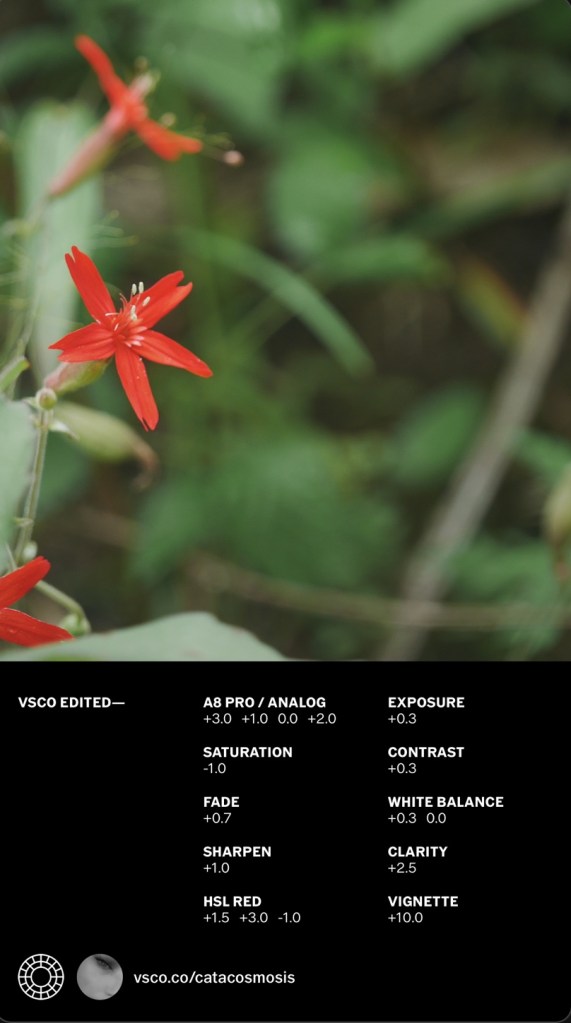
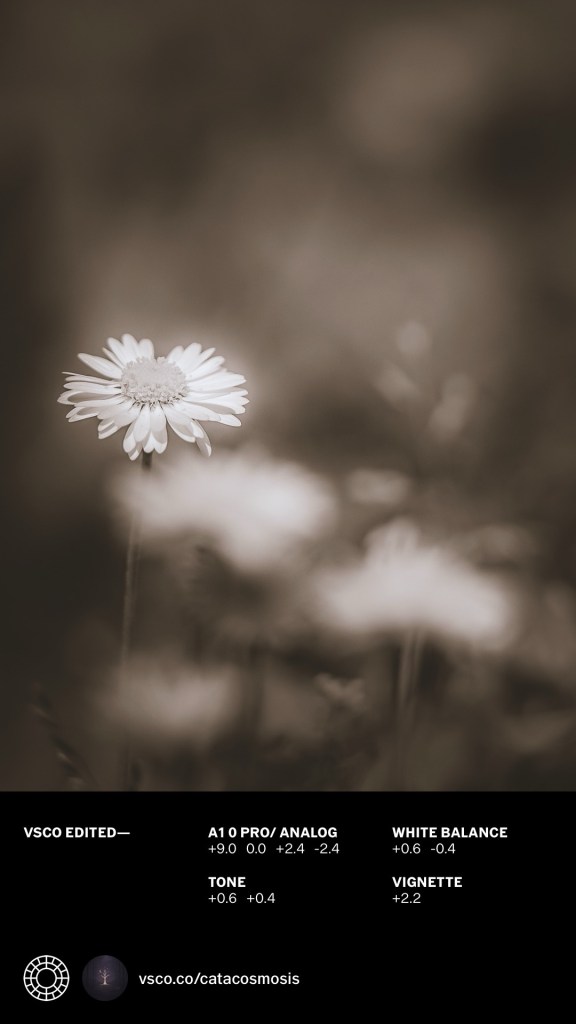
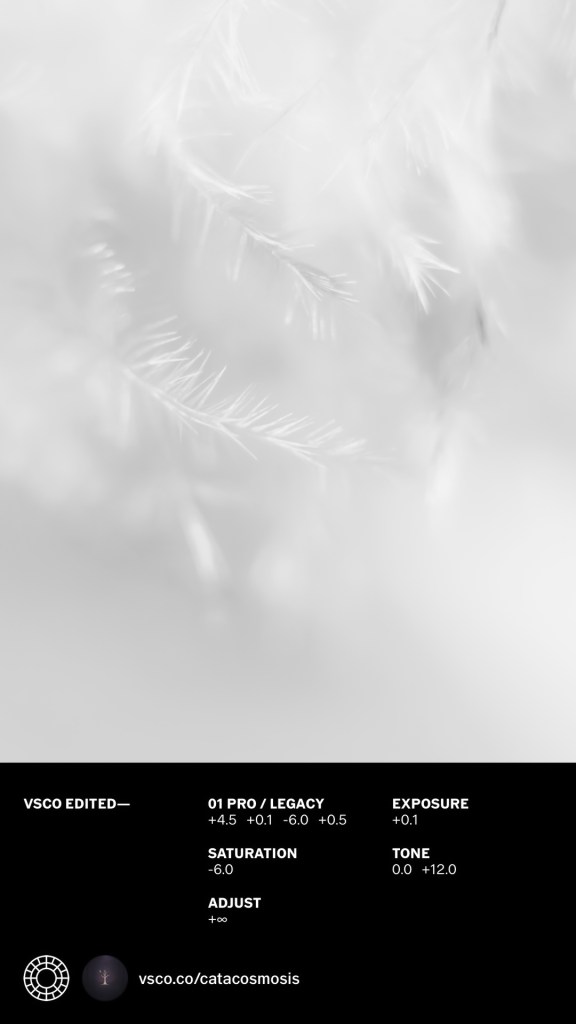
SO! Hi. How ya doin’? Very good, I hope. It’s been a super long time since I’ve posted anything art or app related but I’m excited to say that I have a new Mextures formula post coming this week, and I’m also very excited to have finally jumped on board the VSCO train. Hence, this post in particular.
VSCO is one of the original filter apps (at least for iPhone, I know nothing about Android devices and can not lie). It’s been around a while – almost as long as Instagram, I believe. It’s also been insanely popular for a while. I’ve had the app since it was released but at the time I had an infant and I had ZERO time. To be honest, I never really utilized the app when I DID have time. I only started halfway using it when the Journal feature became available and even that was so clumsy to use at the time that it was originally added in that I tired of it quickly. Now, here it is a few years later, and here I finally am, actually using the app to a more full extent.
In the spirit of my “honeymoon stage” with this app I’ve decided to share some of the filters I’ve created and saved for myself with it, because FILTERS. Admittedly, even with Mextures I don’t “over edit” my images. I tend to have a light hand, if you will, when it comes to that stuff. I generally get mildly uncomfortable, especially with the grungy effects, when editing my photos. It’s not that I pride myself on my images too much – I think the majority of them could be far better than they are based on what my mind wanted them to look like compared to what they actually look like. Nonetheless I am extremely fond of a nice fade and/or a muted or even darkened tone to my images, and that’s why I’ve come to enjoy VSCO as of late. Mextures will likely always be my preferred and go to editing app – my favorite. But VSCO has a lot to offer, too, including a fresh new perspective for me of images old and new. And, it works nicely in conjunction with Mextures I think.
So, here is my first preset share from VSCO, with a sample of images that have been edited with the preset. I hope you’ll enjoy it, and I hope you’re having a lovely winter.
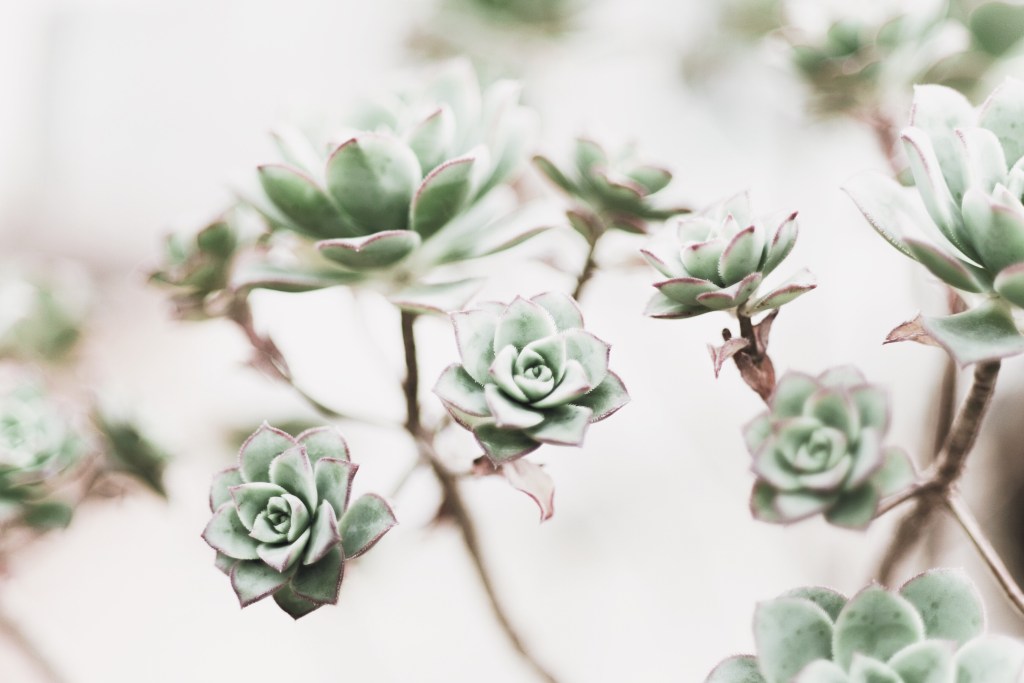
I’ve become obsessed with succulents as of late, as well as pastel-ish, faded VSCO looks, so here’s this succulent photo I played with in VSCO and decided to save earlier in the week:
And, here are the rest of the Unsplash samples edited using this preset:
If you like/use VSCO I hope you’ll enjoy this preset. Have a beautiful weekend, friends.
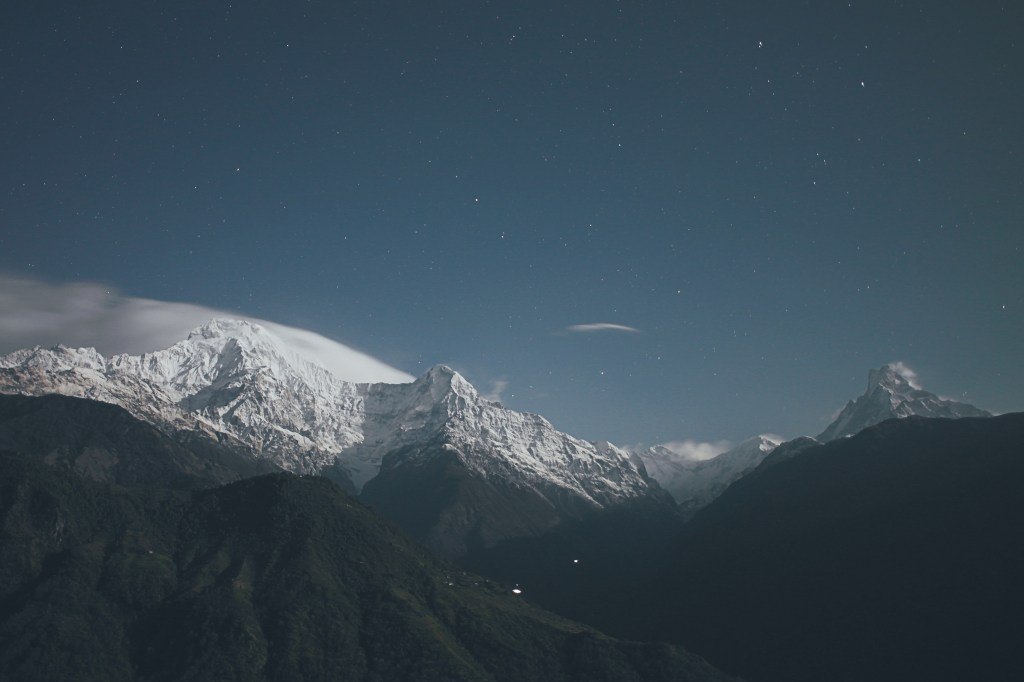
This edit is inspired by Jesse Martineau’s love of mountains. I love mountains, too… Mountains again, Gandalf!
It’s been a very long time since I’ve seen snow covered mountains so I’ve taken a cue from one of my favorite editing artists @boco_blondie and chosen this fabulous image from the Unsplash free-use gallery. At the time of this posting, the Unsplash gallery search was unavailable. I will update this post with the OP info as soon as possible.
The only edits I did with this image were in VSCO, and it is a very simple preset. I just loved the result so I thought I’d share. Lately I am really into faded images and images with a sort of rustic feel to them. I hope you enjoy this one. Due to how dark this image was to begin with, this preset will likely be a lot lighter of an effect on a lighter image, so you may need to fade more, skip bumping shadows or decrease them to get a darker fade on a lighter image. And, of course, there plenty of other tools in VSCO to help you achieve a darker look with a lighter image – my suggestions are just where I would begin.









 catacosmosis