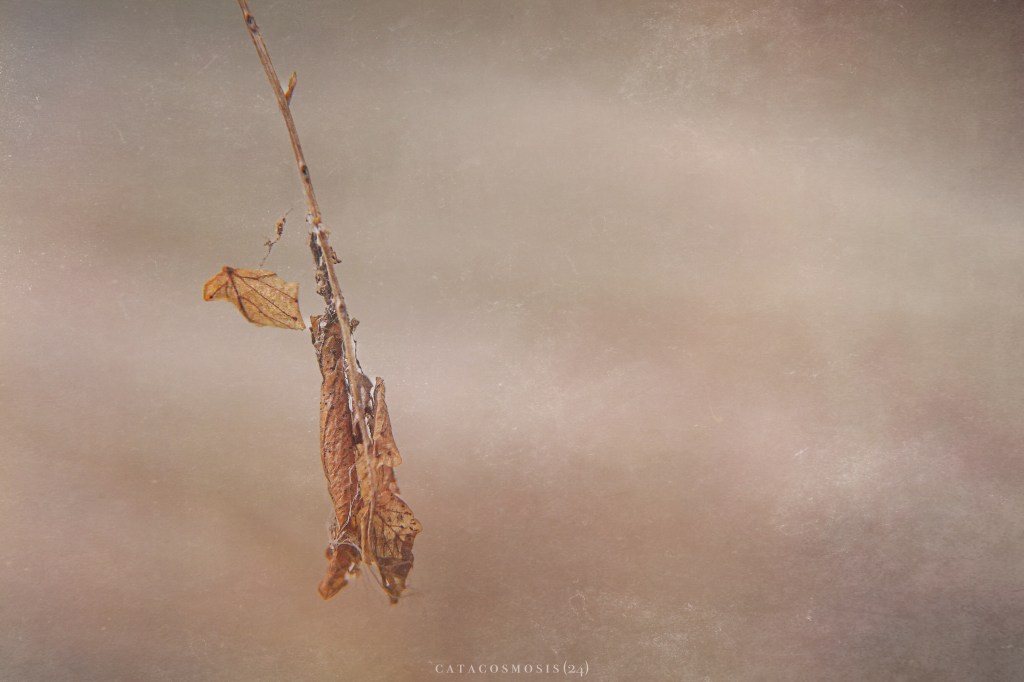
Tag: understanding

  • The Freeze

    The Freeze

    Every so often, I experience what I call the freeze.

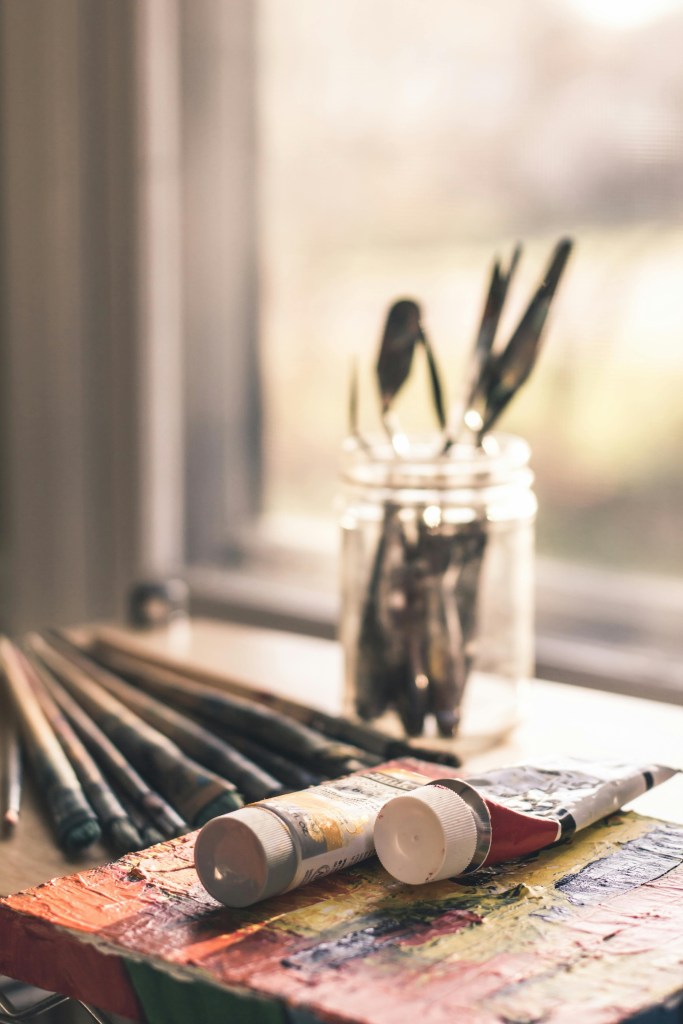
    Artists will know exactly what I mean. It is that moment right before you begin a new piece, canvas blank and supplies ready, when something inside you locks up. You want to move, but you don’t. You know what to do, but suddenly you can’t do it.

    It’s not laziness and it’s not a lack of ideas. It’s more like a quiet paralysis, the sense that whatever you do first will somehow be wrong, wasteful, or irreversible.

    I experienced that tonight, and it surprised me. I haven’t frozen like that in a long time.

    Maybe it is holiday stress. Maybe it is the cumulative weight of life, reality, and empathy for a world that feels perpetually on edge. Maybe it is something smaller, or something that would sound completely absurd to anyone watching from the outside. But absurd does not mean invalid.

    Any time we experience something like this, there is a reason… and I am the kind of person who looks for it. I look inward and outward, I sit with the discomfort instead of trying to bulldoze through it, and I pay attention to what is actually happening in my body and mind.

    I find that process purposeful, and sometimes even enjoyable, not because it’s comfortable but because it gives me agency. When I understand what is happening and why, anxiety loses its grip. I can experience it and coexist with it at the same time. More often than not, that approach resolves the issue in a deeper and longer-lasting way than simply forcing myself forward.

    So this is the internal conversation I had tonight, and how I talked myself through it once I reached a clearer understanding of what was really going on. This is where my professional training in psychology meets my self-taught training in art, I suppose.

    If you have similar experiences to what I’ve described above, I hope some part of this is useful to you.


    Step 1. Pause for a moment. Not to analyze or fix anything, just to name what is happening. Once something is named, it tends to lose a surprising amount of its power.

    What you’re feeling when you experience “the freeze” as soon as you pick up a brush or a palette knife, or face whatever in life it is that makes you freeze in a similar way, is not a personal flaw. For artists and creatives, it’s not proof that you are bad at being creative.

    It’s a very specific nervous-system response, and it shows up most often in people who actually care about what they are making. In psychology, this response is often described in a few overlapping ways.

    It can be understood as a conditioned approach and avoidance conflict within you, where the part of you that wants to create is simultaneously held back by fear of loss or failure.

    Funny story: I wrote an entire 23-page research paper on this in my junior year of undergrad. In my opinion, it was incredibly boring, personally insulting, and the worst three months of my life at the age of 21, but somehow I shockingly got an A.

    I digress.

    It can also appear as performance anxiety, though not in the social sense, more as an internal pressure to do it right. For me, it is absolutely perfectionism as a defensive strategy, a way of protecting myself from imagined mistakes or wasted effort (thanks, Mom, may you rest in peace). In many cases, it can even be the brain or your physiology responding to dorsal vagal activation, which includes fight, flight, freeze, or fawn, but we will not go that deep here.

    To put it in easy, normal language, this reaction almost always appears right before commitment. Any commitment, but especially one that means “if it goes wrong it’ll really cost me.”

    In the art scenario, up until this point, the work has existed only in imagination. In that space it is infinite, perfect, and safe. The moment you are about to touch the canvas, it becomes finite and real. Something is chosen. Other possibilities fall away. Your (my) system hears that as loss, and it tries to protect you by freezing you in place.

    That feeling that it has to be a certain way to be right is not creativity. It is internalized surveillance. Somewhere early on, many of us learned that mistakes mean waste, mess means failure, and a wrong choice causes permanent damage. Even when those rules no longer apply, the body remembers them. So when you are free, your body does not quite believe it.

    That is not weakness, or incompetence. It is conditioning that has simply outlived its usefulness.

    At the center of this response is a quiet lie: “If this turns out bad, the supplies are ruined.”

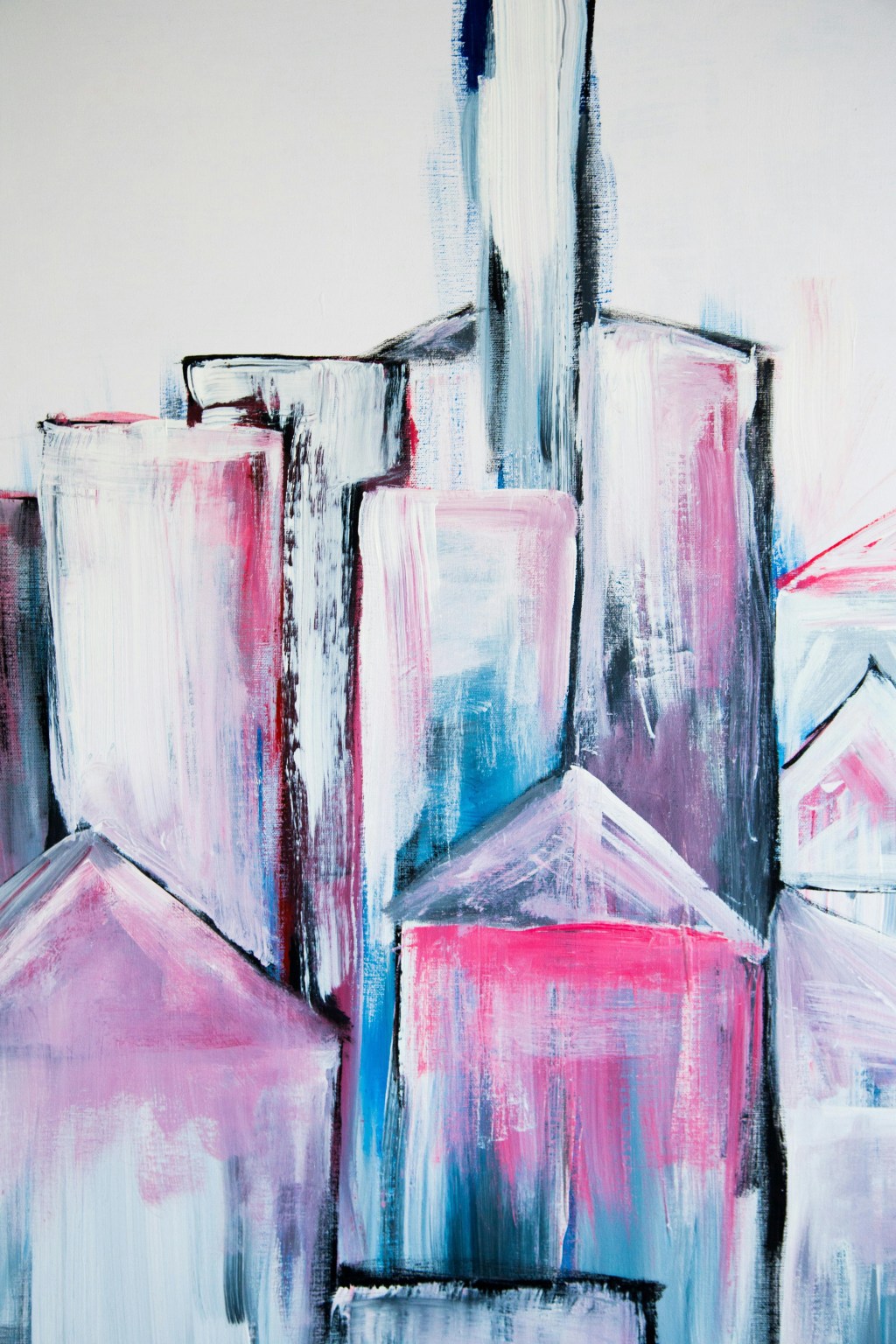
    That is just not true. Acrylic can be scraped, painted over, sanded, cut up, or turned into texture. A canvas can become a foundation rather than a final statement. Materials are meant to be used. That is their purpose. Paint that sits untouched out of fear is already wasted.

    Canvas is not sacred. You are. Please remind yourself of that immediately, and lock it in.

    Another lie slips in just as easily: “It has to be a certain way to be right.”

    Right for whom? There is no audience in the room, no rubric, no grade. There is only motion, pressure, color, and the physical relief of making contact with the surface. Art does not exist to behave! Remember?

    This kind of freeze does not happen to people who do not care. People who are shallow about creativity do not spiral like this. It tends to happen to people with depth and sensitivity, to people who were corrected more often than they were encouraged, and to people who learned how to perform before they learned how to play.

    The nervous system is not sabotaging anything. It’s trying to protect something precious: the ability to feel and express. It’s simply using outdated rules.

    Step 2. A small reframe helps here. You are not making a painting right now. You are making the first layer of a surface. Nothing more. Not meaning, not outcome, not art with a capital A. Just noticing what happens when color moves downward. That layer is allowed to be ugly. It is allowed to be scraped away. It is allowed to disappear entirely under the next thing. You are allowed to stop at any time.

    There is one gentle but important rule I follow that can helps me quiet the pressure. Say out loud that nothing you do in the next fifteen minutes counts. Set a timer. When it ends, you can walk away with no obligation to continue, fix, or judge. This is not about pushing through fear. It is about making fear irrelevant.

    And finally, this matters. The experience, the art, and your simply being. But also, the fact that you sometimes freeze. It’s not invalid. You do not need to get over it already. That voice was built over years. It softens through safe repetition, not self-attack. Every time you begin anyway, tentatively and imperfectly, you rewrite it.

    You are not broken. You are unwinding.

    I hope this helps someone…

    xo.

    c.

  • Unhidden

    Unhidden

    entry nineteen — scattered light, fractured grace: a quiet archive of light, loss, and what remains.
    Lumix GX7 + DistressedFX + Mextures

    I’ve been thinking about how easily we overlook what does not bloom on command. How quickly we decide something is less valuable when its rhythms are quiet or unusual or slow to reveal themselves. How we are conditioned by convenience to turn away from what requires a different or more tender kind of attention, unless we are its mother.

    As mothers, the expectations begin to pile up, even as the help quietly disappears… if it ever shows up to begin with. It showed up for me recently, with my son’s diagnosis of autism, and then the weight shifted again. The label alone added a layer of juggling and balancing that feels impossible, even in ways that his father may never fully know…

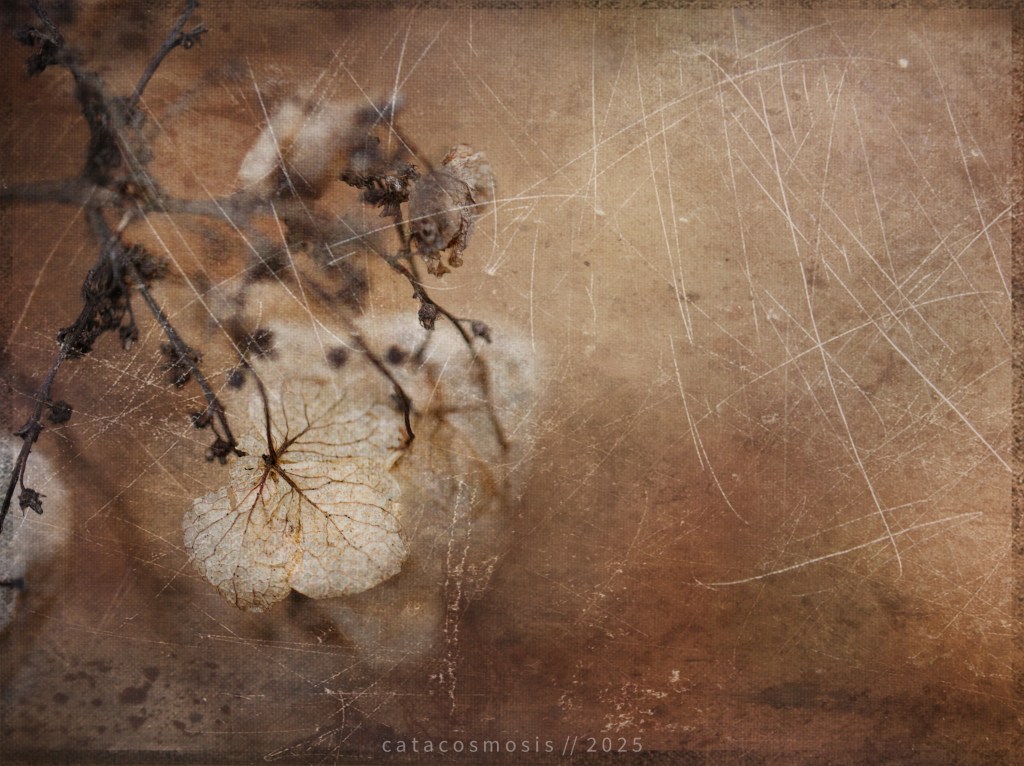
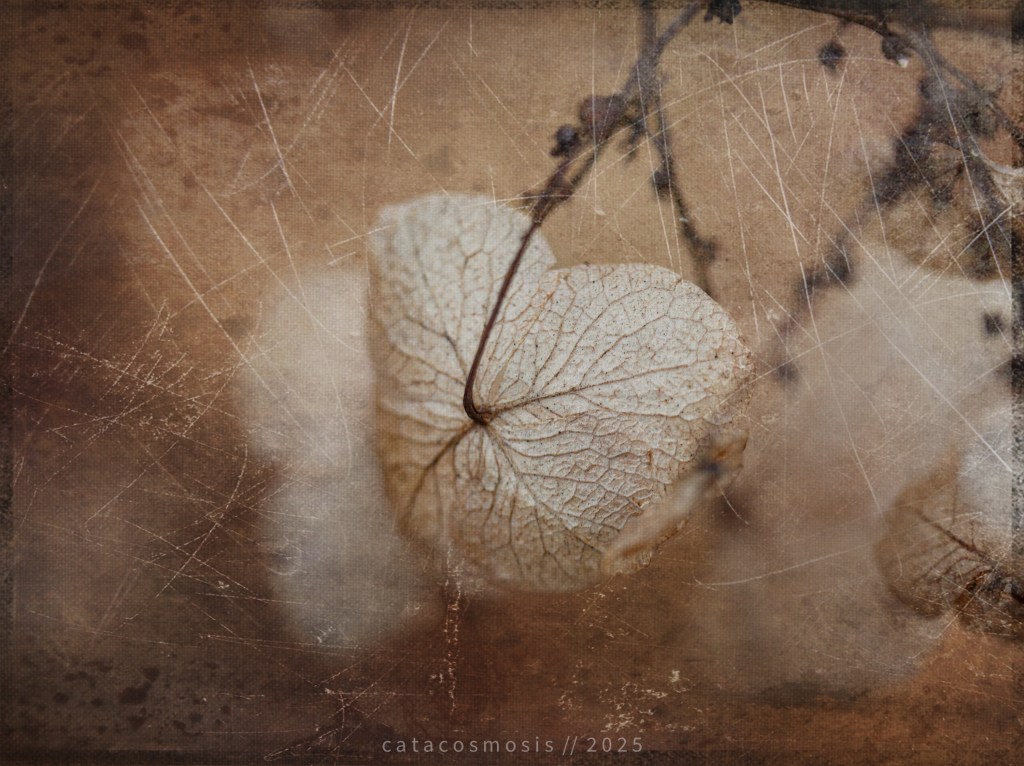
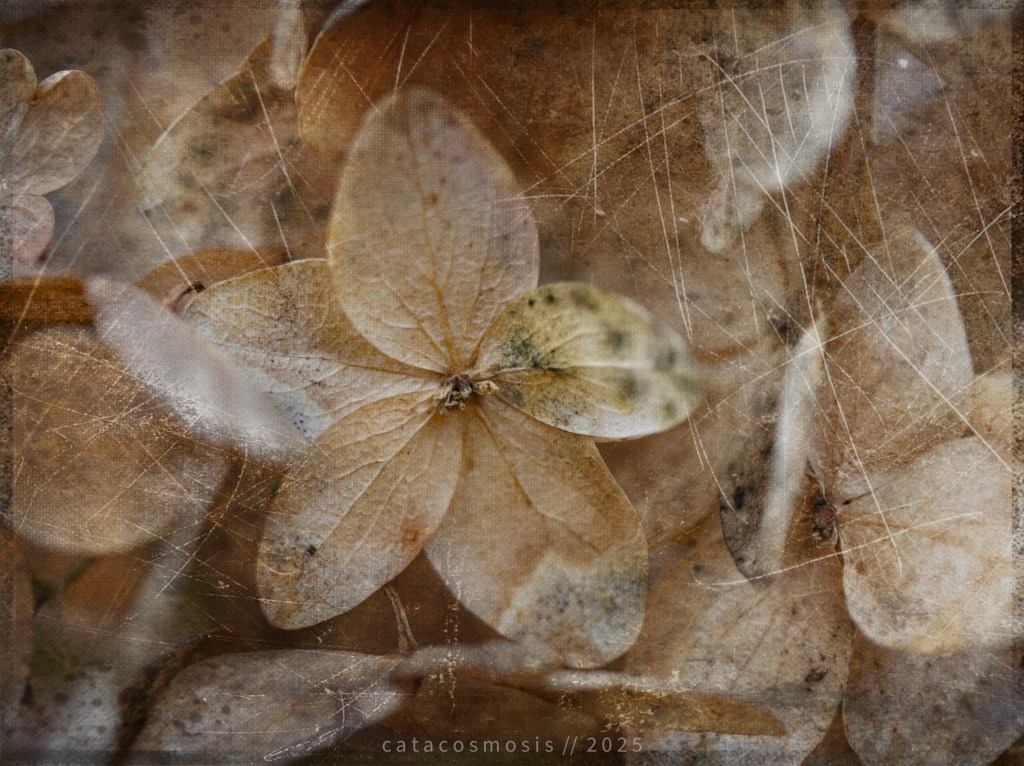
    …but these small remnants of #lovelydeadcrap in my backyard have been teaching me how to package it all and express what’s inside.

    Lumix GX7 + DistressedFX + Mextures

    In their faded textures and fragile lines, I find a gentler truth. Beauty is not always loud, nor peace immediate. Sometimes neither are easily interpreted. Sometimes they appear in the very things the world has already dismissed as unremarkable because they do not fit the desire or expectation.

    When my son was diagnosed with moderate to severe autism, the world tried to hand me a script of loss and limitation. But the more I sit with the reality of who he is and what I know he has experienced in his life, the more I understand that nothing essential has been diminished.

    Lumix GX7 + DistressedFX + Mextures

    Not unlike #lovelydeadcrap, the reality of his story simply asks to be read with a different kind of seeing. The light lands from another direction. The beauty moves at its own pace. That is what this winter season is teaching me:

    To honor what does not conform. To stay open to the quiet forms of life and value that do not perform for anyone’s comfort. To recognize that some truths require presence rather than projection.

    Lumix GX7 + DistressedFX + Mextures

    My son is not less. He is not broken. He is not something to mourn. He is fully himself, unfiltered and unhidden, and there is a sacred beauty in that.

    May we all learn to truly see what stands before us, not merely what we were taught to expect.

  • Revelation

    Revelation

    entry seventeen — scattered light, fractured grace: a quiet archive of light, loss, and what remains.
    iPhone 17 Pro + DistressedFX + VSCO

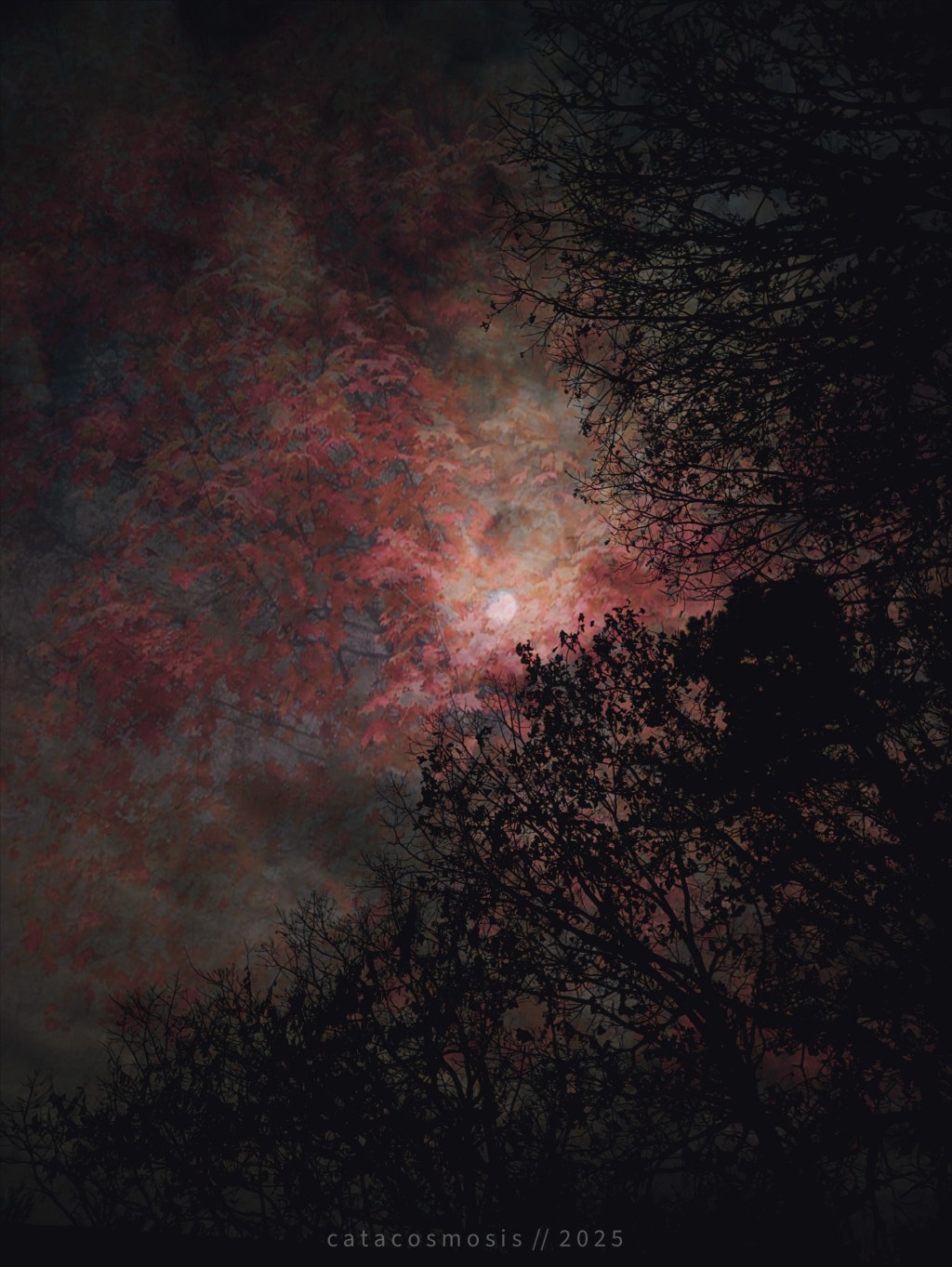
    The full moon always finds me in that thin place between ache and awakening. The heart softens, the past stirs, and the light insists on touching what I thought I’d hidden.

    It doesn’t shout. It simply rises. And in rising, it reveals.

    This full moon of these last few days felt like a mirror tilted by something wiser than me: clear, unguarded, almost tender in the way it offers back the truth of who I am becoming.

    Every full moon asks for release, but this one asked for understanding. It offered an opportunity for a quiet recognition of what’s been shed, what’s been carried, and what still longs to be held with gentler hands.

    Under its glow, my fractures stopped pretending to be wounds. Instead, they shined… faint, but deliberate. And grace slipped in when I wasn’t looking.

  • Coldness

    Coldness

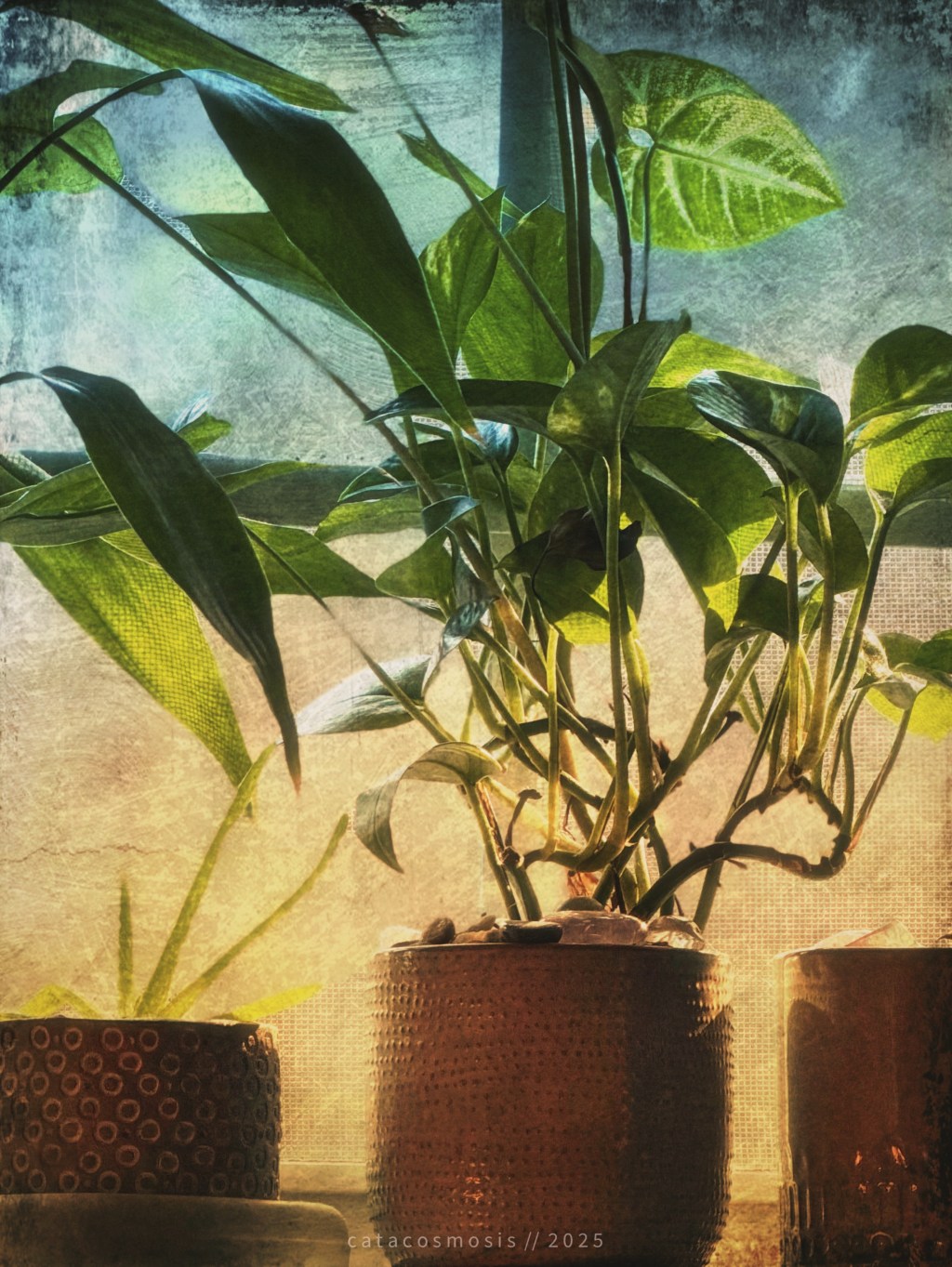
    Coldness has arrived and with it the pull to go inward, to rest in the quiet places that rarely see the sun. Winter has always been the hardest season for me. It settles deep and stirs up everything I have tried to set down, everything that has followed me long after the caregiving ended. Two years have passed and I am still carrying the weight of those long nights, the vigilance, the grief that lives in the body long after the moment of loss.

    iPhone 17 Pro + DistressedFX + VSCO

    Yet even now there are small reminders of life that keeps reaching for the light. These plants on my windowsill keep growing with a kind of quiet courage. The morning sun touches them and they respond without hesitation, without guilt, without a single thought about the expectations of others. They lean toward whatever warmth they can find and allow that to be enough.

    I am trying to learn from them. I am trying to believe that rest is not weakness. It is restoration. It is the slow and necessary work of returning to myself after years of tending to everyone else. Winter makes that lesson feel sharper, but it also makes it feel truer.

    Some days I am tired in a way that feels ancient, but I keep growing in small ways. I keep reaching for light in whatever form it finds me. If these green and fragile things can thrive in the coldest season, maybe I can too.

    xo…

  • Exhale

    Exhale

    entry fifteen — scattered light, fractured grace: a quiet archive of light, loss, and what remains.
    iPhone 17 Pro + VSCO (L6 +1) + Lightroom (watermark only).

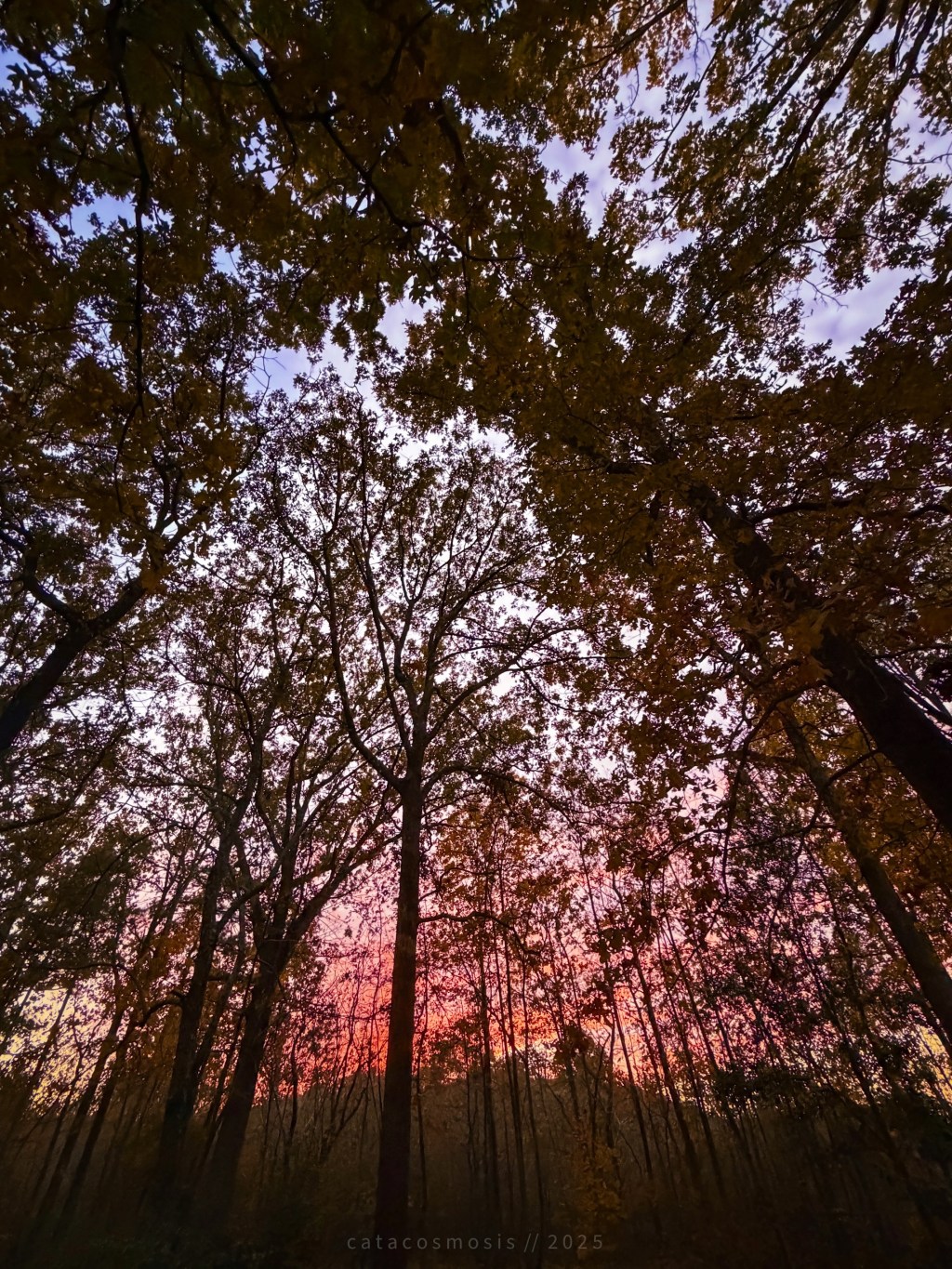
    The sunset this evening caught my eye as I glanced up from the command prompt to rest my eyes.

    “cmd —> DISM /Online /Cleanup-Image /RestoreHealth” be damned, I forgot the problematic machine.

    I gravitated outside as though an unseen force beckoned me… and instead of me capturing a backyard moment, the moment froze me in place and then swallowed me whole.

    It happened quietly, the way revelation always does: when the day was no longer sure of itself.

    The horizon drew one long, trembling breath, and the sky exhaled light like a confession, soft and burning all at once.

    For a few heartbeats, the forest became a cathedral. Oaks turned to stained glass, every vein of every leaf catching the final ember of the sun’s breath.

    The air itself seemed to glow with a kind of surrender, as though heaven was remembering how to let go and reminding me all over again.

    I stood beneath it, small but aware, suspended in that thin seam between the living, the leaving, and the memory of the already gone.

    The colors didn’t ask to stay; they simply poured through the cracks of the canopy and into me, as if to say, “grace doesn’t vanish when the light fades. It only changes hue.”

    When the sky went gray again, it felt less like an ending and more like an exhale finished.

    And life went on…

    catacosmosis // 2025

  • Lovely Death

    Lovely Death

    Dried leaves in repose,
    macro lens unveils their tale.
    Lovely death, frozen.

    (Lumix+Panasonica/Leica Macro DG Elmarit, VSCO, Mextures, Lightroom)

    In my mid-20s, I experienced an interesting exploration of death as a subject in my work, professionally and creatively. Delving into the intricate realms of death became an unexpected but necessary journey. Originating from my research and work in psychology, the fascination found a niche in the recesses of my mind, dancing at a newly discovered crossroad: psychology and spirituality.

    The illusion of immortality, a comforting notion in my youth, began to unravel, and a sobering awareness seeped in – a gentle reminder that time, despite our desires, marches on. This realization stirred occasional anxiety, yet it birthed within me an artistic sanctuary. While my “irl” associates and friends were rather put off by such a topic of discussion, it was given tangible validity within the “lovely dead stuff” community on Instagram.

    Back then, Instagram thrived on genuine connections, nearly two decades ago during its inception. Communities flourished, spanning from technical visual elements, like layering textures and tones, to profound philosophical discussions embedded in art. It was within the latter that the “lovely dead stuff” tag/community found its home. While the platform’s landscape may have evolved, I suspect its essence endures, adapting to the shifting tides of philosophy and the world’s unfolding events.

    The “lovely dead stuff” community, a haven for kindred spirits, provided a liberating space where my inquisitive mind and creative endeavors harmonized. In those formative years, it fostered an environment that not only embraced my curiosity but also guided me in the art of amalgamating thought and creativity. It became a conduit for transforming introspection into tangible expressions, a timeless journey that shaped both my understanding of mortality and my artistic identity.

    During that formative time in my spirituality, I realized that the connections between psychology and spirituality were becoming a pressing issue in my still immortal mind — I think I wanted to, like many, freeze time and never die and there was this underlying current of consciousness beginning to happen to me that screamed, “you’re not as immortal as you think you are, young ‘un!”

    It would sometimes create a lot of anxiety, those explorations, but I am so grateful that I found an outlet in the “lovely dead stuff” artistic community on Instagram. It was a liberating community that embraced all those levels of me (brain, heart, and soul) and helped me learn to employ them simultaneously for the first time in my life (I’d never been allowed that prior to that time in my life). I was able to create some tangible reality out of it all.

    I was not expecting to revisit those memories or that topic today, but I found myself considering it as I “walked the yard” (a Dorie thing that some of you may remember) this morning in search of moss to photograph for a mixed media project I was working on to commemorate my mother’s birthday. Amidst the quiet canvas of nature, the stark contrast between the lingering death of winter and the emerging promises of spring captured my attention. Winter’s remnants, laid bare and hanging in the air, echoed the transient beauty of life’s inevitable cycles. Meanwhile, the subtle signs of spring’s awakening breathed new life into the scene, embodying the enduring spirit of renewal and the continuous dance between life and its inevitable counterpart.

    It served as a poignant reminder that, like the seasons, our perspectives too undergo a perpetual transformation, each moment holding within it the delicate balance of both closure and new beginnings. Here’s to remembering and retrying forgotten editing skills, and to whatever comes next…

    Happy birthday, Mama. Thank you for the lessons, and the love. I miss you…