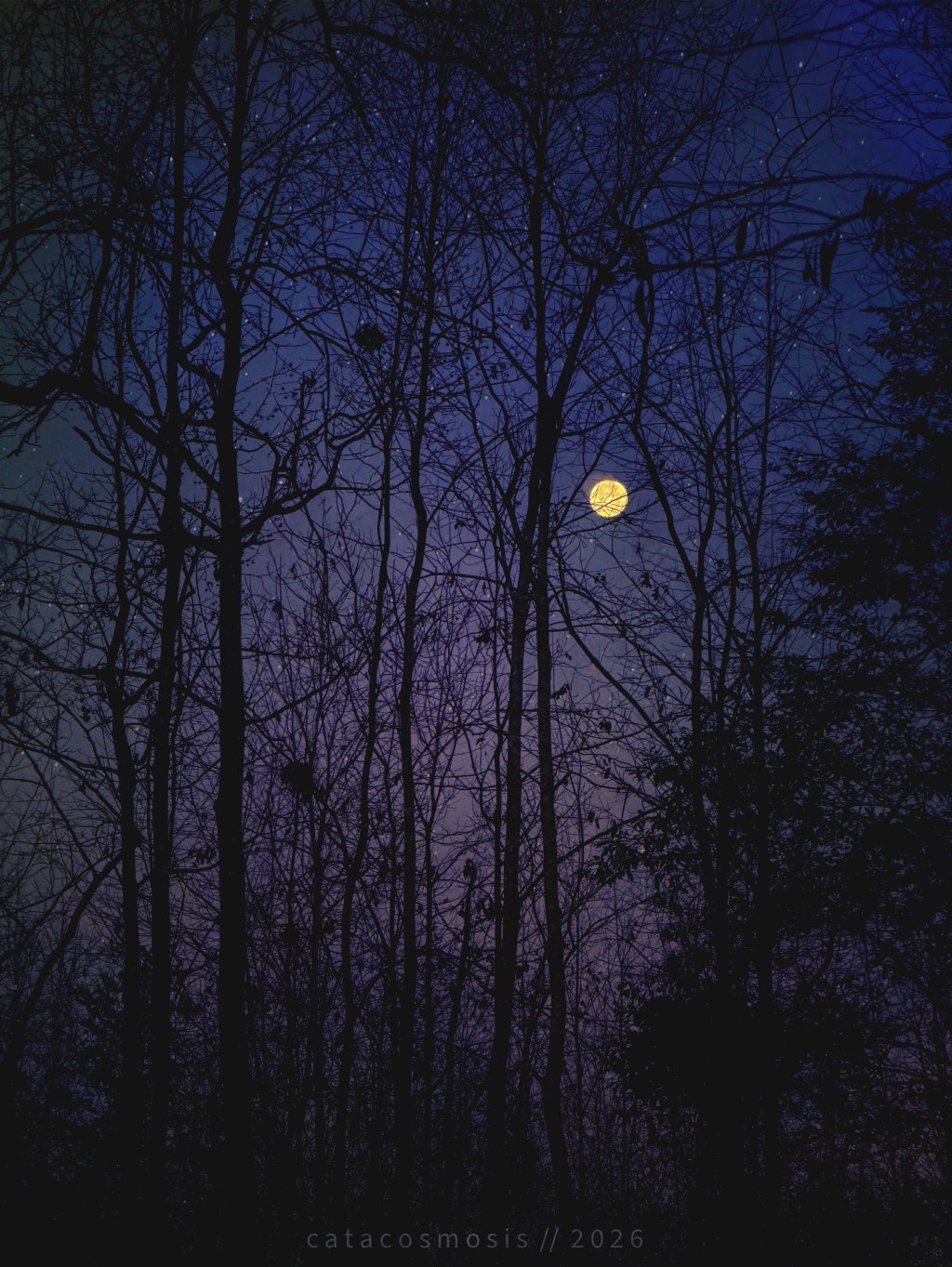
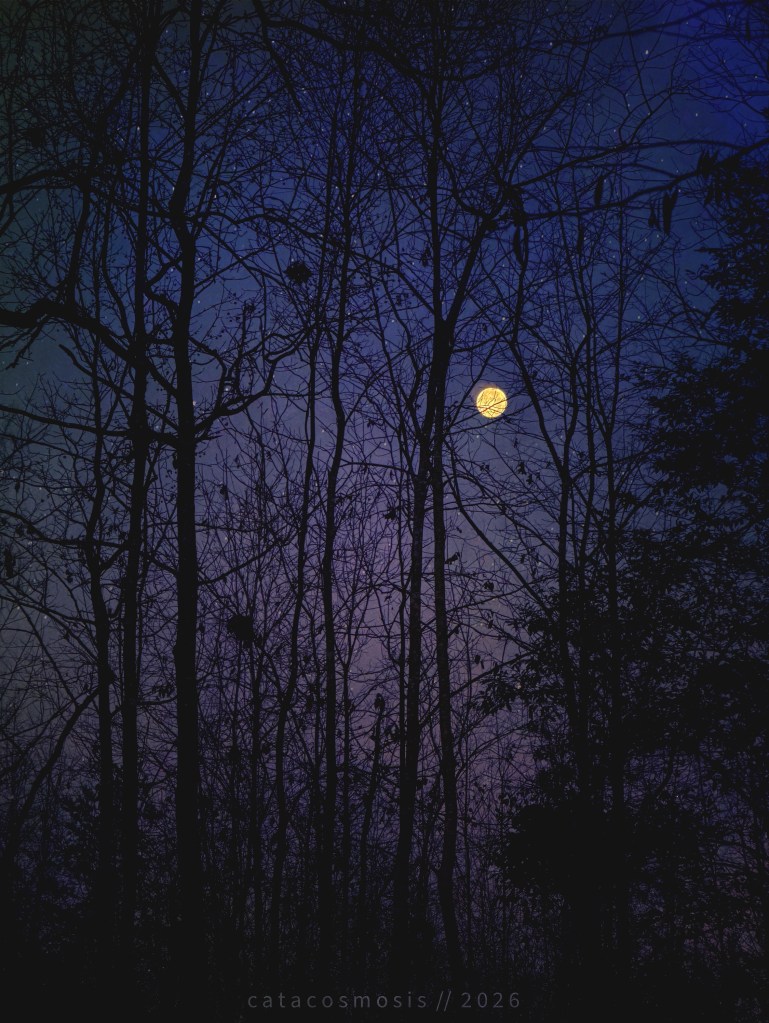
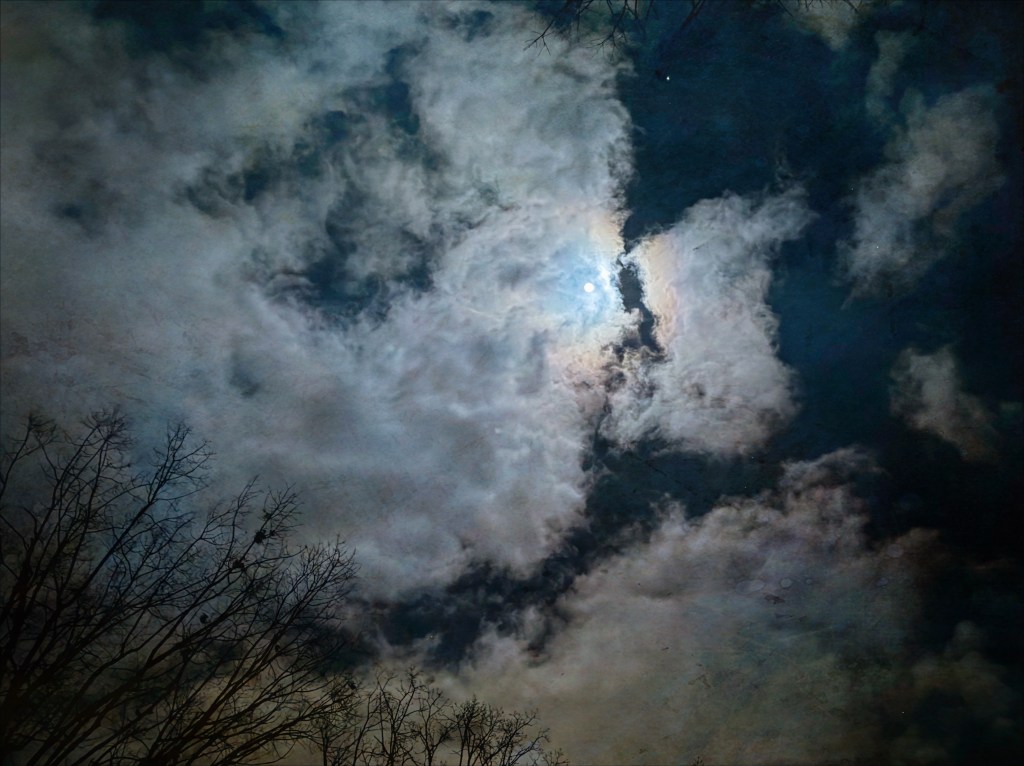
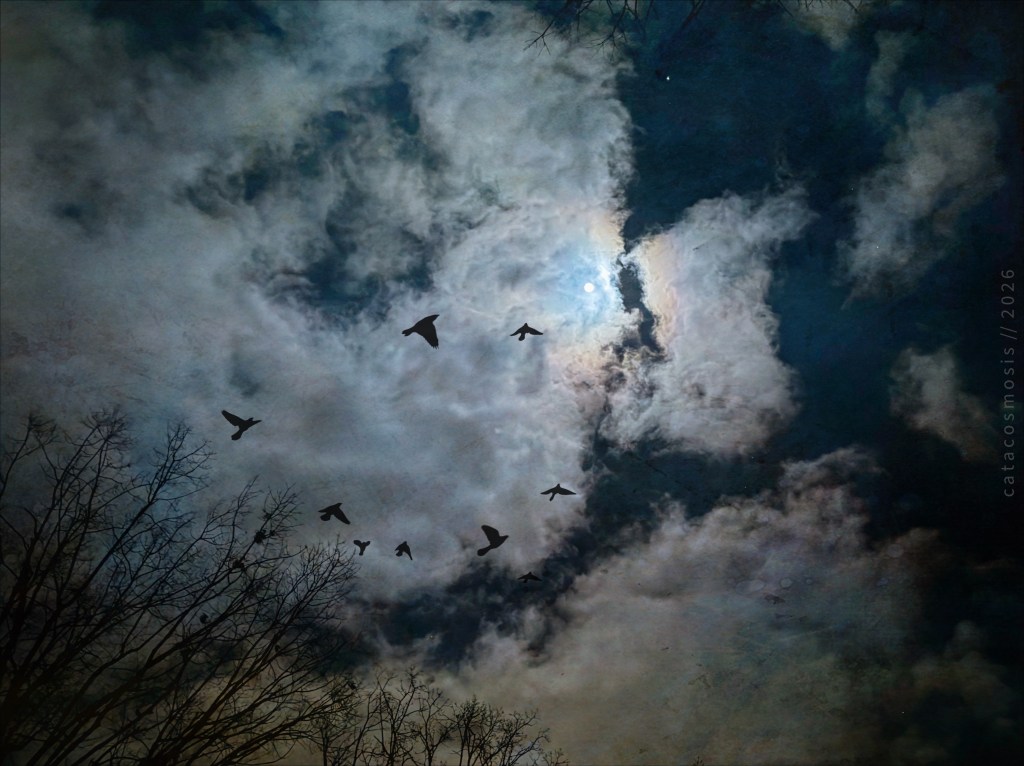
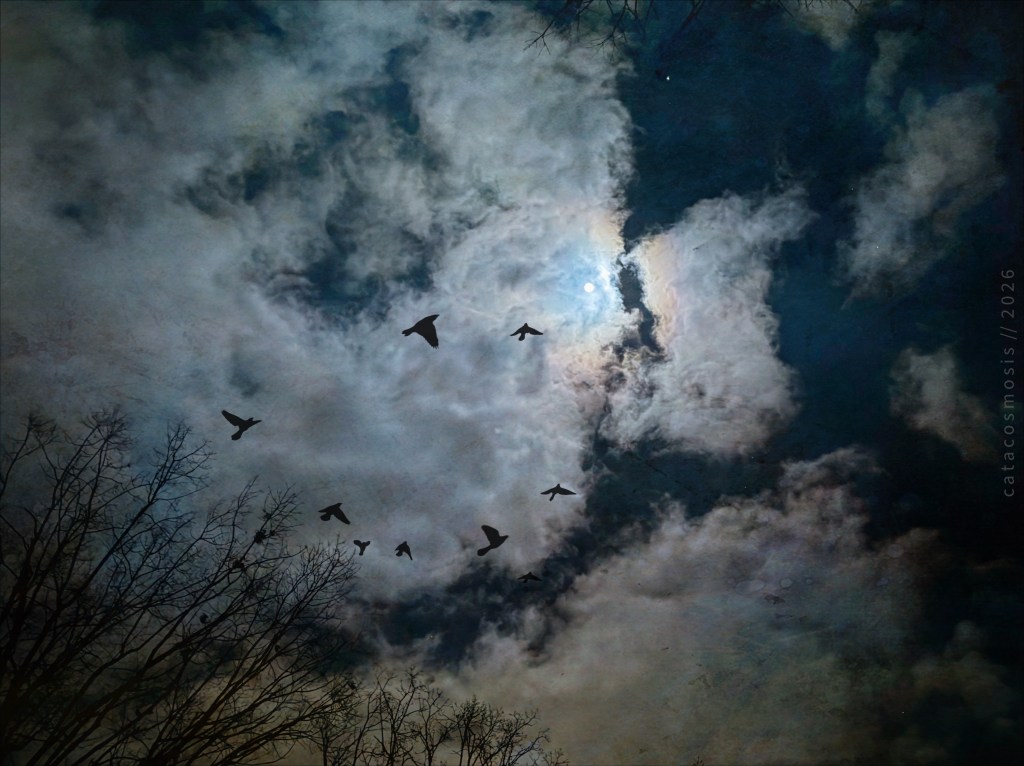
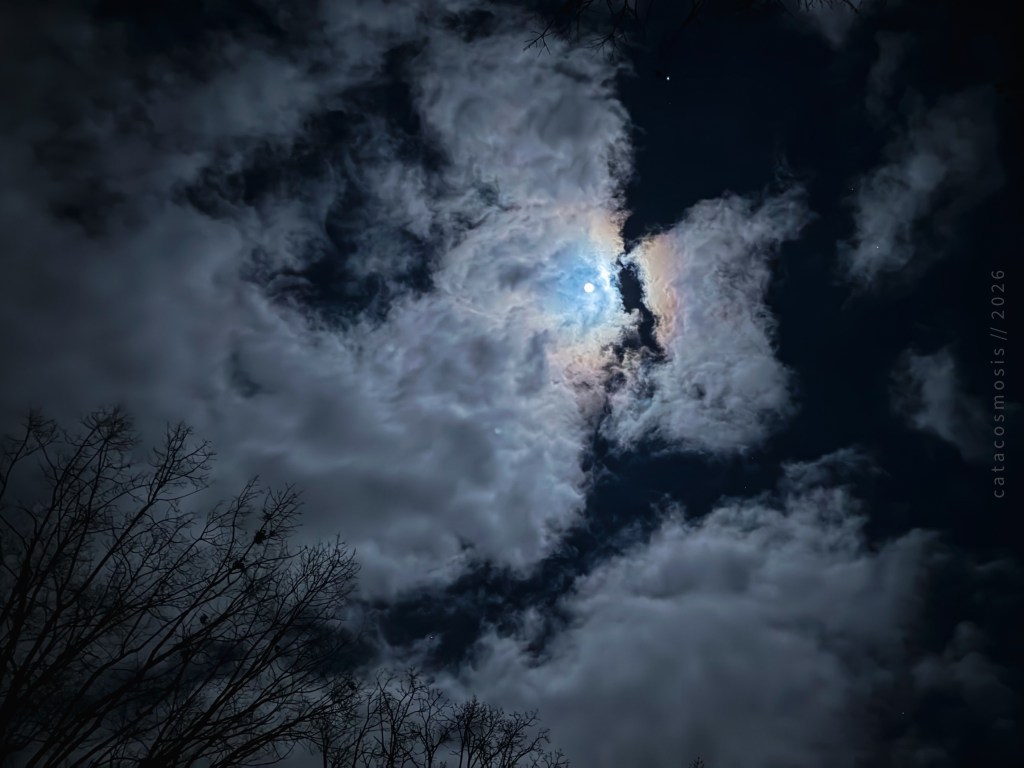
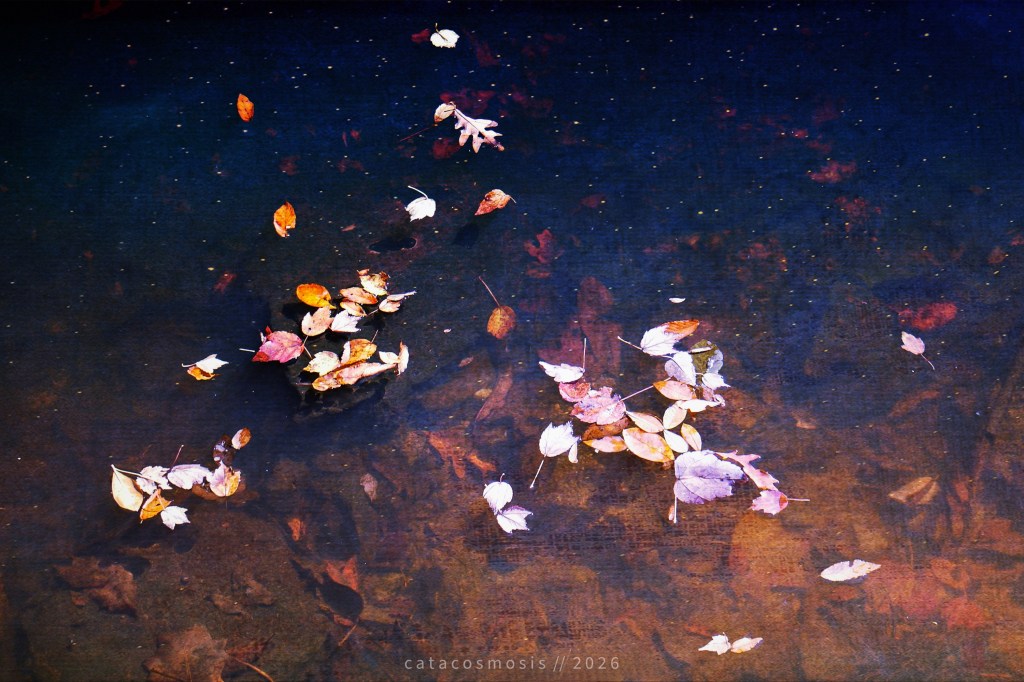
entry twenty four — scattered light, fractured grace: a quiet archive of light, loss, and what remains.
iPhone 17 Pro + Reeflex Camera
iPhone 17 Pro + Reeflex Camera
iPhone 17 Pro + Reeflex Camera
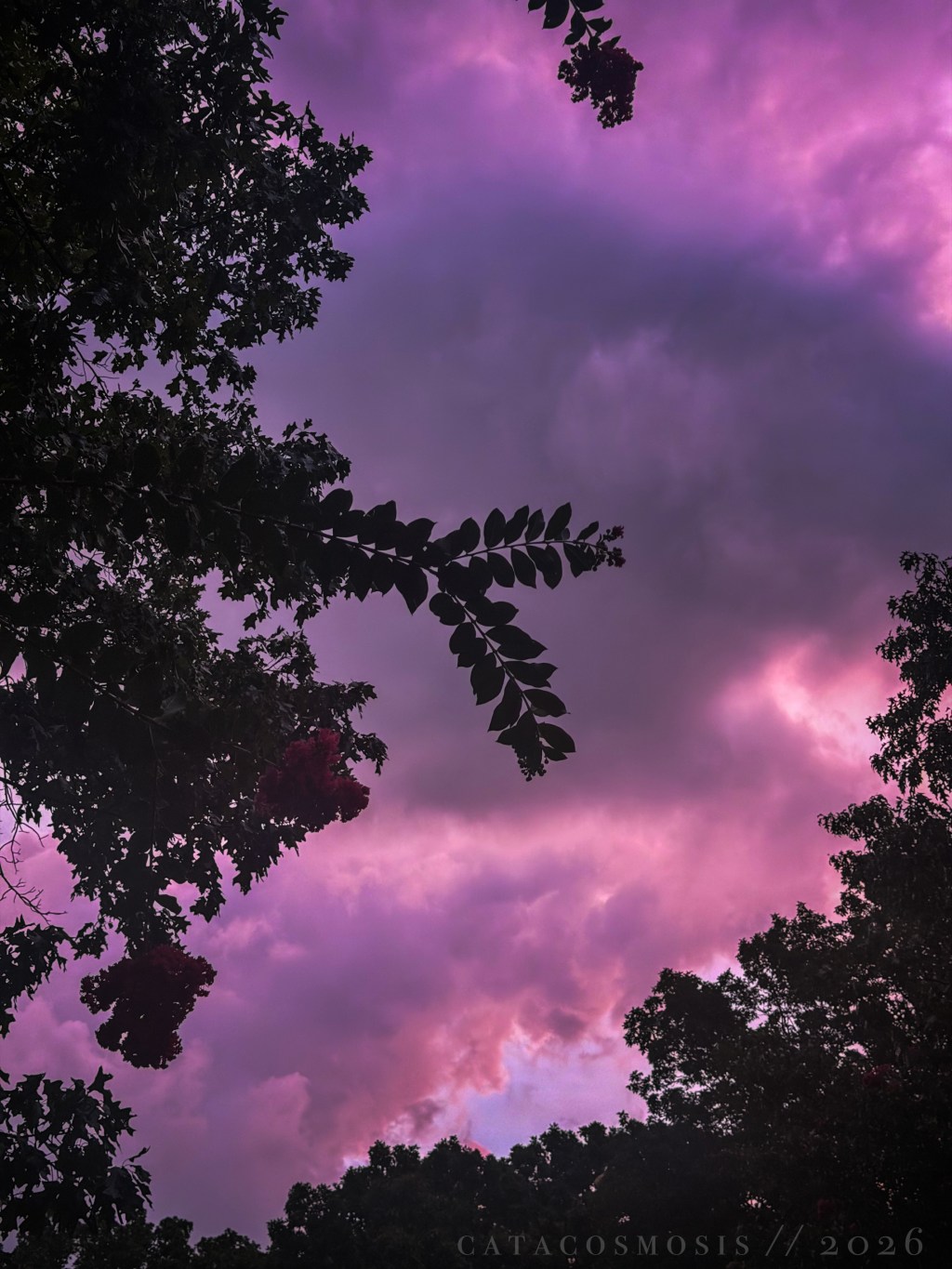
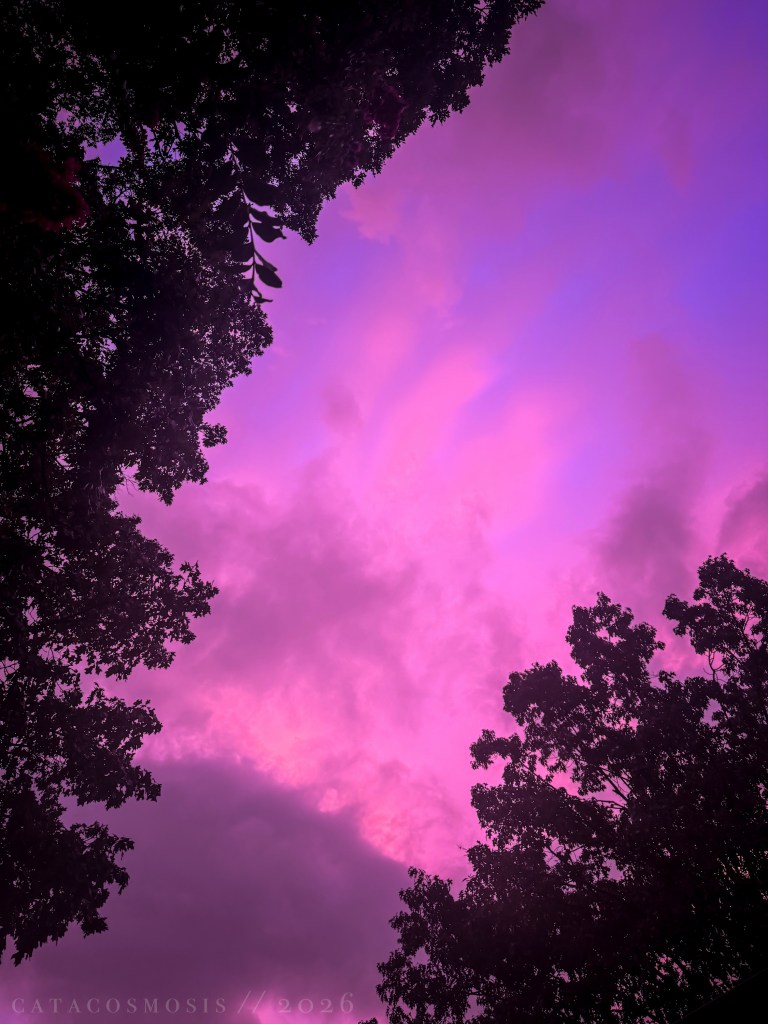
Aculeus in Caput Mortuum
one breath the sky was fire; the next, the dark leaned in. branches held the violet open, then closed around it, like hands remembering how to hide. thank you, Spirit, for the sudden pink and the holy purple— even though both refused to stay. thank you, even for the shadows that always find their way back, despite the sunshine of a beautiful day, even when they don’t ask permission to come, or to leave.
c.//2026
“scattered light, fractured grace” is a photography series from my art journaling journey about how light doesn’t always fall straight. Sometimes it fractures through memory, grief, and grace—and what was broken still glimmers. It is a collection of soft reckonings. Fragments, unfiltered, and written in the in-between.
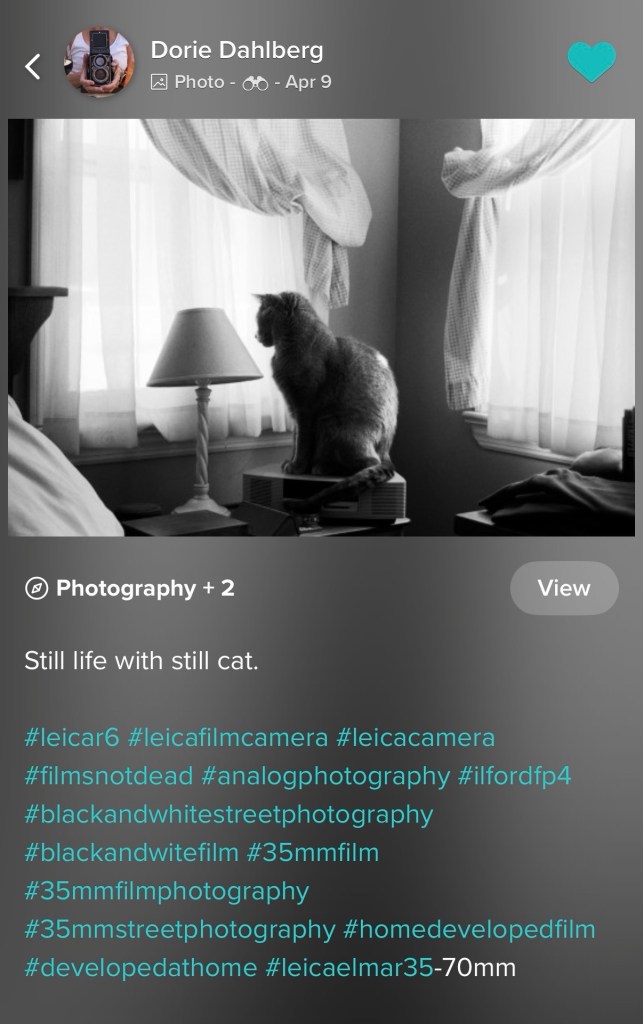
@dorie_dahlberg’s (via Vero) gorgeous captures have inspired me to put more conscious effort into capturing everyday moments in my own life again.
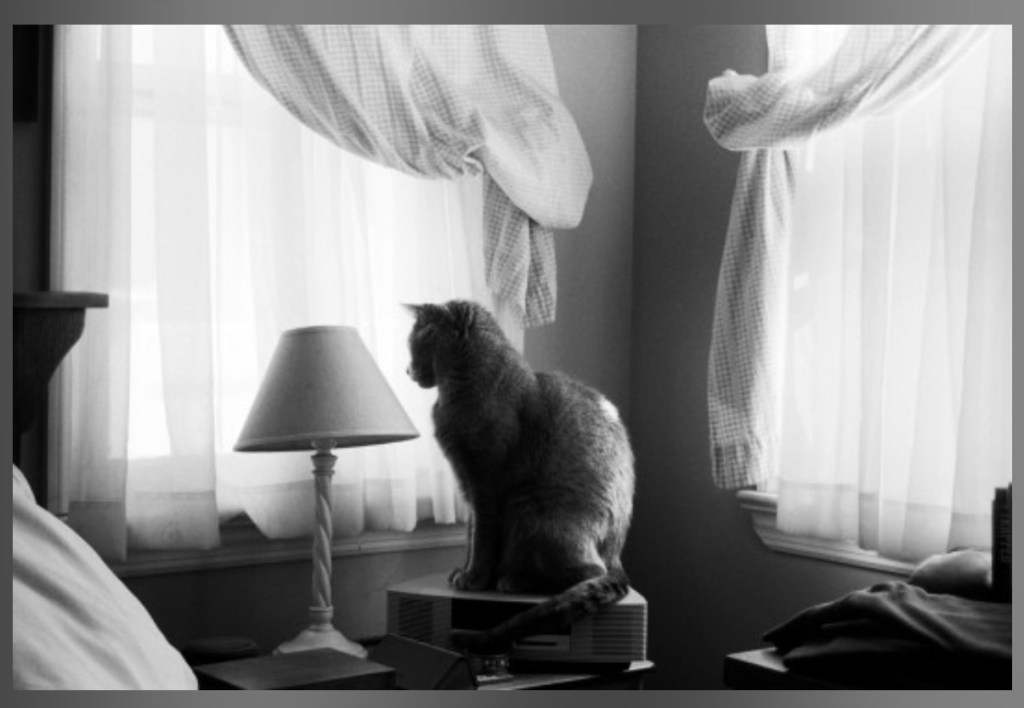
Screen capture of one of my favorite of Dorie Dahlberg’s beautiful 35mm shots…
A funny thing: one of the people I helped to care for and walk through the death and dying journey with was my best friend of more than two decades, Dorie. I clicked on this image before noticing the name, but when I did look up to see it I couldn’t help but chuckle.
Maybe my Dorie led me to this Dorie, knowing I’d find inspiration. I like to believe so. She was always very good at seeing when I needed a nudge of inspiration, and bringing hers to the rescue.
Browsing through Dorie Dahlberg’s work at Vero, I found myself nostalgic for these last few years – years that grief has swallowed silently and invisibly, for the most part. I’ve used my creative work and writing as an outlet and means of exploring these experiences, especially in the heaviest moments, but it’s always been more curated than candid; more “have an idea and create it” than “let the work come out of nowhere, in a random moment.”
I used to really enjoy that type of work. As I sat with the feelings this fantastic photographer’s work churned up in me, I don’t know if I realized how lazy I’ve been with my creativity lately, or just that I miss it. Maybe both…
With age, with my own health concerns now, I sometimes wonder if it’s later than I think. Not too late, but… can I keep up? Can I set a goal, at least mentally, and keep it? Or will I bog myself down with the weight of my own expectations… and anxieties?
Am I finally willing to pay attention to the moments that matter, and put more effort into them, instead of letting them float by unacknowledged, again?
I think so…
I hope so.
As long as I am still breathing, I still have time – and it’s only wasted if I pretend I don’t.
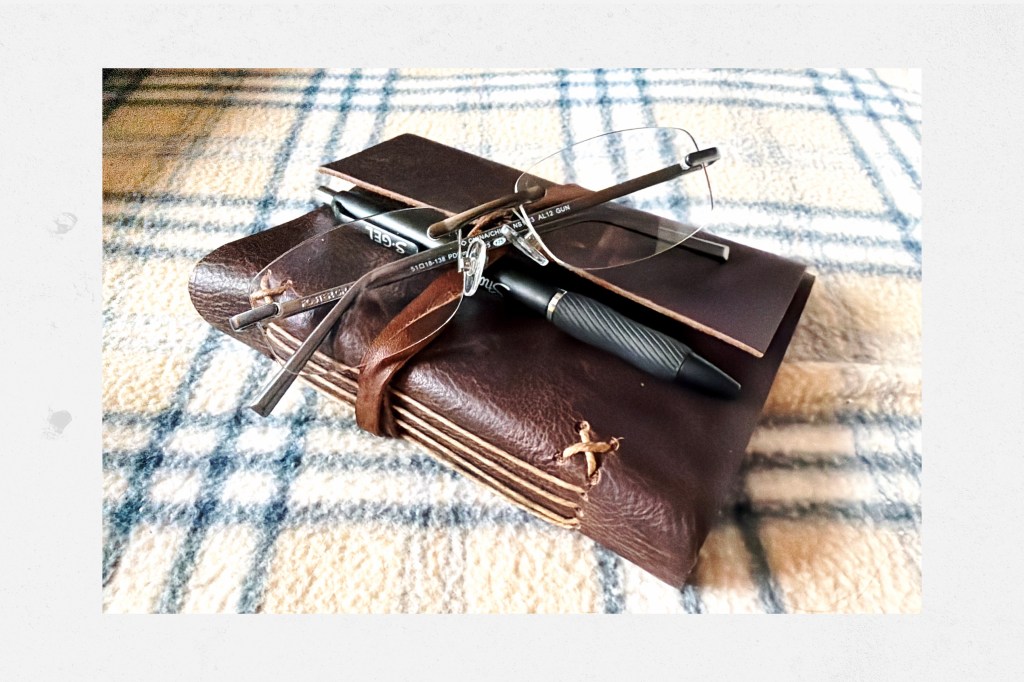
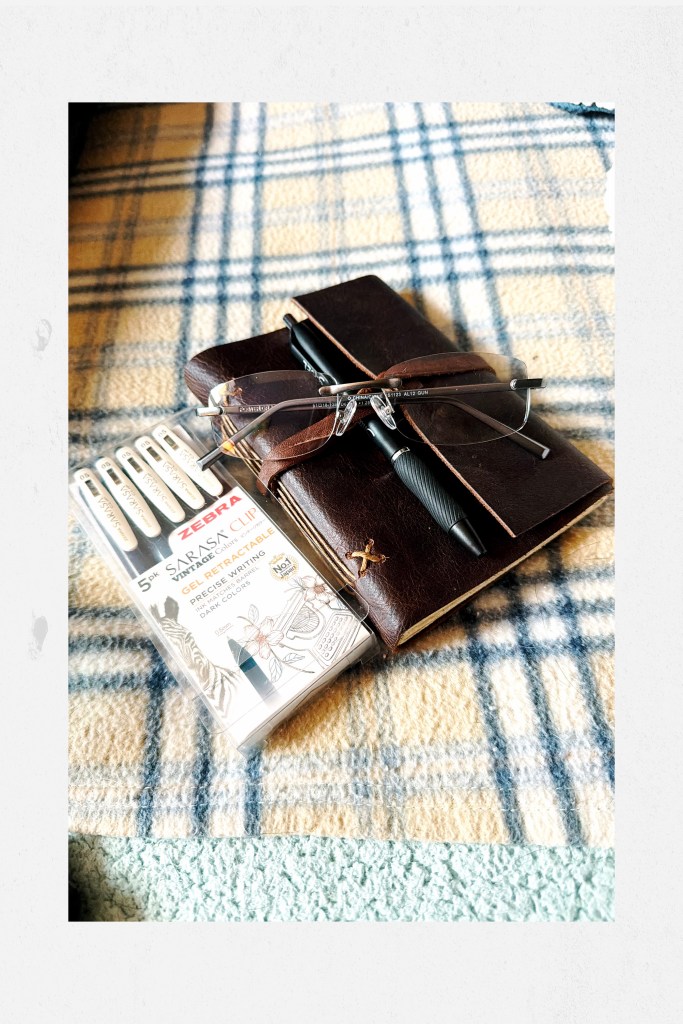
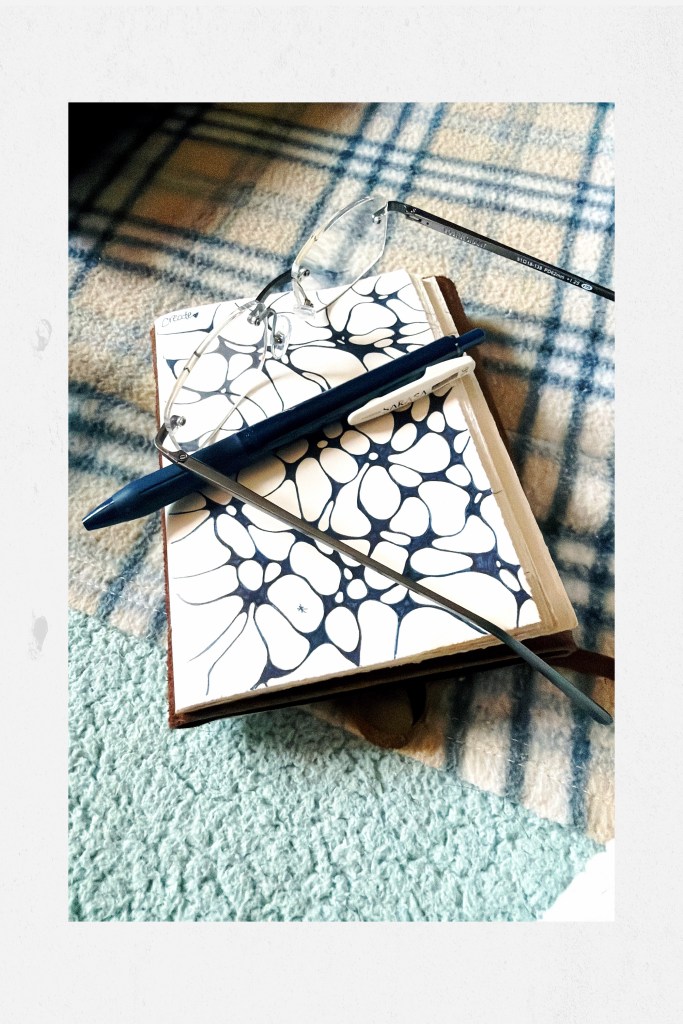
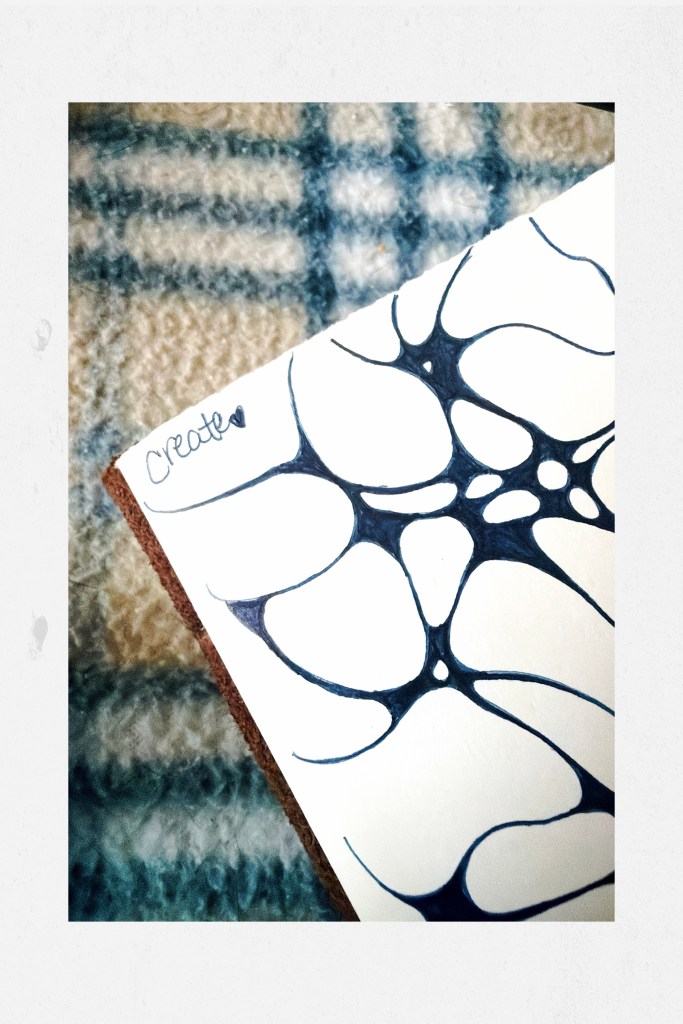
Rediscovering an old, forgotten treasure – barely touched, but quietly waiting – is a comforting gift as I learn to wait patiently for my body to heal and be ready to move back into the studio.
iPhone 17 Pro + Hipstamatic X
This morning I sat with that truth for a long, still moment. As the steady ticking of the clock kept gentle cadence with the rising sun, something settled over me like grace instead of regret:
I have always loved and collected journals and sketchbooks. I own many, yet only a few are filled and several remain untouched – so many sitting in limbo for years, held back by the fear driven fallacy of “messing them up.”
iPhone 17 Pro + Hipstamatic X
With age, I am gently defeating that lie. Life is brief, tomorrow is never promised, and no act of creativity is ever wasted – even when the product of the process doesn’t match the vision that first called it forth.
Now, as I grow older and look back on the many years gone by, I feel far more sorrow for all the moments I never recorded than I ever felt for any imperfect line, any handwriting that wasn’t lovely enough, or any watercolor that fell short of my imagination or my dreams.
iPhone 17 Pro + Hipstamatic X
Moments, art supplies, and blank pages are only wasted when we aren’t present with them… when we overlook and leave them blank for fear of messing them up.
The only thing that messes anything up is letting fear, doubt or insecurity drive us in the first place.
Tonight I wrote a prose/journal piece for AllPoetry.com, and I couldn’t help sharing it here. Some pieces are just… well, you want to save them in your little treasure shoebox. I suppose, in many ways, that’s what this space has become for me. My treasure shoebox, like the ones we had when we were kids. And that’s where this post begins, so that’s a more fitting analogy than it may seem.
I’ve been writing a lot of poetry again lately. I don’t know what brought that back into such an intense level of focus; nothing in particular, except maybe the health and heart scares of late. Moments like that at any age tend to send us on a reminiscent journey, don’t they… those introspective moments in life where everything matters, and we simultaneously realize that very little of what we have for years focused on or worried about actually does. It’s distinguishing what does, I suppose, that brought the poetry back to life. The poetry, as much as the prose, has always mattered deeply to me.
There is something about a Southern summer night that gets into you young. The air sits heavy and close, warm even after the sun goes down, and the woods at the edge of the yard breathe with it. I was a child who noticed things — the way light changed before a storm, the sound leaves made when no wind had been announced. And, in those summers, every evening brought the fireflies.
They came at dusk. First one or two like punctuation, then more, and then all at once they were everywhere, blinking out of the dark in their hundreds, their thousands. Legion, though I did not think of it that way then. That word belonged to something else entirely. It had been pressed into me through scripture and sermon as a name for the unclean, for the swarming darkness that could take up residence in a person and multiply. Legion, said the demon, for we are many.
So the fireflies blinked their quiet light, and somewhere underneath the beauty was a word I had been given to be afraid of.
Then I found Alan Watts. Or, rather, was introduced…
I was twenty-three, in graduate school, teaching computer classes at a community college for a department head called Ralph who had bent the rules a little to bring me in. He had seen something in me before I had fully seen it in myself. That is the particular gift of certain people; they hold the mirror at just the right angle.
One day he handed me a book. Alan Watts. “The Book: On the Taboo Against Knowing Who You Are.” He did not make a ceremony of it. He gave it the way people give things when they know exactly what they are doing — quietly, like it was obvious.
It was not obvious to me yet. But I took it home, and I read it. I had to read it multiple times to finally grasp the method to Watts’ madness, and by the third time something that had been holding its breath inside me for twenty-three years slowly let it out.
Watts did not ask me to abandon what I believed. He asked me to look at it more honestly. To ask who had handed me my fear alongside my faith, and whether those two things were always meant to arrive together. He wrote about the universe not as a collection of separate objects but as one enormous, continuous flowering, and he moved between the language of science and the language of spirit without apology or explanation.
And I thought of the fireflies.
Legion, but not demons. Never demons. Just light, doing what light does in the dark.
Ralph is gone now, and in a strange twist of fate, or perhaps the perfect design of it, it was our home in which he hospiced and passed on. But that book remains, and so does everything it opened.
I had known much of Watts’ philosophy before I knew Watts, subconsciously, without knowing I knew anything at all… in the wordless way children know things before language has a chance to organize them into beliefs.
There were nights, and to child-me they all feel like midnight, the grown world asleep and the dark belonging entirely to you, when I would slip outside and sit in the yard while the fireflies did their quiet work around me. I did not have a name for what I was doing. I only knew that something in me needed the dark and the stillness and the small lights blinking in and out like thoughts I hadn’t found words for yet.
Sometimes I brought a notebook. Sometimes I just sat and let whatever was moving in me move, uninterrupted. The night felt alive in a way the daytime didn’t. More honest, somehow. Less performed. In the day you were somebody’s daughter, somebody’s student, somebody being watched and measured. In the dark you were just yourself, with the fireflies and the heavy Southern air and whatever God was doing in the quiet.
I did not know then that I was doing what writers do. I only knew it felt necessary.
Watts wrote often about the muse, about inspiration not as something you summon but as something that arrives when you stop trying to control the room. The midnight hour, literal or felt, is when the ego gets tired and steps aside. And in that stepping aside, something true gets through.
Tonight as I write this, it is close to midnight. Not child-midnight, not the felt sense of it, but the real thing, with the clock to prove it. I am not outside. I am in my bed, with my laptop, no fireflies in sight. The dark beyond the window is just dark. But something in me is exactly where it was in that Alabama yard decades ago, sitting with what needed to come through, waiting without quite waiting.
Earlier tonight I was tired and closing down, the way you get when the world has been louder than usual and something in you needs quiet it cannot seem to find. I was ready to disappear into sleep. And then something arrived. It always arrives this way, not when I go looking for it but when I have exhausted myself enough to stop.
A poem I had written about Alan Watts. A fellow poet’s encouragement to go deeper. A thread pulling me back to those childhood summers, to Ralph, to The Book, to the child in the yard who already knew.
Watts would not be surprised. He might laugh a little, warmly, in that way he had. He would say the muse was never yours to command, only to receive. That the midnight hour is generous precisely because you have stopped performing for the daylight.
Ralph knew this too. He saw it in me before I could name it. He handed me a book and said, in his quiet way, “you already know this. Go read it anyway.” I did. I am still reading.
I am still stepping outside into the dark, in whatever form the dark takes now. And the lights are still there, fewer perhaps, but holier for it. Now that is a piece of my freedom.
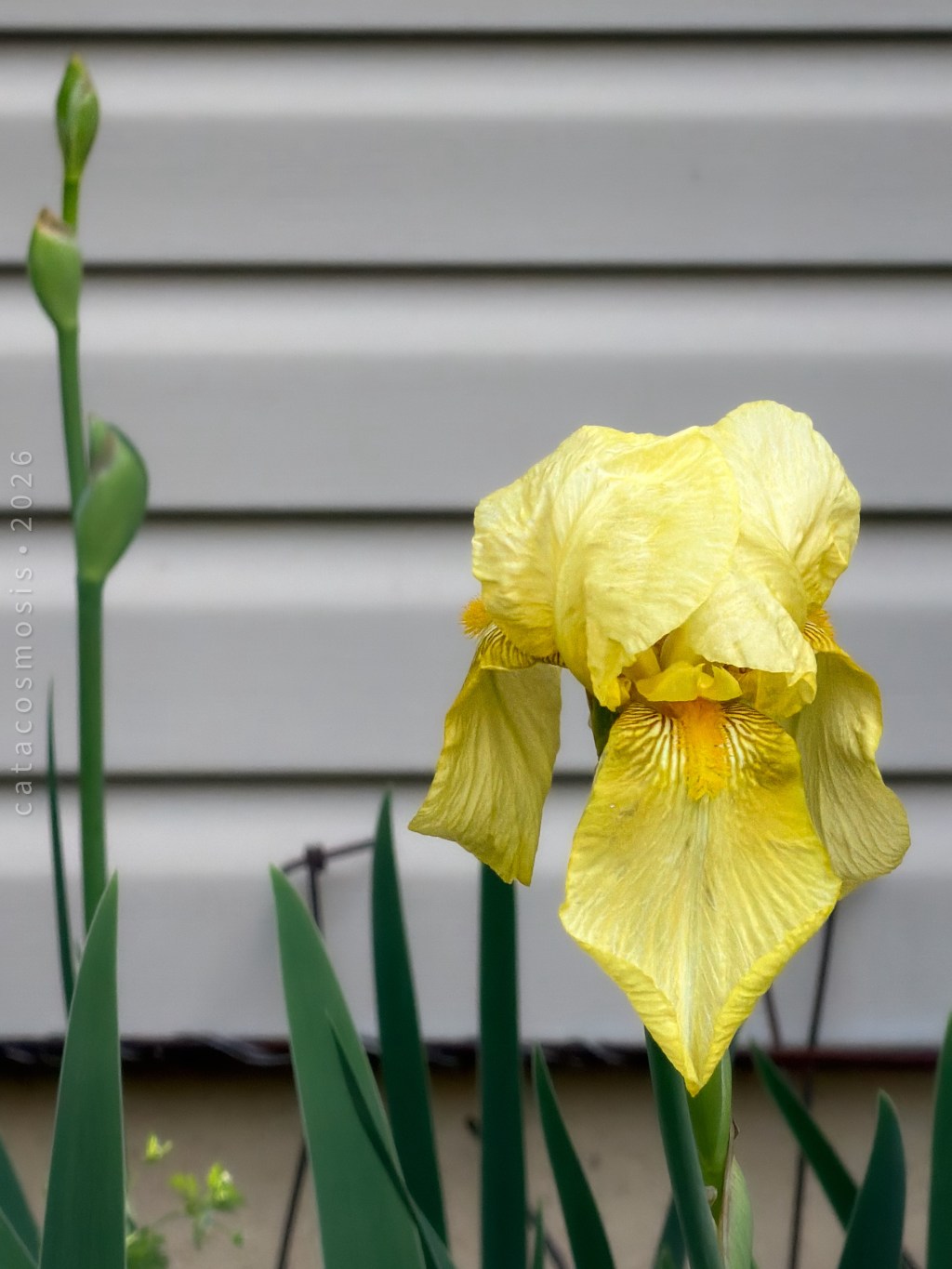
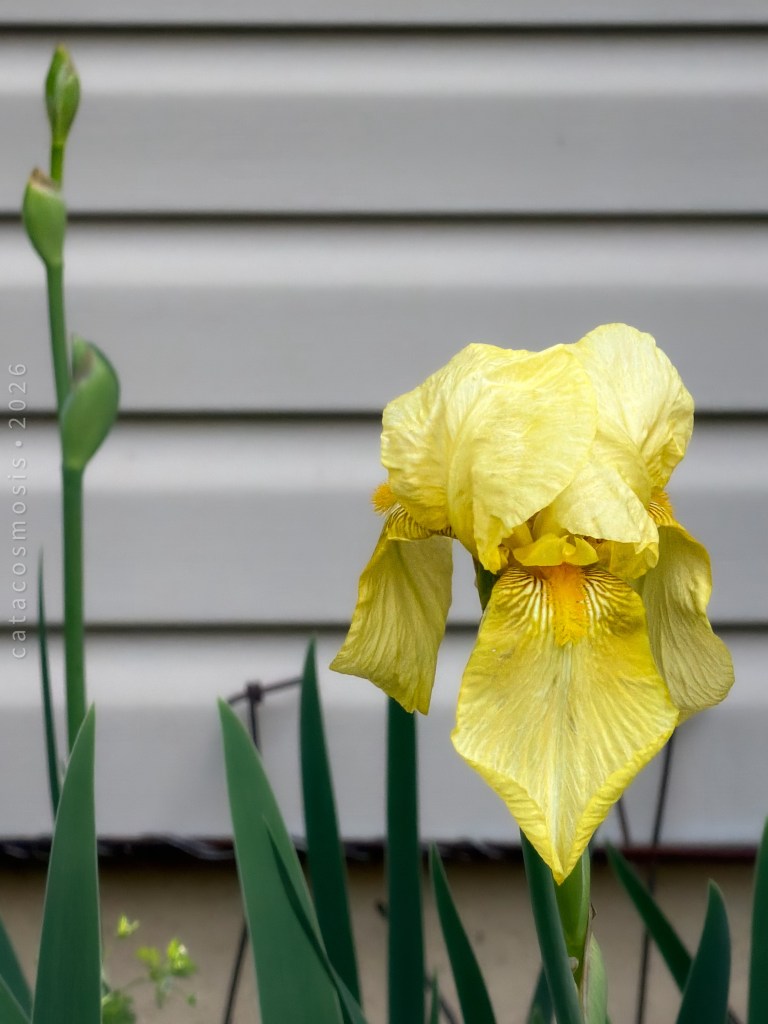
In an unassuming corner of the yard, this yellow iris has unfurled like a quiet epiphany. What was once a tightly wound promise, rhizome buried deep through winter’s long hush, now opens fully to the light. Its ruffled petals now catch the sun with an almost reckless joy. The veins of deep gold trace a map of quiet persistence, while the orange heart glows like an inner fire that refused to go out.
Beside it, younger buds wait in patient green, still curled in their own contemplative silence. They teach their own lesson: not everything must bloom at once. Some wisdom arrives early; some lingers in the stalk, trusting the season will call when it is ready.
There is something profoundly philosophical in this annual resurrection. The iris does not bloom for applause or permanence. It blooms because that is its nature, with its brief, brilliant way of saying yes to existence, and it does so right here, against the ordinary creamy beige siding of daily life, proving that the sacred never waits for perfect conditions. It simply returns, year after year, not asking permission or requiring validation, reminding us that we too carry rhizomes of possibility beneath the surface of our ordinary days.
Seasons of dormancy give way to moments of vivid becoming, if only we pause long enough to witness it. Perhaps every ordinary moment holds the potential for a quiet epiphany. The question is whether we slow down enough to notice.
He has made everything beautiful in its time. He has also set eternity in the human heart; yet no one can fathom what God has done from beginning to end. (Ecclesiastes 3:11)
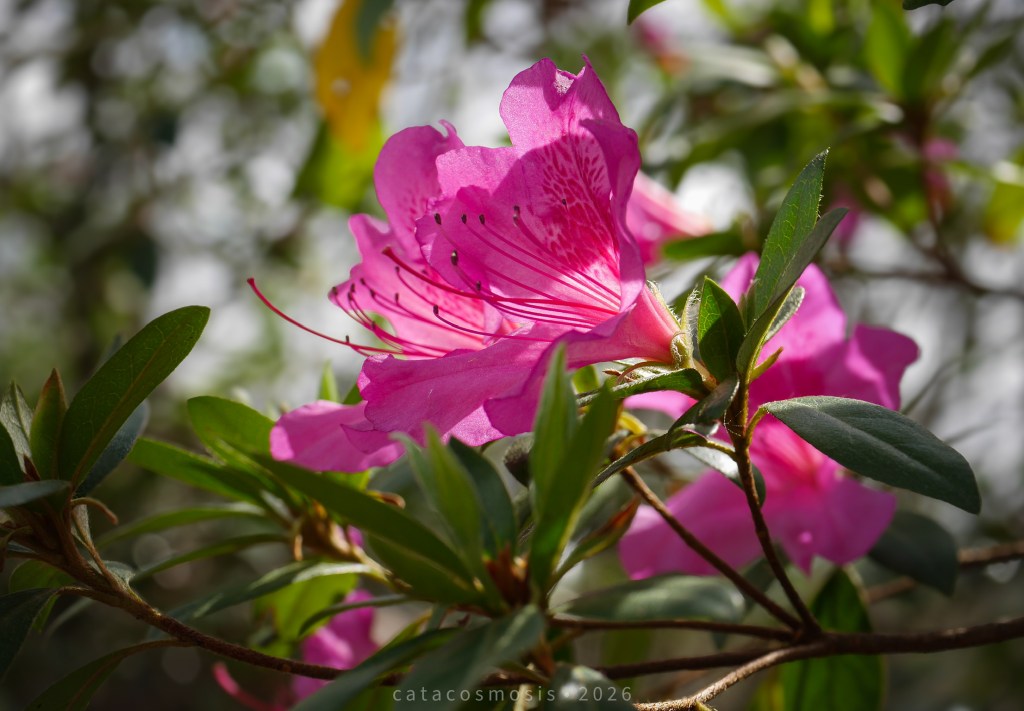
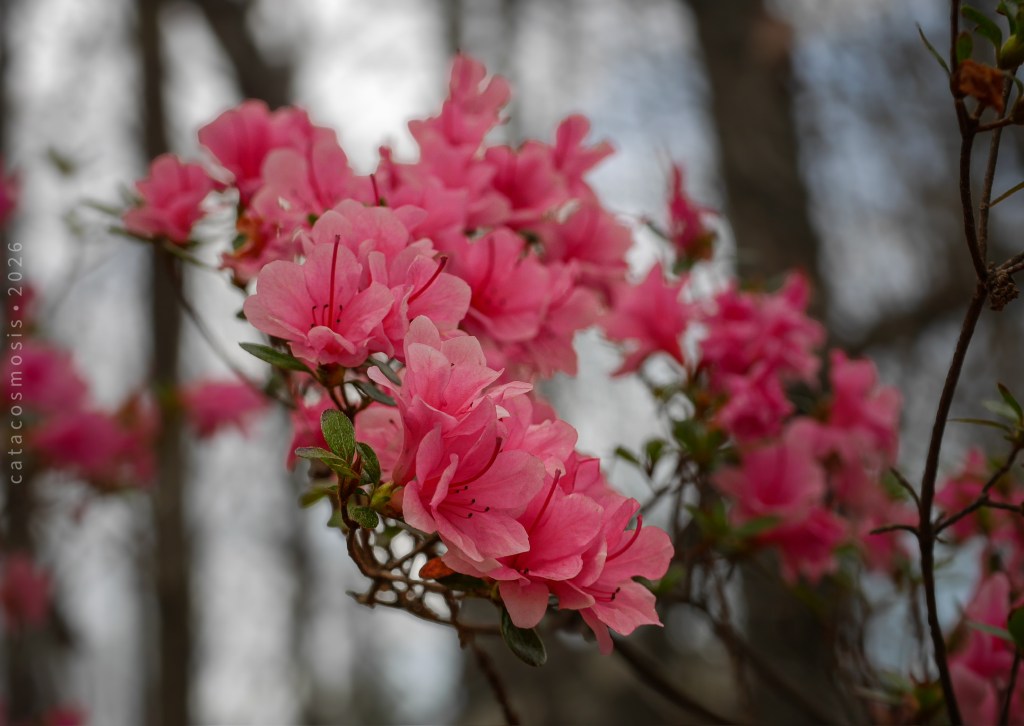
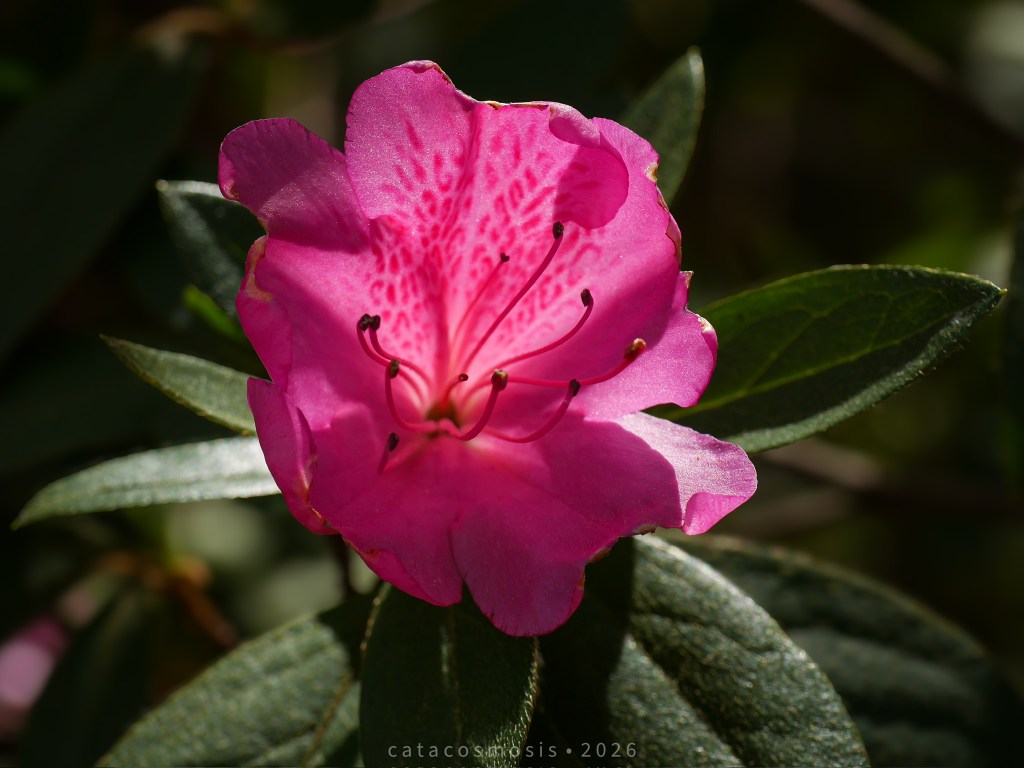
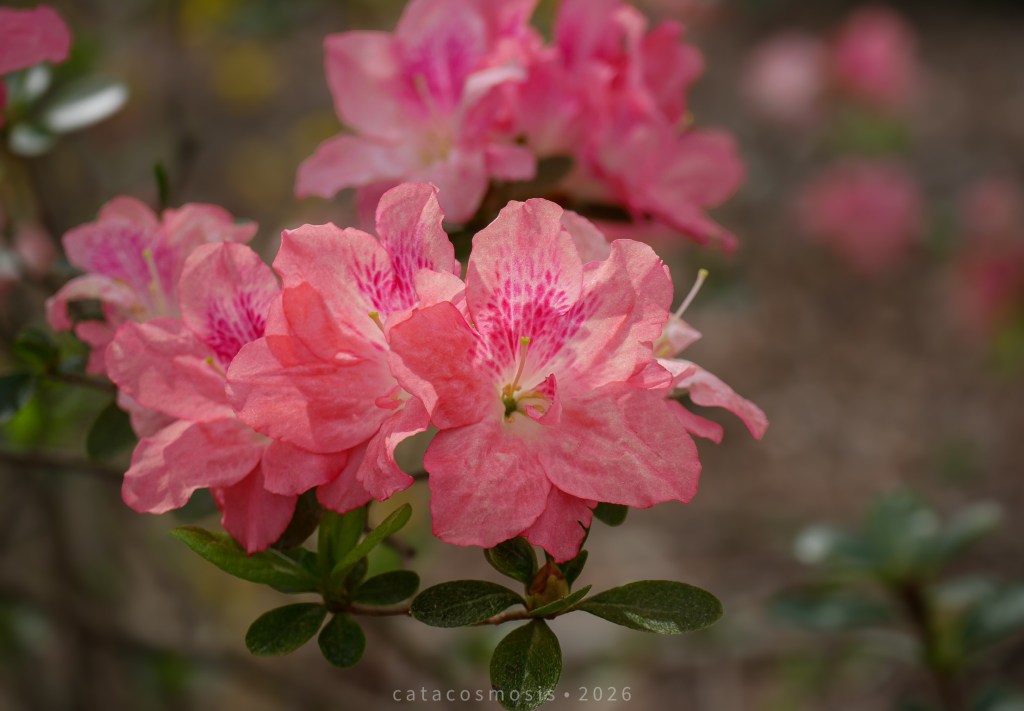
Tucked into the quiet corners of my yard and spilling along the back fence — where wild grass gives way to the shadowed woods and, beyond them, the familiar silhouette of my mountain — the azaleas have erupted this spring in an almost audible riot of pink, purple, and white.
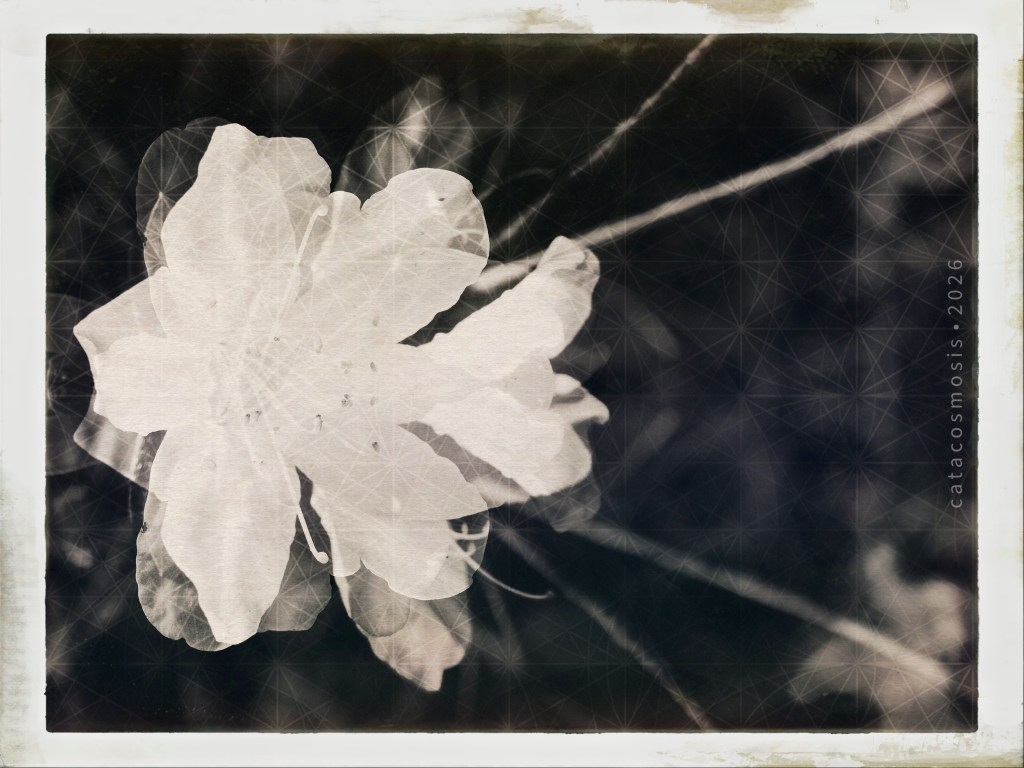
Two bushes a deeper rose at the edges, softening to a pink like the first blush of dawn on cotton-candy clouds; the purple one as deep as twilight shadows pooling in the underbrush, veined with richer amethyst; the handful of white ones pure and luminous, like scattered moonlight caught on petals. On several of them, the blooms crowd the branches so thickly that the dark green leaves vanish beneath waves of color, the bushes a generous bouquet bowed gently under its own abundance.
I stand at the fence line with my camera, breathing in the faint, sweet honey of their fragrance carried on the breeze, and it pulls me straight back to childhood. Growing up in the valley just across from my current, adult home, right at the base of that mountain, I’d watch for the wild azaleas and mountain laurel to appear along the wood’s edge, tiny beacons at the pasture’s far side. Each warming degree and every minute longer the day became — yes, I counted the minutes — felt like permission: one more day to explore before the snakes woke fully from their winter sleep.
With each passing day I’d step more carefully, heart racing with equal parts thrill and caution — head on a swivel, eyes scanning for copperheads or rattlers coiled just out of sight. The early days of spring were my favorite. They were the most relaxed. But the flowers made even the hot summer days worth the risk, with the promise of wild bursts of color rivaling my grandmother’s carefully tended, cultivated bushes next door, proof that beauty could thrive untamed.
Funny the things we fear and the things we don’t. Bobcats and mountain lions hunted those slopes, yet I never once worried about them — until the story my father told years later. At three years old, toddling the forty yard path to Grandmother’s a couple of hours after nightfall, my father watching and guarding intently — something I’d, we’d, done dozens of times before without consequence — a mountain lion perched on the cellar roof five feet above me, eyes fixed, body still. Daddy watched it watch me, praying silently, knowing any sudden move or cry might trigger instinct. It never pounced. I reached the house safe, unaware. When I was safely inside my grandmother’s screened-in back porch, he scared it off with a shotgun blast into the air, and we never saw one that close again.
I’ve thought about that story more often since losing him. He’s been gone eleven years now, and there are many things I never thought to ask, or wish I hadn’t been afraid to ask, while I still could… but this one he told me himself, more than once. I think it meant something to him that I should know it.
What I understand now, standing on this side of parenthood, is the cost of that stillness. The discipline of it. To watch a predator watch your child and not move, not cry out, not run — to trust that motion or sound might break whatever fragile restraint was holding that animal in place, and be so steady and rooted in your faith that you pray. Just… confidently pray. Whatever else he did or didn’t get right in his life, in that moment my father was made entirely of love and terror and faith, and none of it showed on the outside. That kind of stillness cost him everything. It was paid for in utter surrender, and he surrendered to fate, and to faith, beautifully.
📷 iPhone 17 Pro ⚒️ Hipstamatic X (Salvador 64 Lens + Uchitel 20 Film + Spiro Pop Flash
I think about that when I think about my own son. Sixteen, navigating a world that doesn’t always make room for the way his mind works, walking through invisible dangers I can’t always name or intercept. And I understand something about the helplessness of parenthood now that I couldn’t have grasped as that oblivious three-year-old toddling through grace.
You can’t always throw yourself between your child and what’s coming. Sometimes the most faithful thing is to stand still, breathe, and trust the hand that’s bigger than yours.
These azaleas have had quieter seasons. A few years back they were sparse, almost reluctant, with a handful of blooms where there should have been abundance. I watched them without much comment, the way you watch things when your own life has gone quiet in ways that don’t invite easy conversation.
Loss has a way of muting everything: the yard, the mornings, the impulse to pick up a camera at all. Grief and illness and the particular exhaustion that comes from giving what you have left to people you love… all of it settles like a kind of winter that has nothing to do with temperature. I’ve had a few of those winters. Longer than I’d like to admit.
So this spring, when every single bush along the fence erupted like they were making up for lost time, I stood there and felt something catch in my chest. That’s part of why I photograph at all — not just to capture beauty, but to bear witness to it. To say, with the deliberate act of framing a shot, I see this. This is real. This happened. The camera makes me slow down enough to actually look, and looking is a form of gratitude I can access even when words fail me.
As a child, maybe I sensed some invisible shield, or maybe I was just young enough to believe in magic. As an adult, looking at these cultivated echoes of those wild blooms now thriving in my own yard, I know the truth: protection was there all along. Not arrogance, but grace.
God’s hand has turned aside far greater dangers than I ever knew were there. The mountain lion I never saw, the losses I somehow survived, the moments where the math shouldn’t have worked out in my favor and it did anyway. These azaleas, blooming so fully this year after quieter seasons, feel like a quiet reminder of that mercy, a gift unfolding right where the tame meets the wild, the past meets the present, under the watchful gaze of my mountain.
I don’t take that lightly. I don’t take it for granted. I take photographs of it, and I tell the stories that go with them, because that’s how I know to say thank you.
Mere backyard glory doesn’t begin to cover it. It’s memory, wonder, and gratitude all tangled in petals.
I wrote that on January 8 when I shared this edit of an iPhone shot I captured in my back yard to Vero and VSCO, and then just… moved right past sharing the image or the words here. I’ve been becoming.
I’ve been lost in introspection, peeling back layers, observing, feeling it out, integrating it – all of this over and over in this time non-adjacent, beautiful cycle of infinity, that I kind of forgot… most everything lately. I used to think it was just the caregiving and/or the surgical menopause. I thought for a short time, when I surrendered the last earthly thing I had left that had for so long been the treasure of my heart, that I’d finally just overloaded and lost my mind.
In reality, ultimate surrender to God, truly following where He leads, had removed and continues to remove me from everything, and evolved me into this extremely quiet girl who just stands under the sky and lets it undo her. Not just in posting, but at every level, including who I remember myself to be.
Coming to Christ – not just saying the words but the evolution itself – hasn’t just been “I believe.” I have believed since I was a child. It hasn’t just been, “I accept, I surrender, I heal, God changes my heart and I change my habits.” It’s been this slow, surgical unmaking down in the deepest parts, and I’ve been metamorphosing through it since the night Ralph died.
It’s been soaking in depths even I never imagined. And that’s saying something. It’s been being truly alone, except for His presence, and the Holy Spirit’s, and it’s been… excruciatingly, exquisitely beautiful.
It’s not trauma, it’s not grief. It’s not even grief-induced – not wholly. That’s all nonsense, at least in the way the Western world and Western medicine and psychology and new age and new thought belief systems tell it. It’s more real, more spiritual, more invisibly tangible, than all of that ever thought about being. It was just… time.
It’s been about the things I thought I understood, the places where I thought I had to earn worth, the parts of me that were performing the gifts of the spirit – the discernment, the temperance, the hard-earned wisdom, the surrender – that I was so desperate to truly embody. It’s been no longer sharing or trying to grow and evolve that with anyone else. It’s been walking into the desert, embracing solitude instead of simply being in it by circumstance, and just… belonging to Him.
Somewhere in that process, I lost track of a lot of things. A lot of people. Somewhere in the slow, surgical unmaking of solitude, I lost track of almost everything I used to believe was real. I’ve been letting Jesus have the layers, not just the words. Letting Him name me again, in the dark, where nobody’s clapping, where it’s just me and the sky and the God who knows my real name, and actually treasures, doesn’t just hold, my heart.
I’m not sure what this post really is. I’m returning this scrap of sky to this quiet place, in part because I hope it helps someone else, as always… but also because I don’t want the girl who stares up and ultimately surrenders to the peace of solitude and to the Creator Himself to be a footnote in her own story. I don’t want the becoming to swallow the one who simply is. This is me remembering me, and thanking God for the long, slow unmaking that made room for the becoming in the first place.
Even if it meant losing almost everyone I ever loved, I’ve found a love within myself I never could have imagined, and it all comes from and returns to Him.
Catastrophe in osmosis. That’s where catacosmosis began. And the name won’t change, though the person has, because that’s the entire point of that journey.
Tetelestai (ܬܫܠܡ). John 19:30
And yet, for me, it feels like it’s only just begun.
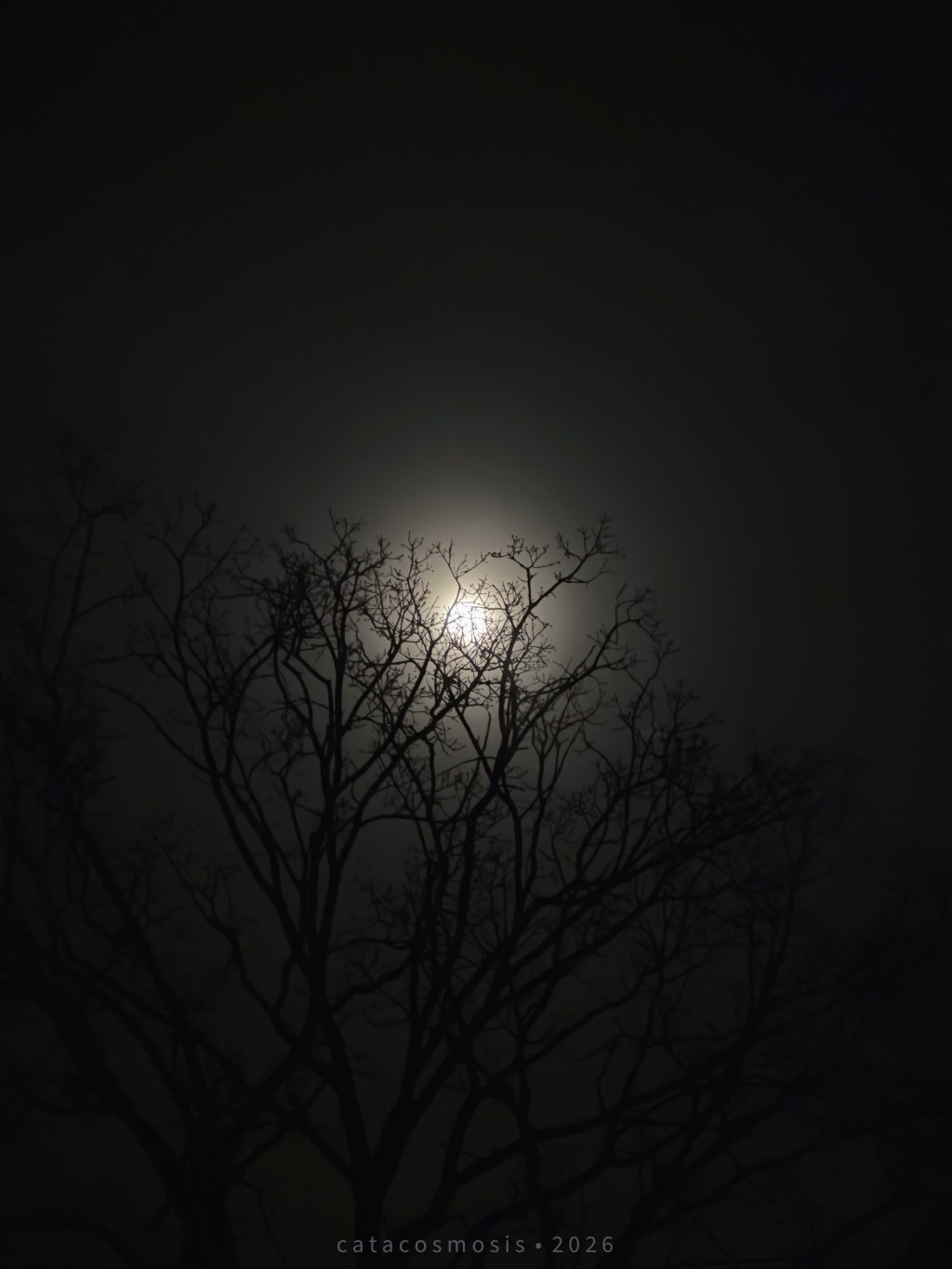
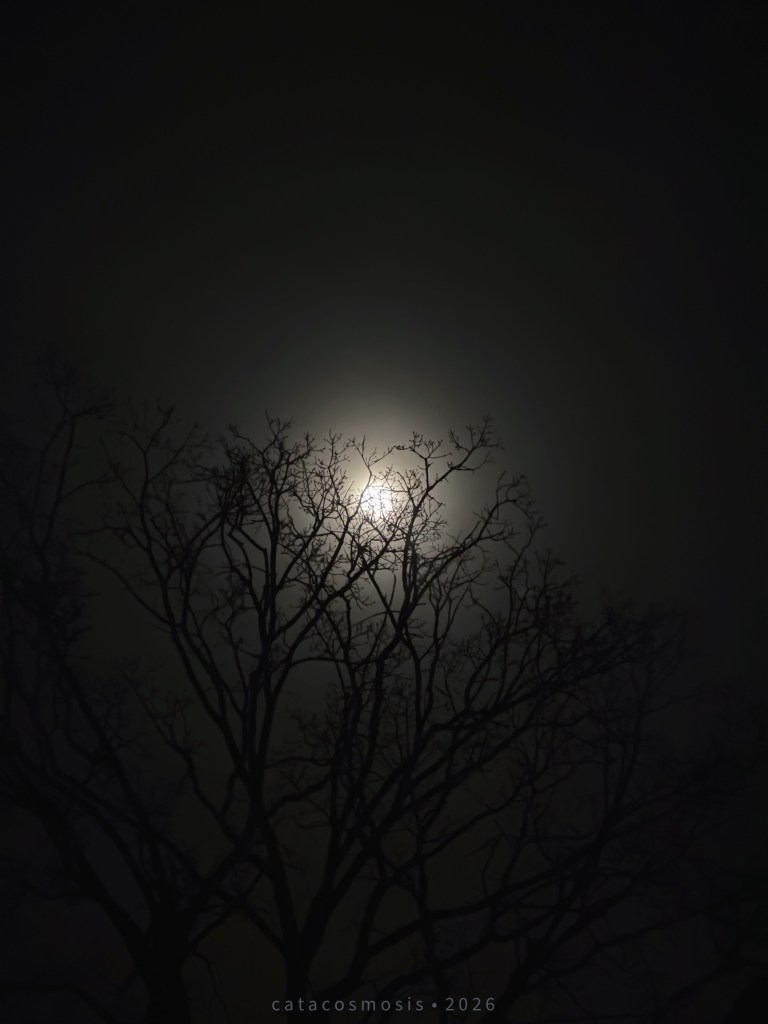
entry twenty three — scattered light, fractured grace: a quiet archive of light, loss, and what remains.
iPhone 17 Pro + VSCO (wb) + Lightroom Mobile (noise, watermark)
The moon is a small, stubborn wound in the dark, haloed and patient. Branches reach like remembered names, skeletal and exact against the hush.
The light slips through their fingers and leaves a trail of familiar ache. Not sharp, not new, just honest and unblinked.
I stand where the tree lives in my knowing, and for a breath the world narrows to that thin halo and the soft geometry of limbs. There is comfort in the way memory and sky overlap, how absence can be a kind of company.
Home again feels less like a place and more like the presence that arrives when light finds the places you thought were empty.
entry twenty two — scattered light, fractured grace: a quiet archive of light, loss, and what remains.
iPhone 17 Pro + DistressedFX (Final Edit)
Sometimes it feels like there is a different, almost literal space between seconds. A pause the world does not announce.
There is intimacy in those spaces. Love. Beauty. A kind of quiet permission.
There is me, and the moon, and what I remember without remembering. Something about home. Something about spirit. Something about soul.
In those spaces, which turn into a place, then into awareness, then into something conscious without warning, I find myself again. Not arriving. Not searching. Just remembering how to be.
It feels like standing in a doorway I have crossed a thousand times but cannot name. Familiar without history. Known without proof.
And always, even when I wish it were not so, there she is too.
There are all of them. The pieces of my life that have already returned to Source, leaving me here to feel them but never hold them, to love without helping, to remember without any hope of their human realities returning.
Home, not as a location, but as a frequency. And for a moment, I am inside it.
catacosmosis // 2026
iPhone 17 Pro + DistressedFX (Final Edit)iPhone 17 Pro + DistressedFX (Textures Only)iPhone 17 Pro (Original, shot with ProCamera)
entry twenty one — scattered light, fractured grace: a quiet archive of light, loss, and what remains.
Lumix GX7 + DistressedFX + VSCO
At first glance, it looks like the night sky. Stars caught in dark water, light splintered and scattered across a depth that won’t quite give itself away. But it isn’t the sky.
It’s dead things in the night, drifting on reflections. What’s beneath them still visible in places, obscured in others, the creek bed watching quietly through the murk.
This is what avoidance looks like.
We tell ourselves we are being practical. Responsible. Efficient. We say we can’t afford to stay. That we don’t have the time. That the weight would crush us if we lingered too long in the place where everything ended.
Sometimes those things are true. But truth has layers, and there is always another one underneath the one we say out loud.
I didn’t leave because I couldn’t manage it. I left because staying would have required me to face the finality of it all… and I wasn’t ready to let it be final unless I controlled the ending.
So I doubled down.
If this was the last chapter, I would slam the book shut myself. Sell the house. Let it go. Never look back. Shut myself away from it in the fullest, most tangible way that I could. And I did.
Except that isn’t how grief works. Not in real life. Not in spirit. Not in the psyche or the heart.
What we try to bury doesn’t disappear. What we try to drown learns how to breathe underwater. The things we refuse to look at don’t stop existing. They just wait.
They become shapes beneath the surface. Creek monsters tucked under rocks. Ghouls that don’t announce themselves, only shift when the light hits the water just right.
Running feels like relief at first. It masquerades as strength. As forward motion. As survival.
But it isn’t courage. It isn’t healing. And it certainly isn’t wisdom. It is postponement.
Eventually, the piper comes.
This winter has been that reckoning for me. A season of stillness I didn’t choose, where the water stopped moving long enough for everything to rise.
Regret. Guilt. Shame. The ache of what I didn’t tend to when I still had the chance.
It has been heavy.
But I am here. And I am mid-process of the exhumation.
Instead of running, I am learning (again) to release. To let what I tried to sink float to the surface. To watch it drift, or linger, or soften and break apart with time. To observe rather than flee. To witness rather than erase.
Because drowning it never made it disappear. It only darkened the water.
There is grace even here. Fractured, scattered, refracted through loss, but still light. Still honest. Still mine, in memory and in soul.
I sold my childhood home, and I regret it. Not because it is gone, but because I believed distance could undo what shaped me. It couldn’t. I didn’t forget it. I didn’t erase it. And now I face the ghost of it… even if I must do so from far, far away.