Tag: simplicity

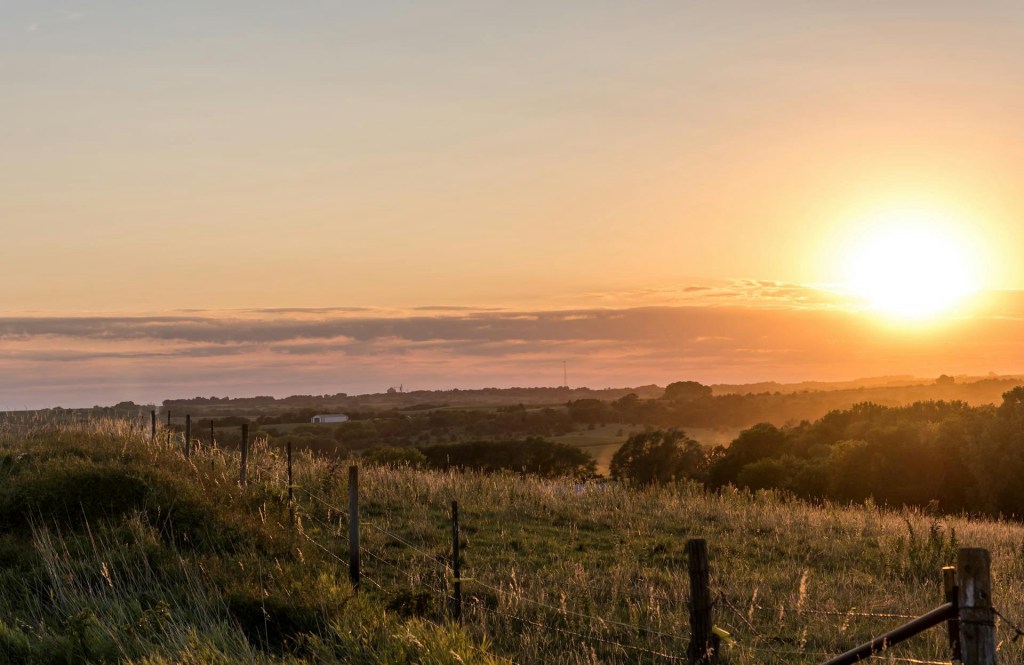
  • December Sunrise

    December Sunrise

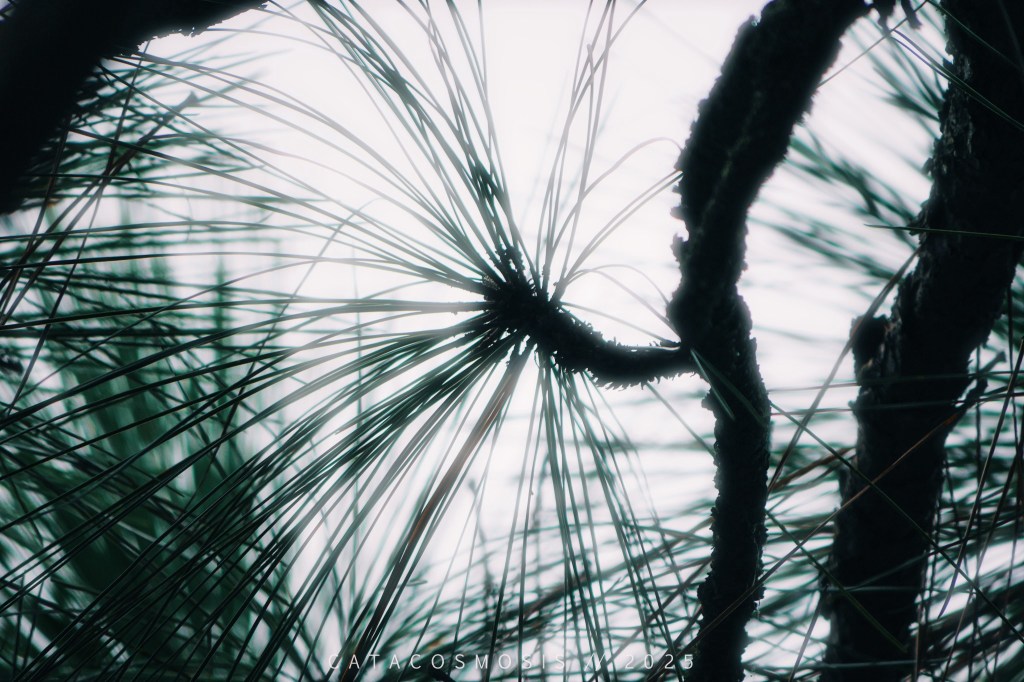
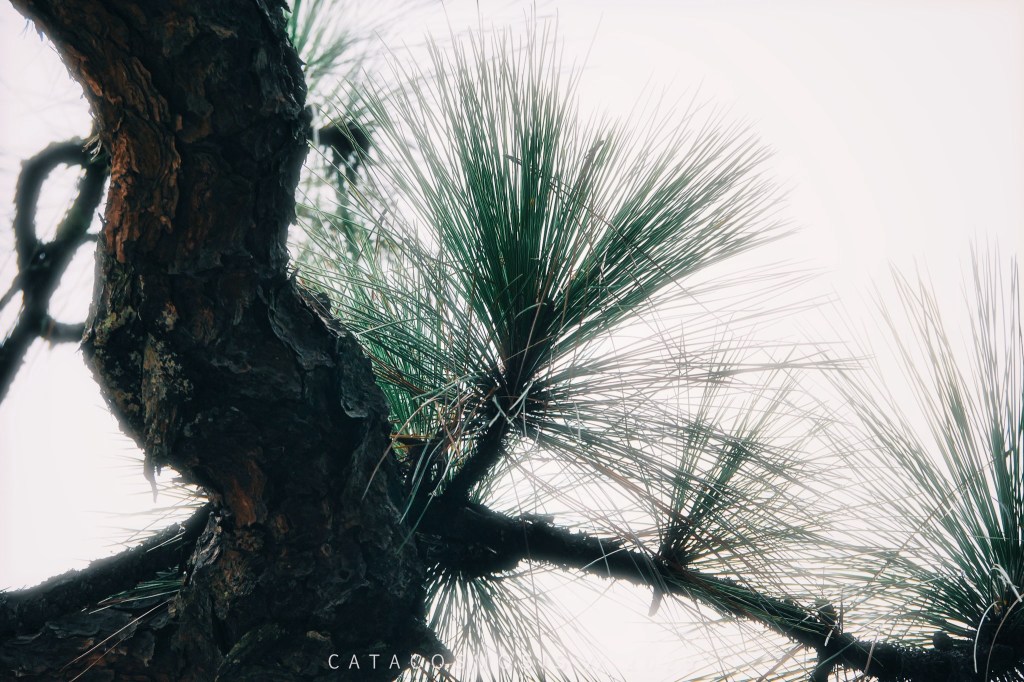
    entry eighteen — scattered light, fractured grace: a quiet archive of light, loss, and what remains.
    iPhone 17 Pro + DistressedFX + Mextures + VSCO

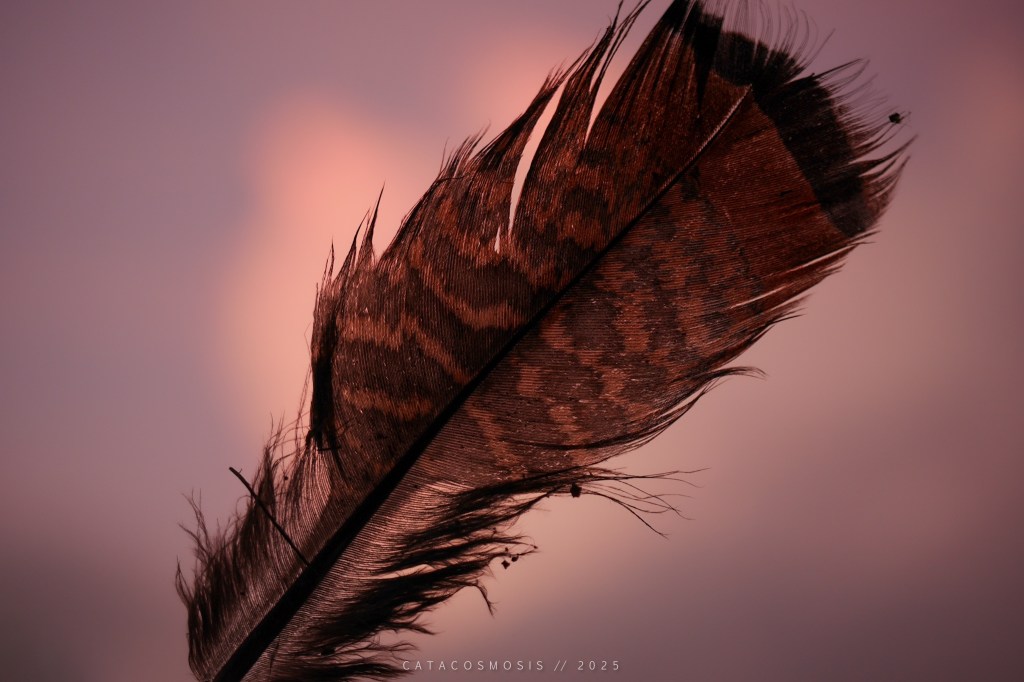
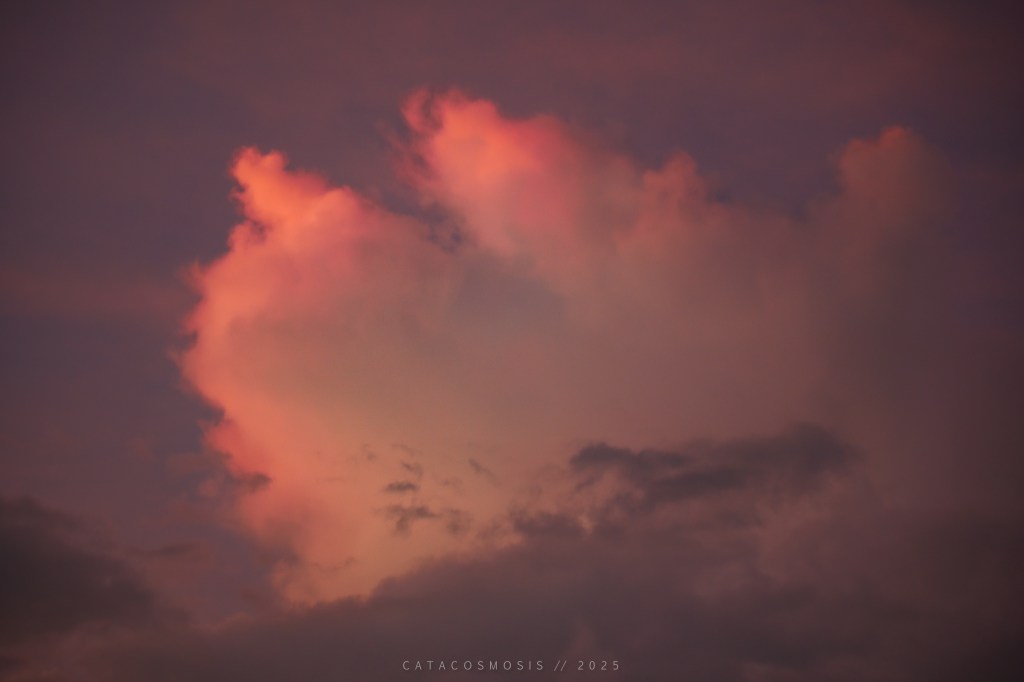
    There’s a softness to this kind of morning light… the kind that slips in without ceremony and still manages to uncover what the heart has tried to tuck away. The silhouettes stand like witnesses, thin and unassuming, yet somehow they hold the whole ache of the season.

    And maybe this the truest gift of December: that almost nothing blooms, yet everything speaks.

    The sky daily turns itself into a quiet oracle, whispering that even in the stripped-back places, even in the stark-cold bare and in-between, there is still beauty gathering itself at the edges, waiting to rise every morning with the sun.

  • Tipping Point

    Tipping Point

    It would seem I’ve waken up to yet another extreme of the obvious hypocrisy in what’s being demanded as “reality.” Some people genuinely still do not “get it,” while others still willfully refuse to see.

    Either way, and from all sides, there is an overarching question: Has society reached a true tipping point?

    Based on the reaction to a black man in white face, it would seem double standards have finally outstayed their welcome overall.

    Notice the general pattern of double standards over the last several years:

    Women can mock men.
    Trans can mock cis.
    Non-whites can mock whites.
    Gay can mock straight.

    Flip any of that around and you’re cooked.

    Look at the standards a little more deeply:

    The most obvious example is how men putting on “woman-face” or women putting on “man-face” isn’t just accepted — it’s demanded that everyone affirm it as their literal reality and “respect” it.

    So, logically, if that’s celebrated and that’s “reality,” then picking on any culture in jest for their quirks, failures, or oddities should be just as acceptable.

    That sums up what people are really upset about re: this skit that’s been circulating the last couple of days: it’s the double standards.

    And it’s not just white people who have had it.

    Yes, this particular skit has a lot of white people speaking out — they’re tired of being singled out as the only group not permitted to joke back, and then accused of lacking a sense of humor when it’s done to them.

    But consider society as a whole:

    Non-whites and whites alike are fed up with their own people acting like ungrateful, entitled fools — wasting the opportunities their ancestors fought to provide them and destroying the respectability they strove for.

    By now becoming loud, lazy, and disrespectful criminals, people make a mockery not only of their rights and the many opportunities they have if they would simply show up, but of their entire communities.

    Whites are fed up with Karens and Chads.

    Legal immigrants feel the same way about illegals trashing the opportunities they earned by doing things the right way — respecting the privilege of coming to another country, rebuilding responsibly, and treating that privilege with honor.

    Instead, illegals cause even legal immigrants to take the flak, lose opportunities, and be punished for things they didn’t even do.

    Masculine men are tired of being told they’re assholes instead of protectors, simply because masculinity is constantly mistaken for toxicity.

    Men of every race and personality type are sick of women parading around declaring they don’t need men, accusing and blaming men for everything wrong in the world — while in the same breath lamenting absent fathers, complaining that men don’t “show up” in general, and then demanding applause and respect for a world women absolutely didn’t build without the strength and masculinity of men.

    Women of all races and personality types are sick of being pressured to accept men in dresses not only mocking them and what it means to be a woman, but especially a mother, and having their spaces invaded and reclaimed as “everyone’s space,” only to be labeled ‘phobic’ or hateful for feeling that way.

    This isn’t only racial. It’s far broader than that, and these are only a few of many examples.

    Most, if not all, “everyday people” — all of us who are not filthy rich or sitting in positions of power — are fed up with war, crime, cruelty, and double standards. We just want to work hard, add meaning to the world, and reap the fruits of our labor: enough to survive, and enough to live — to enjoy a healthy, peaceful, happy existence.

    When did that become an unrealistic or unacceptable dream to have? It’s one that has echoed through the ages.

    Society as a whole is at a tipping point — fed up with hypocrisy, nonsense, and the double standards that no longer make sense.

    The solution, as I keep attempting to remind people, is simple across every aspect of society — yet seemingly impossible for most: for all people to embody empathy for others while taking accountability for themselves, existing in and acting from discernment.

    It is to embody some semblance of morality overall, respect nature, the planet and all its people, but especially ourselves. If we do that first — embody true self-love and self-respect — the depths of it, and not merely the mask — all the rest falls into place on its own.

    Will that be impossible for you? Or will you make it possible for yourself, and thus for others?

    Good luck out in the world today. Much love from me to you (no matter who you are).

    💜

    xo,

    c.

  • Babel, Babylon, and Beyond | The Same Old Serpent

    Babel, Babylon, and Beyond | The Same Old Serpent

    Fall is already upon us. Nature seems to have gotten ahead of itself in recent weeks and the world around me, from my backyard to the vast wilderness, has already begun to experience the cycles of death and decay that the fall season brings to prepare us to enter a season of rest.

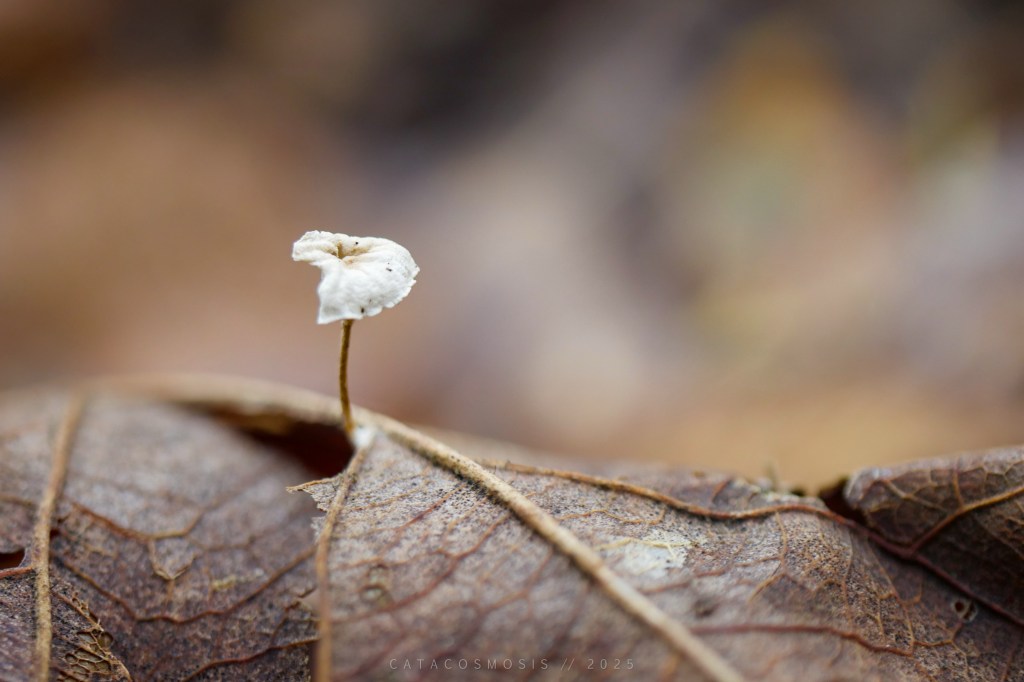
    I’ve found myself meditating on this as I’ve observed the process and explored the details of it with my camera lately. Here are some of the fruits of these meditations — especially the ones I experienced while studying this little corner of my backyard that has been unseasonably filled with the tiniest but cutest mushrooms.

    We so often use falling leaves as the symbol of letting go in autumn — but mushrooms tell another side of the story. They are decay in action, the hidden transformation beneath the surface, breaking down what once was so that life can be nourished again. They remind me that endings are not passive; they are active processes of renewal, just as necessary as the more obvious metaphors we tend to notice.

    What follows in this post may not feel “light and pretty,” but the deeper work is still life-giving. Much of it was born from reviewing and processing my recently captured mushroom images — small, humble, not glamorous, yet quietly essential. These considerations and introspections, though they may seem less than inviting, have at their core offered me encouragement.


    When you strip away the politics, money, and power structures, what you’re left with is a spiritual war. That’s the root of it all.

    The “deep state,” the “new world order,” whatever names we slap on it in the 3D — those are just costumes. The real battle is what Paul described in Ephesians 6:

    “We wrestle not against flesh and blood, but against principalities, powers, rulers of the darkness of this world, and spiritual wickedness in high places.”

    In short, demonic and low-level forces that have always tried to mimic, distort, and overthrow the authority of God.

    From Babel to Babylon to Rome to today, it’s the same rebellion recycled. Every empire that tries to erase God ends up becoming a shadow play of Babel — the same arrogance, the same lust for control, and the same inevitable collapse. The schemes shift form — empire, propaganda, deception, perversion — but the spirit behind them hasn’t changed.

    It’s the same old serpent trying to counterfeit creation and place itself on the throne. But here’s the thing you need to remember, if you are of the light:

    Humans can choose to align with that darkness or resist it. That’s why it looks like whole institutions, movements, or leaders are “possessed” by this agenda. But the truth is, they’re vessels. Some willingly, some blindly. And even when people align with darkness, they are never the true source of its power — and they are never beyond God’s reach if they repent of and rebuke the darkness.

    The vessels may change, but the spirit behind them is the same counterfeit. It’s not their power. It’s borrowed power, and because the Devil is a trickster and a liar, it cannot outlast the sovereignty of Source truth.

    That’s why, in the light of evil tragedy, the instinct to pray “God bless and protect” is attacked and pushed down so brazenly by some, and depended upon and held on to so tightly by others. The only way for the dark to win is to try to sniff out the light.

    The only shield that stands against the dark, though, isn’t more politics, more anger, or more fleshly fight — it’s divine covering. That’s why light beings, from Buddha to Jesus, called us salt and light — because no matter how deep the night gets, even the smallest flame cannot be overcome.

    Light exposes. Truth cuts through lies. And no empire, no “order,” no demonic hierarchy driving human ego has ever been able to out-rule the Source of the Universe: Love.

    The darkness may rage, but it has already lost. Its decay is inevitable. Our task is not to fear its noise, but to keep carrying the light that cannot be extinguished.

    if you are only just beginning to see the reality of this battle and sense that light, do not be afraid of how small it may seem in you. Even the faintest flicker is enough to drive back the dark. Nurture it. Walk with it. Let it steady your steps.

    The path may feel unfamiliar, but you are not walking it alone. Every spark joins the greater flame, and together we rise.

    Keep going — the light you carry is already proof that the darkness has not won.

    xo,

    c.

  • I died, and it… was okay. | Notes from the Other Side

    I died, and it… was okay. | Notes from the Other Side

    The First Illusion

    How can an illusion free an illusion?

    It can’t.

    Impossible.

    And yet, freedom itself is not impossible.

    But what we often mistake for freedom is only substitution. We trade one mask for another, one prison for another, one dream for another.

    Replacing one illusion with another does not set us free. It does not bring liberation. It simply shifts us deeper into what I sometimes call non-happening happening — the endless cycle of movement that looks like change but never truly is.

    So where, then, is freedom?

    Maybe it’s in understanding that simple truth.

    Maybe it’s in seeing clearly that nothing we have called “freedom” has ever been real freedom at all.

    Maybe that was the point, all along.

    Is that awakening?

    Awakening as Death

    Awakening is the death of the familiar.

    Because what is “familiar” to us — what we call “our life,” “our personality,” “our world” — is illusion.

    Nothing we are familiar with is actually real. None of it is actually us.

    We are not real. We are not what we think — what we are told — we are. And yet, here we are.

    So when awakening comes, it feels like death. Because it is death — the falling away of everything we thought was “me.”

    And without that death, there is no birth of what was real all along.

    Meaning Before and After

    Before awakening, there is no meaning of our own.

    The only meaning available to us is what others have told us is meaningful. Parents, teachers, religions, governments, lovers, friends, enemies, cultures, systems — all of them have fed us their meanings.

    And we absorbed them as if they were truth.

    We were conditioned to believe meaning is handed down, not discovered.

    We were punished for expressing anything antithetical.

    Yes, that is a word. I did not make it up. I checked, as always, when I returned from the other side.

    I digress.

    Even when we think we are thinking for ourselves — are we? Have we ever? Do we even know how?

    This is the prison of the familiar.

    But those of us who have never been able to simply swallow it — those of us who have spent our lives being told we are crazy, too deep, over-analytical, antithetical — maybe we’ve always been a little closer to freedom.

    Because we have always been with ourselves. We have always lived in the company of our own questioning. Our own introspection.

    And that has saved us.

    Moving Through Darkness into Light

    My entire life has been this movement — through darkness into light.

    And then again. And again.

    I never stayed still in a 3D thought long enough to let ideology calcify around me. Never settled enough into the world’s definitions of reality to say: “Yes, this is it. This is reality. This is me. This is final.”

    No.

    I couldn’t.

    Always, incessantly, I questioned. I sought. I chased myself. I chased I am.

    Because each time I reached for that exactness, that rigidity, something in me would die. And something deeper would awaken.

    So instead, I’ve kept moving. Through darkness, into light.

    Through lies, into truth.

    Through death, into life.

    Over and over again.

    And each time, what I found was not more of “me,” but less.

    Until I began to understand that the “me” I thought was the center of the story was never the point at all.

    And then, I actually… died.

    And then, I came back!

    What?

    I know. That’s what I said, too.

    And that is when the fullness of both illusion and irrelevance were clear to me, and the illusion and irrelevance… both shattered.

    Freedom.

    The Irrelevance of “Me”

    “Me” is irrelevant.

    Yet somehow, everything has always been about me.

    That’s the paradox.

    The small “me” — the conditioned self, the mask, the name, the history — means nothing. It is dust. Illusion. A temporary construction.

    But the deeper “I” — the one who moves through the dying and the awakening, the one who is aware of even that dust falling away — that “I” has always been the ground of everything.

    So in a sense, “me” does not exist.

    And in another sense, “me” is all that has ever existed.

    It was always… the I Am.

    The Misunderstanding

    This will be misunderstood.

    Mostly by anyone and everyone who reads it.

    If they even make it past the first few lines.

    Because illusion defends itself. It doesn’t like being called what it is.

    But misunderstanding doesn’t matter.

    Life takes care of itself.

    Life Happens

    Even when you are not there to see it, life still happens.

    Everything still unfolds — rivers flow, winds move, earth shifts.

    Even if you choose inaction — even if you refuse to eat, drink, or sleep — things still happen. The body dies, yes, but death itself is a happening.

    Because everything is always happening. Always in motion.

    Even in stillness, there is happening.

    And everything that happens has a result. Even nothingness produces consequence.

    Life is self-correcting. Even ungrounded, it finds its own balance.

    Sometimes that balance looks toxic. Sometimes it looks destructive. But it is always balance. Always motion. Always happening.

    Death Must Occur

    Death, then, is necessary.

    Not the physical death we fear — not suicide, not the cutting short of the body’s days.

    Though that death is really not all that bad, in my experience.

    The dying part itself is no fun.

    The death?

    Too many words — words are funny for this one; there is not a word, other than death.

    It is nothing, and everything.

    Alpha, omega.

    I am.

    Here? What must die is the illusory self.

    The self we defend, cling to, and worship without even knowing it. The self we call “me.”

    That death is the doorway.

    The Last Illusion

    And yet, even here, there is a final paradox:

    If the self is illusion, then death is illusion too.

    Which means — death cannot free us either.

    Because an illusion cannot free an illusion.

    I do not fear.

    Why is none of this terrifying to me?

    Maybe because fear only exists where there is something to lose. And what I am losing was never real in the first place.

    Maybe because I have already died a thousand small deaths, the fear has already been burnt out of me.

    Maybe because I saw it:

    That what I am cannot die.

    And maybe that — quiet, simple, unshaken — is what freedom has always been.

    xo,

    c.

  • Maintenance as a Creative | Not Broken, Just Built Differently

    Maintenance as a Creative | Not Broken, Just Built Differently

    There’s this list — never written down in one place, but always hanging over me like the hum of an old fluorescent light. It’s made of things that should be straightforward:

    • Back up the photos.
    • Untangle the art supplies.
    • Organize the sketchbooks.
    • Move the ideas from my head to a place they can breathe.
    • Put the words onto the pages.
    • Clean the brushes.
    • Organize the books.
    • Organize the ideas.

    But they are never straightforward. Not for me. Not for anyone whose mind has a thousand open windows and refuses to shut them just because the world prefers tidy blinds.

    Society has found a name for this: ADD. ADHD. Neurodivergence. The diagnosis may be true for some, but here’s what I believe — it’s not a flaw. It’s the original wiring of the artist, the philosopher, the restless creative soul. It’s the part of the mind that won’t collapse into the assembly-line cadence of “normal life.” And that refusal has always been a threat to the people who rely on compliance.

    This is why so many people who are miserable in the 9–5 grind feel like they’re constantly drowning. They fight from one day to the next just to keep their priorities in order, forgetting things, feeling scattered, wondering why life feels like a treadmill they can’t get off. It’s not because they’re lazy or incapable — it’s because they’ve been convinced, by family, by school, by the whole machinery of society, that their purpose is something other than what their soul already knows it to be.

    They’re creatives, not conformers. But they’ve spent their entire lives pouring all their energy into staying afloat in a stormy, chaotic sea they were never meant to swim in. And not only has the world’s rules kept them from living their purpose, they don’t even remember what that purpose is… and they certainly haven’t been taught how to manage or maintain reality as a creative.

    The problem is, the tools that work for type A people don’t work for type B people — and vice versa. But the world, the powers that be? They don’t want any creatives to thrive. Why? Because thriving creatives don’t line their pockets, and they can’t control what they can’t contain.

    By the late ’90s and early 2000s, the strategy had shifted. They started medicating us into focus, pressing Adderall into palms while preaching “Say no to drugs” in the same breath. It wasn’t just hypocrisy; it was the perfect kind of doublethink. They couldn’t get my generation — Gen X, especially — to trade curiosity for clock-punching, so they tried to sedate the wonder right out of us.

    It had started long before my generation. From the ’60s onward, every decade had its rebellion, but something about our era cracked the pattern wide open. We remembered how to slip back into our creative current, to say — without apology — that the system wasn’t built for us, and we weren’t going to rewire ourselves to suit it.

    The boomer generation fell for it enough to punch the clock and hold the grind in both hands. But my generation? The ones who were school-aged in the ’80s and especially high school/college aged in the ’90s, raised as latchkey kids, left to our own devices? We had just enough space to keep our own ideas and double down on our self-expression. We rejected the rhetoric outright, but we still had the foundational work ethic, the grit, the stubborn drive to show up.

    Unfortunately, that refusal was met with more control, more noise. By 2012, the hum had become a low, constant pressure. By 2016, the unexpected and unorthodox split the air like lightning, and nothing went back to sleep after that. By 2020 — and certainly by 2022 — largely thanks to Covid (which I will forever believe was a purposeful attempt to tighten the reins of control), the result wasn’t the obedience they hoped for. It was the opposite. People were waking up in numbers that mattered.

    And here we are.
    And here I am.

    Sitting with a computer that holds hundreds of gigabytes of uncataloged photographs, each one a memory or a moment, all of them waiting for me to find them a home, if not on someone’s wall then in beautiful posts they can enjoy on their computer screens. Art supplies scattered in a way that makes them impossible to ignore and yet impossible to start sorting. Projects that live half in the physical world and half in my head, where they multiply faster than any app or planner could contain.

    Digital tools have not tamed the chaos — they’ve only given it better hiding places. They’ve bred a new kind of loathing, a quieter form of procrastination and lethargy, one that makes the struggles of pre-technology life feel almost romantic in hindsight — like a fairy tale we didn’t know we were living, a beautiful dream we only learned to miss once it was gone.

    This morning, I pulled a book from my shelf. It’s been there since Ralph died:

    How to Be an Explorer of the World — Portable Art Life Museum.

    I haven’t opened it yet. The title alone feels like someone has tossed me a rope, and I’m still deciding whether to pull. Even without turning a page, I intuitively, automatically know — as every creative does — what waits for me inside. The “Art” in the title has been struck through and replaced with “Life” for a reason: because that’s what it truly is. A reminder that we’re not here to live as curators of someone else’s museum, dusting off exhibits we never chose. We’re here to explore — to step into new rooms, to rearrange them until they make sense to us, to claim the space as our own.

    And yet, here’s the truth I keep circling: maintenance is the perpetual loop where I always seem to get stuck.

    Not the dreaming, not the making, but the keeping. The tending. The part where you have to hold the door open for what you’ve already made so it doesn’t fall apart while you’re off chasing the next thing. Somewhere in the tug-of-war between vision and upkeep, I drop threads. And when enough threads fall, the rest of my life starts tangling with them — homeschooling, daily meals, the way the pantry and the jumble of household chores scribbled on random scraps of paper looks like a metaphor for my brain.

    This is the quiet battle no one talks about: how to keep creating without losing the things you’ve already created. How to tend your work without caging your mind. How to make room for the next idea without letting the last one turn to dust.

    For people like us, maintenance is never just maintenance. It’s a negotiation between the world’s idea of order and the wild way our minds are built to move. And maybe the truth is that we aren’t the ones in need of repair.

    Maybe the wiring was never the problem.
    Maybe it’s the world that’s broken.

    And what does all of this lead to? Yet another idea tossed onto the pile: maybe I should explore it in an in-depth series of articles here.

    Ha.

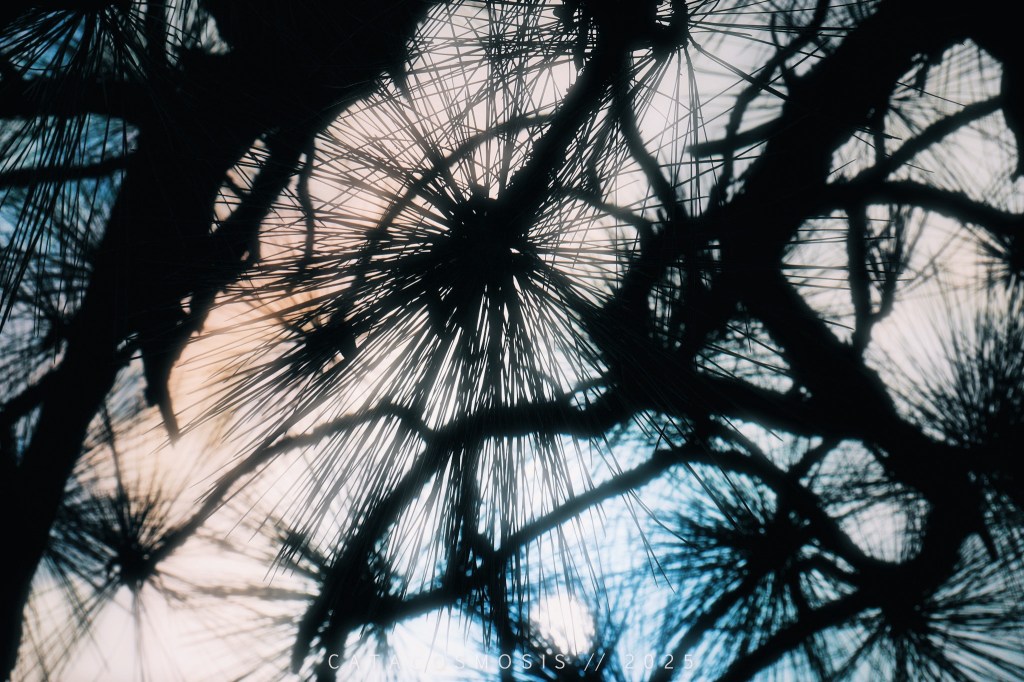
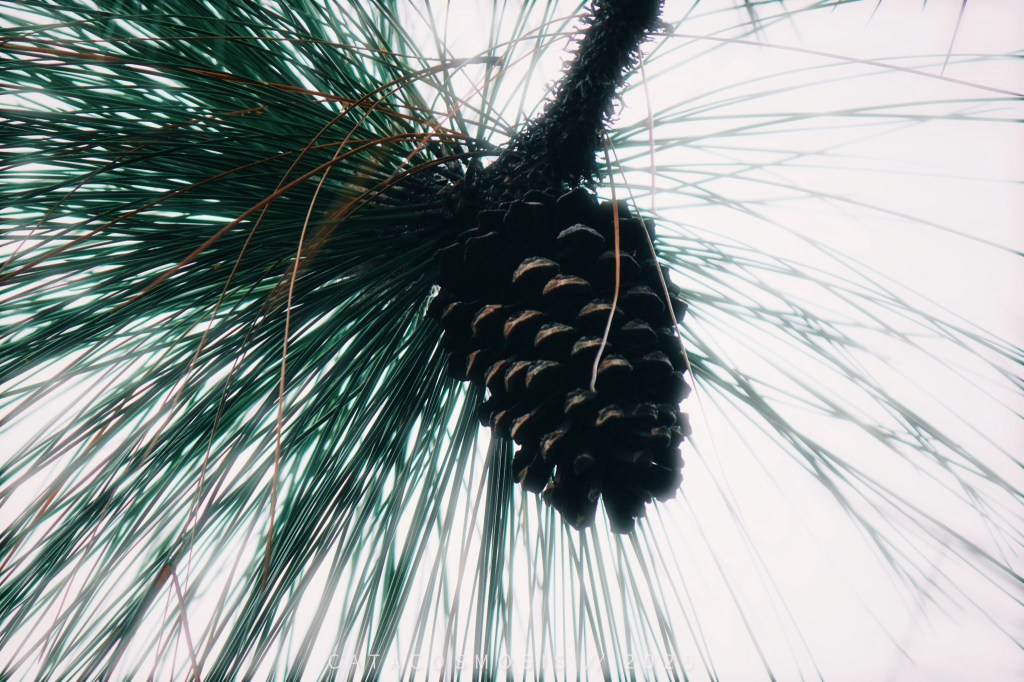
    For now, though, here’s a brief gallery of shots of my favorite tree — the oldest in my state, and one I’ve found myself referencing often lately. A couple are completely blown out. One feels especially dull to me. But while they may seem ordinary, even boring, to the casual observer, my passion for this incredible 400+ year-old short-leaf pine runs deeper than any skill or lens could ever capture.

    And that’s exactly the point — this tree is the living embodiment of what I’ve been trying to say above. The uncreative soul may never understand the pull, the quiet reverence, or the way beauty lives in the details that can’t be measured or monetized. But to those who do understand, no explanation is needed.

    I hope you enjoy these images as much as I enjoyed the process of shooting and processing them.

    xo.

    c.

  • The Line Is Always Open

    The Line Is Always Open

    A while ago, God asked me to step away from the noise. The purpose was not just to “rest,” but to enter true solitude. It wasn’t the kind of solitude that simply quiets the mind; it was the kind that strips away the need to convince, the compulsion to rescue, and the reflex to correct every error you see in the world.

    When you live in that stillness long enough, especially when you begin to examine how deeply and how long you have been misunderstood in your own life, you finally grasp why no one was truly listening. You begin to understand:

    The time for saving people by warning them and trying to teach them by telling them, begging them, or reasoning with them has passed. Just like with a child, there comes a time when you have to let them just keep screwing up until they learn. Experience is the only teacher that can accomplish anything fruitful.

    At some point, you realize your job is and always has been to just be the example and let them hate you or blame you if they wish. The time now, and the purpose, is to show up anchored in truth, walking forward for the sake of those who are searching.

    It is time to lead without any guarantee of who will follow, even if the path takes you to meet God alone. In the end, it all comes down to free will — and on the day you stand before Him, the only life and soul you will ultimately give account for is your own.

    There is no bureaucracy at the Pearly Gates, no worldly process to pass through. Character witnesses don’t exist there. Your actions, your choices, and the truth of your heart and relationship with Source will speak for themselves to the one and only true Judge, whose authority is absolute and divine.

    After months of this solitude, returning to public spaces feels different. The peace you find in solitude makes the digital clamor almost unbearable. You realize most people are not listening, not because they can’t, but because they don’t want to. They’ve been taught to fear the very silence that would heal them.

    Still, there are always a few — maybe only two or three in a sea of millions — who are listening for a different kind of voice. And for them, we show up.

    As I dipped a toe back into social media in recent weeks, I saw exactly why Source had been directing me as it had. Then, this morning, I saw a post on Instagram that reminded me exactly why I hesitate to return.

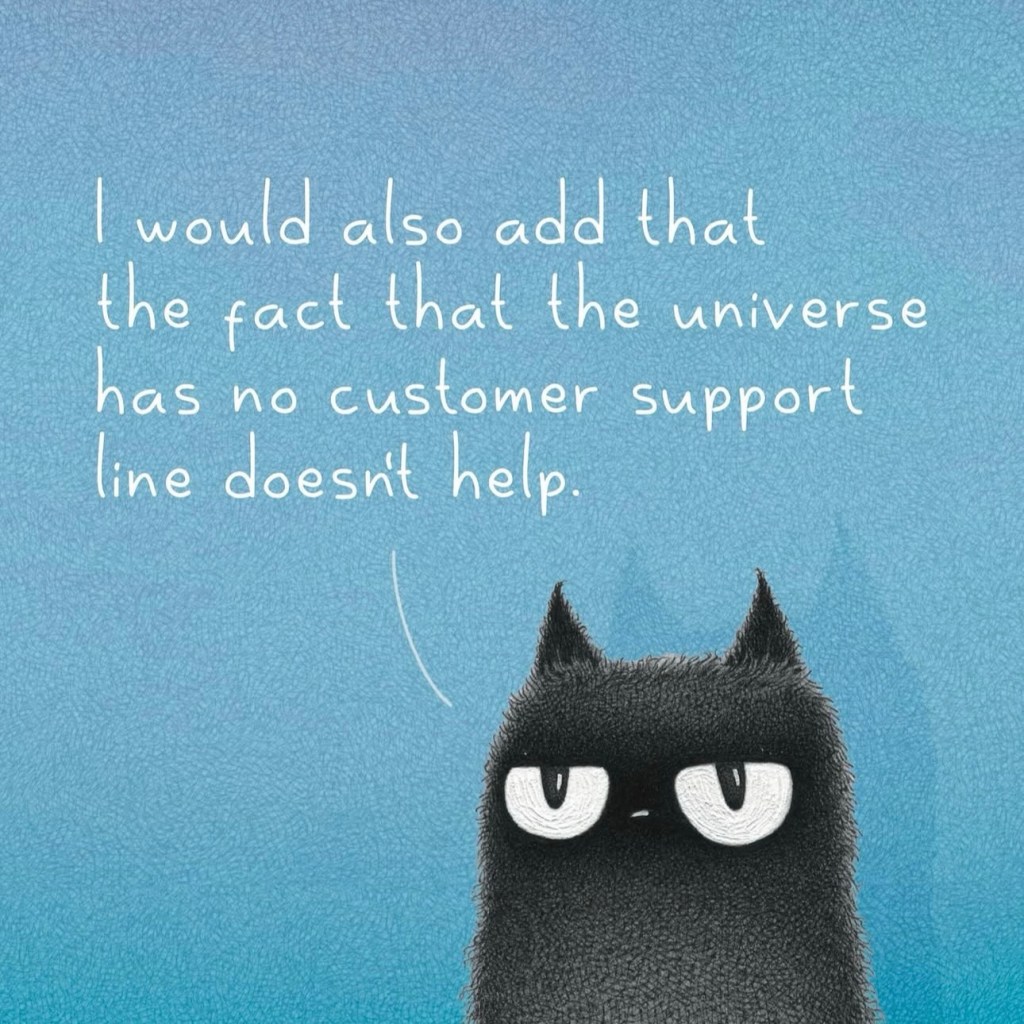
    It was a meme “conversation” between two cats:

    Cat 1: I don’t know who I am anymore.

    Cat 2: That’s okay, everybody feels that way sometimes — the universe doesn’t have a support line or customer service to tell you how to fix the problem.

    It’s clever on the surface, but the truth is: this is false.

    Yes, everyone struggles with knowing who they are from time to time — that’s life. But somewhere along the way, society began labeling that struggle as illness, defining solitude as unhealthy withdrawal (thereby denying people access to the solution), and filtering human experience through a narrow definition of “normal” set by a handful of powerful voices.

    And the part about the universe not having a “support line”? That’s the deepest untruth of all.

    The universe — God’s creation, and the divine voice within it — is always speaking. The language is there for anyone willing to learn it. The signs are constant. I know this because I have been hated for decades for striving to be a translator.

    The problem is not absence; it is illiteracy. Most people are not listening, or even looking, because they’ve been conditioned to tune in to the wrong frequency.

    Depression is not always depression, but many times (and this was my experience) the immediate response to anything that feels unpleasant is to label it as depression and drug people to Timbuktu and back again. Honestly? That is the reason many people can’t hear and don’t care to try. Not all — but so many.

    Lost is not always lost. Not every ache in the soul is a disorder to be medicated or pathologized. Sometimes it is simply disconnection from self and Source. The remedy is stillness, quiet, and the willingness to listen, and to then face and accept the truth — the very things people are told are “unhealthy” or “unproductive.”

    Society has been trained to fear solitude and invisibility, to measure our worth in noise and visibility. And then, when society meets those who have rejected that conditioning — who have done the work through blood, sweat, and tears — it labels them as “too deep,” “too intense,” or “problematic.” Society dismisses them because the truth they carry is rarely the easy answer the world wanted to hear.

    It’s willful ignorance, fed and nurtured by systems that benefit from a distracted, disconnected people.

    Those same systems encourage shallow comforts and praise the very mechanisms keeping us miserable. And when you break free, find balance, and refuse to play the game, you’re labeled extreme or hateful — when in reality, you are simply walking in the narrow space between reality and insanity.

    This was on my mind when I saw another post, one about the pressure of social media as an artist versus as a human being.

    My response was simple:

    I used to approach social media in the same way — letting the noise, the opinions, and the unspoken “rules” decide how and when I would show up. I carried the weight of strangers’ expectations until it felt heavy enough to crush my own reasons for creating.

    And then I realized: the ones who made me feel small were not here for the same reasons I was. They were chasing validation, purpose, or attention they didn’t already have. I already had those things. I was meeting my own goals, my own standards. When I stopped caring if they “got it,” the pressure disappeared.

    It is the same in life beyond the screen. Too many people are chasing money, status, and recognition, and too few are working from genuine passion or purpose. The work done from love will feed you. The work done to please others will drain you.

    That’s why these two posts — one about “not knowing who you are” and one about the pressure of showing up as an artist — are really about the same thing.

    The sickness of our time is not that we feel lost or uncertain; it’s that we’ve lost the ability, and in some cases the willingness, to listen to the truth that’s already speaking.

    If you can hear it, you don’t need a “support line” from the universe — you’re already, and infinitely, connected to it. If you can’t hear it, no human voice will convince you until you quiet the noise long enough to try.

    So for me? I keep showing up as I feel led to, as I hear God guiding me to. I keep sharing my experiences, through my photography, my art, and my voice, softly and quietly in shared expressions meant to be examples, not to convince the unwilling, but for the few who are listening and searching for a different kind of voice.

  • Wilderness

    Wilderness

    Lumix GX7, Panasonic Lumix 100-300mm Tele-Lens. Handheld. Lightroom (watermark and contrast).

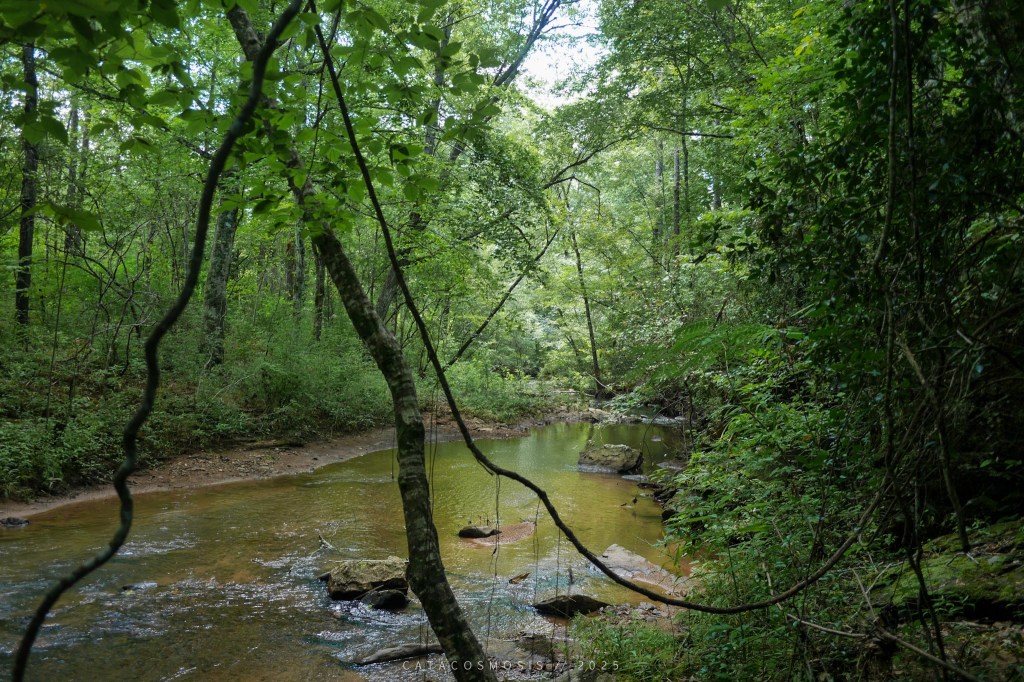
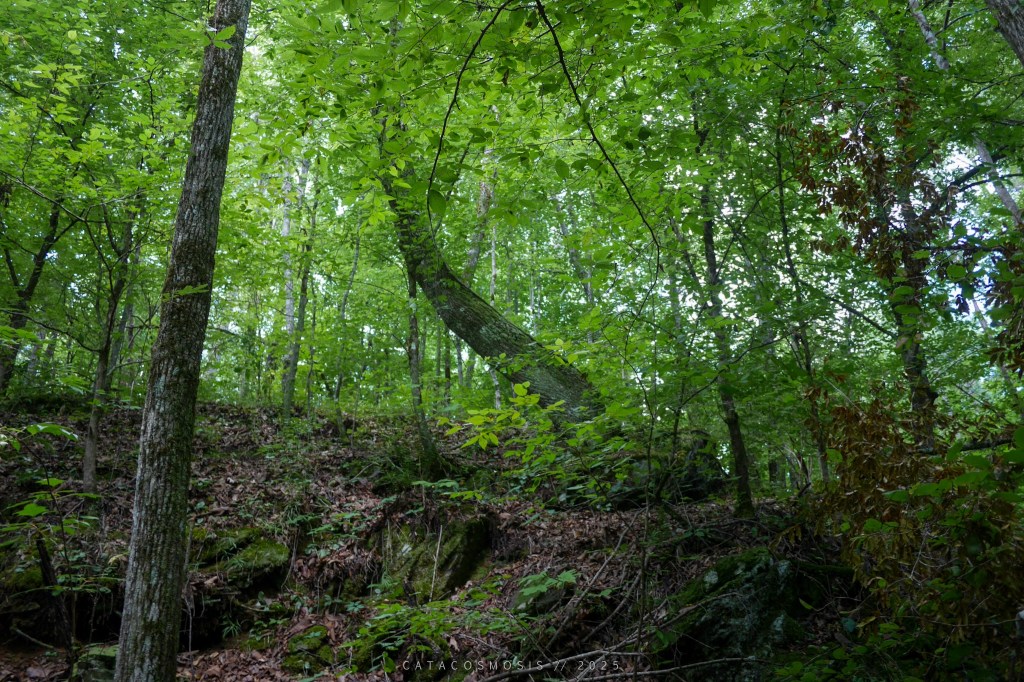
    The wilderness is the oldest, truest friend a human can have, both in body and in spirit.

    Lumix GX7, Panasonic Lumix 100-300mm Tele-Lens. Handheld. Lightroom (watermark and contrast).

    It teaches in silence.

    Lumix GX7, Panasonic Lumix 100-300mm Tele-Lens. Handheld. Lightroom (watermark and contrast).

    It speaks without words.

    Lumix GX7, Panasonic Lumix 100-300mm Tele-Lens. Handheld. Lightroom (watermark and contrast).

    It holds space for your becoming, your undoing, your return.

    Lumix GX7, Panasonic Lumix 100-300mm Tele-Lens. Handheld. Lightroom (watermark and contrast).

    And it is only “dangerous” when we forget to honor it, or refuse to learn from and respect it.

  • Focal Point

    Focal Point

    It’s as important as perspective. Perhaps even more so…

    We talk so much about perspective—about changing our view, reframing the story, finding the silver lining in the storm cloud.

    But sometimes, perspective doesn’t shift easily.

    Sometimes, circumstance leaves you standing exactly where you’ve always stood. The view is the same. The light hits the same edges. The shadows fall in familiar places.

    But even when the scene remains unchanged…the focal point doesn’t have to.

    Focus is a choice.

    A sacred, stubborn one.

    It’s the difference between staring at the problem and noticing the petal behind it.

    It’s where your attention lands, and where your energy follows.

    It’s learning to zoom in on grace even when grief is still in the frame.

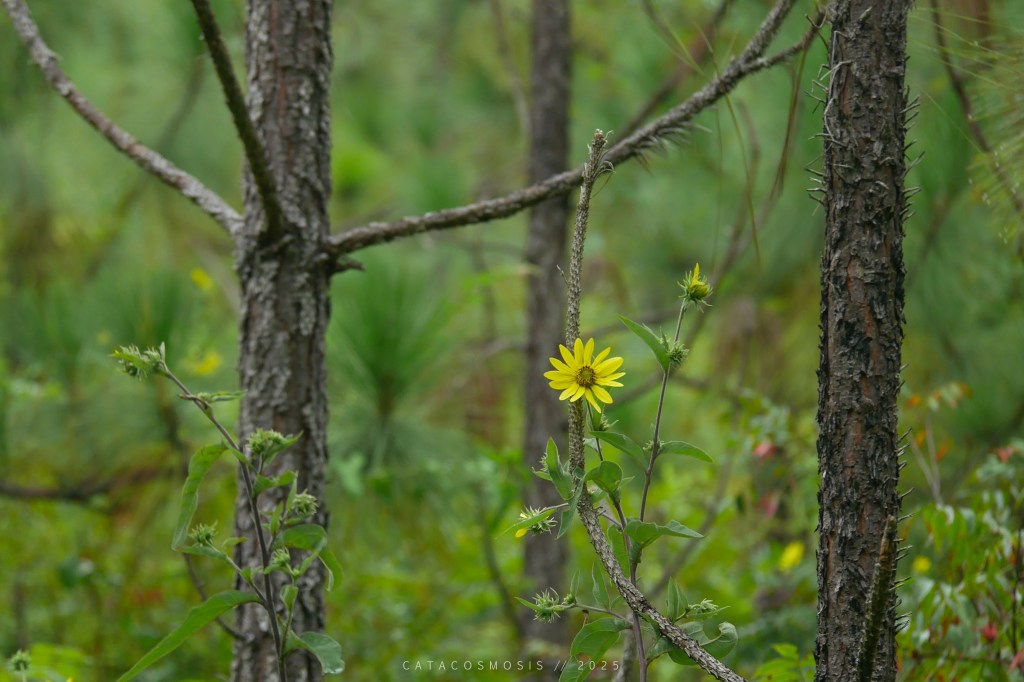
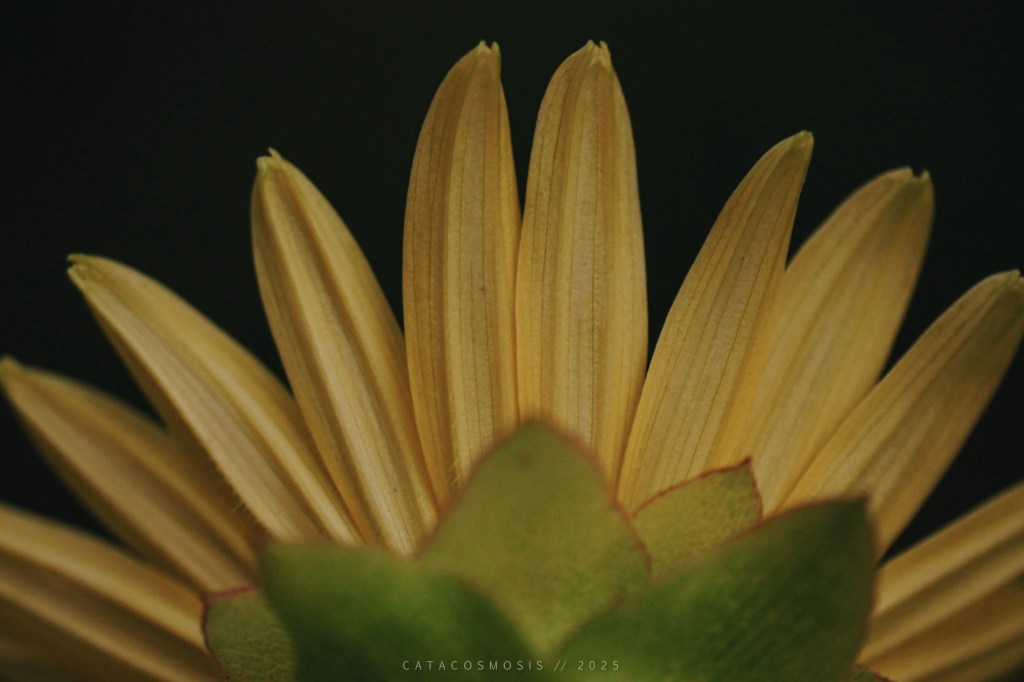
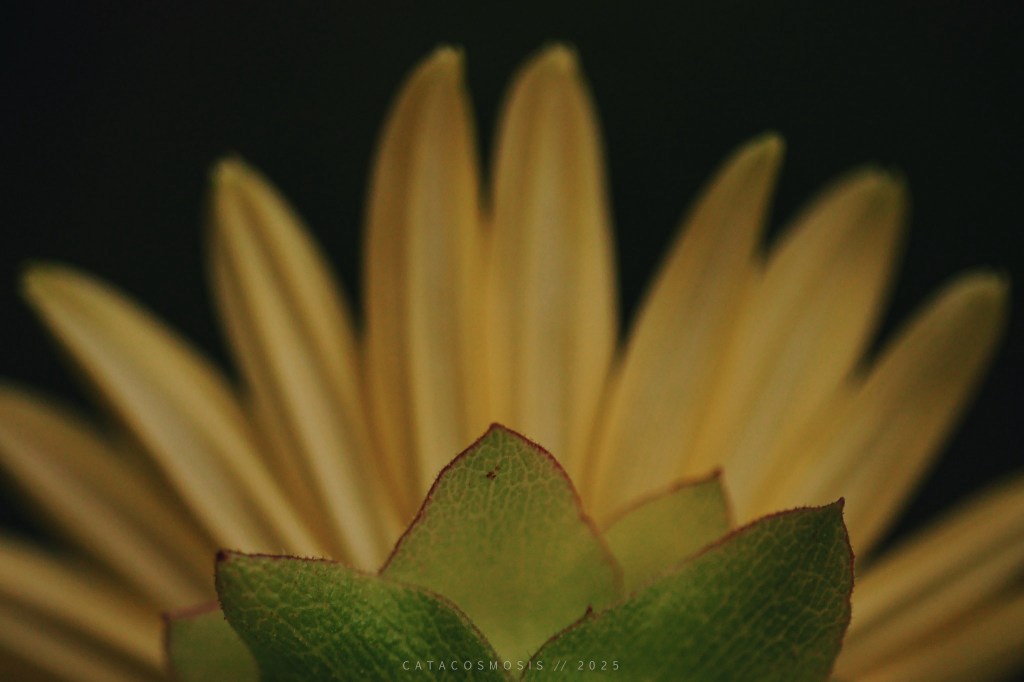
    In these frames, nothing moved.

    Not the flower. Not the light. Not the angle.

    Only the focal point changed.

    And with that subtle shift, a new vision — a new truth— came forward.

    Almost always—including in life, and despite circumstance—the best composition doesn’t come from changing the scene but from learning which part of it to focus on.

    catacosmosis // 2025

  • Lifted

    Lifted

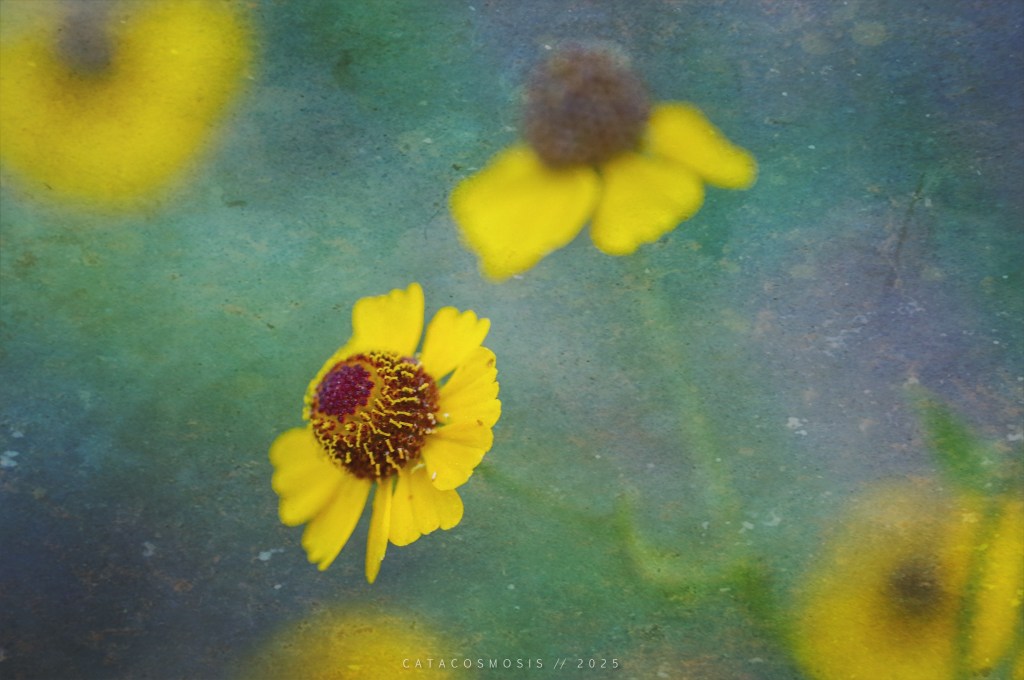
    entry twelve — scattered light, fractured grace: a quiet archive of light, loss, and what remains.
    Lumix GX-7 + Panasonic-Leica DG Macro Elmarit 45mm f/2.8 ASPH. VSCO (A6 PRO) + DistressedFX + Lightroom (watermark only).

    There is a moment, early in a few blessed summer evenings, when the heat—the oppression—sighs and lets go.

    Not in protest, but in quiet surrender—the sun lingers, the sky softens, and a hush moves in with the rain.

    Steam rises like incense from the bones of the earth.

    You’ve felt that coveted shift.

    It’s not loud. Not showy. Just the heaviness loosening its grip on your ribs as breath returns without warning.

    This is how some battles end—

    Not with victory, but with survival.

    Not with a roar, but with a breeze.

    No fanfare—just rain through fractured light, and the ache leaving your body before you even know it’s gone.

    What remains?

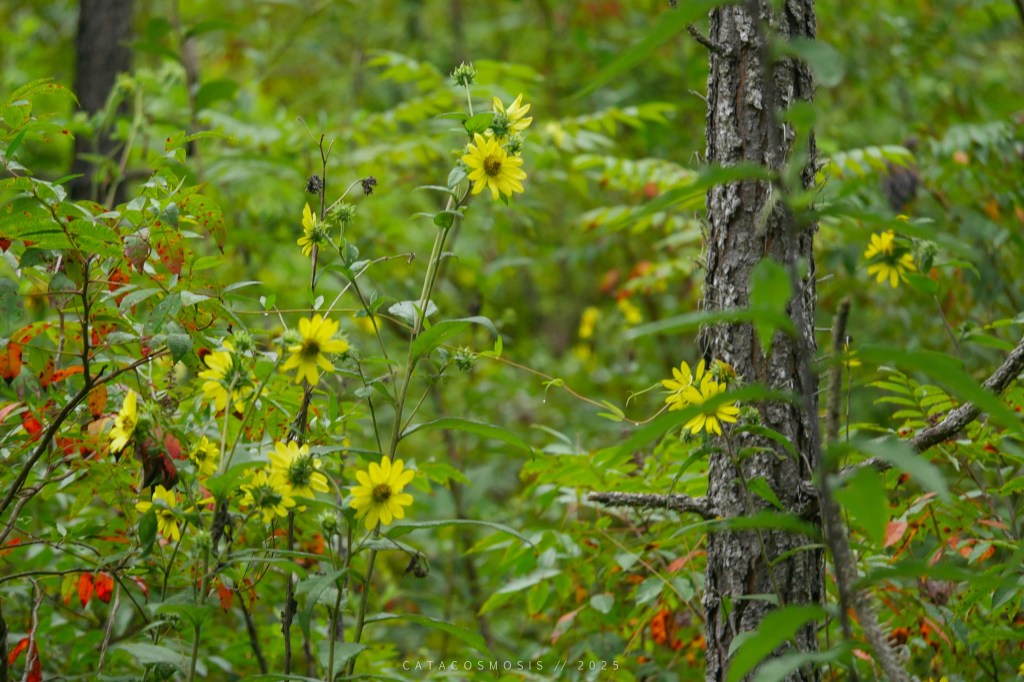
    A field of yellow flowers—bent but blooming.

    Tired, but free.

    And air that smells like something holy—finally lifted.

    catacosmosis // 2025

  • Where Abundance Lives

    Where Abundance Lives

    It’s never been money or material success that has defined wealth for me.

    For most of my life, I chased meaning in moments loud enough to echo—grand gestures, perfect timing, outcomes wrapped in validation. But it was my most treacherous and grueling experiences—the ones that stripped me bare and rebuilt me from the soul up—that taught me something higher.

    They taught me to be still.

    To be quiet.

    To kneel at the altar of the subtle.

    A blurry cloud, simultaneously barely and boldly defining its own form, illuminated at just the right angle.

    Lumix GX7 + Lightroom (watermark only)

    A battered feather, found in the dead center of a forgotten dirt road, caught in evening light.

    Lumix GX7 + Lightroom (watermark only)

    The soft hush of trees at dusk, whispering the memories of the ghosts that still roam underneath them.

    Lumix GX7 + Lightroom (watermark only)

    This is abundance.

    There’s something sacred about catching these quiet offerings—the ones that ask for nothing but your presence. No performance. No hustle. Just your full attention. And I think that’s what I’ve been learning to fully morph into, slowly but surely, all my life.

    I’ve always been in love with nature, and over the past few years, I’ve begun to understand why—consciously, spiritually, viscerally:

    Nature doesn’t demand applause, but it offers everything to those who notice.

    Before caregiving and grief, nature called to me—quietly, consistently—and I always accepted her invitation to explore and to wonder. During caregiving, she became an escape. I retreated there as often as possible, weary and begging for rest that not even sleep could offer…and nature always obliged.

    Now? I don’t go to escape or to retreat, I don’t just visit. Nature meets me. Whether I’m deep in the woods or walking my yard…hiking a trail or running my neighborhood…now, I am always home.

    We live in a world trained to skim, to scroll, to monetize every breath of stillness. But this—this sky, this feather, this light that passes and never repeats—reminds me:

    Presence is the prize.

    It’s all around us, all the time, no matter where we are…but people don’t see it anymore. They no longer observe. Most have forgotten—that observation is a form of reverence. And reverence, when practiced daily, becomes a kind of homecoming.

    “Abundance is not found in money and material gain—at least, not for me. To me, it is found in nature’s unexpected surprises.”

    I wrote that in my memory while standing beneath the canopy of trees shared above as it held the last light of evening. There was no one else there. No applause. Just me, and the divine choreography of stillness.

    In that moment, nature herself invited me to remind you:

    If you’re searching for proof that you’re loved, that you belong, that there’s meaning woven through even the hardest days—

    Look up.

    Look closer.

    Be still.

    The abundance you’re looking for is already here.

    It’s been waiting for your eyes—and your heart— to land on it.

    Be present.

    Pay attention.

    Be observant.

    Your presence in the present matters.

    It’s where abundance lives.

    🪶💜✨

    catacosmosis // 2025