Tag: reflection

  • Aware.

    Aware.

    Tucked into the quiet corners of my yard and spilling along the back fence — where wild grass gives way to the shadowed woods and, beyond them, the familiar silhouette of my mountain — the azaleas have erupted this spring in an almost audible riot of pink, purple, and white.

    Two bushes a deeper rose at the edges, softening to a pink like the first blush of dawn on cotton-candy clouds; the purple one as deep as twilight shadows pooling in the underbrush, veined with richer amethyst; the handful of white ones pure and luminous, like scattered moonlight caught on petals. On several of them, the blooms crowd the branches so thickly that the dark green leaves vanish beneath waves of color, the bushes a generous bouquet bowed gently under its own abundance.
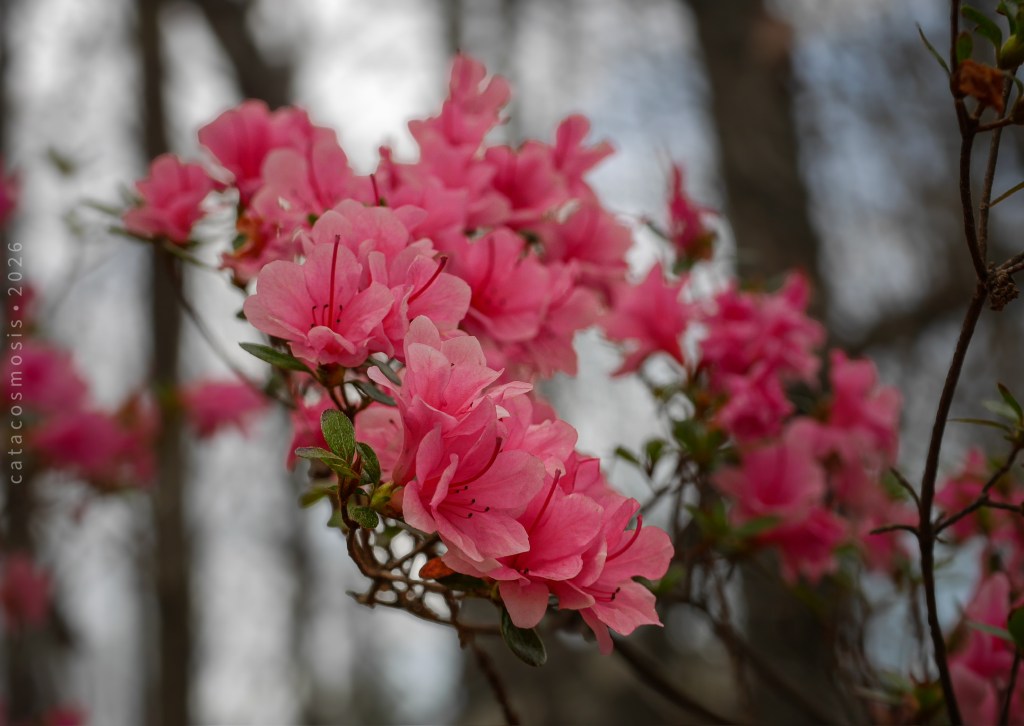
    📷 Lumix GX7 + Panasonic-Leica DG Macro=Elmarit
    ⚒️ VSCO + Lightroom Mobile

    I stand at the fence line with my camera, breathing in the faint, sweet honey of their fragrance carried on the breeze, and it pulls me straight back to childhood. Growing up in the valley just across from my current, adult home, right at the base of that mountain, I’d watch for the wild azaleas and mountain laurel to appear along the wood’s edge, tiny beacons at the pasture’s far side. Each warming degree and every minute longer the day became — yes, I counted the minutes — felt like permission: one more day to explore before the snakes woke fully from their winter sleep.

    With each passing day I’d step more carefully, heart racing with equal parts thrill and caution — head on a swivel, eyes scanning for copperheads or rattlers coiled just out of sight. The early days of spring were my favorite. They were the most relaxed. But the flowers made even the hot summer days worth the risk, with the promise of wild bursts of color rivaling my grandmother’s carefully tended, cultivated bushes next door, proof that beauty could thrive untamed.
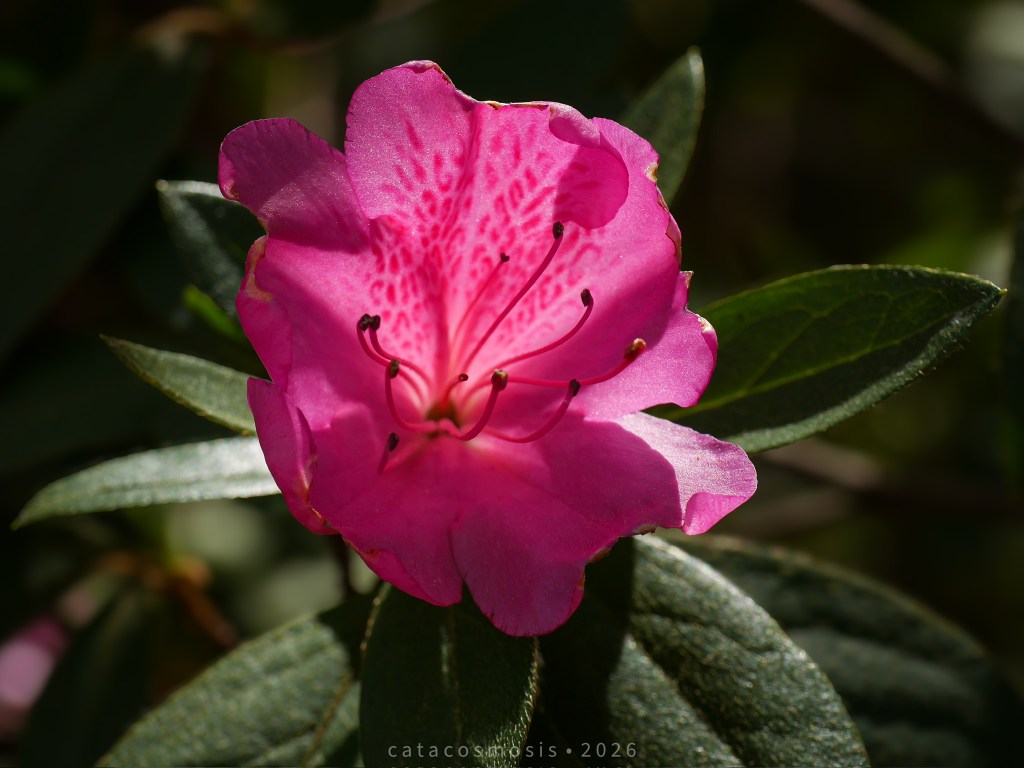
    📷 Lumix GX7 + Panasonic-Leica DG Macro=Elmarit
    ⚒️ VSCO + Lightroom Mobile

    Funny the things we fear and the things we don’t. Bobcats and mountain lions hunted those slopes, yet I never once worried about them — until the story my father told years later. At three years old, toddling the forty yard path to Grandmother’s a couple of hours after nightfall, my father watching and guarding intently — something I’d, we’d, done dozens of times before without consequence — a mountain lion perched on the cellar roof five feet above me, eyes fixed, body still. Daddy watched it watch me, praying silently, knowing any sudden move or cry might trigger instinct. It never pounced. I reached the house safe, unaware. When I was safely inside my grandmother’s screened-in back porch, he scared it off with a shotgun blast into the air, and we never saw one that close again.

    I’ve thought about that story more often since losing him. He’s been gone eleven years now, and there are many things I never thought to ask, or wish I hadn’t been afraid to ask, while I still could… but this one he told me himself, more than once. I think it meant something to him that I should know it.

    What I understand now, standing on this side of parenthood, is the cost of that stillness. The discipline of it. To watch a predator watch your child and not move, not cry out, not run — to trust that motion or sound might break whatever fragile restraint was holding that animal in place, and be so steady and rooted in your faith that you pray. Just… confidently pray. Whatever else he did or didn’t get right in his life, in that moment my father was made entirely of love and terror and faith, and none of it showed on the outside. That kind of stillness cost him everything. It was paid for in utter surrender, and he surrendered to fate, and to faith, beautifully.
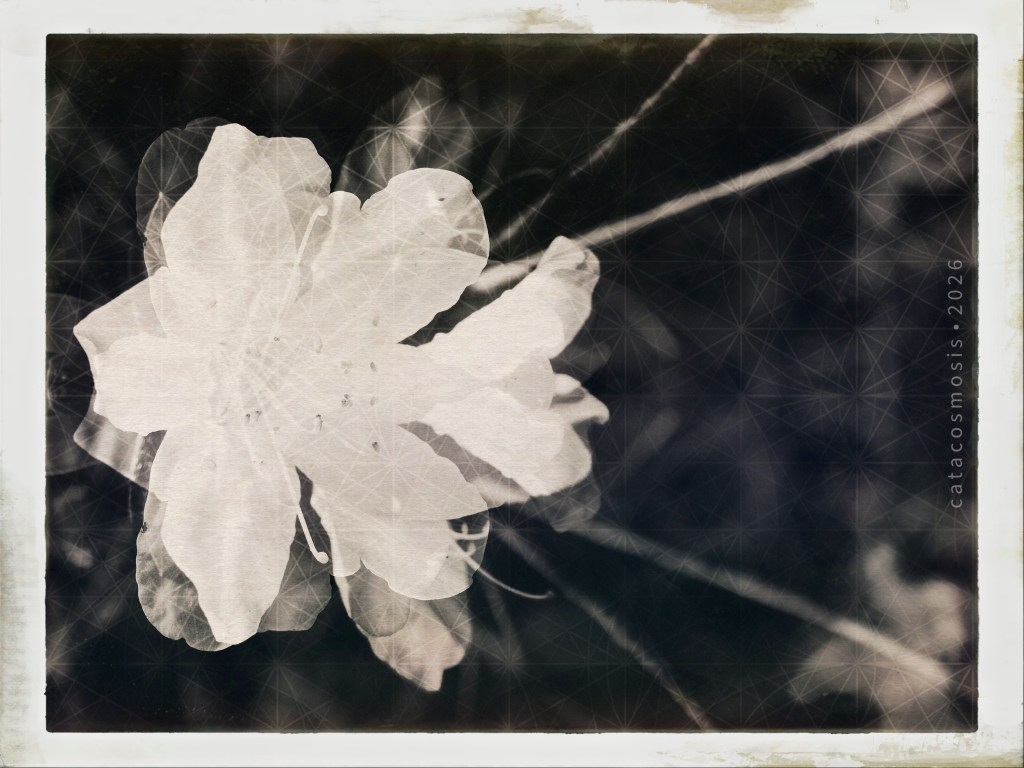
    📷 iPhone 17 Pro
    ⚒️ Hipstamatic X (Salvador 64 Lens + Uchitel 20 Film + Spiro Pop Flash

    I think about that when I think about my own son. Sixteen, navigating a world that doesn’t always make room for the way his mind works, walking through invisible dangers I can’t always name or intercept. And I understand something about the helplessness of parenthood now that I couldn’t have grasped as that oblivious three-year-old toddling through grace.

    You can’t always throw yourself between your child and what’s coming. Sometimes the most faithful thing is to stand still, breathe, and trust the hand that’s bigger than yours.
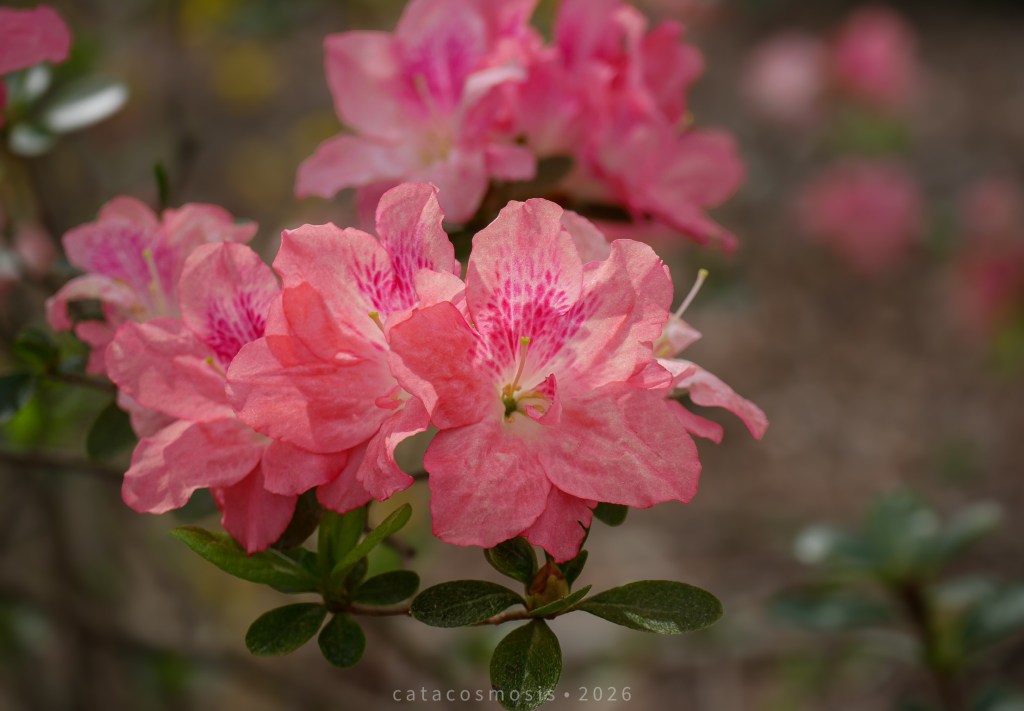
    📷 Lumix GX7 + Panasonic-Leica DG Macro=Elmarit
    ⚒️ VSCO + Lightroom Mobile

    These azaleas have had quieter seasons. A few years back they were sparse, almost reluctant, with a handful of blooms where there should have been abundance. I watched them without much comment, the way you watch things when your own life has gone quiet in ways that don’t invite easy conversation.

    Loss has a way of muting everything: the yard, the mornings, the impulse to pick up a camera at all. Grief and illness and the particular exhaustion that comes from giving what you have left to people you love… all of it settles like a kind of winter that has nothing to do with temperature. I’ve had a few of those winters. Longer than I’d like to admit.

    So this spring, when every single bush along the fence erupted like they were making up for lost time, I stood there and felt something catch in my chest. That’s part of why I photograph at all — not just to capture beauty, but to bear witness to it. To say, with the deliberate act of framing a shot, I see this. This is real. This happened. The camera makes me slow down enough to actually look, and looking is a form of gratitude I can access even when words fail me.
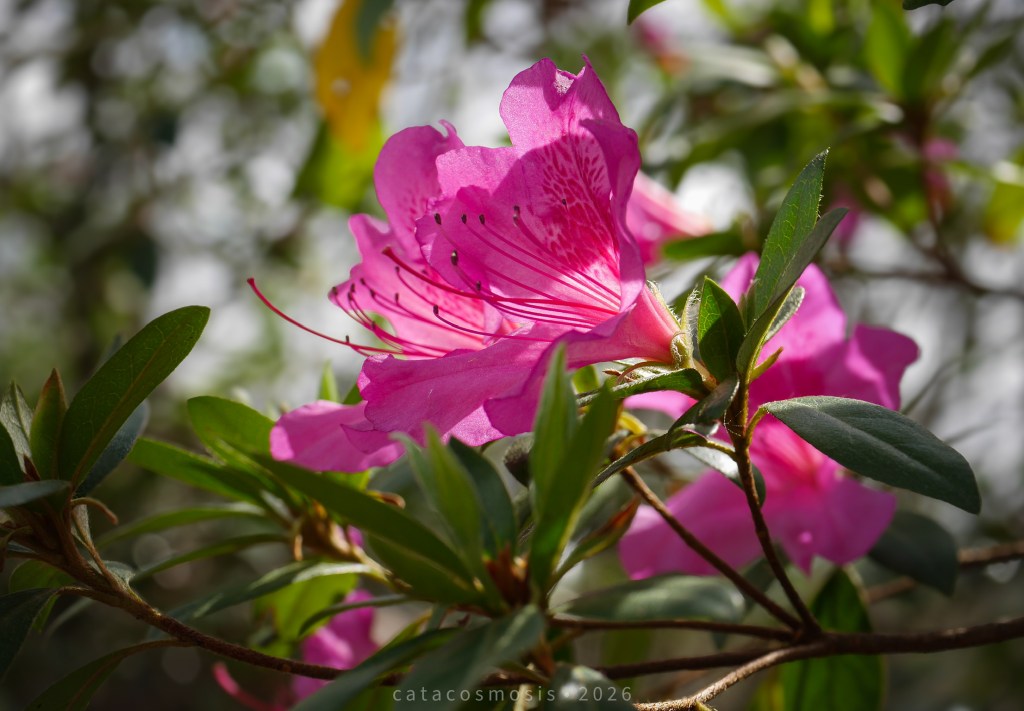
    📷 Lumix GX7 + Panasonic-Leica DG Macro=Elmarit
    ⚒️ VSCO + Lightroom Mobile

    As a child, maybe I sensed some invisible shield, or maybe I was just young enough to believe in magic. As an adult, looking at these cultivated echoes of those wild blooms now thriving in my own yard, I know the truth: protection was there all along. Not arrogance, but grace.

    God’s hand has turned aside far greater dangers than I ever knew were there. The mountain lion I never saw, the losses I somehow survived, the moments where the math shouldn’t have worked out in my favor and it did anyway. These azaleas, blooming so fully this year after quieter seasons, feel like a quiet reminder of that mercy, a gift unfolding right where the tame meets the wild, the past meets the present, under the watchful gaze of my mountain.

    I don’t take that lightly. I don’t take it for granted. I take photographs of it, and I tell the stories that go with them, because that’s how I know to say thank you.

    Mere backyard glory doesn’t begin to cover it. It’s memory, wonder, and gratitude all tangled in petals.
  • Exhumation

    Exhumation

    entry twenty one — scattered light, fractured grace: a quiet archive of light, loss, and what remains.
    Lumix GX7 + DistressedFX + VSCO

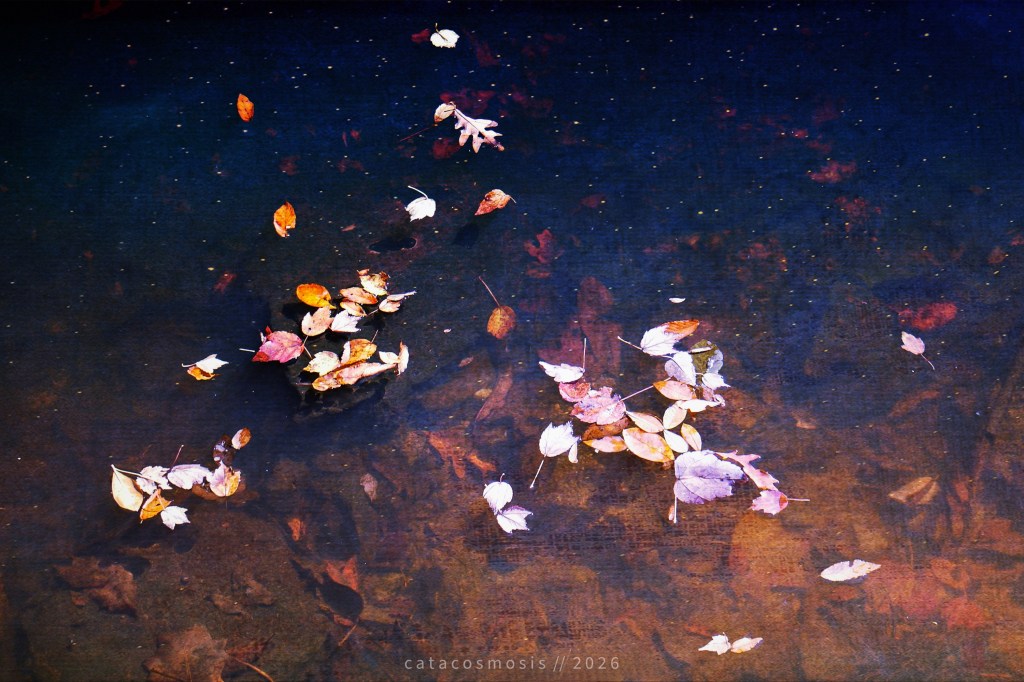
    At first glance, it looks like the night sky. Stars caught in dark water, light splintered and scattered across a depth that won’t quite give itself away. But it isn’t the sky.

    It’s dead things in the night, drifting on reflections. What’s beneath them still visible in places, obscured in others, the creek bed watching quietly through the murk.

    This is what avoidance looks like.

    We tell ourselves we are being practical. Responsible. Efficient. We say we can’t afford to stay. That we don’t have the time. That the weight would crush us if we lingered too long in the place where everything ended.

    Sometimes those things are true. But truth has layers, and there is always another one underneath the one we say out loud.

    I didn’t leave because I couldn’t manage it. I left because staying would have required me to face the finality of it all… and I wasn’t ready to let it be final unless I controlled the ending.

    So I doubled down.

    If this was the last chapter, I would slam the book shut myself. Sell the house. Let it go. Never look back. Shut myself away from it in the fullest, most tangible way that I could. And I did.

    Except that isn’t how grief works. Not in real life. Not in spirit. Not in the psyche or the heart.

    What we try to bury doesn’t disappear. What we try to drown learns how to breathe underwater. The things we refuse to look at don’t stop existing. They just wait.

    They become shapes beneath the surface. Creek monsters tucked under rocks. Ghouls that don’t announce themselves, only shift when the light hits the water just right.

    Running feels like relief at first. It masquerades as strength. As forward motion. As survival.

    But it isn’t courage. It isn’t healing. And it certainly isn’t wisdom. It is postponement.

    Eventually, the piper comes.

    This winter has been that reckoning for me. A season of stillness I didn’t choose, where the water stopped moving long enough for everything to rise.

    Regret. Guilt. Shame. The ache of what I didn’t tend to when I still had the chance.

    It has been heavy.

    But I am here. And I am mid-process of the exhumation.

    Instead of running, I am learning (again) to release. To let what I tried to sink float to the surface. To watch it drift, or linger, or soften and break apart with time. To observe rather than flee. To witness rather than erase.

    Because drowning it never made it disappear.
    It only darkened the water.

    There is grace even here. Fractured, scattered, refracted through loss, but still light. Still honest. Still mine, in memory and in soul.

    I sold my childhood home, and I regret it. Not because it is gone, but because I believed distance could undo what shaped me. It couldn’t. I didn’t forget it. I didn’t erase it. And now I face the ghost of it… even if I must do so from far, far away.

    catacosmosis // 2026

  • The Freeze

    The Freeze

    Every so often, I experience what I call the freeze.

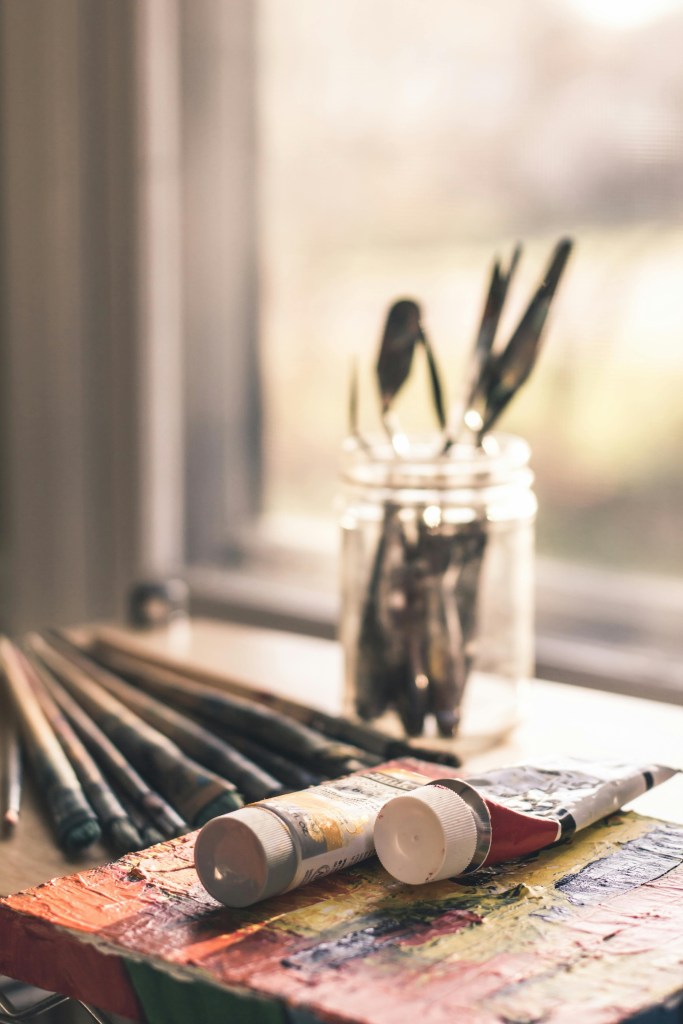
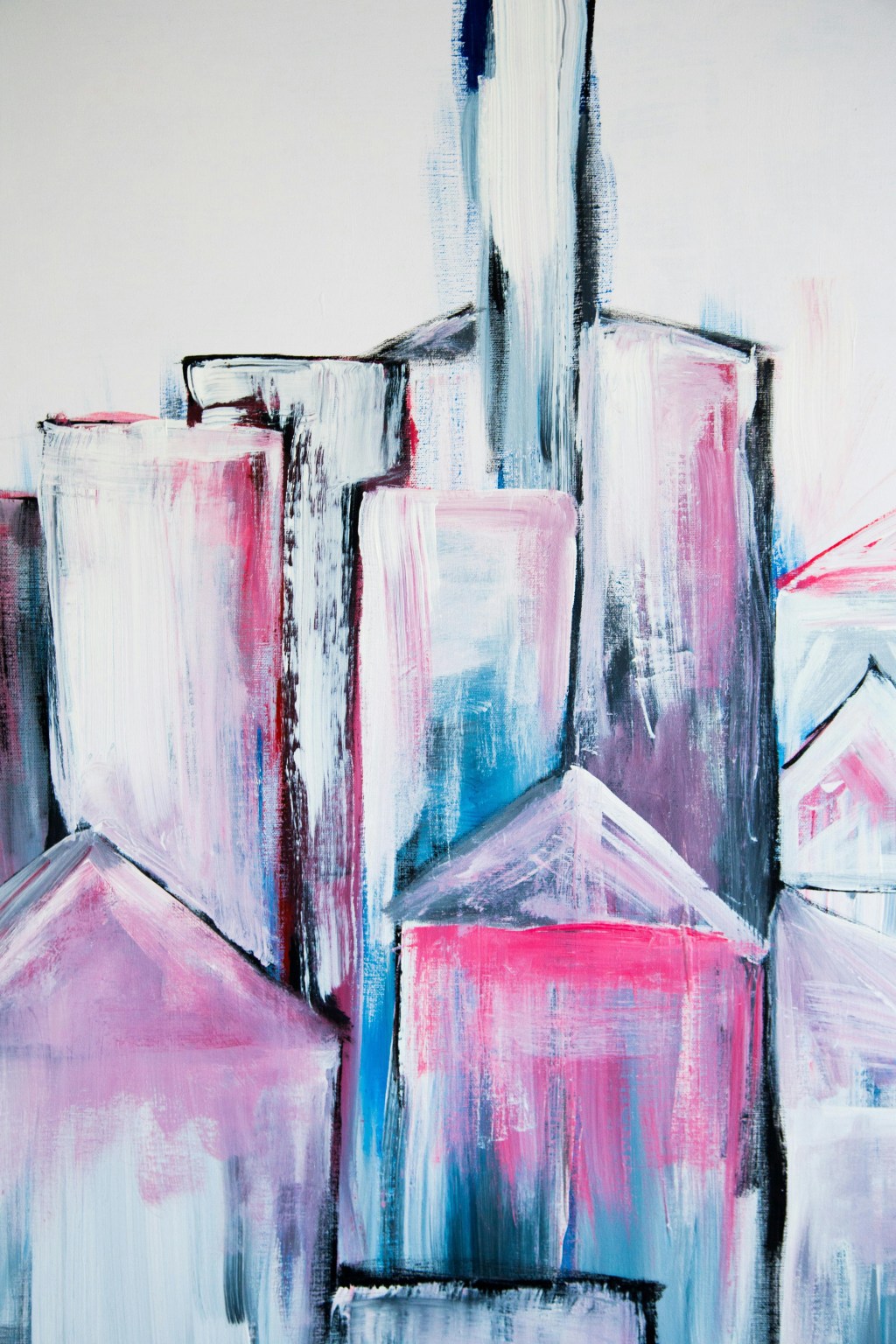
    Artists will know exactly what I mean. It is that moment right before you begin a new piece, canvas blank and supplies ready, when something inside you locks up. You want to move, but you don’t. You know what to do, but suddenly you can’t do it.

    It’s not laziness and it’s not a lack of ideas. It’s more like a quiet paralysis, the sense that whatever you do first will somehow be wrong, wasteful, or irreversible.

    I experienced that tonight, and it surprised me. I haven’t frozen like that in a long time.

    Maybe it is holiday stress. Maybe it is the cumulative weight of life, reality, and empathy for a world that feels perpetually on edge. Maybe it is something smaller, or something that would sound completely absurd to anyone watching from the outside. But absurd does not mean invalid.

    Any time we experience something like this, there is a reason… and I am the kind of person who looks for it. I look inward and outward, I sit with the discomfort instead of trying to bulldoze through it, and I pay attention to what is actually happening in my body and mind.

    I find that process purposeful, and sometimes even enjoyable, not because it’s comfortable but because it gives me agency. When I understand what is happening and why, anxiety loses its grip. I can experience it and coexist with it at the same time. More often than not, that approach resolves the issue in a deeper and longer-lasting way than simply forcing myself forward.

    So this is the internal conversation I had tonight, and how I talked myself through it once I reached a clearer understanding of what was really going on. This is where my professional training in psychology meets my self-taught training in art, I suppose.

    If you have similar experiences to what I’ve described above, I hope some part of this is useful to you.


    Step 1. Pause for a moment. Not to analyze or fix anything, just to name what is happening. Once something is named, it tends to lose a surprising amount of its power.

    What you’re feeling when you experience “the freeze” as soon as you pick up a brush or a palette knife, or face whatever in life it is that makes you freeze in a similar way, is not a personal flaw. For artists and creatives, it’s not proof that you are bad at being creative.

    It’s a very specific nervous-system response, and it shows up most often in people who actually care about what they are making. In psychology, this response is often described in a few overlapping ways.

    It can be understood as a conditioned approach and avoidance conflict within you, where the part of you that wants to create is simultaneously held back by fear of loss or failure.

    Funny story: I wrote an entire 23-page research paper on this in my junior year of undergrad. In my opinion, it was incredibly boring, personally insulting, and the worst three months of my life at the age of 21, but somehow I shockingly got an A.

    I digress.

    It can also appear as performance anxiety, though not in the social sense, more as an internal pressure to do it right. For me, it is absolutely perfectionism as a defensive strategy, a way of protecting myself from imagined mistakes or wasted effort (thanks, Mom, may you rest in peace). In many cases, it can even be the brain or your physiology responding to dorsal vagal activation, which includes fight, flight, freeze, or fawn, but we will not go that deep here.

    To put it in easy, normal language, this reaction almost always appears right before commitment. Any commitment, but especially one that means “if it goes wrong it’ll really cost me.”

    In the art scenario, up until this point, the work has existed only in imagination. In that space it is infinite, perfect, and safe. The moment you are about to touch the canvas, it becomes finite and real. Something is chosen. Other possibilities fall away. Your (my) system hears that as loss, and it tries to protect you by freezing you in place.

    That feeling that it has to be a certain way to be right is not creativity. It is internalized surveillance. Somewhere early on, many of us learned that mistakes mean waste, mess means failure, and a wrong choice causes permanent damage. Even when those rules no longer apply, the body remembers them. So when you are free, your body does not quite believe it.

    That is not weakness, or incompetence. It is conditioning that has simply outlived its usefulness.

    At the center of this response is a quiet lie: “If this turns out bad, the supplies are ruined.”

    That is just not true. Acrylic can be scraped, painted over, sanded, cut up, or turned into texture. A canvas can become a foundation rather than a final statement. Materials are meant to be used. That is their purpose. Paint that sits untouched out of fear is already wasted.

    Canvas is not sacred. You are. Please remind yourself of that immediately, and lock it in.

    Another lie slips in just as easily: “It has to be a certain way to be right.”

    Right for whom? There is no audience in the room, no rubric, no grade. There is only motion, pressure, color, and the physical relief of making contact with the surface. Art does not exist to behave! Remember?

    This kind of freeze does not happen to people who do not care. People who are shallow about creativity do not spiral like this. It tends to happen to people with depth and sensitivity, to people who were corrected more often than they were encouraged, and to people who learned how to perform before they learned how to play.

    The nervous system is not sabotaging anything. It’s trying to protect something precious: the ability to feel and express. It’s simply using outdated rules.

    Step 2. A small reframe helps here. You are not making a painting right now. You are making the first layer of a surface. Nothing more. Not meaning, not outcome, not art with a capital A. Just noticing what happens when color moves downward. That layer is allowed to be ugly. It is allowed to be scraped away. It is allowed to disappear entirely under the next thing. You are allowed to stop at any time.

    There is one gentle but important rule I follow that can helps me quiet the pressure. Say out loud that nothing you do in the next fifteen minutes counts. Set a timer. When it ends, you can walk away with no obligation to continue, fix, or judge. This is not about pushing through fear. It is about making fear irrelevant.

    And finally, this matters. The experience, the art, and your simply being. But also, the fact that you sometimes freeze. It’s not invalid. You do not need to get over it already. That voice was built over years. It softens through safe repetition, not self-attack. Every time you begin anyway, tentatively and imperfectly, you rewrite it.

    You are not broken. You are unwinding.

    I hope this helps someone…

    xo.

    c.

  • Winnow

    Winnow

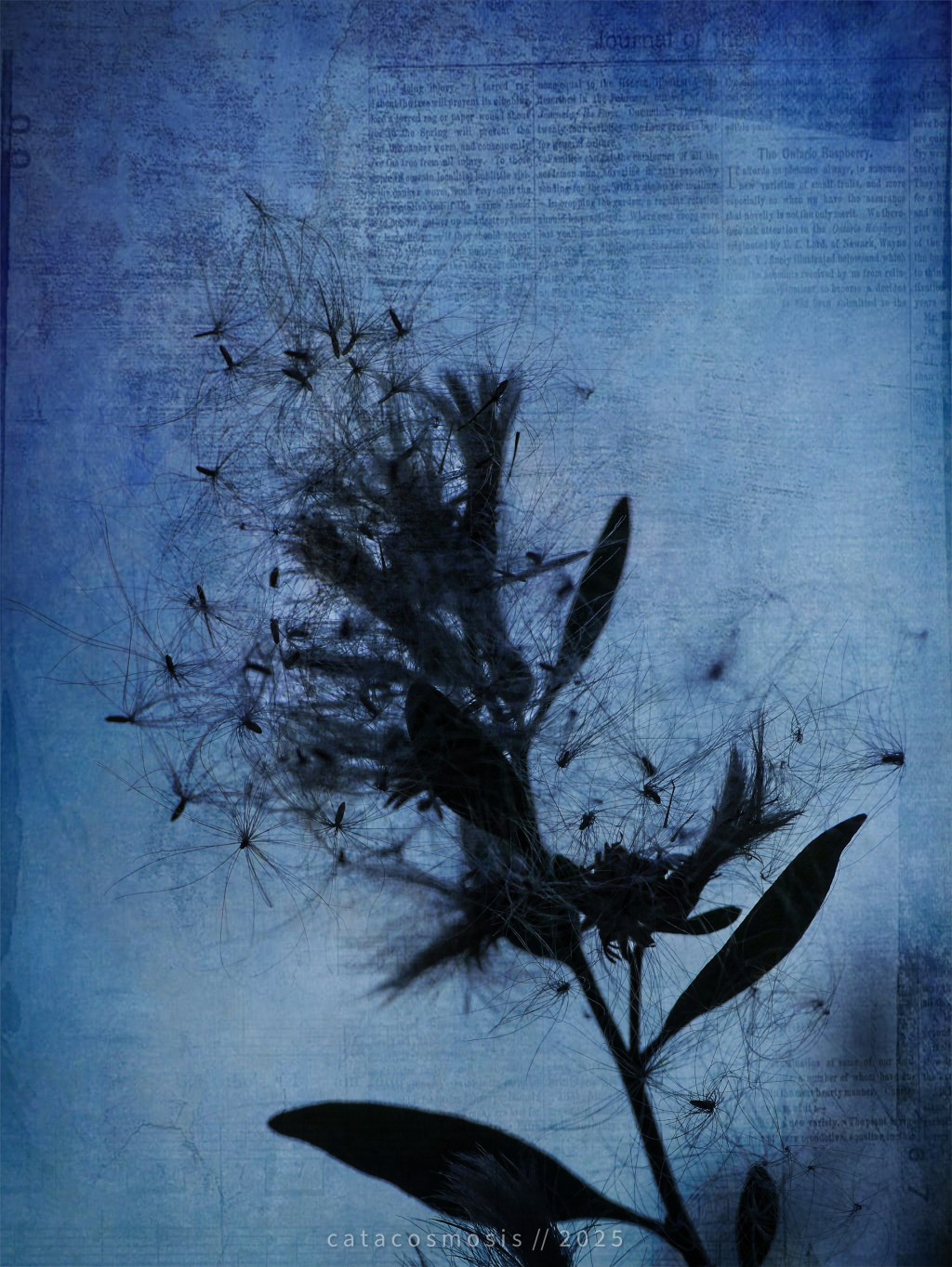
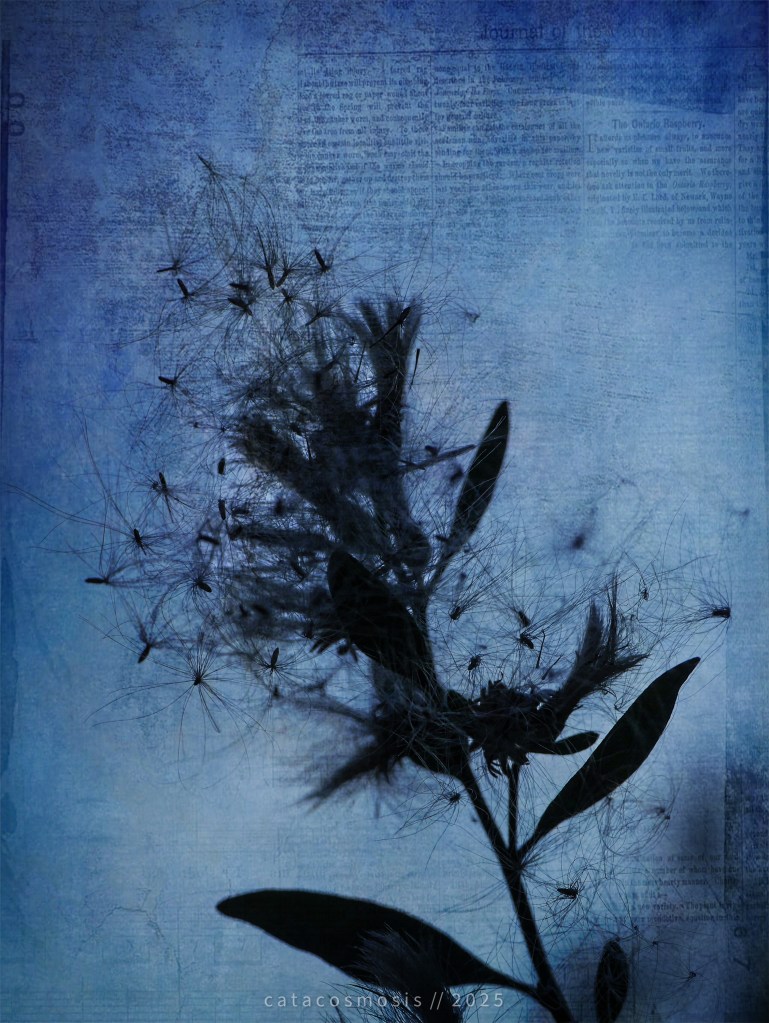
    entry sixteen — scattered light, fractured grace: a quiet archive of light, loss, and what remains.
    iPhone 17 Pro + VSCO + DistressedFX + Lightroom Mobile (watermark only).

    Evening gathers in a bluish-purple hush, and the crunch of dirt and rock seems to echo around me. Steadily and with intention, I put one foot in front of the other.

    The birds fall silent, and the wind begins its quiet work. Loosening what I’ve held too tightly. Lifting the thin, trembling pieces of me that never settled into place.

    They rise like seeds learning the shape of their own release, drifting out of me in a soft unspooling. The silhouette remains. Stem, leaf, the stark line of what endures. Everything lighter unthreads itself into motion.

    What once felt like a tangle becomes a brief choreography, a small mercy in the dimming light. Loss, I’m learning, is sometimes only a shifting of weight.

    The wind carries the rest. The jumbled thoughts. The old ache. The unspoken sentences that kept circling my ribs. Let them scatter. Let them drift beyond reach.

    What stays is quieter, but honest. A rooted shape against the fading sky, held together not by certainty, but by the simple grace of letting go.