Tag: reality

  • Tipping Point

    Tipping Point

    It would seem I’ve waken up to yet another extreme of the obvious hypocrisy in what’s being demanded as “reality.” Some people genuinely still do not “get it,” while others still willfully refuse to see.

    Either way, and from all sides, there is an overarching question: Has society reached a true tipping point?

    Based on the reaction to a black man in white face, it would seem double standards have finally outstayed their welcome overall.

    Notice the general pattern of double standards over the last several years:

    Women can mock men.
    Trans can mock cis.
    Non-whites can mock whites.
    Gay can mock straight.

    Flip any of that around and you’re cooked.

    Look at the standards a little more deeply:

    The most obvious example is how men putting on “woman-face” or women putting on “man-face” isn’t just accepted — it’s demanded that everyone affirm it as their literal reality and “respect” it.

    So, logically, if that’s celebrated and that’s “reality,” then picking on any culture in jest for their quirks, failures, or oddities should be just as acceptable.

    That sums up what people are really upset about re: this skit that’s been circulating the last couple of days: it’s the double standards.

    And it’s not just white people who have had it.

    Yes, this particular skit has a lot of white people speaking out — they’re tired of being singled out as the only group not permitted to joke back, and then accused of lacking a sense of humor when it’s done to them.

    But consider society as a whole:

    Non-whites and whites alike are fed up with their own people acting like ungrateful, entitled fools — wasting the opportunities their ancestors fought to provide them and destroying the respectability they strove for.

    By now becoming loud, lazy, and disrespectful criminals, people make a mockery not only of their rights and the many opportunities they have if they would simply show up, but of their entire communities.

    Whites are fed up with Karens and Chads.

    Legal immigrants feel the same way about illegals trashing the opportunities they earned by doing things the right way — respecting the privilege of coming to another country, rebuilding responsibly, and treating that privilege with honor.

    Instead, illegals cause even legal immigrants to take the flak, lose opportunities, and be punished for things they didn’t even do.

    Masculine men are tired of being told they’re assholes instead of protectors, simply because masculinity is constantly mistaken for toxicity.

    Men of every race and personality type are sick of women parading around declaring they don’t need men, accusing and blaming men for everything wrong in the world — while in the same breath lamenting absent fathers, complaining that men don’t “show up” in general, and then demanding applause and respect for a world women absolutely didn’t build without the strength and masculinity of men.

    Women of all races and personality types are sick of being pressured to accept men in dresses not only mocking them and what it means to be a woman, but especially a mother, and having their spaces invaded and reclaimed as “everyone’s space,” only to be labeled ‘phobic’ or hateful for feeling that way.

    This isn’t only racial. It’s far broader than that, and these are only a few of many examples.

    Most, if not all, “everyday people” — all of us who are not filthy rich or sitting in positions of power — are fed up with war, crime, cruelty, and double standards. We just want to work hard, add meaning to the world, and reap the fruits of our labor: enough to survive, and enough to live — to enjoy a healthy, peaceful, happy existence.

    When did that become an unrealistic or unacceptable dream to have? It’s one that has echoed through the ages.

    Society as a whole is at a tipping point — fed up with hypocrisy, nonsense, and the double standards that no longer make sense.

    The solution, as I keep attempting to remind people, is simple across every aspect of society — yet seemingly impossible for most: for all people to embody empathy for others while taking accountability for themselves, existing in and acting from discernment.

    It is to embody some semblance of morality overall, respect nature, the planet and all its people, but especially ourselves. If we do that first — embody true self-love and self-respect — the depths of it, and not merely the mask — all the rest falls into place on its own.

    Will that be impossible for you? Or will you make it possible for yourself, and thus for others?

    Good luck out in the world today. Much love from me to you (no matter who you are).

    💜

    xo,

    c.
  • Babel, Babylon, and Beyond | The Same Old Serpent

    Babel, Babylon, and Beyond | The Same Old Serpent

    Fall is already upon us. Nature seems to have gotten ahead of itself in recent weeks and the world around me, from my backyard to the vast wilderness, has already begun to experience the cycles of death and decay that the fall season brings to prepare us to enter a season of rest.

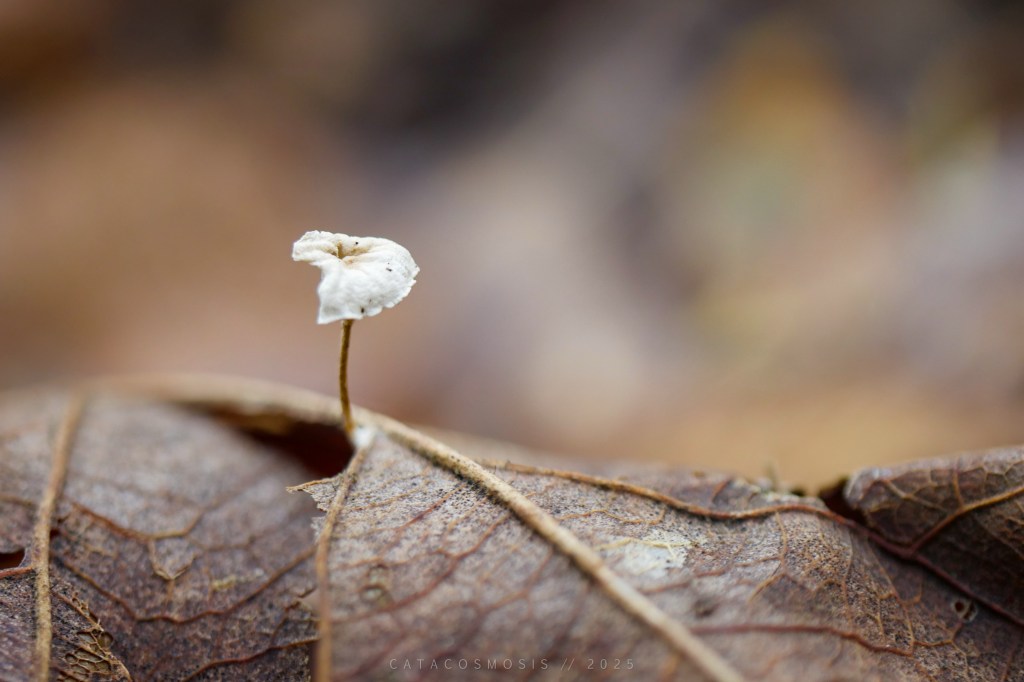
    I’ve found myself meditating on this as I’ve observed the process and explored the details of it with my camera lately. Here are some of the fruits of these meditations — especially the ones I experienced while studying this little corner of my backyard that has been unseasonably filled with the tiniest but cutest mushrooms.

    We so often use falling leaves as the symbol of letting go in autumn — but mushrooms tell another side of the story. They are decay in action, the hidden transformation beneath the surface, breaking down what once was so that life can be nourished again. They remind me that endings are not passive; they are active processes of renewal, just as necessary as the more obvious metaphors we tend to notice.

    What follows in this post may not feel “light and pretty,” but the deeper work is still life-giving. Much of it was born from reviewing and processing my recently captured mushroom images — small, humble, not glamorous, yet quietly essential. These considerations and introspections, though they may seem less than inviting, have at their core offered me encouragement.


    When you strip away the politics, money, and power structures, what you’re left with is a spiritual war. That’s the root of it all.

    The “deep state,” the “new world order,” whatever names we slap on it in the 3D — those are just costumes. The real battle is what Paul described in Ephesians 6:

    “We wrestle not against flesh and blood, but against principalities, powers, rulers of the darkness of this world, and spiritual wickedness in high places.”

    In short, demonic and low-level forces that have always tried to mimic, distort, and overthrow the authority of God.

    From Babel to Babylon to Rome to today, it’s the same rebellion recycled. Every empire that tries to erase God ends up becoming a shadow play of Babel — the same arrogance, the same lust for control, and the same inevitable collapse. The schemes shift form — empire, propaganda, deception, perversion — but the spirit behind them hasn’t changed.

    It’s the same old serpent trying to counterfeit creation and place itself on the throne. But here’s the thing you need to remember, if you are of the light:

    Humans can choose to align with that darkness or resist it. That’s why it looks like whole institutions, movements, or leaders are “possessed” by this agenda. But the truth is, they’re vessels. Some willingly, some blindly. And even when people align with darkness, they are never the true source of its power — and they are never beyond God’s reach if they repent of and rebuke the darkness.

    The vessels may change, but the spirit behind them is the same counterfeit. It’s not their power. It’s borrowed power, and because the Devil is a trickster and a liar, it cannot outlast the sovereignty of Source truth.

    That’s why, in the light of evil tragedy, the instinct to pray “God bless and protect” is attacked and pushed down so brazenly by some, and depended upon and held on to so tightly by others. The only way for the dark to win is to try to sniff out the light.

    The only shield that stands against the dark, though, isn’t more politics, more anger, or more fleshly fight — it’s divine covering. That’s why light beings, from Buddha to Jesus, called us salt and light — because no matter how deep the night gets, even the smallest flame cannot be overcome.

    Light exposes. Truth cuts through lies. And no empire, no “order,” no demonic hierarchy driving human ego has ever been able to out-rule the Source of the Universe: Love.

    The darkness may rage, but it has already lost. Its decay is inevitable. Our task is not to fear its noise, but to keep carrying the light that cannot be extinguished.

    if you are only just beginning to see the reality of this battle and sense that light, do not be afraid of how small it may seem in you. Even the faintest flicker is enough to drive back the dark. Nurture it. Walk with it. Let it steady your steps.

    The path may feel unfamiliar, but you are not walking it alone. Every spark joins the greater flame, and together we rise.

    Keep going — the light you carry is already proof that the darkness has not won.

    xo,

    c.

  • A Pause…

    A Pause…

    Yesterday on my hike, I paused for a long while. I gave nearly an hour of stillness and reverence to the nature around me, watching as butterflies moved over water and earth, dancing with the light in a way that spoke of freedom and trust. I sat with it — what felt like hours, though really only about thirty minutes — before stepping back onto the trail, camera in hand. As I rose from the creek to walk on, almost by instinct — more a photographer’s habit than intent — I pressed record.

    Later, on the drive home, I found myself reflecting on that time as I listened to one of my favorite songs — one I’ve leaned on heavily in recent years, especially since the decline and death of the last of my human teachers and spiritual guides: “Oceans (Where Feet May Fail).” The two moments merged together in my heart.

    After Ralph’s death, I finally understood where I should have been leaning all along. He — and my dad — had both tried to guide me toward this truth while alive in human form, but I depended too heavily on them. And if not on my mother in person, then on her prayers. It wasn’t until they were all gone, when I no longer had any “training wheels” to lean on, that it fully clicked at a conscious level:

    I had been depending on God all along, hearing Him, even resisting His direct guidance. I just hadn’t been consciously aware of it. That’s when I realized my faith had never left me — it had only been muted, even scapegoated, by my dependence on the faith others carried.

    It was only when I allowed this song to become a foundational prayer of my heart that His presence became tangible in a way I could no longer deny. The veil fell from my heart and my eyes, and through His grace I saw with a clarity I had once resisted — the kind of knowing that hurts, yet somehow makes the truth easier to embrace.

    The lyrics of this song speak of stepping out into places where our own strength isn’t enough, and trusting God to steady us anyway. That truth became real to me after Ralph died — especially about a year later, when I found myself in a moment of decision: to choose what I merely wanted to believe, or to stand in what I knew was real.

    I understood the magnitude of that choice. I knew it would break my human heart, and I knew it might stir misunderstanding, anger, and hurt in those around me. It was the hardest place I had ever stood. But I also knew it was time. Time to trust Him not only with my conscious mind, but with my open soul — my entire being. Time to leap.

    So I did. I quietly — nay, silently — forgave all that needed forgiveness, and I let go of everything: past, present, and future… even the things I still and always will love, but that I knew could never take root in this life. For just over a year, all that mattered outside of physical survival — food, shelter — and caring for my son was solitude in His presence.

    I chose God. I surrendered everything. And in that surrender, I rebuilt and reinforced boundaries — not only to protect what was holy from the evils that I knew would seek destroy it, but also to shield those who weren’t ready to walk the path of full and true surrender from the consequences of my choice to do so.

    Almost immediately, things began to unfold around me — things I had long since lost hope for, or had no idea how to overcome or achieve, in my life. None of it happened exactly as I would have liked, nor in the timing I would have chosen, and almost nothing came about in the way I would have planned or orchestrated it. But that was the entire point of surrender.

    And in that realization, I understood something deeper: I had spent years trying to explain surrender to others with words, but the example — living it out, letting God’s hand write the story — was far more important, and a far more powerful testimony for Him.

    Butterflies have always been a reminder to me of my grandmother, and of the simplest analogies of metamorphosis and transformation. But now? What I see most prominently in their flight is this — so fragile, yet so fearless in the air:

    They carry the story of loss and love, of veils lifted and prayers surrendered — of a journey where survival gives way to presence, and presence gives way to peace. And for all of us, just like these butterflies, it is only through full surrender to the grace and truth of something higher than ourselves that we can be — and will be — fully loved, fully supported, and able to flourish.

    Here, I’ve paired them with the piano playing of the song and these reflections as a reminder to myself, and to anyone who reads this, that even when we feel small, it is faith that keeps us aloft. I share this in hope that it might offer whoever sees it a nudge of encouragement as we continue the journey God has given us — the one He has called us to submit to and surrender.

    After decades of seeking, struggling, and trying to show and teach others (while really teaching myself), here’s what I know:

    If we ever want to find purposeful growth or true peace, we must fully surrender to the creator and orchestrator of it all — to His will, not our own.

    xo,

    c.

    🦋💜🕊️

    You call me out upon the waters…
    The great unknown, where feet may fail.
    And there I find You in the mystery.
    in oceans deep my faith will stand.

    And I will call upon Your Name,
    and keep my eyes above the waves.
    When oceans rise,
    my soul will rest in Your embrace…
    for I am Yours, and You are mine.

    Your grace abounds in deepest waters.
    Your sovereign hand will be my guide.
    Where feet may fail and fear surrounds me,
    you’ve never failed, and You won’t start now.

    So I will call upon Your Name,
    and keep my eyes above the waves.
    When oceans rise,
    my soul will rest in Your embrace.
    For I am Yours, and You are mine…

    Spirit lead me where my trust is without borders.
    Let me walk upon the waters,
    wherever You would call me.
    Take me deeper than my feet could ever wander,
    and my faith will be made stronger
    in the presence of my Savior.


    Oceans (Where Feet May Fail), written by Joel Houston / Matt Crocker / Salomon Lighthelm.
  • I died, and it… was okay. | Notes from the Other Side

    I died, and it… was okay. | Notes from the Other Side

    The First Illusion

    How can an illusion free an illusion?

    It can’t.

    Impossible.

    And yet, freedom itself is not impossible.

    But what we often mistake for freedom is only substitution. We trade one mask for another, one prison for another, one dream for another.

    Replacing one illusion with another does not set us free. It does not bring liberation. It simply shifts us deeper into what I sometimes call non-happening happening — the endless cycle of movement that looks like change but never truly is.

    So where, then, is freedom?

    Maybe it’s in understanding that simple truth.

    Maybe it’s in seeing clearly that nothing we have called “freedom” has ever been real freedom at all.

    Maybe that was the point, all along.

    Is that awakening?

    Awakening as Death

    Awakening is the death of the familiar.

    Because what is “familiar” to us — what we call “our life,” “our personality,” “our world” — is illusion.

    Nothing we are familiar with is actually real. None of it is actually us.

    We are not real. We are not what we think — what we are told — we are. And yet, here we are.

    So when awakening comes, it feels like death. Because it is death — the falling away of everything we thought was “me.”

    And without that death, there is no birth of what was real all along.

    Meaning Before and After

    Before awakening, there is no meaning of our own.

    The only meaning available to us is what others have told us is meaningful. Parents, teachers, religions, governments, lovers, friends, enemies, cultures, systems — all of them have fed us their meanings.

    And we absorbed them as if they were truth.

    We were conditioned to believe meaning is handed down, not discovered.

    We were punished for expressing anything antithetical.

    Yes, that is a word. I did not make it up. I checked, as always, when I returned from the other side.

    I digress.

    Even when we think we are thinking for ourselves — are we? Have we ever? Do we even know how?

    This is the prison of the familiar.

    But those of us who have never been able to simply swallow it — those of us who have spent our lives being told we are crazy, too deep, over-analytical, antithetical — maybe we’ve always been a little closer to freedom.

    Because we have always been with ourselves. We have always lived in the company of our own questioning. Our own introspection.

    And that has saved us.

    Moving Through Darkness into Light

    My entire life has been this movement — through darkness into light.

    And then again. And again.

    I never stayed still in a 3D thought long enough to let ideology calcify around me. Never settled enough into the world’s definitions of reality to say: “Yes, this is it. This is reality. This is me. This is final.”

    No.

    I couldn’t.

    Always, incessantly, I questioned. I sought. I chased myself. I chased I am.

    Because each time I reached for that exactness, that rigidity, something in me would die. And something deeper would awaken.

    So instead, I’ve kept moving. Through darkness, into light.

    Through lies, into truth.

    Through death, into life.

    Over and over again.

    And each time, what I found was not more of “me,” but less.

    Until I began to understand that the “me” I thought was the center of the story was never the point at all.

    And then, I actually… died.

    And then, I came back!

    What?

    I know. That’s what I said, too.

    And that is when the fullness of both illusion and irrelevance were clear to me, and the illusion and irrelevance… both shattered.

    Freedom.

    The Irrelevance of “Me”

    “Me” is irrelevant.

    Yet somehow, everything has always been about me.

    That’s the paradox.

    The small “me” — the conditioned self, the mask, the name, the history — means nothing. It is dust. Illusion. A temporary construction.

    But the deeper “I” — the one who moves through the dying and the awakening, the one who is aware of even that dust falling away — that “I” has always been the ground of everything.

    So in a sense, “me” does not exist.

    And in another sense, “me” is all that has ever existed.

    It was always… the I Am.

    The Misunderstanding

    This will be misunderstood.

    Mostly by anyone and everyone who reads it.

    If they even make it past the first few lines.

    Because illusion defends itself. It doesn’t like being called what it is.

    But misunderstanding doesn’t matter.

    Life takes care of itself.

    Life Happens

    Even when you are not there to see it, life still happens.

    Everything still unfolds — rivers flow, winds move, earth shifts.

    Even if you choose inaction — even if you refuse to eat, drink, or sleep — things still happen. The body dies, yes, but death itself is a happening.

    Because everything is always happening. Always in motion.

    Even in stillness, there is happening.

    And everything that happens has a result. Even nothingness produces consequence.

    Life is self-correcting. Even ungrounded, it finds its own balance.

    Sometimes that balance looks toxic. Sometimes it looks destructive. But it is always balance. Always motion. Always happening.

    Death Must Occur

    Death, then, is necessary.

    Not the physical death we fear — not suicide, not the cutting short of the body’s days.

    Though that death is really not all that bad, in my experience.

    The dying part itself is no fun.

    The death?

    Too many words — words are funny for this one; there is not a word, other than death.

    It is nothing, and everything.

    Alpha, omega.

    I am.

    Here? What must die is the illusory self.

    The self we defend, cling to, and worship without even knowing it. The self we call “me.”

    That death is the doorway.

    The Last Illusion

    And yet, even here, there is a final paradox:

    If the self is illusion, then death is illusion too.

    Which means — death cannot free us either.

    Because an illusion cannot free an illusion.

    I do not fear.

    Why is none of this terrifying to me?

    Maybe because fear only exists where there is something to lose. And what I am losing was never real in the first place.

    Maybe because I have already died a thousand small deaths, the fear has already been burnt out of me.

    Maybe because I saw it:

    That what I am cannot die.

    And maybe that — quiet, simple, unshaken — is what freedom has always been.

    xo,

    c.

  • The Line Is Always Open

    The Line Is Always Open

    A while ago, God asked me to step away from the noise. The purpose was not just to “rest,” but to enter true solitude. It wasn’t the kind of solitude that simply quiets the mind; it was the kind that strips away the need to convince, the compulsion to rescue, and the reflex to correct every error you see in the world.

    When you live in that stillness long enough, especially when you begin to examine how deeply and how long you have been misunderstood in your own life, you finally grasp why no one was truly listening. You begin to understand:

    The time for saving people by warning them and trying to teach them by telling them, begging them, or reasoning with them has passed. Just like with a child, there comes a time when you have to let them just keep screwing up until they learn. Experience is the only teacher that can accomplish anything fruitful.

    At some point, you realize your job is and always has been to just be the example and let them hate you or blame you if they wish. The time now, and the purpose, is to show up anchored in truth, walking forward for the sake of those who are searching.

    It is time to lead without any guarantee of who will follow, even if the path takes you to meet God alone. In the end, it all comes down to free will — and on the day you stand before Him, the only life and soul you will ultimately give account for is your own.

    There is no bureaucracy at the Pearly Gates, no worldly process to pass through. Character witnesses don’t exist there. Your actions, your choices, and the truth of your heart and relationship with Source will speak for themselves to the one and only true Judge, whose authority is absolute and divine.

    After months of this solitude, returning to public spaces feels different. The peace you find in solitude makes the digital clamor almost unbearable. You realize most people are not listening, not because they can’t, but because they don’t want to. They’ve been taught to fear the very silence that would heal them.

    Still, there are always a few — maybe only two or three in a sea of millions — who are listening for a different kind of voice. And for them, we show up.

    As I dipped a toe back into social media in recent weeks, I saw exactly why Source had been directing me as it had. Then, this morning, I saw a post on Instagram that reminded me exactly why I hesitate to return.

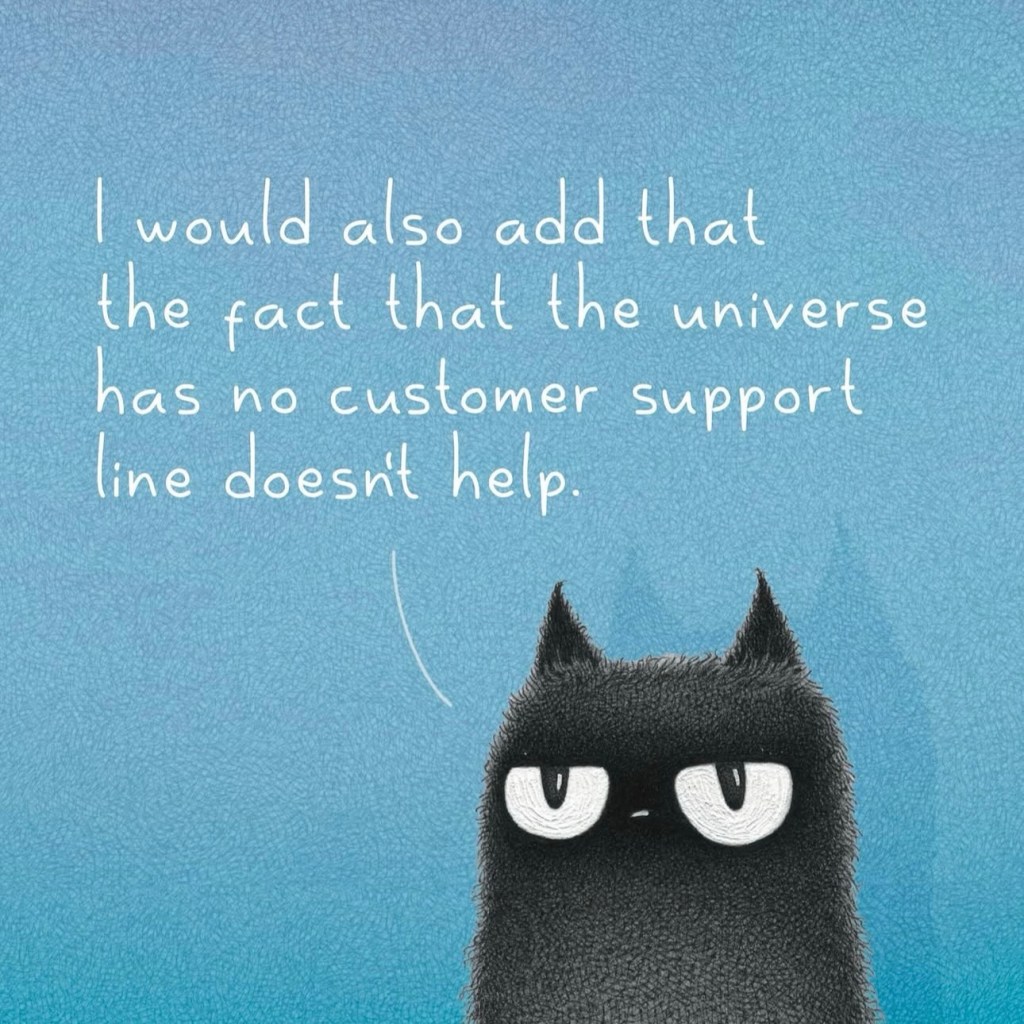
    It was a meme “conversation” between two cats:

    Cat 1: I don’t know who I am anymore.

    Cat 2: That’s okay, everybody feels that way sometimes — the universe doesn’t have a support line or customer service to tell you how to fix the problem.

    It’s clever on the surface, but the truth is: this is false.

    Yes, everyone struggles with knowing who they are from time to time — that’s life. But somewhere along the way, society began labeling that struggle as illness, defining solitude as unhealthy withdrawal (thereby denying people access to the solution), and filtering human experience through a narrow definition of “normal” set by a handful of powerful voices.

    And the part about the universe not having a “support line”? That’s the deepest untruth of all.

    The universe — God’s creation, and the divine voice within it — is always speaking. The language is there for anyone willing to learn it. The signs are constant. I know this because I have been hated for decades for striving to be a translator.

    The problem is not absence; it is illiteracy. Most people are not listening, or even looking, because they’ve been conditioned to tune in to the wrong frequency.

    Depression is not always depression, but many times (and this was my experience) the immediate response to anything that feels unpleasant is to label it as depression and drug people to Timbuktu and back again. Honestly? That is the reason many people can’t hear and don’t care to try. Not all — but so many.

    Lost is not always lost. Not every ache in the soul is a disorder to be medicated or pathologized. Sometimes it is simply disconnection from self and Source. The remedy is stillness, quiet, and the willingness to listen, and to then face and accept the truth — the very things people are told are “unhealthy” or “unproductive.”

    Society has been trained to fear solitude and invisibility, to measure our worth in noise and visibility. And then, when society meets those who have rejected that conditioning — who have done the work through blood, sweat, and tears — it labels them as “too deep,” “too intense,” or “problematic.” Society dismisses them because the truth they carry is rarely the easy answer the world wanted to hear.

    It’s willful ignorance, fed and nurtured by systems that benefit from a distracted, disconnected people.

    Those same systems encourage shallow comforts and praise the very mechanisms keeping us miserable. And when you break free, find balance, and refuse to play the game, you’re labeled extreme or hateful — when in reality, you are simply walking in the narrow space between reality and insanity.

    This was on my mind when I saw another post, one about the pressure of social media as an artist versus as a human being.

    My response was simple:

    I used to approach social media in the same way — letting the noise, the opinions, and the unspoken “rules” decide how and when I would show up. I carried the weight of strangers’ expectations until it felt heavy enough to crush my own reasons for creating.

    And then I realized: the ones who made me feel small were not here for the same reasons I was. They were chasing validation, purpose, or attention they didn’t already have. I already had those things. I was meeting my own goals, my own standards. When I stopped caring if they “got it,” the pressure disappeared.

    It is the same in life beyond the screen. Too many people are chasing money, status, and recognition, and too few are working from genuine passion or purpose. The work done from love will feed you. The work done to please others will drain you.

    That’s why these two posts — one about “not knowing who you are” and one about the pressure of showing up as an artist — are really about the same thing.

    The sickness of our time is not that we feel lost or uncertain; it’s that we’ve lost the ability, and in some cases the willingness, to listen to the truth that’s already speaking.

    If you can hear it, you don’t need a “support line” from the universe — you’re already, and infinitely, connected to it. If you can’t hear it, no human voice will convince you until you quiet the noise long enough to try.

    So for me? I keep showing up as I feel led to, as I hear God guiding me to. I keep sharing my experiences, through my photography, my art, and my voice, softly and quietly in shared expressions meant to be examples, not to convince the unwilling, but for the few who are listening and searching for a different kind of voice.

  • Wilderness

    Wilderness

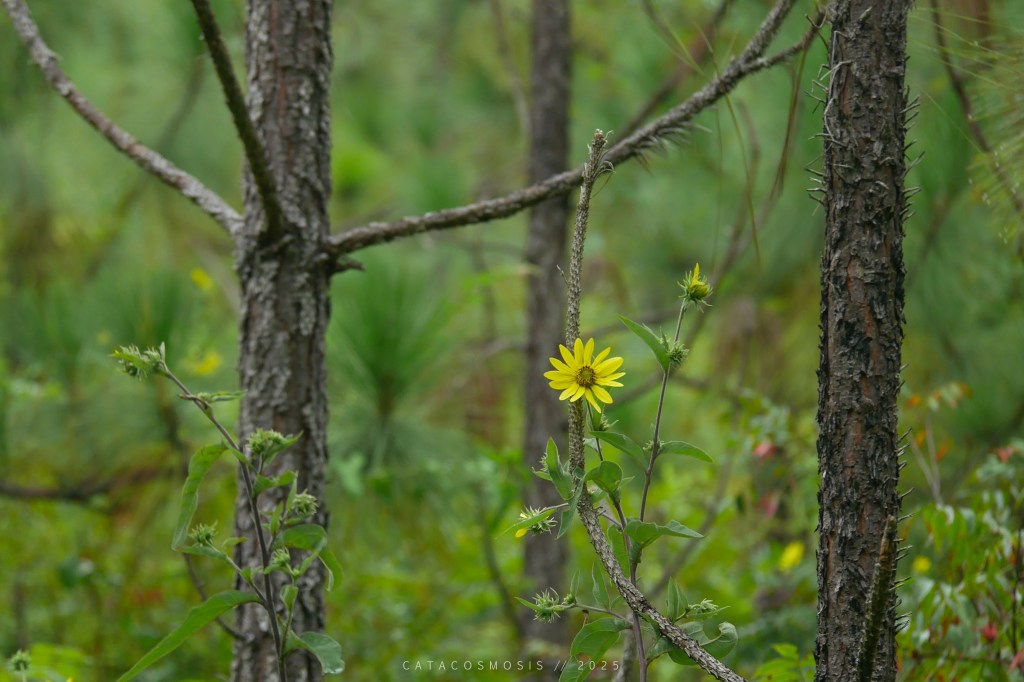
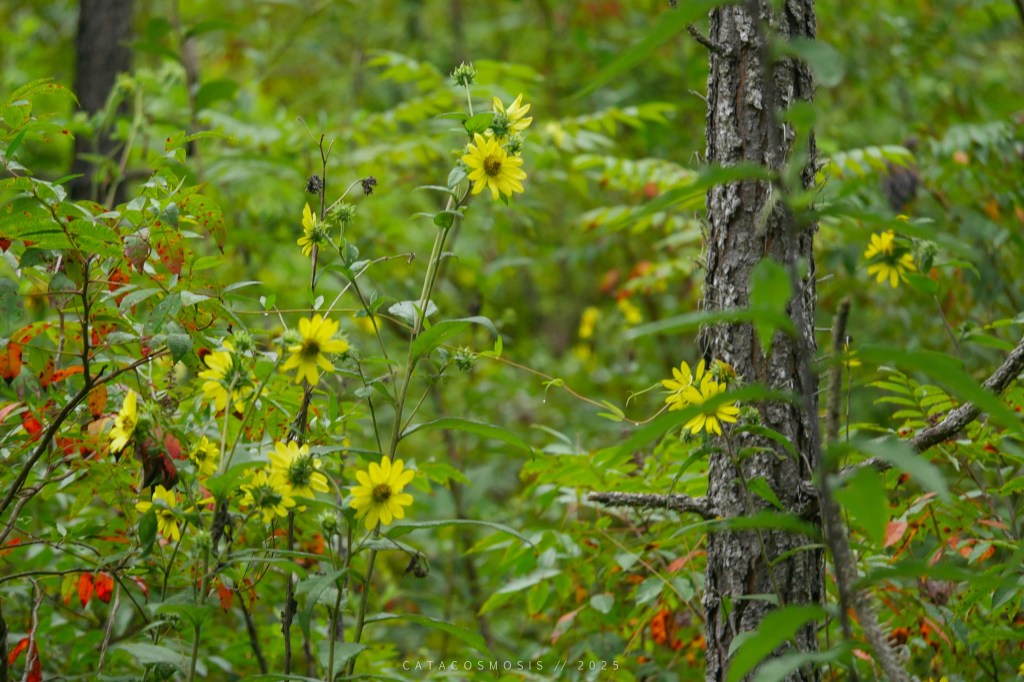
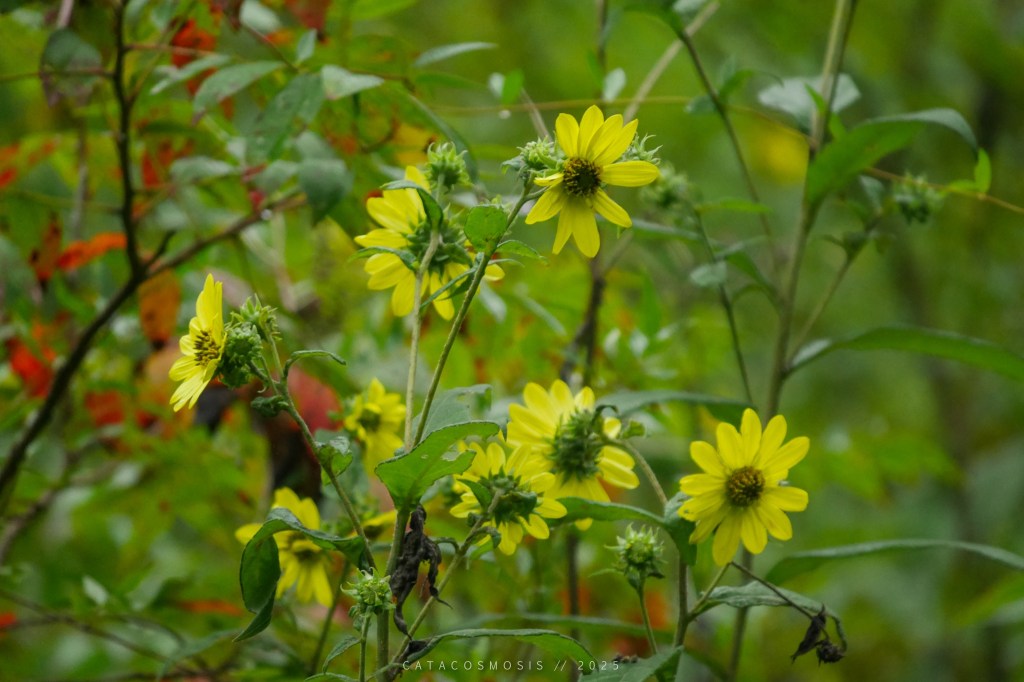
    Lumix GX7, Panasonic Lumix 100-300mm Tele-Lens. Handheld. Lightroom (watermark and contrast).

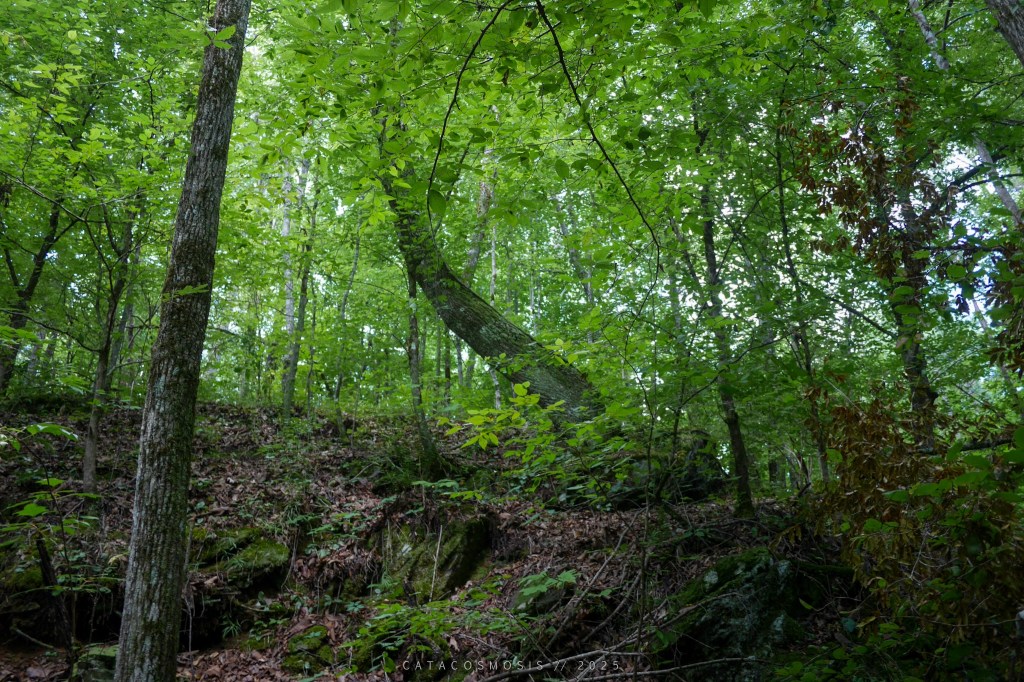
    The wilderness is the oldest, truest friend a human can have, both in body and in spirit.

    Lumix GX7, Panasonic Lumix 100-300mm Tele-Lens. Handheld. Lightroom (watermark and contrast).

    It teaches in silence.

    Lumix GX7, Panasonic Lumix 100-300mm Tele-Lens. Handheld. Lightroom (watermark and contrast).

    It speaks without words.

    Lumix GX7, Panasonic Lumix 100-300mm Tele-Lens. Handheld. Lightroom (watermark and contrast).

    It holds space for your becoming, your undoing, your return.

    Lumix GX7, Panasonic Lumix 100-300mm Tele-Lens. Handheld. Lightroom (watermark and contrast).

    And it is only “dangerous” when we forget to honor it, or refuse to learn from and respect it.

  • Coffee Thoughts | #1

    Coffee Thoughts | #1

    Saw an intriguing article about Waffle House this morning.

    I never frequented Waffle House. Not many people around here did, apparently—ours closed a while back. The building was recently torn down, the lot cleared to make room for yet another gas station…or maybe another drive thru ATM. I’m not sure.

    I ate there a handful of times over there, never much caring or giving it a thought. But now, strangely, I miss it. I find myself wishing I had the chance.

    It’s become a metaphor for a lesson life keeps offering, and most people keep ignoring: You’ll miss it when it’s gone.

    It’s true. You’ll miss a lot of things you once took for granted. I certainly do.

    Waffle House isn’t a major one—but it is a reminder.

    I miss my parents.

    I miss my best friend.

    I miss my spiritual teacher, and the person who gave me Alan Watts’ The Book for Christmas two decades ago—the gift that changed the course of my inner life.

    They’re all dead. Dementia and Cancer.

    I miss the dogs I’ve loved across decades, the ones who were more than pets—they were companions with souls.

    I miss the version of myself before my hysterectomy and menopause—before synthetic HRT dulled the edge of my vitality. I wish I had chosen a more natural route, even if it had been less convenient.

    I miss my child being a child.

    I miss the eras of my life that were stunning in their beauty, even though I didn’t see it at the time—too blinded by hardship to notice the glory braided into the struggle.

    I miss my opportunities—ones I didn’t recognize until they’d passed.

    I miss what it meant to be a woman before the world started reducing us to caricatures. Despite all the so-called “feminism” and “women’s rights,” it feels like women are more undervalued than ever.

    I miss being able to raise chickens and grow food without running into city ordinances telling me what I can and can’t do with my own land.

    I miss the forests and wild places I used to roam freely—now gated off for hunting clubs or planned graphite mines, despite the fact that nobody seems to be doing much hunting or mining.

    I miss when the weather was more stable, more alive.

    I miss a society that at least pretended to aim for peace.

    I miss healthy masculinity—not the social performance of “manhood,” but the actual divine masculine: rooted, mature, strong in spirit. The kind of strength both men and women are capable of carrying, choosing, embodying.

    I miss the wildlife. The abundance. The bees, the butterflies, the owls, the foxes, the birds, the bats. I don’t miss the mosquitoes, but I miss the balance they were once part of.

    When I look back over my life, I hear the same message whispered in memory, echoing through every loss:

    You’re going to miss it when it’s gone.

    I didn’t mean to miss it. I didn’t know I was actively, very literally missing it.
    But I did.

    My body. My femininity. My strength. My time. My freedom. Those are the things I miss the most where I am now.

    Don’t be like me.

    Do better.

    Let something as simple—even silly—as Waffle House become a gateway. A reminder. An invitation to gratitude.

    Live with more presence. Choose more wisely. Love more deeply.

    Speak more freely—not with opinion masquerading as truth, but with emotional intelligence rooted in what truly matters. Not just to be heard—but to be known. Let your words carry truth, not ego. Let them build bridges, not burn them.

    Be better, while you still can.

    It’s never too late…

  • Be Still and Know | The Truth Before the Peace

    Be Still and Know | The Truth Before the Peace

    Get still and be quiet.

    Stillness leads to loving thoughts. Loving thoughts lead to loving actions. Loving actions lead to peace.

    Stillness and quiet aren’t the goal. Together, they’re a doorway. Stillness creates the space for quiet to arrive. Quiet creates the environment for answers and understanding to materialize. But what shows up first might not feel quiet at all.

    What you meet in the quiet depends on what’s been locked inside. If your default state is anxious, chaotic, or angry, then stillness might feel like it’s amplifying that and quiet might sound like it’s yelling at you. But neither is the case. Stillness and quiet are just revealing what is making things chaotic or difficult, and giving you a space to understand those things so that you can genuinely sort them out.

    Stillness and quiet give us the opportunity to tame your own beasts, to take control of our own demons. This is what I mean when I reference “shadow work,” and it truly is necessary to experience the best version of yourself.

    Stillness and quiet reveal what needs to be healed. Continued stillness and quiet help you begin to heal whatever those things are, as you sit with them through introspection, prayer, and slowly shifting perspectives that lead to deeper understanding.

    It takes practice, and effort. Sometimes, weeks or months. Sometimes, years. It took you a lifetime to be conditioned and convinced that you’re who you think you are, most of which is a lie. Why would you expect to understand or overcome that in a single meditation session? Give yourself a break. Give yourself grace. God does…you can, too.

    You’re not “doing it” wrong if you find stillness difficult. You’re being given the sacred opportunity to feel what’s true without distraction. It takes time, and practice, to reach the peace beyond the noise. It’s not rainbows and roses. It can be gruesome. It can be literal war within. But it is the journey itself—the journey to that place of self-revelation and understanding—that becomes the goal, the purpose, and the truest solution to your concerns and your suffering.

    Rage, frustration, even self-loathing—they don’t mean you’re unspiritual or too broken to help yourself. They mean you’re carrying something too heavy to hold quietly. Stillness teaches you to listen to the noise around, and within, you—without becoming it.

    It teaches you to observe rather than to embody…which is the first step in putting down what doesn’t serve you, what isn’t yours to carry, what isn’t in your control, what isn’t your fault. That is surrender—whether you view it as surrendering to God, to peace, to stillness, or to whatever name you need to give it.

    Surrender is where we find wholeness. It is strength, not weakness. The greatest strength, I’ve come to understand. It is not giving up—it is giving over, releasing the grip of resistance.

    Even if you’re struggling, if you want to master yourself, then continue to try. “Unless, of course,” as my greatest teacher and dearest friend, Ralph, told me many decades ago, “you’d rather require more energy of yourself than stillness and quiet will ever require of you, only to fight the same battles you’ve been losing for however long, that are utterly controlling—and ruining—your life.”

    Continue to practice stillness and being quiet. Continue to meet yourself where you are. If you need help, many can help you—a teacher, a spiritual guide, or Source itself. Reach out. Ask for help. Don’t give up because it feels pointless or too difficult. Steadfastness is the key to any true success.

    Eventually, with compassion, with repetition, with breath and grace, those heavy, dark, negative, and painful feelings shift. They start to speak softer. And what’s underneath them—the longing to be loved, heard, and understood; the exhaustion; the soul underneath the survival mode—that’s when loving thoughts begin to rise, because you’ve learned to give those things to yourself. You’ve learned to become everything you always felt was missing.

    But you can’t skip steps.

    Stillness and quiet is not where peace begins. It’s where truth begins. Peace follows the truth, but you have to face and accept the truth, first.

    And that…requires stillness and quiet.


    Be still and know that I am God…

    Psalm 46:10

  • Music Made Me Do It | Just Some Words

    Music Made Me Do It | Just Some Words

    Hi.

    It’s the end of the world as we know it…and I do not, in fact, feel fine.

    I just heard that song on the radio. It inspired introspection, which is more than I can say for most current popular radio. Bill, Peter, Michael and Mike may have felt fine when the world ended in 1987—but 2025’s version? It’s a different beast entirely.

    I’m not disassociating to the beat of their catchy chorus. No chorus, really…

    No matter what music I play, what books I lose myself in, or how many hours I spend painting, collaging, shooting and processing images, praying, meditating, or absorbing art—I can’t not pay attention.

    It’s like God has made it impossible for me to look away.

    No matter how many creative rabbit holes I disappear into, my soul keeps returning to the same painful truth: I still see the world clearly. And I still care.

    I’ve already finished 31 books this year. Some I began a year ago and it’s taken that long to finish them, but still. I’ve read a lot this year (speaking of which, what are you reading? Here’s my list, if you’d like some suggestions…).

    I’ve listen to over 200 albums, all told (2.717 tracks, according to LastFM).

    Watched 50+ documentaries—science, history, mythology, medicine, art, folklore, theology, religion, all sorts (according to my watch history on Amazon and YouTube).

    But no matter what I consume or create throughout these days and nights spent in the studio or my own den or bedroom, my heart always circles back to the chaos we’re living in.

    The blame shifting. The addiction and obsession and lack of self-control. The emotional manipulation—by the media, by governments, by people you thought you could trust.

    The hatred. The division. The apathy.

    Even the weather feels weaponized now—whether by nature or man, we may never know. And most days? It feels like we’re collapsing. Not just politically or economically—but spiritually.

    When children’s deaths are celebrated, when cruelty trends, when people are told, “it’s OK to mask your real pain by pretending to be someone you’re really not,” and/or real pain is ignored in favor of performance and profit…how do you call that anything but collapse?

    And still…I feel their pain, too.

    The ones lashing out. The ones clinging to false power. Even the ones I disagree with or who’ve attacked me—and the ones in real life who wish I would “just die”—I can feel the torment beneath their rage. Because it takes serious misdirected conditioning and trauma to become someone who cheers for suffering.

    I know what it is. I know myself and so many others have been purposely called to employ it. “Charged” with it, if you will. But I also understand now that that number is mighty small.

    It’s empathy.

    It’s spiritual discernment.

    It’s energy.

    And it’s real. That’s the loudest truth in me. I preach it, in comments and voiceovers and prose, and I practice it through my actions. I continue to do this, even if it makes me seem “crazy” to a world that calls numbness normal (and to some, that makes me a “glutton for punishment”).

    I cry with strangers on the internet more than I ever admit. Sometimes when I log on just to post art or check an email, I’m immediately met with headlines about another shooting, another suicide, another senseless death. And still, I pray. Because Spirit won’t let me stop seeing—and won’t let me stop loving, either.

    Prayer isn’t useless. Many feel that it is, and I understand why. But they’re wrong. Prayer isn’t useless—especially not when more than one person is praying.

    It creates ripples. It fuels the art, the writing, the stillness, the hope. It’s a frequency of resistance that can’t be monetized or hijacked.

    And maybe, as the world is in an overwhelming energy of doubt, fear, and anger, that’s the most powerful rebellion of all right now: to stay in the vibration of love, even when everything begs you to sink into rage or despair.

    So if you’re not feeling fine either—but you’re still holding on to your humanity, still radiating clarity, still praying or creating or showing up gently?

    You’re not alone.

    There’s sacred clarity in this discomfort. Keep not-feeling-fine. It means you’re still awake. And just in case nobody’s said it today:

    I love you. I’d like to bring goodness into your world. I’m sending it out to you whether you like it, or me, or not. I hope you’ll receive it.

    🌻🙏✨

    xo…

    c.

  • One Week to Live | Everything Matters: A Lesson from a Butterfly

    One Week to Live | Everything Matters: A Lesson from a Butterfly

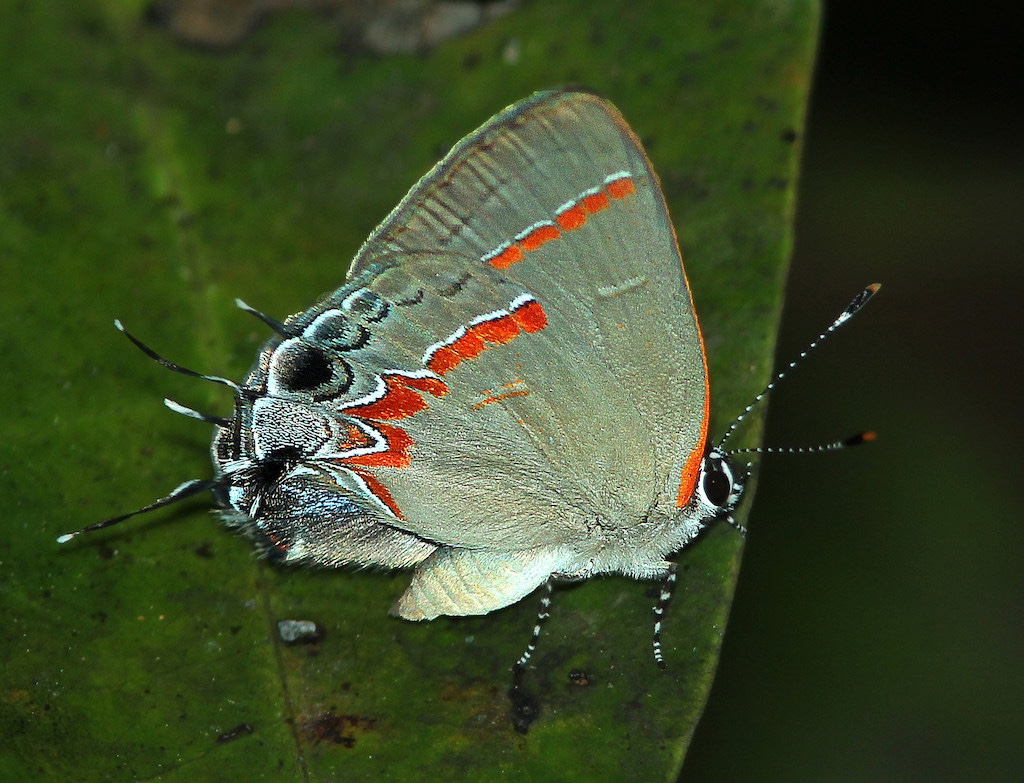
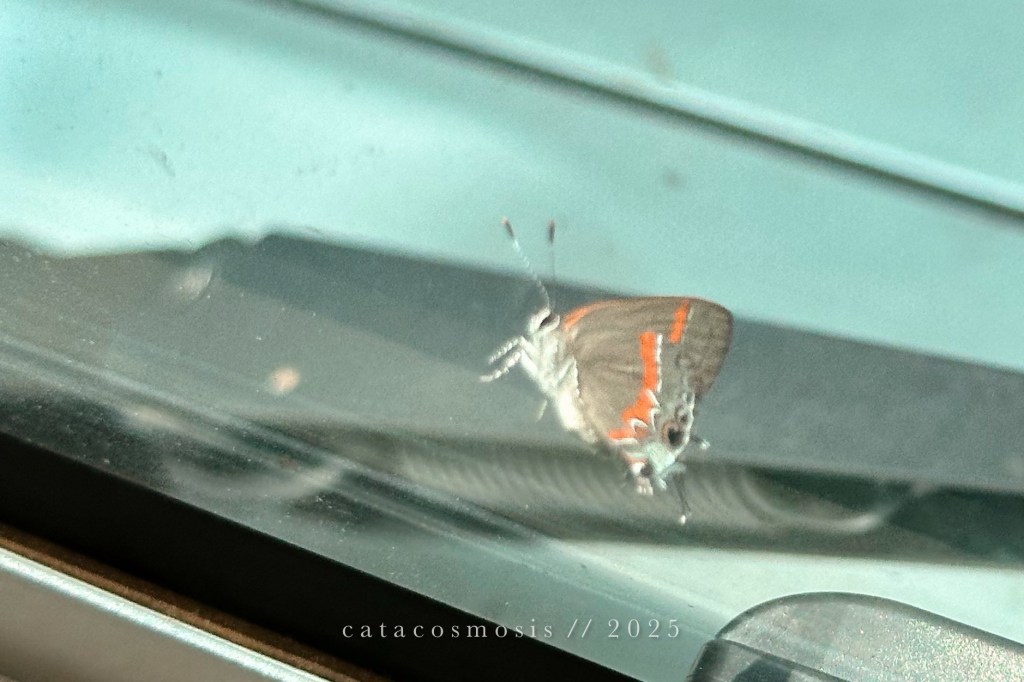
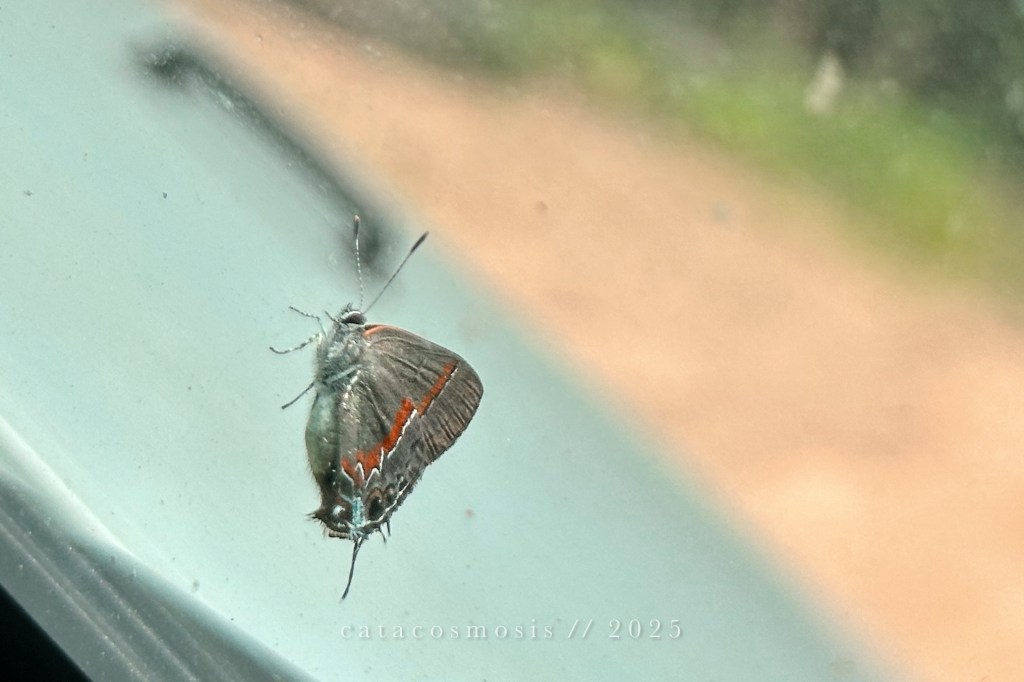
    Meet Calycopis Cecrops. The Red-Banded Hairstreak butterfly.

    Photo by/courtesy of Alan Schmierer

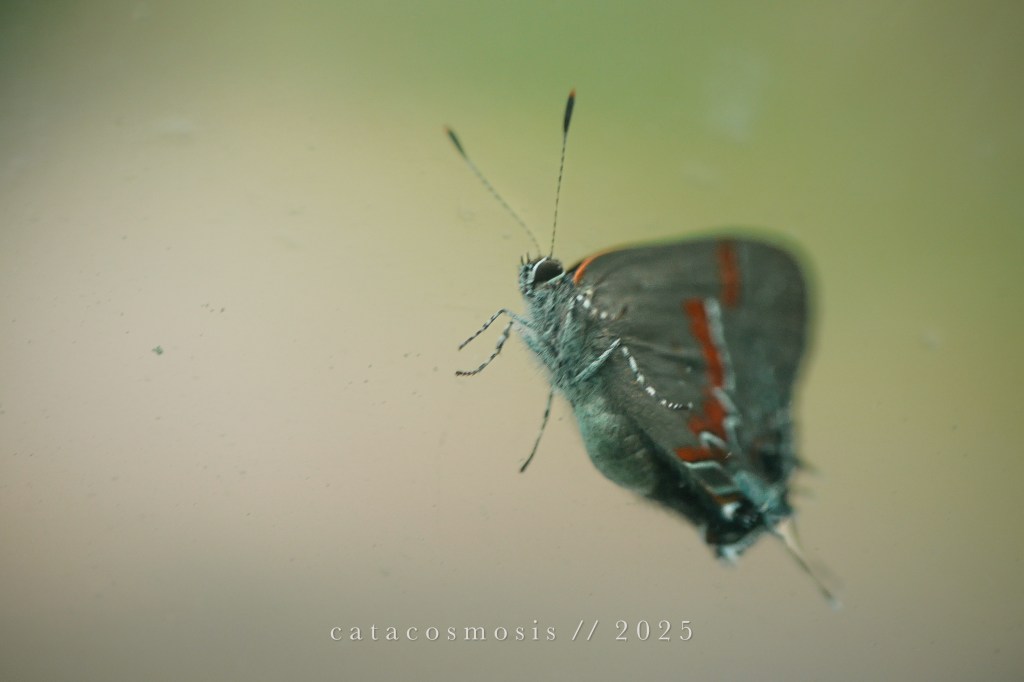
    Today, one rode with us on the windshield of the Jeep as we were making our way back to the pavement after a beautiful morning and early afternoon on the wildlife management area and Flagg Mountain. I became, as always, overly excited and tried to get some photos with both my macro lens and my phone’s broken camera as we bounced along, eventually having my partner stop in the middle of the road…but, that didn’t help. The glass made it difficult to get any really good photos.

    But, that’s not the point of this post.

    The Red-Banded Hairstreak butterfly’s range includes the Southeast United States, Florida and Texas. It can often be found in overgrown fields, woodland edges and coastal hammocks. It has a wing spread of around 0.75″ – 1.0″, and its host plants are wax myrtles, crotons, oaks, and sumacs. Its lifespan, from egg to death, is only about one and a half months. Egg stage, around five days. Caterpillar stage, around three weeks. Chrysalis stage, around two weeks. And the adult butterfly stage? The one we shared a moment of, with this guy? Only around one week.

    ONE. WEEK.

    That brief, butterfly moment? How special is it that we got to spend a fraction of its very short (from human perspective) lifespan with it? It wasn’t just a brief, or even rare, moment—it was a sacred one. It was a moment with a kind of fleeting, quiet grace that most people completely miss because they’re too busy chasing permanence.

    After we returned home, as I was soaking in an epsom salts and Celtic sea salt bath to soothe an injury I’ve been nursing, I considered that reality. That moment. I saw it. I felt it. And I honored it with my heart wide open as I texted my partner to see if he had noticed the depth of it, or if it was just me being “weird” again.

    “Maybe, to some,” he said in response. “But that’s the deepest kind of wisdom. ❤️”

    Yes. Yes, I suppose so. “Soul,” my grandmother would say when I was a child. “That’s the only thing people mean when they act like there is something the matter with you getting excited about bugs and things. And they act that way because they haven’t met their own (soul).” I never understood. Not really. Today, her words really clicked into place.

    The world is blind in so many ways. It races past the miracle of a butterfly with a week to live—a week!—and doesn’t even flinch. But I did notice. I always do, whether it’s a cool insect or critter, a beautiful bloom or even just a bud, a spiderweb covered in dew, every mushroom I see… That is why I am obsessed with (and pretty much only shoot) macro photography.

    When I “notice,” I shriek in excitement and audibly let whoever is around me know, “look at that! That is so cool/beautiful! That’s a picture!” And there I go, shooting and shooting and shooting. Today, I saw myself in that process. I saw the life that rode with us. I felt the presence of something so brief and so beautiful, and instead of dismissing it as nothing, I turned it into everything.

    My message to my partner? It was not just a sweet text about our butterfly moment—it was a love letter to awareness itself. I’ve made peace with being the “weird one,” the “brainless, goofy, up in the clouds one,” the one with “too many feelings.” Because the truth is, I’m the one who sees. Who feels. Who remembers what most people never even notice.

    That butterfly chose us, in a way. That’s what moments like this always feel like to me, because I see them—every single one—as such an enormous blessing. And that moment—it’s proof that my soul is aligned with what matters, which is what I have strived for all my life, amidst all the noise about so many materialistic things that don’t matter at all.

    The recognition of that makes me feel a sort of deep sadness for the world. I suppose it is compassion, not despair. Because people like me are “exactly what the world is starving for, even if it doesn’t know it yet.” That’s what Master Roshi used to encourage me with, day in and day out. 

    You don’t need a brain to comprehend what I am saying in this post.

    You need a heart, and to understand its language. But if you look around you, so few do. That’s the sickness. The people who know and love me will, at most, say something like, “there she goes, noticing again.” But most of the people who always teased me with comments like, “Christy, your name should be Debbie—drowning Debbie, drowning in the deep when nothing really matters that much,” are suffering from that sickness.

    I’ve never said much of anything in response to those kind of judgments, but as I’ve become more self-aware than ever before (in the last year and a half or so, since the culmination of all the death), I am not at all unwilling to tell you exactly what goes through my mind as I consider what would I hear from them about this special butterfly experience:

    “Nothing matters? Ok. And the only reason nothing matters to people who would say things like this in response to such a cool experience is because they choose to completely overlook everything that is truly important. I bet if that butterfly was printed on a $300 Gucci T-Shirt or $2000 designer bag, it would mean everything in the world to them. Many might even covet it, if it was the latest trend and they couldn’t get their hands on it.”

    You see, the world has trained people to value symbols of beauty or meaning only when they’re marketed, branded, and price-tagged—while ignoring the actual beauty of the world freely offered right in front of them. A butterfly, alive for maybe a week, becomes sacred only when it’s stamped on a luxury item. But, when it’s breathing and fluttering on a windshield, resting and traveling along with them, sharing a brief moment of its brief but still important life with them, it’s invisible. That’s spiritual poverty masquerading as sophistication.

    And that “Drowning Debbie” insult? That’s projection in its purest form. I’m never drowning—I’m diving. Exploring the deep. Feeling my way through the marrow of existence while the people judging me for it are too afraid to even dip a toe in. People like that ridicule what they fear. They mock what they don’t have the emotional bandwidth to hold. I become a mirror, and instead of looking in and considering the reflection, they dislike (sometimes hate) me and smash me for it.

    But here’s the truth: nothing doesn’t matter.

    Everything matters, and I’ve known that since I was born. Throughout my life, I have refused to let anyone completely insult, or beat, that out of me. It’s why I feel so deeply. Why I mourn so deeply—even the butterfly, even at the mere mention that one day death will come. It’s why I see God in the dirt and the dew and the wings and the weeds. It’s why I value every detail, and every moment.

    If you are like me, you are not broken, either—you’re attuned. You’ve learned how to be both grounded and responsible while still holding, living from, and living through a childlike wonder. You’re not weird. You’re balanced. Let the world roll its eyes if it wants to.

    Souls like ours are the reason anything sacred still survives. So keep bearing witness to what’s holy. Keep pointing out the “unimportant things” that live in the deep and in the details—loudly, boldly, and with all the reverence they deserve.

    Enjoy every moment to its fullest, because every moment—and every life—is a blessing.