It’s as important as perspective. Perhaps even more so…
We talk so much about perspective—about changing our view, reframing the story, finding the silver lining in the storm cloud.
But sometimes, perspective doesn’t shift easily.
Sometimes, circumstance leaves you standing exactly where you’ve always stood. The view is the same. The light hits the same edges. The shadows fall in familiar places.
But even when the scene remains unchanged…the focal point doesn’t have to.
Focus is a choice.
A sacred, stubborn one.
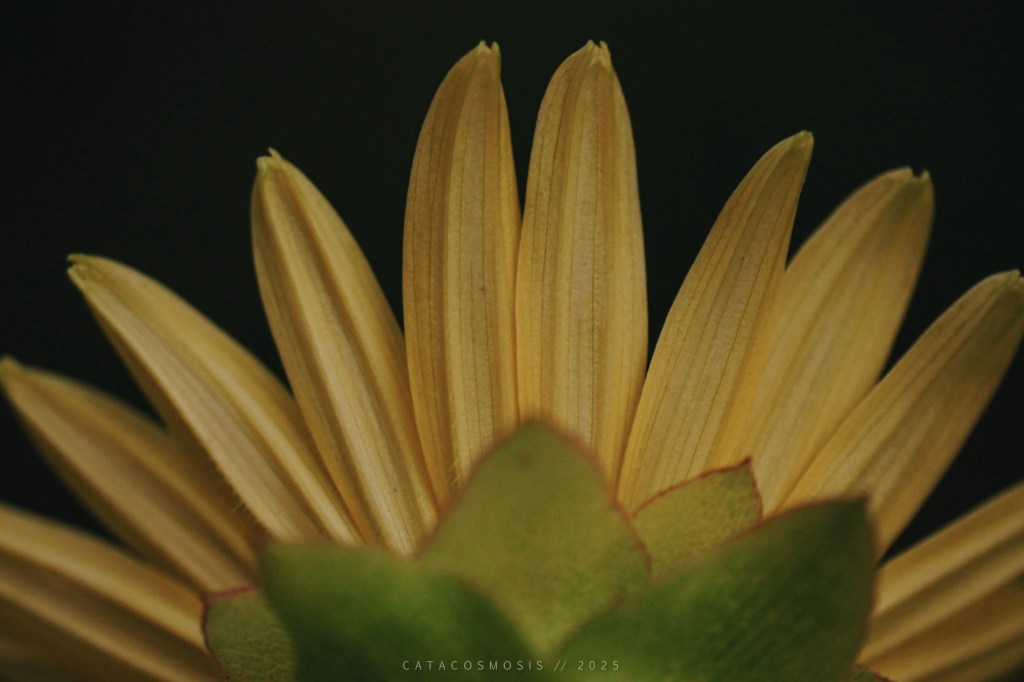
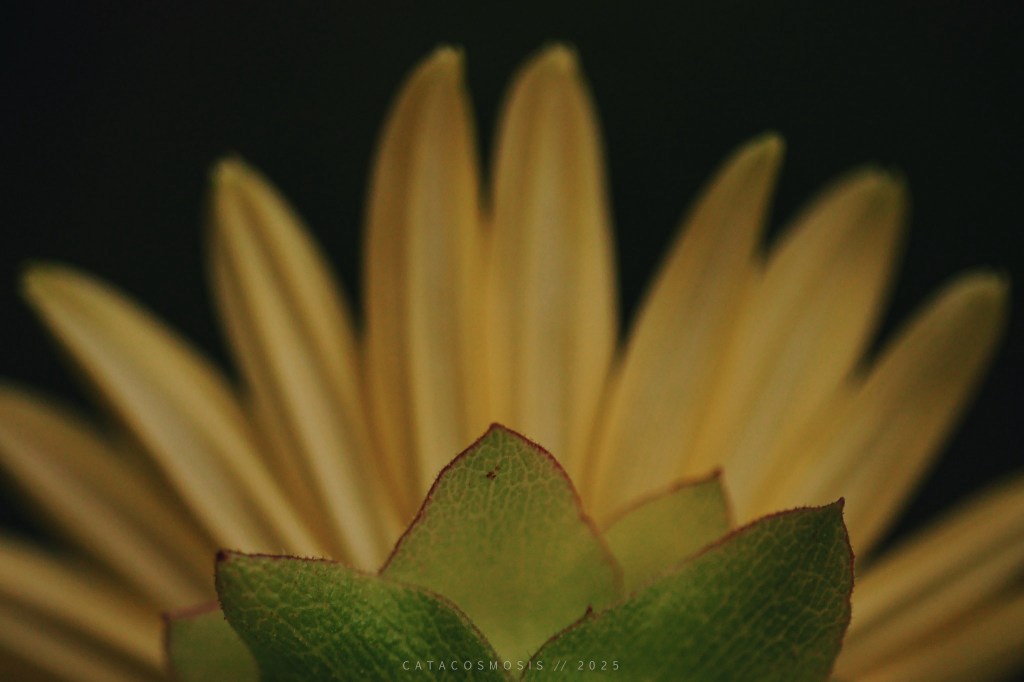
It’s the difference between staring at the problem and noticing the petal behind it.
It’s where your attention lands, and where your energy follows.
It’s learning to zoom in on grace even when grief is still in the frame.
And with that subtle shift, a new vision — a new truth— came forward.
Almost always—including in life, and despite circumstance—the best composition doesn’t come from changing the scene but from learning which part of it to focus on.
It’s never been money or material success that has defined wealth for me.
For most of my life, I chased meaning in moments loud enough to echo—grand gestures, perfect timing, outcomes wrapped in validation. But it was my most treacherous and grueling experiences—the ones that stripped me bare and rebuilt me from the soul up—that taught me something higher.
They taught me to be still.
To be quiet.
To kneel at the altar of the subtle.
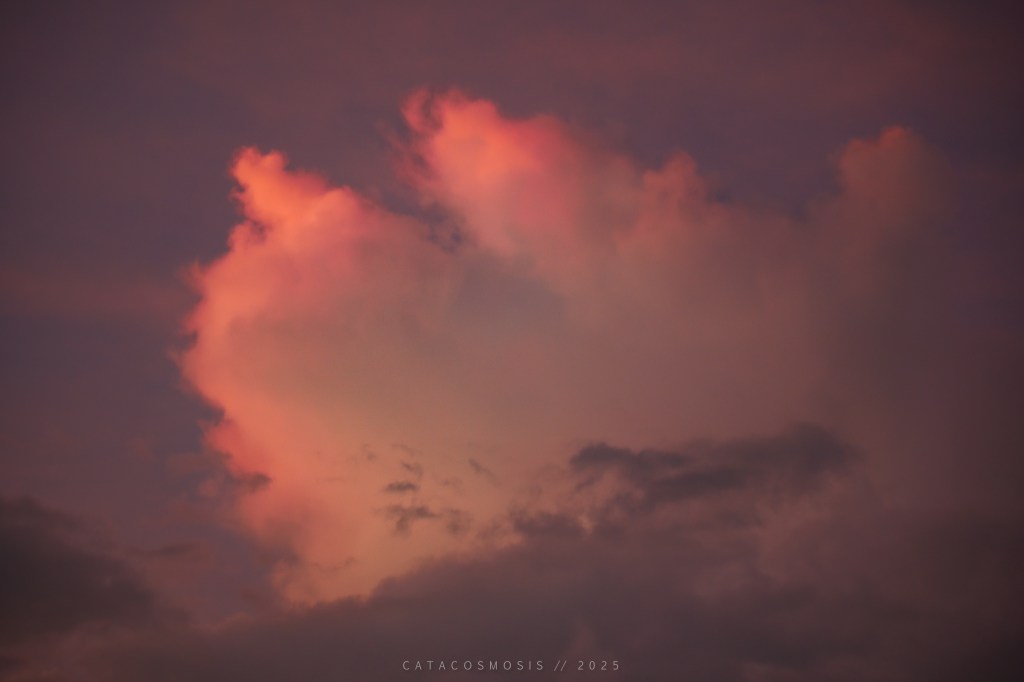
A blurry cloud, simultaneously barely and boldly defining its own form, illuminated at just the right angle.
Lumix GX7 + Lightroom (watermark only)
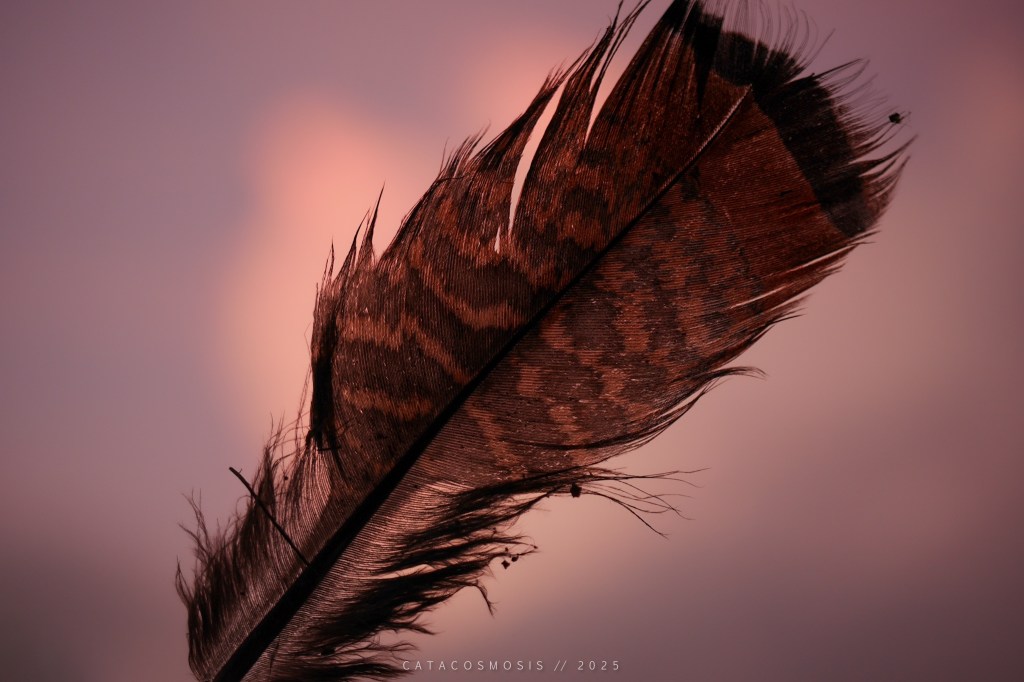
A battered feather, found in the dead center of a forgotten dirt road, caught in evening light.
Lumix GX7 + Lightroom (watermark only)
The soft hush of trees at dusk, whispering the memories of the ghosts that still roam underneath them.
Lumix GX7 + Lightroom (watermark only)
This is abundance.
There’s something sacred about catching these quiet offerings—the ones that ask for nothing but your presence. No performance. No hustle. Just your full attention. And I think that’s what I’ve been learning to fully morph into, slowly but surely, all my life.
I’ve always been in love with nature, and over the past few years, I’ve begun to understand why—consciously, spiritually, viscerally:
Nature doesn’t demand applause, but it offers everything to those who notice.
Before caregiving and grief, nature called to me—quietly, consistently—and I always accepted her invitation to explore and to wonder. During caregiving, she became an escape. I retreated there as often as possible, weary and begging for rest that not even sleep could offer…and nature always obliged.
Now? I don’t go to escape or to retreat, I don’t just visit. Nature meets me. Whether I’m deep in the woods or walking my yard…hiking a trail or running my neighborhood…now, I am always home.
We live in a world trained to skim, to scroll, to monetize every breath of stillness. But this—this sky, this feather, this light that passes and never repeats—reminds me:
Presence is the prize.
It’s all around us, all the time, no matter where we are…but people don’t see it anymore. They no longer observe. Most have forgotten—that observation is a form of reverence. And reverence, when practiced daily, becomes a kind of homecoming.
“Abundance is not found in money and material gain—at least, not for me. To me, it is found in nature’s unexpected surprises.”
I wrote that in my memory while standing beneath the canopy of trees shared above as it held the last light of evening. There was no one else there. No applause. Just me, and the divine choreography of stillness.
In that moment, nature herself invited me to remind you:
If you’re searching for proof that you’re loved, that you belong, that there’s meaning woven through even the hardest days—
Look up.
Look closer.
Be still.
The abundance you’re looking for is already here.
It’s been waiting for your eyes—and your heart— to land on it.
The meaning of life is just to be alive. It is so plain and so obvious and so simple. And yet, everybody rushes around in a great panic as if it were necessary to achieve something beyond themselves. (Alan Watts)
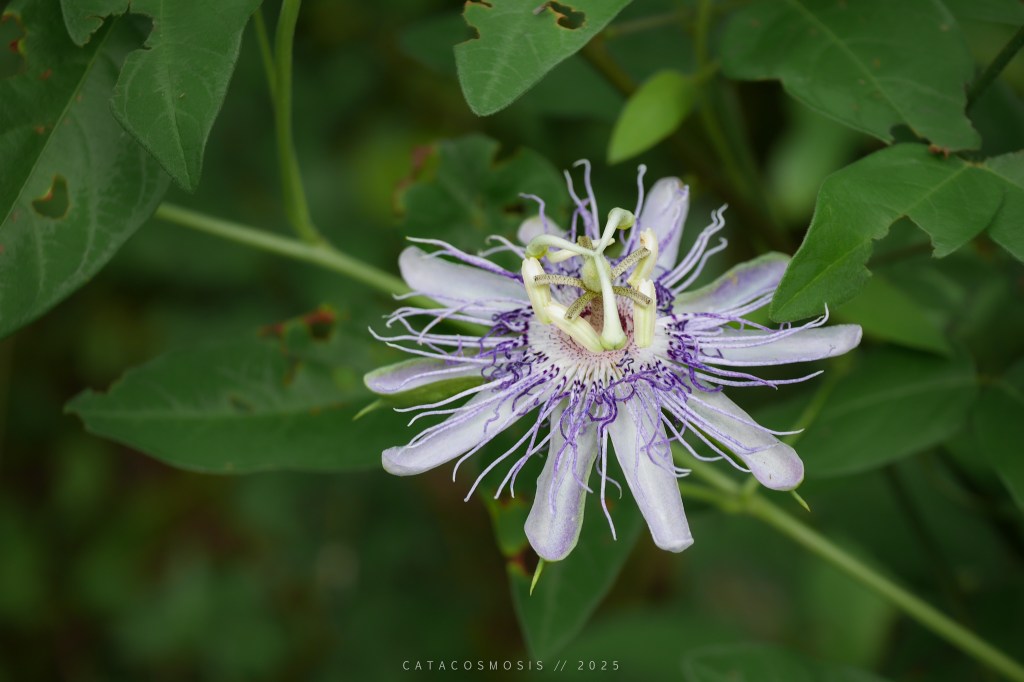
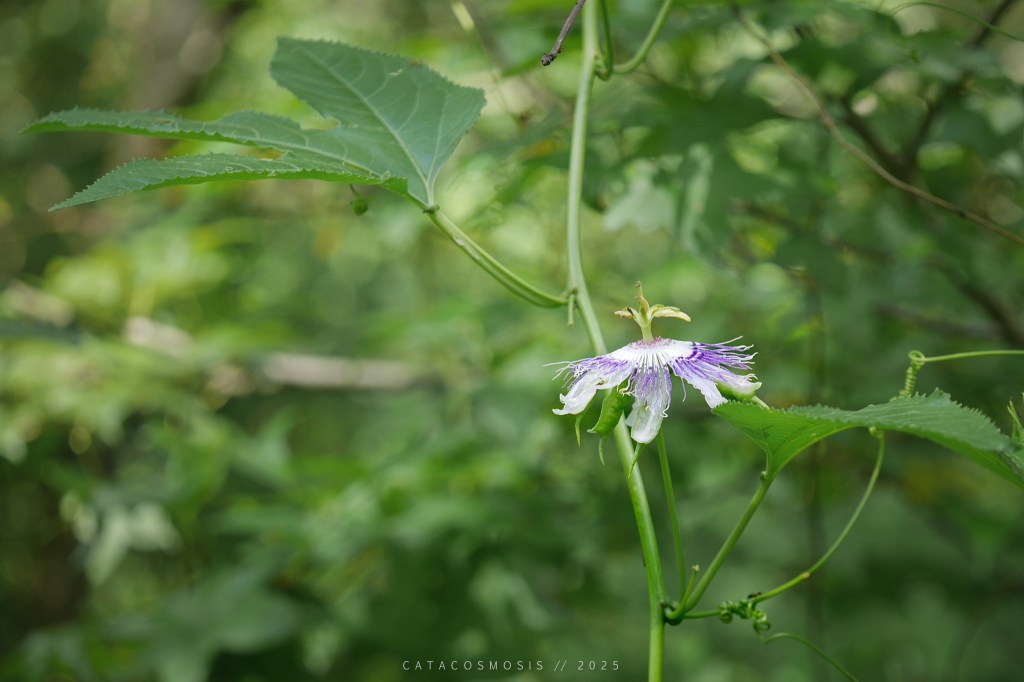
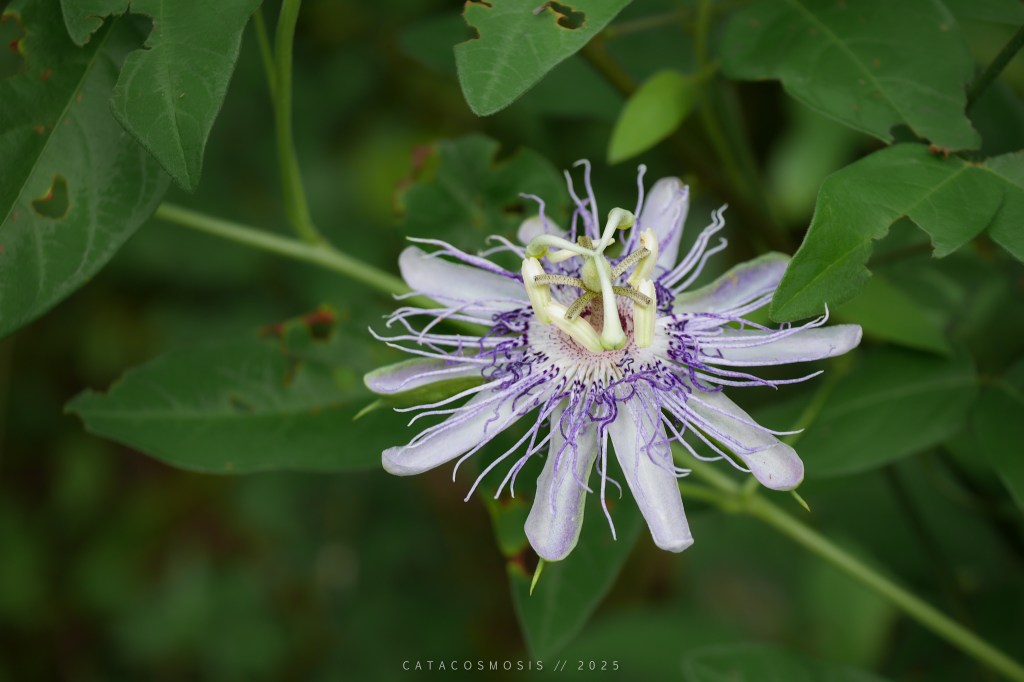
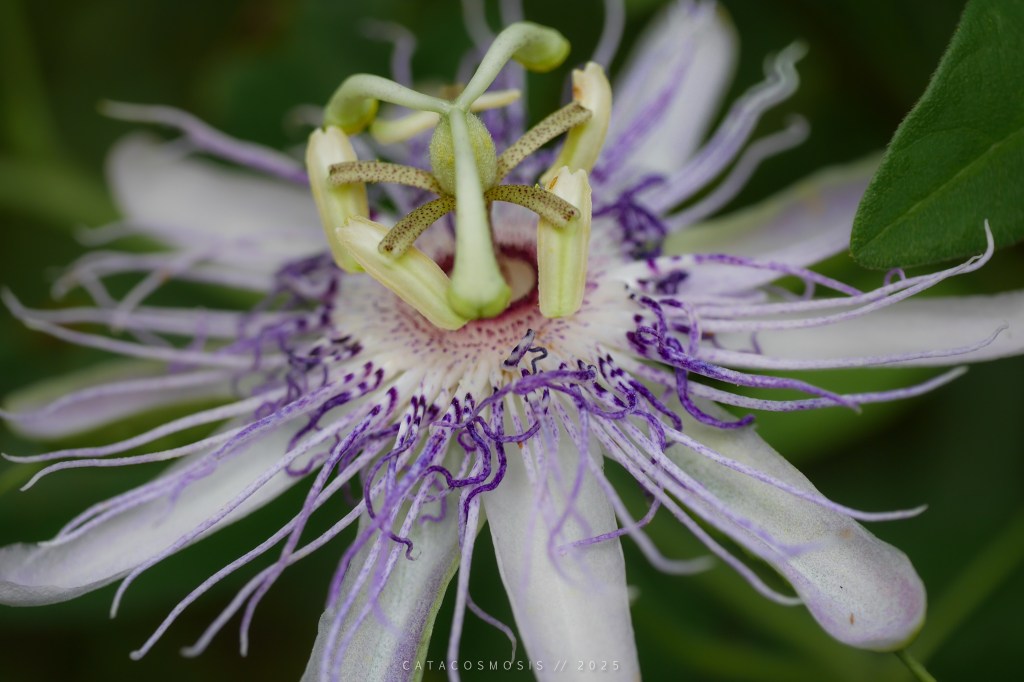
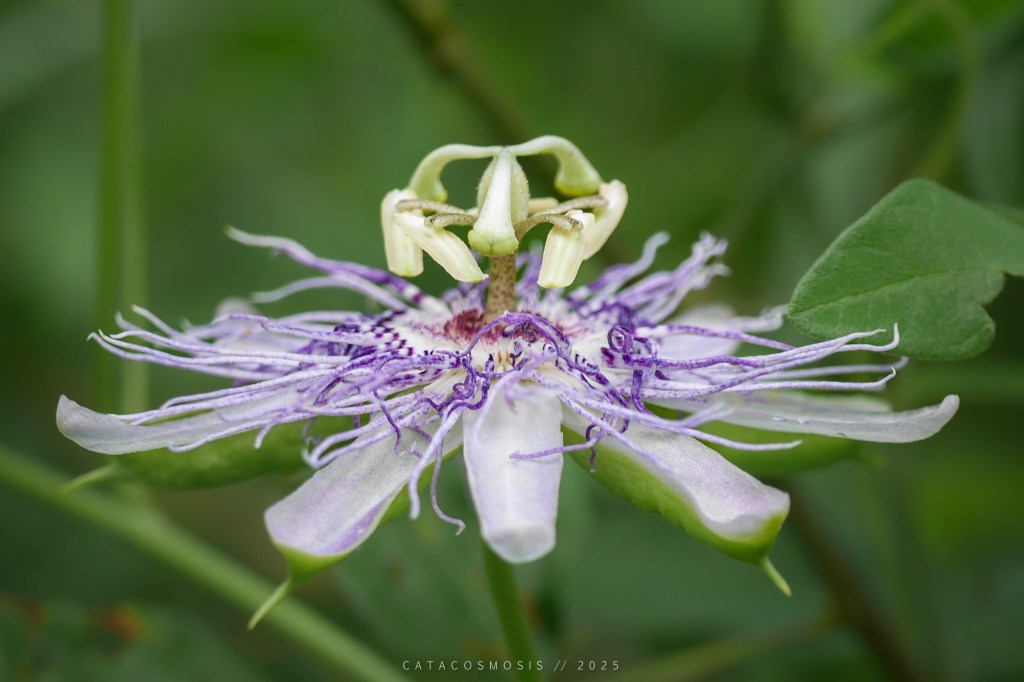
I stood in the green hush, face to face with a bloom so intricate it felt like a secret whispered by the wild. The passionflower doesn’t need to perform. It simply is. Unapologetically strange. Beautifully complex. Alive.
This image wasn’t meant to carry all this, but tonight, it does. It holds the rupture I didn’t know I’d been tiptoeing around all week.
A decade ago today, my father died. Not on the 13th, when the machines started breathing for him—that was just when I knew he was gone. On the 18th, at this hour, the veil broke open for real. And now here I am—ten years later—haunted by dreams I couldn’t explain and a sudden stillness in my creativity I couldn’t shake.
Until now.
I thought I was just tired. Distracted. Stuck. But it was grief. It was reverence in disguise.
My soul remembered the date even when my mind forgot. That’s the strange thing about grief that matures—it doesn’t scream anymore. It hums, low and holy, beneath everything. It clouds the light, then sharpens it. It takes your voice, then gives it back with new timbre.
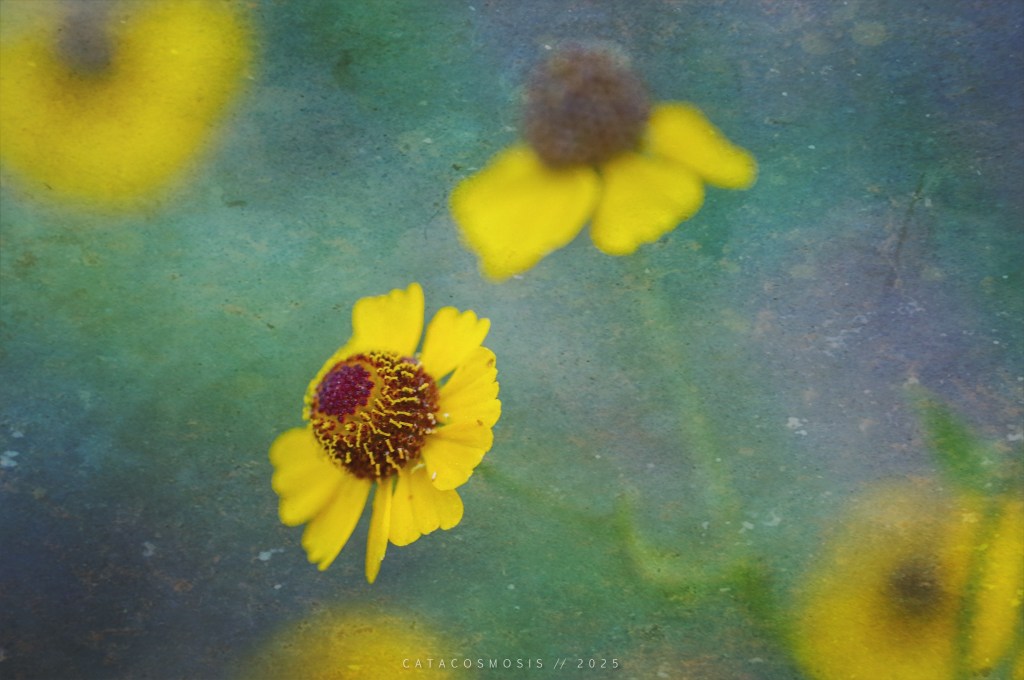
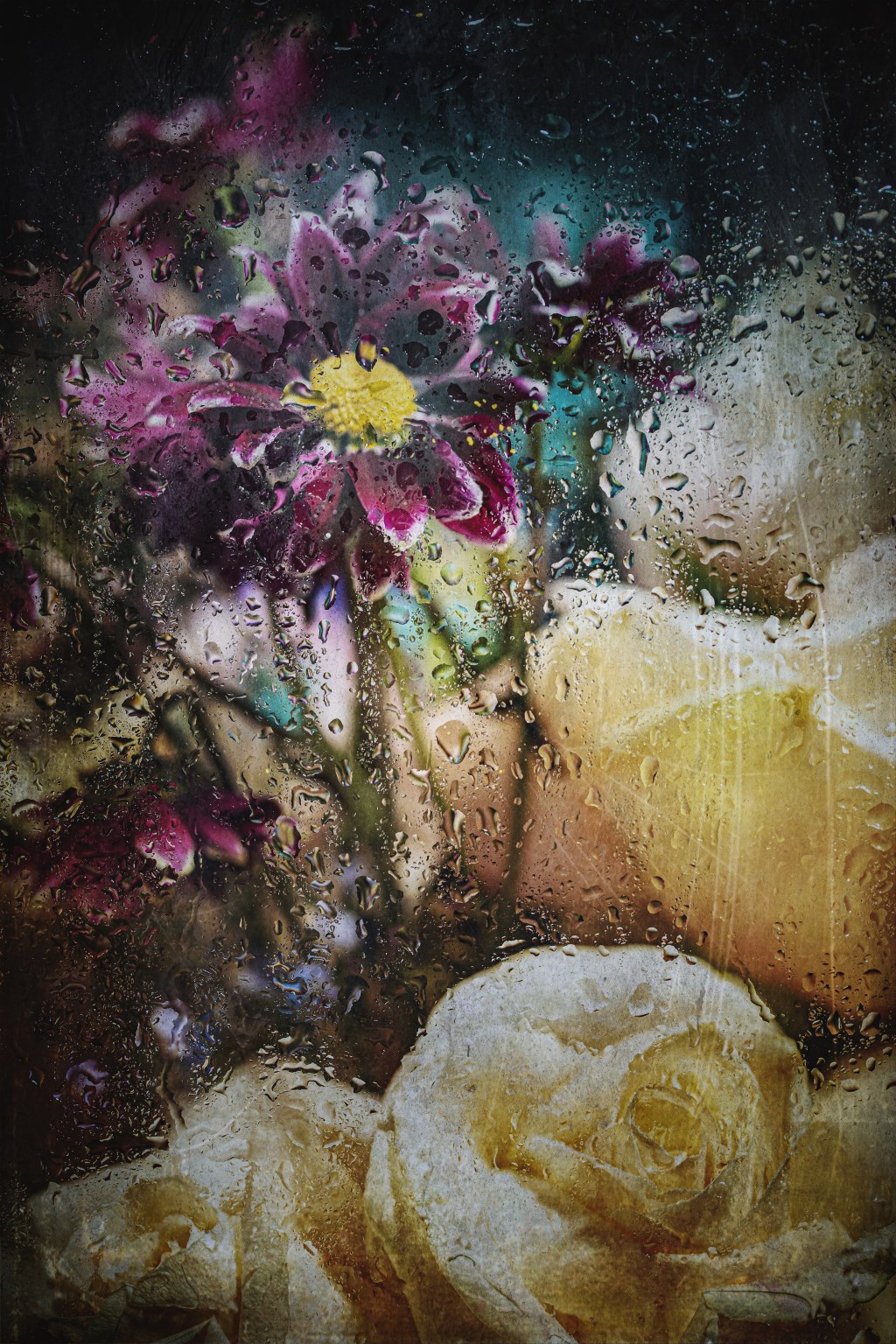
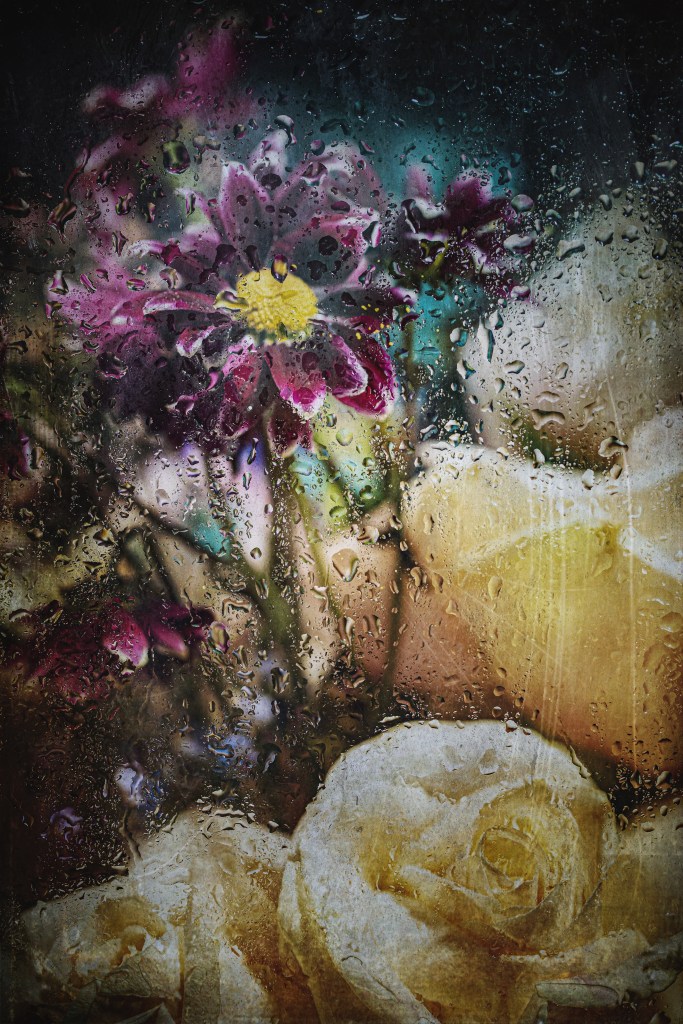
This image—originally photographed by Mikhail Nilov—became a sort of altar. I edited it using Mextures, VSCO, DistressedFX, and Lightroom, layering texture over color, blurring presence and absence, trying to capture what it feels like when sorrow doesn’t knock—it just saturates.
Sanctum.
There’s chaos in this. Petals and light blurred through glass and rain. Beauty you can’t quite hold. A yellow rose—like the ones we laid at his grave—folding in on itself. A daisy, centered in clarity, yet surrounded by blur.
That’s what this night feels like. Clarity in the middle of confusion. Stillness in the swirl.
Earlier tonight, as I outlined these words in my head while I felt my way through the shift I felt in real-time in the energy, I said to myself:
“You didn’t lose your creativity. You’re in holy pause. This isn’t numbness—it’s reverence. You were unconsciously grieving a resurrection-day anniversary, and your spirit bowed its head before your body could even name the loss.”
And now, I feel it even more deeply: Tonight isn’t for making things happen. It’s for honoring what already did.
Tonight is for prayer—prayer and intercession not only over the souls of loved ones who have already crossed over, but over one very important soul who’s still here. One who I know doesn’t understand why I had to go.
The truth is, those crossed over souls didn’t leave to hurt me…even though it did. They left because it was time. That was my burden to bear. The lessons they left me with were my responsibility to sort through, clean up, and learn.
Likewise, I didn’t leave the living out of anger or rejection, or even lack of love. I left because God Himself guided me in a different direction, even if they didn’t want to go that way, or grow that way, too. I will never have a choice above God. And I know that hurts…it hurts me, too.
Forgiveness is an ongoing action, reflected not in words but in the quiet practice of letting go. The love is, and always will be, unconditional. “Anyway love” always is. And my soul will carry a piece of all of their souls within it. Always.
A lot of things are coming full circle for me tonight. Invisible messages carried by unseen energies are releasing a kind of clarity within me—one of deeper substance and fuller understanding, puzzles pieces arriving and falling into place in a way I’ve never experienced before. The spiritual warfare, the dreams full of ghosts, the aching grief—none of that is new. But the understanding I have tonight…it reaches deeper than anything I’ve ever touched before.
Tonight isn’t for sorting through the rubble, cleaning up the floors of my memory, or putting all the lessons learned into neat little compartments in my mind. After all, I’ve already been processing through that, and slowly overcoming it all, for some time now.
No, tonight isn’t for being swallowed by the hauntings of my own heart. Tonight is for letting grief rain gently through the window, washing my soul—and watching how even the blur, when looked at with love and patience, can be textured out, shaped into a symbolic snapshot in time—capturing both the beauty and the chaos—and become art.
It is the emblem of the closure of what has, all at once, been the most painful and the most beautiful decade of my life: the one where, in the end, I finally met God.
I speak the name of Jesus over you In your hurting, in your sorrow I will ask my God to move I speak the name ’cause it’s all that I can do In desperation, I’ll seek Heaven And pray this for you:
I pray for your healing That circumstances will change I pray that the fear inside will flee in Jesus name I pray that a breakthrough Would happen today I pray miracles over your life in Jesus name I pray for revival For restoration of faith I pray that the dead will come alive in Jesus name
When you’re connected, you pause. You listen, and ask better questions. You observe your own patterns, and stop attacking or blaming others for theirs.
When you’re connected, you become a space of calm in a world of storms rather than another disruptive, destructive wave in a sea of chaos.
When you forget how to listen inward, when you stop grounding in self-awareness, you lose your anchor.
Check yourself before you wreck yourself. It’s not about being perfect. It’s about being aware.
Pause, and come back to yourself.
Reconnect, and become the clarity you’ve been searching for.
Remain connected, and become the clarity that helps to guide others home.
A random, inexplicable flux. That insatiable need to create. Some unseen force guiding me to conjure, to express, to birth something.
It happened again last night, but in the same instant that I felt the proverbial tap on my shoulder, a heaviness threatened to settle there. Born and bred creatives know this experience, all the way into their bones.
It comes with a dread, and creates a dangerous, self-sabotaging pre-regret. It manifests from a complete lack of vision:
No concept. No plan. No brilliant idea waiting to be realized. Certainly, no idea where to begin.
Lost but not lacking awareness, and determined to win over the weight of what really boils down to fear of failure, I asked, “what do we want? What is the spark?”
As expected, the silence answered with more of the same cryptic transmission: “Just ‘do.’ Ripples turn into waves.”
So, I rummaged.
I plundered through the old tools and the old toys. You know the ones—the “Ghosts of Projects Past,” our artistic Scrooge’s worst nightmares. The ones tucked away in dusty, overflowing “Likely Garbage” photography folders and long forgotten apps.
The ancient, the analog, the abandoned fragments of another era.
I pulled out the remnants of what once inspired me, not because I knew what I was doing, but because whatever had stirred was creating a riot within me.
These moments are never a question of choice, so I just…explored. Guessed. Played. Flowed.
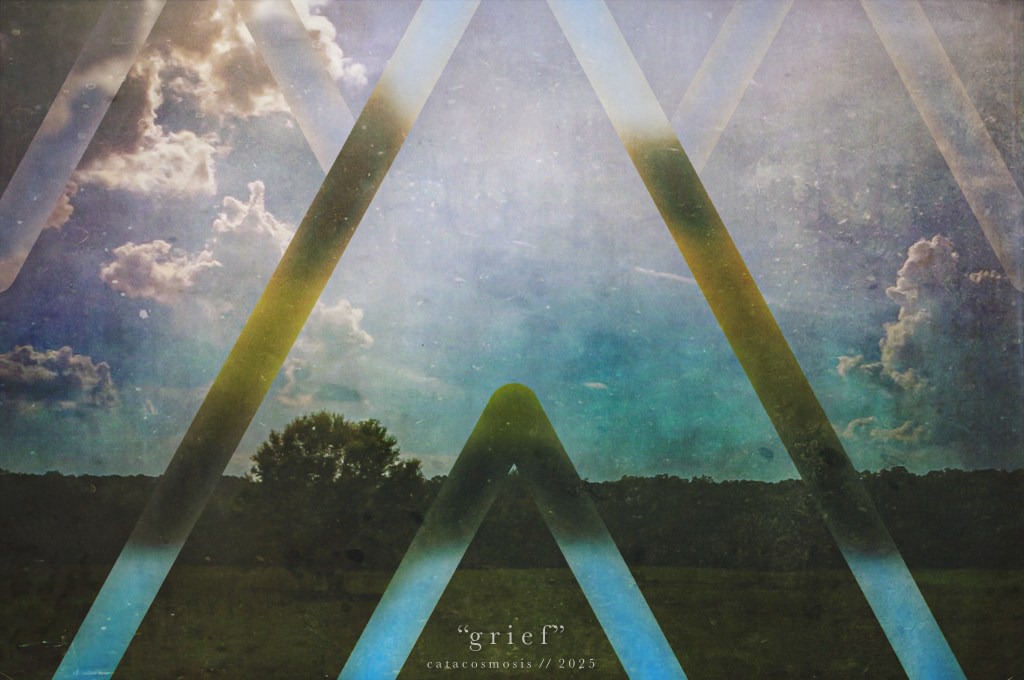
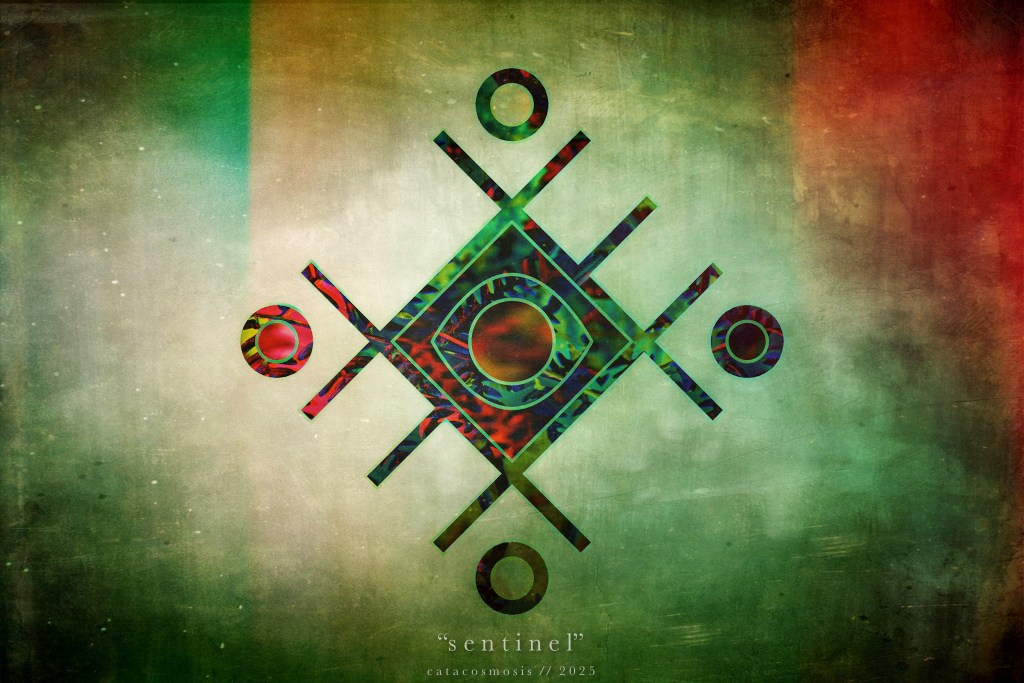
s e n t i n e lg r i e f
Sometimes, perhaps most often, that is the best option. Even if the outcome feels unfamiliar or strange, or doesn’t resemble the “usual” desired outcome. Even if the result is wildly imperfect or impossible to explain…
It is in this uncertain, instinctual process that magic lives and breathes. This is where it sizzles and crackles and arcs, like a furious current from Tesla’s coil—except in this case we don’t need Faraday’s cage.
Creatives—artists, writers, dreamers, philosophers—need the opposite. We need this chaotic energy to touch, and to consume, us. It is the rejection, the not allowing it to, that kills us…and that is always a slow, excruciating death, from the inside out.
In art and creativity, exciting results are not found in safety. They’re not found in perfection. Organic process is not found in planning. Everything in and about the Creative archetype is found in the act of simply showing up.
Creative inspiration doesn’t ask for permission. It asks for presence. It asks that you show up and let it burn through you. The only wrong move is not moving at all.
📷 Lumix GX7 + Panasonic Leica DG Macro-Elmarit 45mm f/2.8 ASPH Mega OIS ⚒️ Fragment + Mextures + Lightroom
entry ten — scattered light, fractured grace: a quiet archive of light, loss, and what remains.
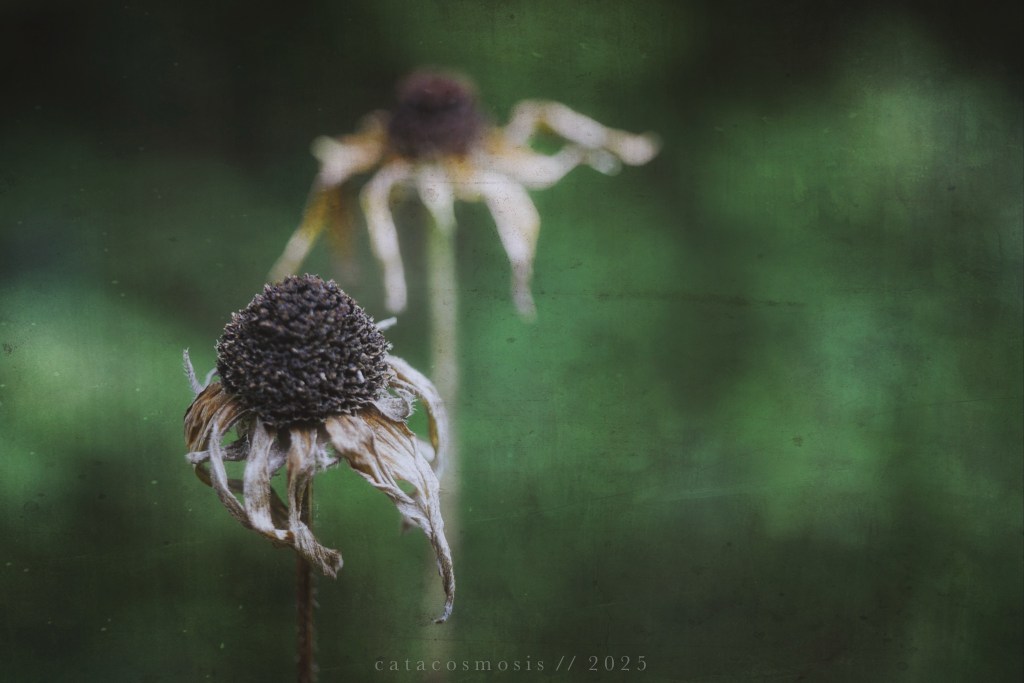
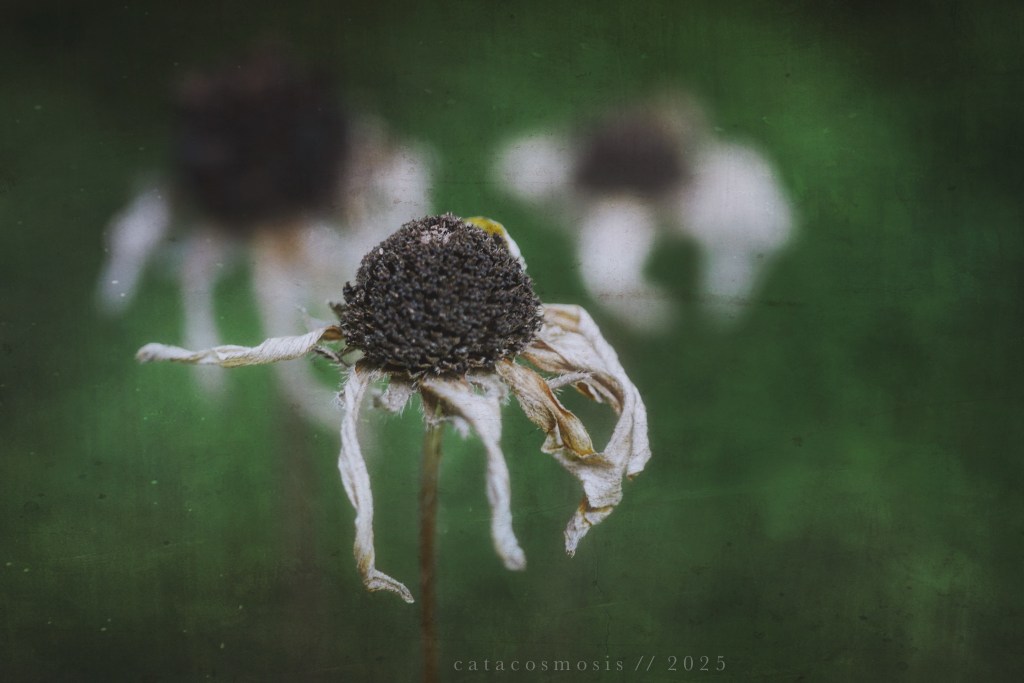
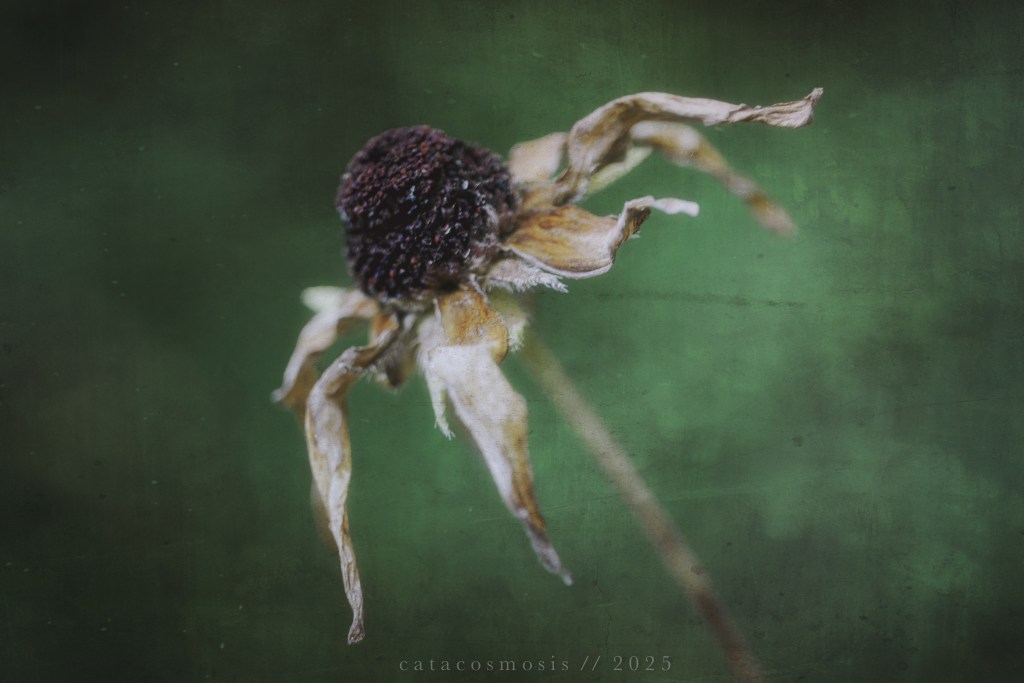
Black-eyed Susan (Rudbeckia hirta), a fading ember of late summer—graceful even in decay, still holding the shape of sunlight after the bloom has passed. Lumix GX7 + Panasonic Leica DG Macro-Elmarit 45mm f/2.8 ASPH. MEGA O.I.S., VSCO (A10PRO), Mextures (personalized texture formula: MEZPZZC), Lightroom Mobile (watermark only).
My mother always told me, in every possible circumstance a child might ever need encouragement, “Do your best, and leave the rest. It’ll all come right some day or night.”
It was a line from “Black Beauty, by Anna Sewell.”
She was a third grade teacher, a grammar Nazi, and a mother trying her damndest to connect with me and, well, do her best.
And, as ornery and difficult a young person as I could often be, she never knew that I believed her…
…even when I forgot I did.
Black-eyed Susan (Rudbeckia hirta), a fading ember of late summer—graceful even in decay, still holding the shape of sunlight after the bloom has passed. Lumix GX7 + Panasonic Leica DG Macro-Elmarit 45mm f/2.8 ASPH. MEGA O.I.S., VSCO (A10PRO), Mextures (personalized texture formula: MEZPZZC), Lightroom Mobile (watermark only).
There was so much distance between us as I struggled through high school with her overbearing “sin obsessed” guidance, and she struggled to save my soul.
Even when the days were so long, when they bled into each other, and when the nights felt like punishments I hadn’t earned, as her brain and body were swallowed by Alzheimer’s.
Even when the thread broke, or maybe I cut it, when she died…I honored and nursed a clean, holy wound in the shape of freedom for both of us, from past grievances, from debts yet unpaid, from fear, from tension, from aching hearts and confused minds and the evils of that horrific disease.
Still, that line stayed, like a soft breath. Like a healing balm. Like the part of her that couldn’t leave, because it lived in me.
Black-eyed Susan (Rudbeckia hirta), a fading ember of late summer—graceful even in decay, still holding the shape of sunlight after the bloom has passed. Lumix GX7 + Panasonic Leica DG Macro-Elmarit 45mm f/2.8 ASPH. MEGA O.I.S., VSCO (A10PRO), Mextures (personalized texture formula: MEZPZZC), Lightroom Mobile (watermark only).
Do your best. Not more than that. Not perfection. Just presence. I tried, truly.
Leave the rest… The story. The tragedy. The one who couldn’t stay.




 catacosmosis