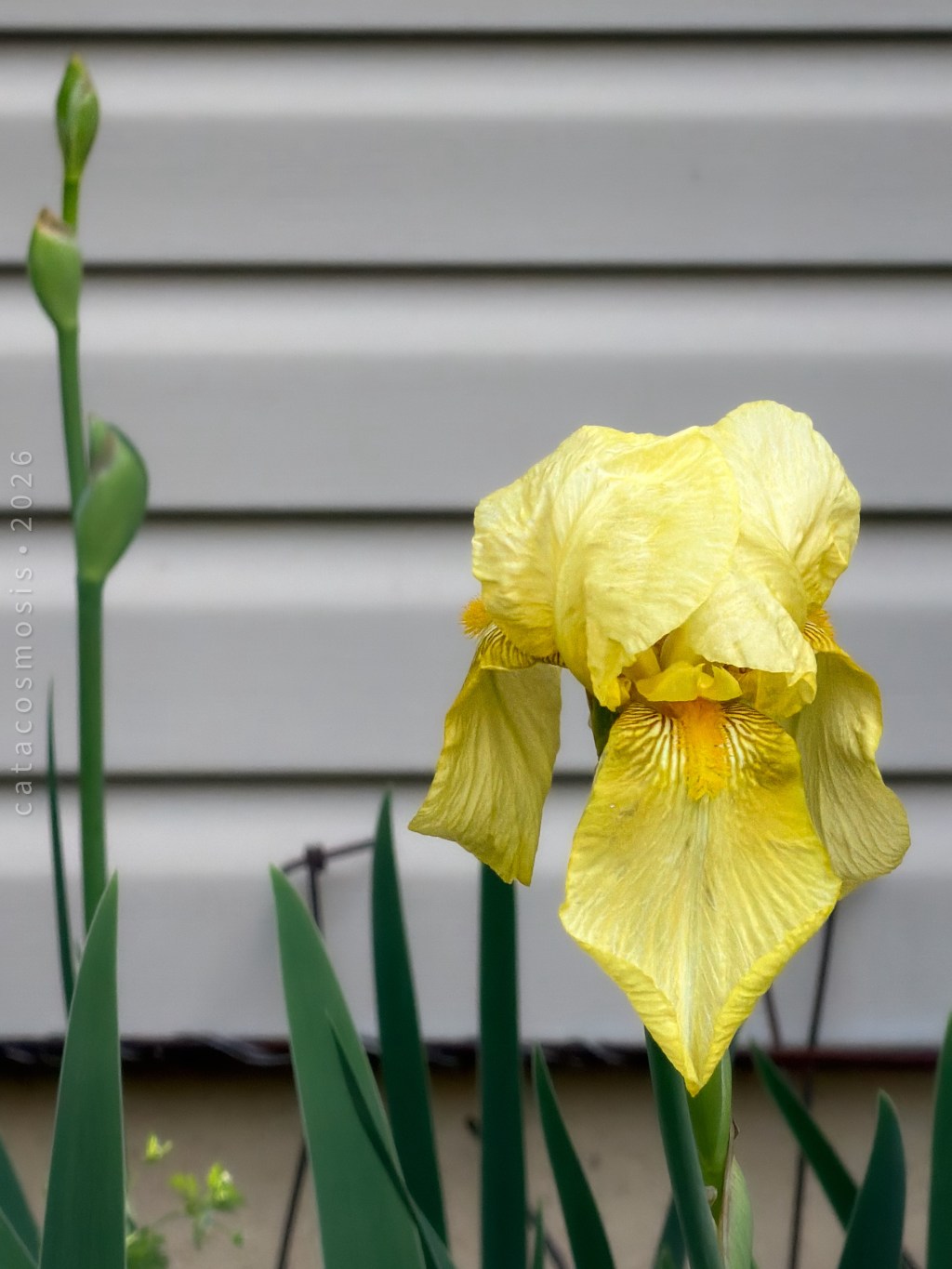
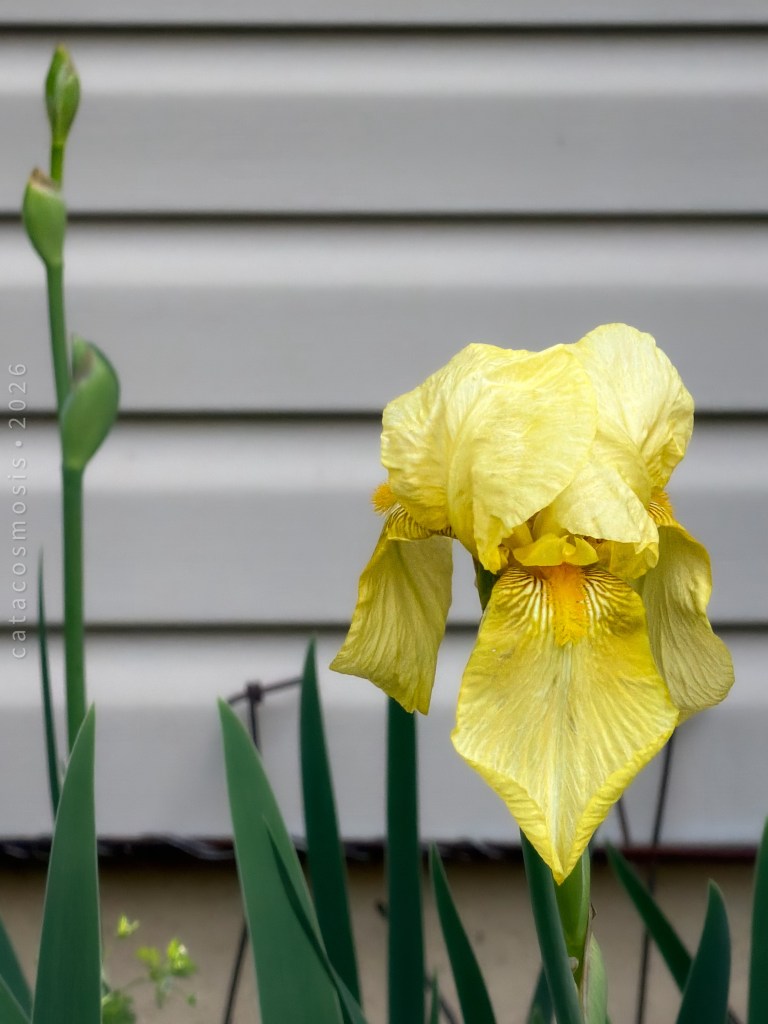
In an unassuming corner of the yard, this yellow iris has unfurled like a quiet epiphany. What was once a tightly wound promise, rhizome buried deep through winter’s long hush, now opens fully to the light. Its ruffled petals now catch the sun with an almost reckless joy. The veins of deep gold trace a map of quiet persistence, while the orange heart glows like an inner fire that refused to go out.
Beside it, younger buds wait in patient green, still curled in their own contemplative silence. They teach their own lesson: not everything must bloom at once. Some wisdom arrives early; some lingers in the stalk, trusting the season will call when it is ready.
There is something profoundly philosophical in this annual resurrection. The iris does not bloom for applause or permanence. It blooms because that is its nature, with its brief, brilliant way of saying yes to existence, and it does so right here, against the ordinary creamy beige siding of daily life, proving that the sacred never waits for perfect conditions. It simply returns, year after year, not asking permission or requiring validation, reminding us that we too carry rhizomes of possibility beneath the surface of our ordinary days.
Seasons of dormancy give way to moments of vivid becoming, if only we pause long enough to witness it. Perhaps every ordinary moment holds the potential for a quiet epiphany. The question is whether we slow down enough to notice.
He has made everything beautiful in its time. He has also set eternity in the human heart; yet no one can fathom what God has done from beginning to end. (Ecclesiastes 3:11)
entry twenty three — scattered light, fractured grace: a quiet archive of light, loss, and what remains.
iPhone 17 Pro + VSCO (wb) + Lightroom Mobile (noise, watermark)
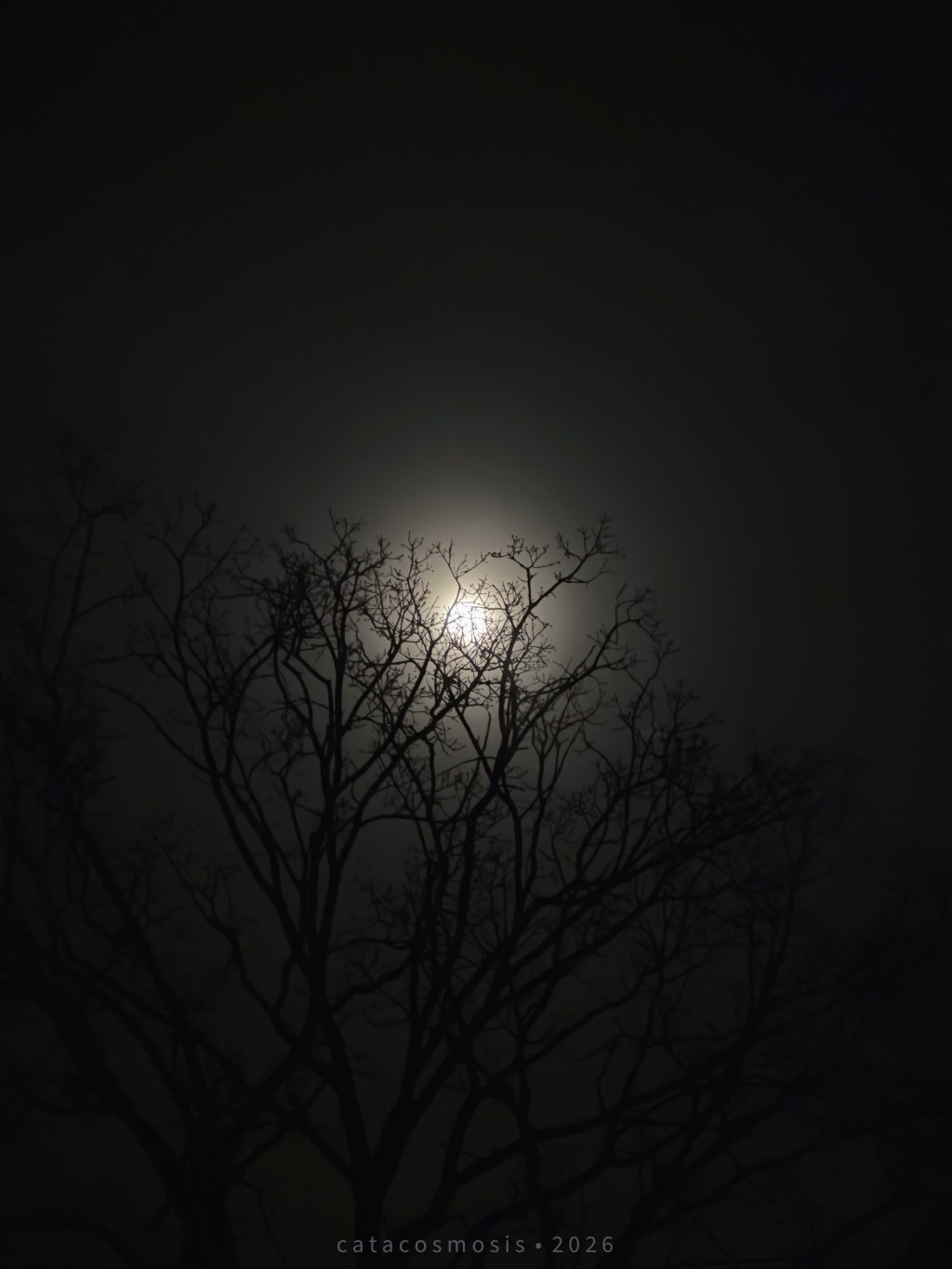
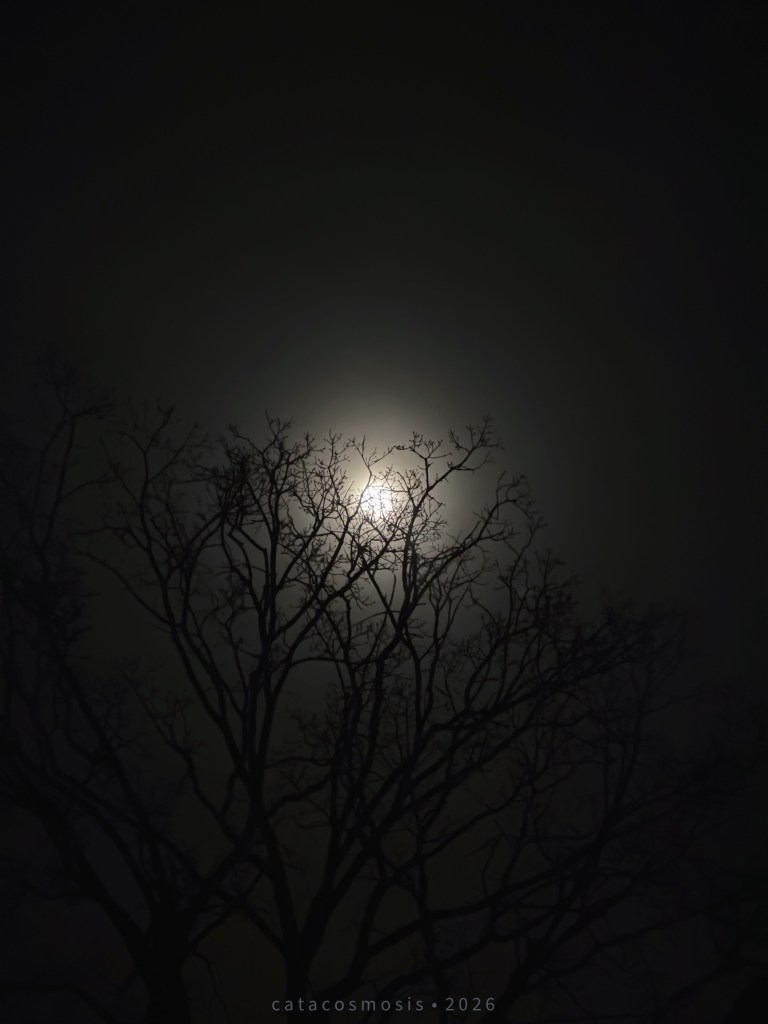
The moon is a small, stubborn wound in the dark, haloed and patient. Branches reach like remembered names, skeletal and exact against the hush.
The light slips through their fingers and leaves a trail of familiar ache. Not sharp, not new, just honest and unblinked.
I stand where the tree lives in my knowing, and for a breath the world narrows to that thin halo and the soft geometry of limbs. There is comfort in the way memory and sky overlap, how absence can be a kind of company.
Home again feels less like a place and more like the presence that arrives when light finds the places you thought were empty.
Not the sanitized, monetized version. Not the hollow “good vibes” lie designed to keep everyone comfortable and nothing honest.
I mean the kind of light that exists because the world has become grungy, nasty, ridiculous, and addicted to consuming whatever still has a pulse.
Truth should be efficient. In a sane world, it is. But this isn’t a sane world.
Here, efficiency belongs to distortion. To slogans instead of substance. To repetition instead of verification. To emotional leverage instead of reality.
Truth requires something costly: attention, humility, memory, accountability. It forces people to stop, reassess, sometimes admit they were wrong, sometimes change. And that makes it inefficient in a culture built to move fast, feel loudly, and never look inward.
So truth is treated as an obstacle. As “problematic.” As dangerous. As something to be managed, softened, buried, or rebranded until it no longer threatens the illusion.
Hold the light anyway.
Even when it makes you a silhouette instead of a spectacle. Even when it costs you comfort, applause, or belonging. Especially when it exposes what others are desperate to keep hidden.
Light doesn’t scream. It doesn’t beg. It doesn’t perform.
It reveals.
And that, more than anything, is why it’s feared.
So keep carrying it through the cracks and decay. Not to save the world. Not to convince the masses. But because surrendering it would mean becoming what’s poisoning everything.
entry sixteen — scattered light, fractured grace: a quiet archive of light, loss, and what remains.
iPhone 17 Pro + VSCO + DistressedFX + Lightroom Mobile (watermark only).
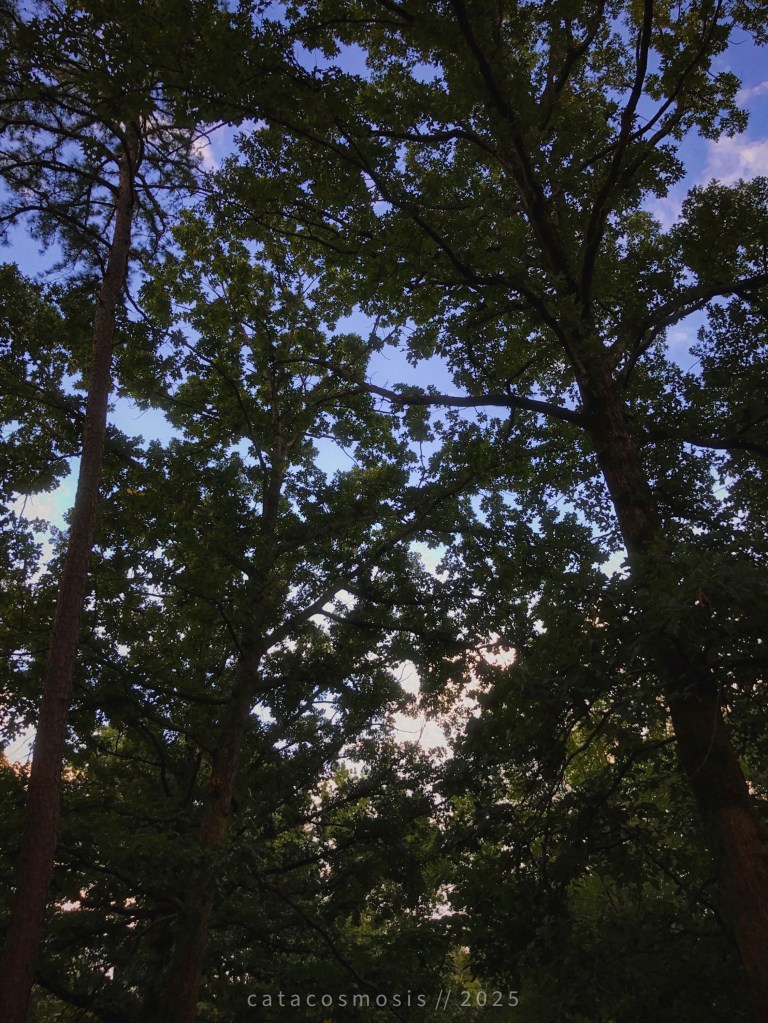
Evening gathers in a bluish-purple hush, and the crunch of dirt and rock seems to echo around me. Steadily and with intention, I put one foot in front of the other.
The birds fall silent, and the wind begins its quiet work. Loosening what I’ve held too tightly. Lifting the thin, trembling pieces of me that never settled into place.
They rise like seeds learning the shape of their own release, drifting out of me in a soft unspooling. The silhouette remains. Stem, leaf, the stark line of what endures. Everything lighter unthreads itself into motion.
What once felt like a tangle becomes a brief choreography, a small mercy in the dimming light. Loss, I’m learning, is sometimes only a shifting of weight.
The wind carries the rest. The jumbled thoughts. The old ache. The unspoken sentences that kept circling my ribs. Let them scatter. Let them drift beyond reach.
What stays is quieter, but honest. A rooted shape against the fading sky, held together not by certainty, but by the simple grace of letting go.
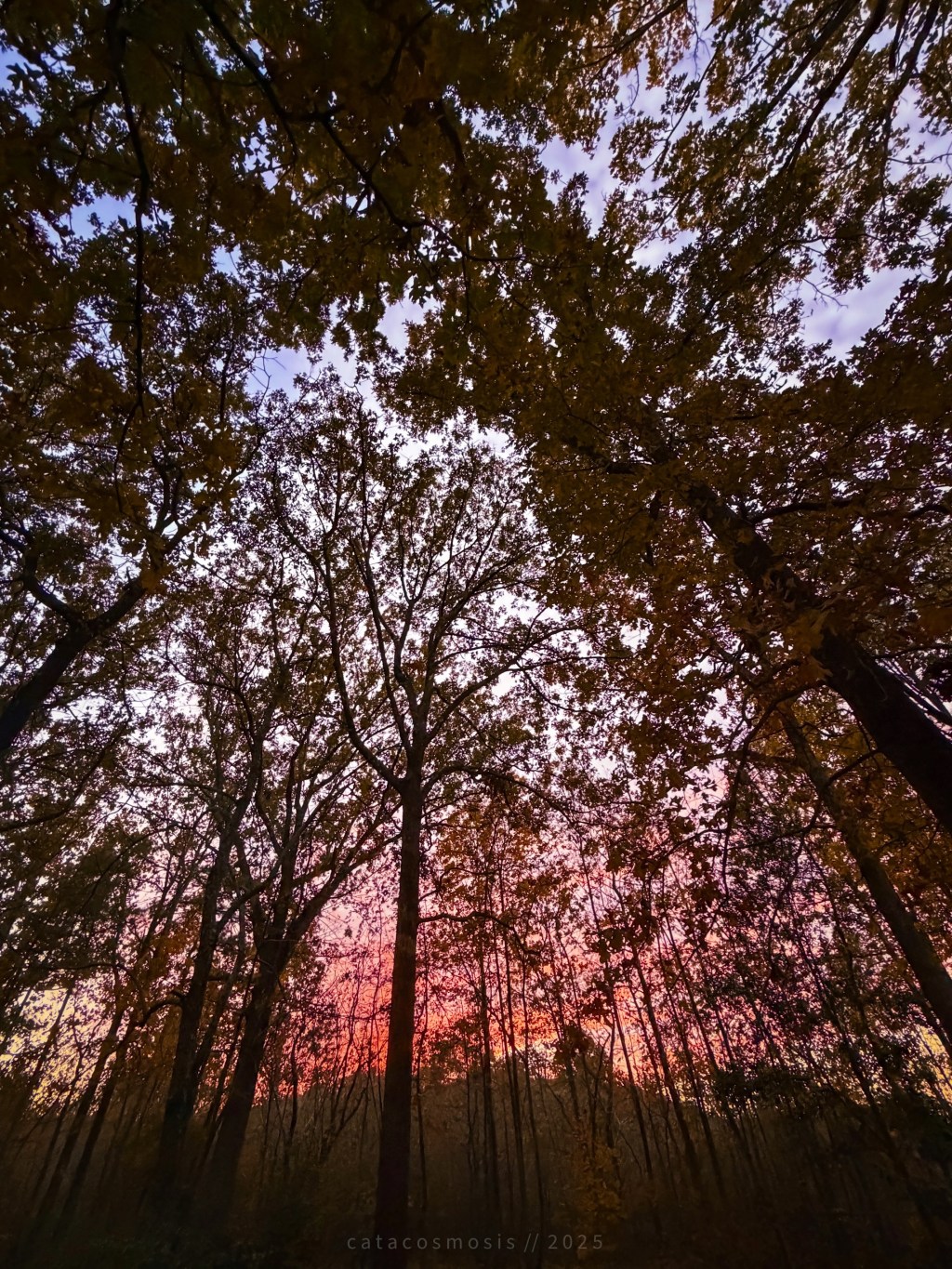
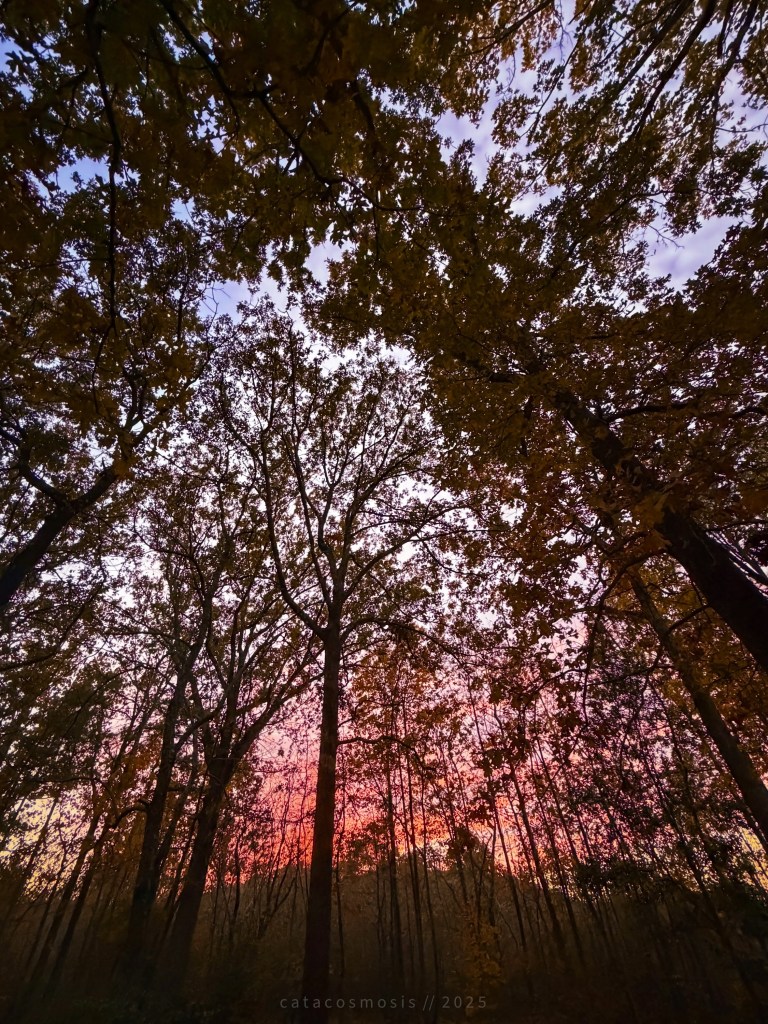
The sunset this evening caught my eye as I glanced up from the command prompt to rest my eyes.
“cmd —> DISM /Online /Cleanup-Image /RestoreHealth” be damned, I forgot the problematic machine.
I gravitated outside as though an unseen force beckoned me… and instead of me capturing a backyard moment, the moment froze me in place and then swallowed me whole.
It happened quietly, the way revelation always does: when the day was no longer sure of itself.
The horizon drew one long, trembling breath, and the sky exhaled light like a confession, soft and burning all at once.
For a few heartbeats, the forest became a cathedral. Oaks turned to stained glass, every vein of every leaf catching the final ember of the sun’s breath.
The air itself seemed to glow with a kind of surrender, as though heaven was remembering how to let go and reminding me all over again.
I stood beneath it, small but aware, suspended in that thin seam between the living, the leaving, and the memory of the already gone.
The colors didn’t ask to stay; they simply poured through the cracks of the canopy and into me, as if to say, “grace doesn’t vanish when the light fades. It only changes hue.”
When the sky went gray again, it felt less like an ending and more like an exhale finished.
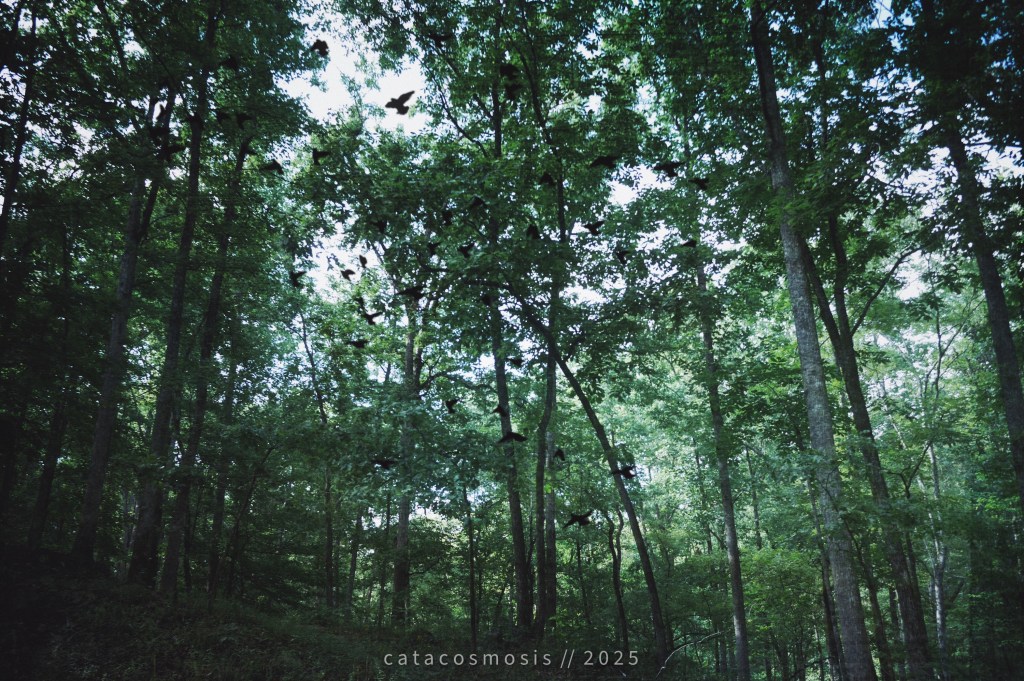
Have you ever been sitting in the woods, in the quiet and minding your own business , just breathing it all in, when out of nowhere the birds seem to spring into motion?
One moment, they’re scattered through the trees, singing softly into the hush; the next, they take flight as one, their calls vanishing into a deathly silence. All that remains is the trembling of wings and the echo of something unspoken moving through the air.
It’s strange how quickly stillness can shift, how a single gust or unseen presence can ripple through an entire forest. You can feel it, even if you can’t name it. The temperature drops, the light changes, and the ordinary world folds itself back like a curtain.
And then you’re left sitting there, swallowed by wonder. Not fear, not exactly, but that beautiful, unnerving awareness that something else is here. Something wild and watching.
For days afterward, it stays with you, that soundless moment when the forest seemed to remember itself. It makes you question what else is living in the margins, what other forms of life or spirit move just beyond the limits of our hearing.
I think that’s when I understood that silence is not absence. It’s presence, waiting to be known.
The forest wasn’t empty. It was full of attention.
entry thirteen — scattered light, fractured grace: a quiet archive of light, loss, and what remains.
There is a moment every single day when golden hour gives way to blue hour. In that moment, the world pauses between heartbeats.
The warmth of the sun hasn’t fully left, but it’s fading, slipping behind the horizon while the cool hues of twilight begin to take hold. For a few fleeting minutes, everything softens. The light is neither day nor night; it’s an in-between realm where time seems to hold its breath.
Shadows stretch. The air shifts. The gold turns to amber, then to lavender, then to blue, a slow dissolving of one truth into another. It’s the day’s last whisper and the night’s first sigh, a moment that belongs to no one and everyone at once.
Most people miss it. But for those who are still and detached from the noise of the world enough to notice, it feels like standing at the seam of two worlds – the visible and the unseen – the known and the infinite, as light gently hands the sky over to darkness.
If I were still as attached to the idea of controlled outcomes as I used to be, I’d still not know it exists… much less recognize it and be aware enough to take it’s photo as it occurs.
This is the product – nay, the gift – of mindfulness. 🧘
Detachment is not that you own nothing. Detachment is that nothing owns you. —Bhagavad Gita 2.47
There’s this list — never written down in one place, but always hanging over me like the hum of an old fluorescent light. It’s made of things that should be straightforward:
Back up the photos.
Untangle the art supplies.
Organize the sketchbooks.
Move the ideas from my head to a place they can breathe.
Put the words onto the pages.
Clean the brushes.
Organize the books.
Organize the ideas.
But they are never straightforward. Not for me. Not for anyone whose mind has a thousand open windows and refuses to shut them just because the world prefers tidy blinds.
Society has found a name for this: ADD. ADHD. Neurodivergence. The diagnosis may be true for some, but here’s what I believe — it’s not a flaw. It’s the original wiring of the artist, the philosopher, the restless creative soul. It’s the part of the mind that won’t collapse into the assembly-line cadence of “normal life.” And that refusal has always been a threat to the people who rely on compliance.
This is why so many people who are miserable in the 9–5 grind feel like they’re constantly drowning. They fight from one day to the next just to keep their priorities in order, forgetting things, feeling scattered, wondering why life feels like a treadmill they can’t get off. It’s not because they’re lazy or incapable — it’s because they’ve been convinced, by family, by school, by the whole machinery of society, that their purpose is something other than what their soul already knows it to be.
They’re creatives, not conformers. But they’ve spent their entire lives pouring all their energy into staying afloat in a stormy, chaotic sea they were never meant to swim in. And not only has the world’s rules kept them from living their purpose, they don’t even remember what that purpose is… and they certainly haven’t been taught how to manage or maintain reality as a creative.
The problem is, the tools that work for type A people don’t work for type B people — and vice versa. But the world, the powers that be? They don’t want any creatives to thrive. Why? Because thriving creatives don’t line their pockets, and they can’t control what they can’t contain.
By the late ’90s and early 2000s, the strategy had shifted. They started medicating us into focus, pressing Adderall into palms while preaching “Say no to drugs” in the same breath. It wasn’t just hypocrisy; it was the perfect kind of doublethink. They couldn’t get my generation — Gen X, especially — to trade curiosity for clock-punching, so they tried to sedate the wonder right out of us.
It had started long before my generation. From the ’60s onward, every decade had its rebellion, but something about our era cracked the pattern wide open. We remembered how to slip back into our creative current, to say — without apology — that the system wasn’t built for us, and we weren’t going to rewire ourselves to suit it.
The boomer generation fell for it enough to punch the clock and hold the grind in both hands. But my generation? The ones who were school-aged in the ’80s and especially high school/college aged in the ’90s, raised as latchkey kids, left to our own devices? We had just enough space to keep our own ideas and double down on our self-expression. We rejected the rhetoric outright, but we still had the foundational work ethic, the grit, the stubborn drive to show up.
Unfortunately, that refusal was met with more control, more noise. By 2012, the hum had become a low, constant pressure. By 2016, the unexpected and unorthodox split the air like lightning, and nothing went back to sleep after that. By 2020 — and certainly by 2022 — largely thanks to Covid (which I will forever believe was a purposeful attempt to tighten the reins of control), the result wasn’t the obedience they hoped for. It was the opposite. People were waking up in numbers that mattered.
And here we are. And here I am.
Sitting with a computer that holds hundreds of gigabytes of uncataloged photographs, each one a memory or a moment, all of them waiting for me to find them a home, if not on someone’s wall then in beautiful posts they can enjoy on their computer screens. Art supplies scattered in a way that makes them impossible to ignore and yet impossible to start sorting. Projects that live half in the physical world and half in my head, where they multiply faster than any app or planner could contain.
Digital tools have not tamed the chaos — they’ve only given it better hiding places. They’ve bred a new kind of loathing, a quieter form of procrastination and lethargy, one that makes the struggles of pre-technology life feel almost romantic in hindsight — like a fairy tale we didn’t know we were living, a beautiful dream we only learned to miss once it was gone.
This morning, I pulled a book from my shelf. It’s been there since Ralph died:
How to Be an Explorer of the World — Portable Art Life Museum.
I haven’t opened it yet. The title alone feels like someone has tossed me a rope, and I’m still deciding whether to pull. Even without turning a page, I intuitively, automatically know — as every creative does — what waits for me inside. The “Art” in the title has been struck through and replaced with “Life” for a reason: because that’s what it truly is. A reminder that we’re not here to live as curators of someone else’s museum, dusting off exhibits we never chose. We’re here to explore — to step into new rooms, to rearrange them until they make sense to us, to claim the space as our own.
And yet, here’s the truth I keep circling: maintenance is the perpetual loop where I always seem to get stuck.
Not the dreaming, not the making, but the keeping. The tending. The part where you have to hold the door open for what you’ve already made so it doesn’t fall apart while you’re off chasing the next thing. Somewhere in the tug-of-war between vision and upkeep, I drop threads. And when enough threads fall, the rest of my life starts tangling with them — homeschooling, daily meals, the way the pantry and the jumble of household chores scribbled on random scraps of paper looks like a metaphor for my brain.
This is the quiet battle no one talks about: how to keep creating without losing the things you’ve already created. How to tend your work without caging your mind. How to make room for the next idea without letting the last one turn to dust.
For people like us, maintenance is never just maintenance. It’s a negotiation between the world’s idea of order and the wild way our minds are built to move. And maybe the truth is that we aren’t the ones in need of repair.
Maybe the wiring was never the problem. Maybe it’s the world that’s broken.
And what does all of this lead to? Yet another idea tossed onto the pile: maybe I should explore it in an in-depth series of articles here.
Ha.
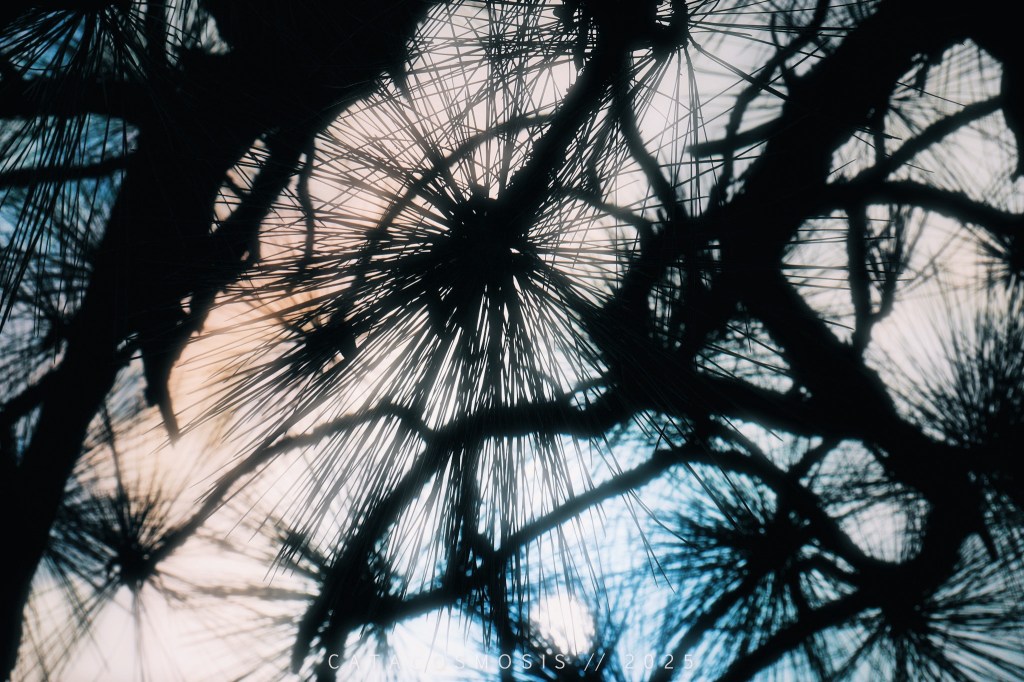
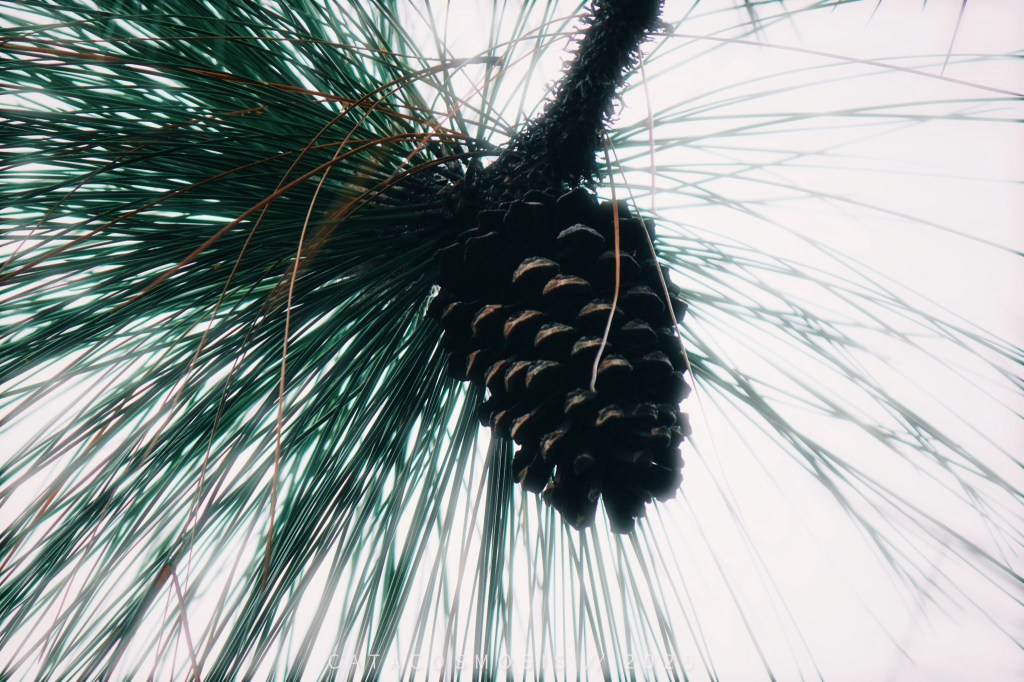
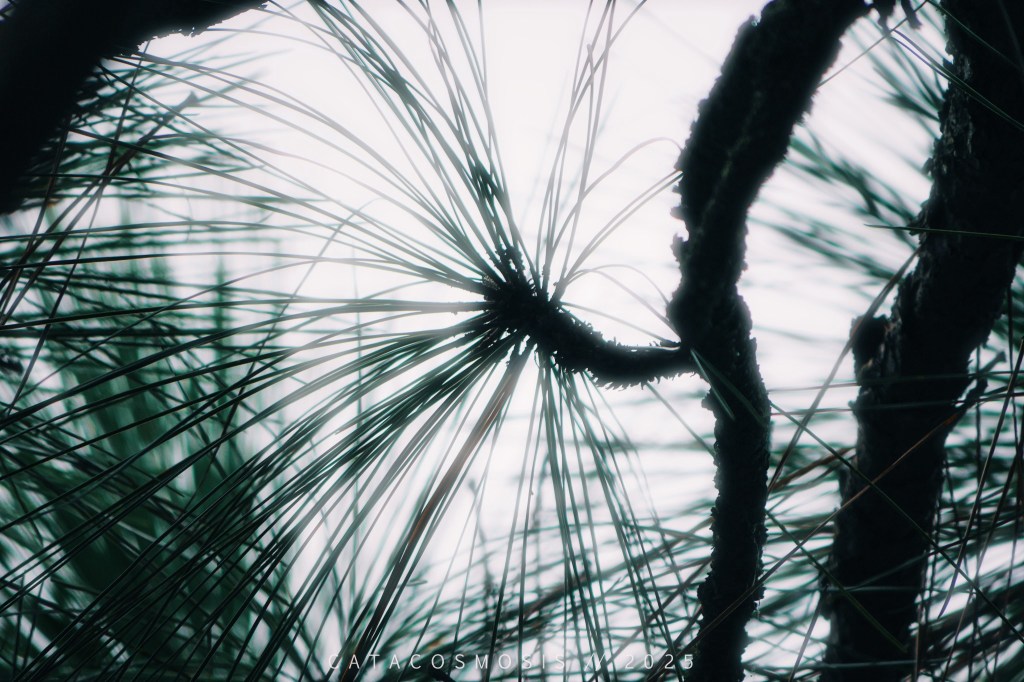
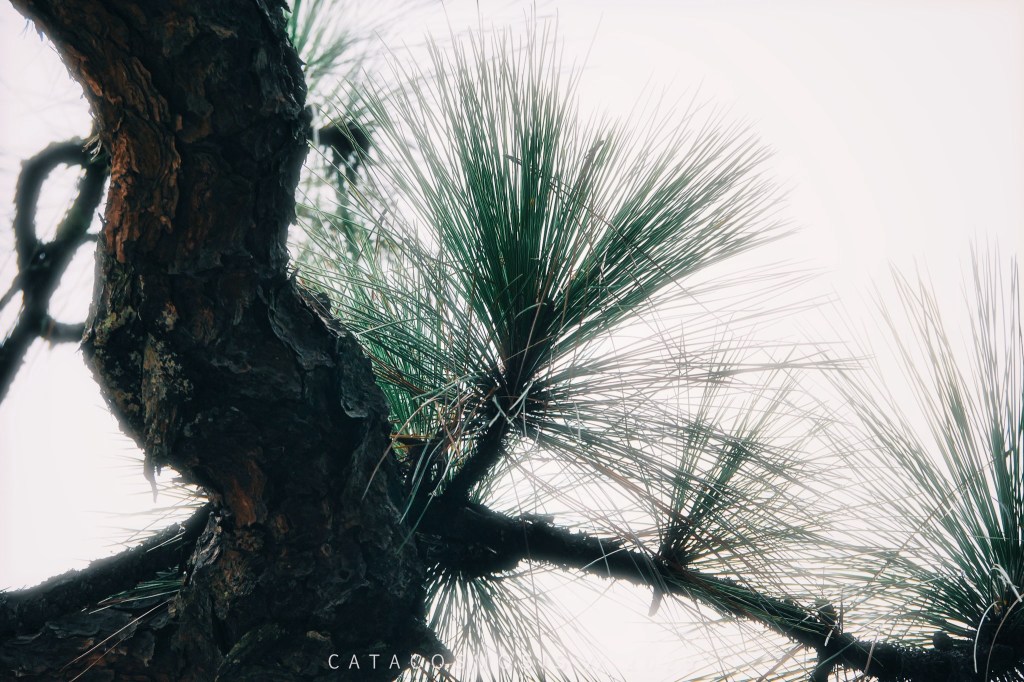
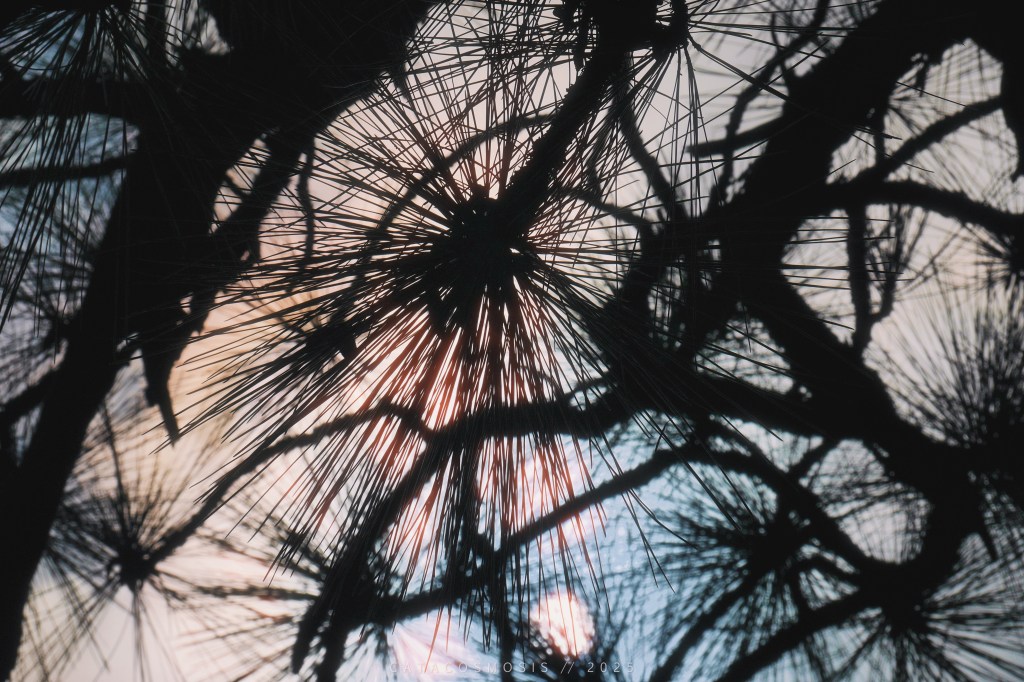
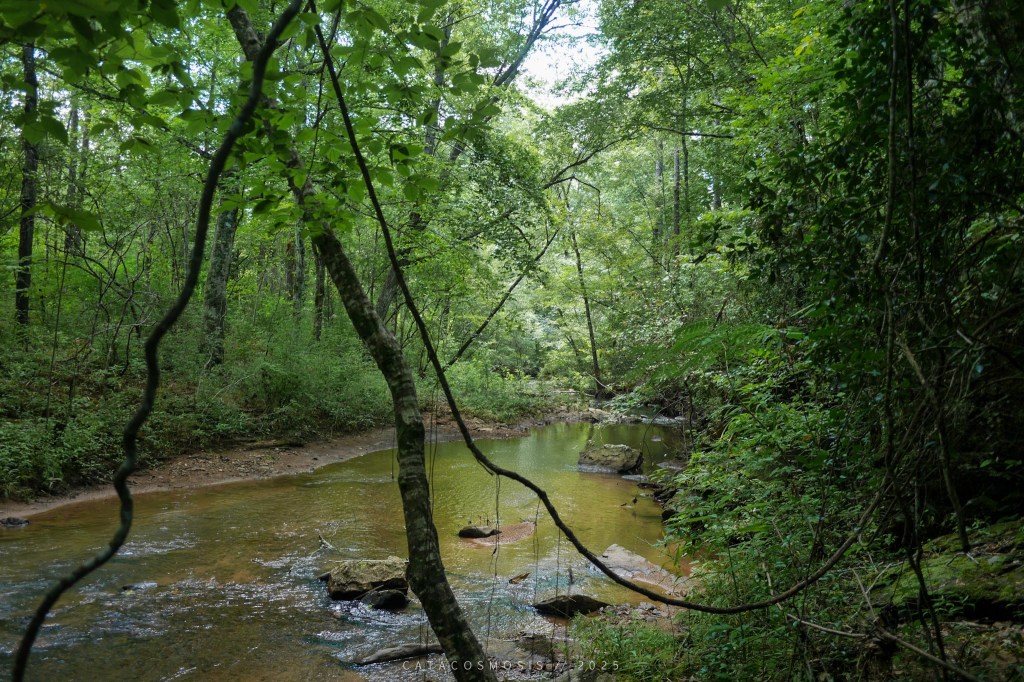
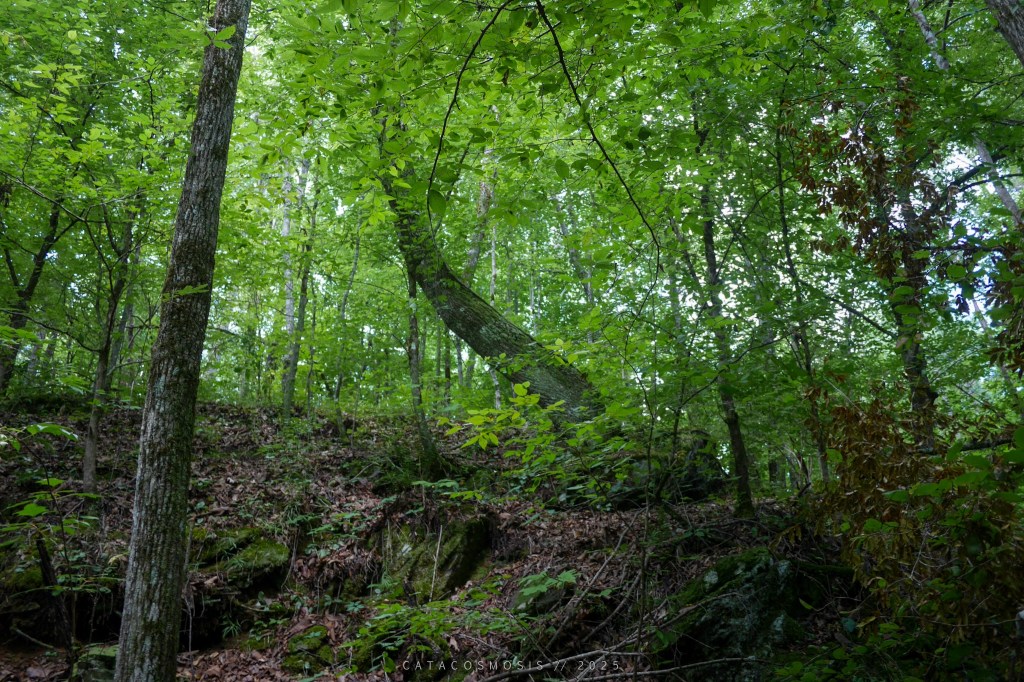
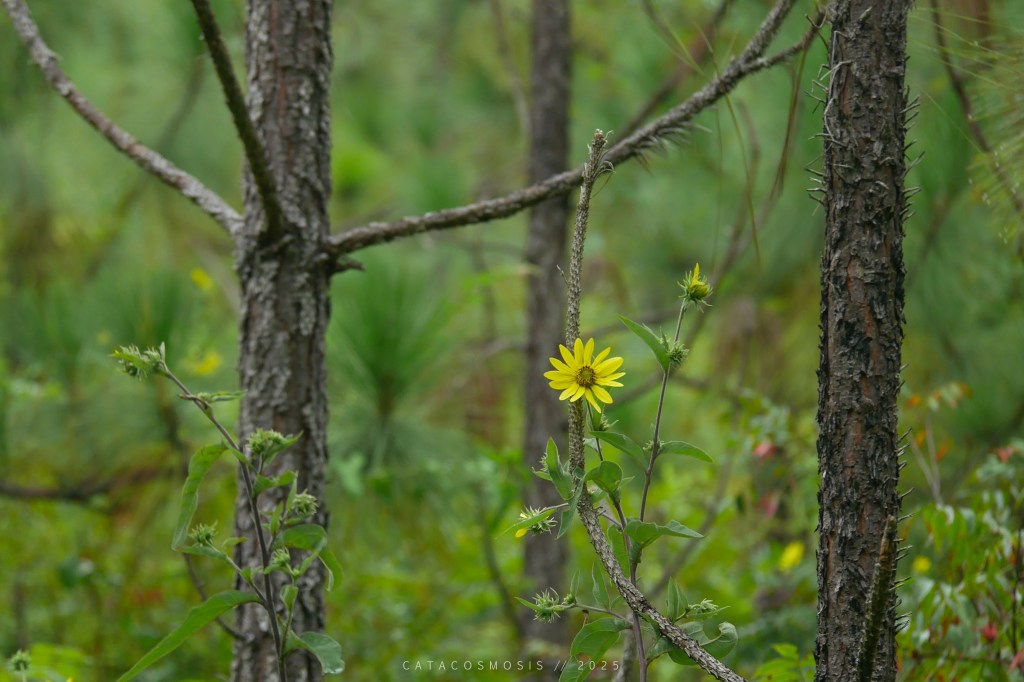
For now, though, here’s a brief gallery of shots of my favorite tree — the oldest in my state, and one I’ve found myself referencing often lately. A couple are completely blown out. One feels especially dull to me. But while they may seem ordinary, even boring, to the casual observer, my passion for this incredible 400+ year-old short-leaf pine runs deeper than any skill or lens could ever capture.
And that’s exactly the point — this tree is the living embodiment of what I’ve been trying to say above. The uncreative soul may never understand the pull, the quiet reverence, or the way beauty lives in the details that can’t be measured or monetized. But to those who do understand, no explanation is needed.
I hope you enjoy these images as much as I enjoyed the process of shooting and processing them.
Yesterday, I went shooting. I collected over 1,500 photographs in a single morning.
It’s been a long time since I’ve been that focused, that immersed in the creative energy that sustains me. It felt good to be so deeply aligned with The Flow—Nature’s and God’s flow, not mine, not anyone else’s.
For hours upon hours, I alternated exploration and randomly sitting still with nature, and with my favorite tree—the oldest documented in my state—for a long time. I quietly observed every detail, inner and outer, letting my mind wander and my spirit settle.
So long, in fact, the chiggers are still feasting on me. A worthy price, though, for what was finally made clear to me—the missing puzzle piece that’s been keeping me from being able to help others fully grasp my perspective when I talk about grounding and meditation:
It’s not about escaping the body, 3D reality, or floating above your life. It’s not about leaving. Healthy, true meditation is the opposite of escape.
Meditation is about stillness, observation, and rooting in. It’s about grounding into the physical body, and the earth itself, consciously connecting with both.
It’s about sinking into the body—not running from it. Anything rooted in “escape” isn’t meditation. At any spiritual or energetic level, escapism is a cop-out. Worse, it’s a lie.
Meditation is about bringing the physical, mental, and emotional into balance so that rising energetically, emotionally, and intellectually becomes not only natural… but possible in the first place.
This shift in understanding can (and will) change everything for anyone who is willing to open their minds and hearts enough embrace it.


 catacosmosis