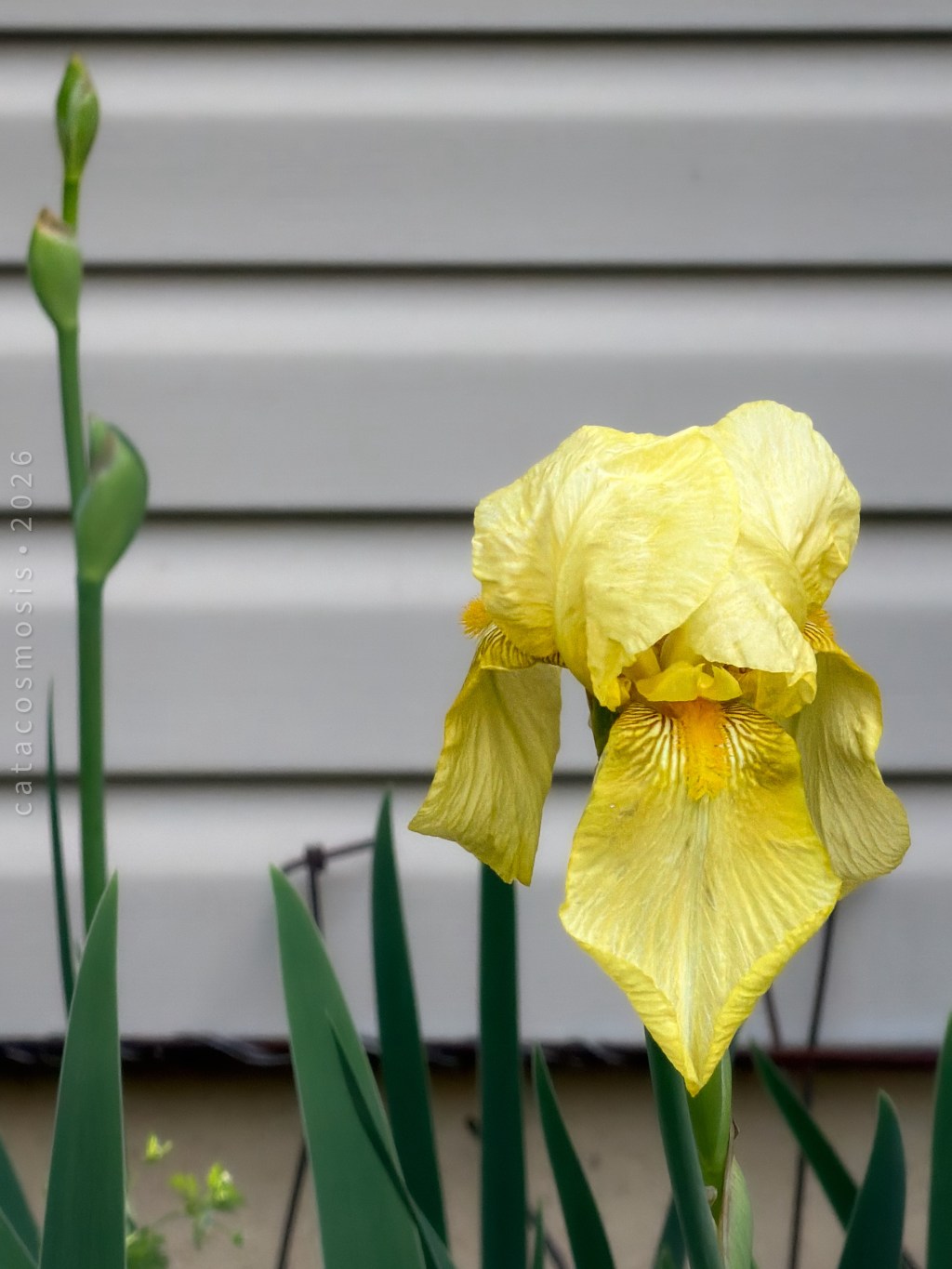
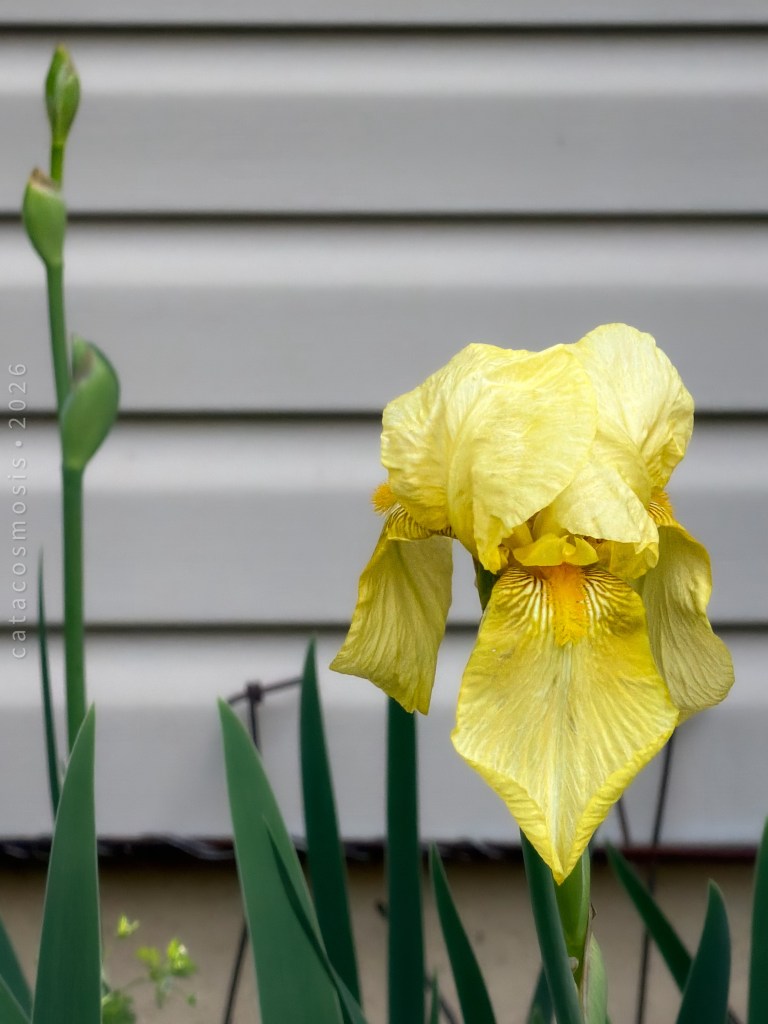
In an unassuming corner of the yard, this yellow iris has unfurled like a quiet epiphany. What was once a tightly wound promise, rhizome buried deep through winter’s long hush, now opens fully to the light. Its ruffled petals now catch the sun with an almost reckless joy. The veins of deep gold trace a map of quiet persistence, while the orange heart glows like an inner fire that refused to go out.
Beside it, younger buds wait in patient green, still curled in their own contemplative silence. They teach their own lesson: not everything must bloom at once. Some wisdom arrives early; some lingers in the stalk, trusting the season will call when it is ready.
There is something profoundly philosophical in this annual resurrection. The iris does not bloom for applause or permanence. It blooms because that is its nature, with its brief, brilliant way of saying yes to existence, and it does so right here, against the ordinary creamy beige siding of daily life, proving that the sacred never waits for perfect conditions. It simply returns, year after year, not asking permission or requiring validation, reminding us that we too carry rhizomes of possibility beneath the surface of our ordinary days.
Seasons of dormancy give way to moments of vivid becoming, if only we pause long enough to witness it. Perhaps every ordinary moment holds the potential for a quiet epiphany. The question is whether we slow down enough to notice.
He has made everything beautiful in its time. He has also set eternity in the human heart; yet no one can fathom what God has done from beginning to end. (Ecclesiastes 3:11)
Not the sanitized, monetized version. Not the hollow “good vibes” lie designed to keep everyone comfortable and nothing honest.
I mean the kind of light that exists because the world has become grungy, nasty, ridiculous, and addicted to consuming whatever still has a pulse.
Truth should be efficient. In a sane world, it is. But this isn’t a sane world.
Here, efficiency belongs to distortion. To slogans instead of substance. To repetition instead of verification. To emotional leverage instead of reality.
Truth requires something costly: attention, humility, memory, accountability. It forces people to stop, reassess, sometimes admit they were wrong, sometimes change. And that makes it inefficient in a culture built to move fast, feel loudly, and never look inward.
So truth is treated as an obstacle. As “problematic.” As dangerous. As something to be managed, softened, buried, or rebranded until it no longer threatens the illusion.
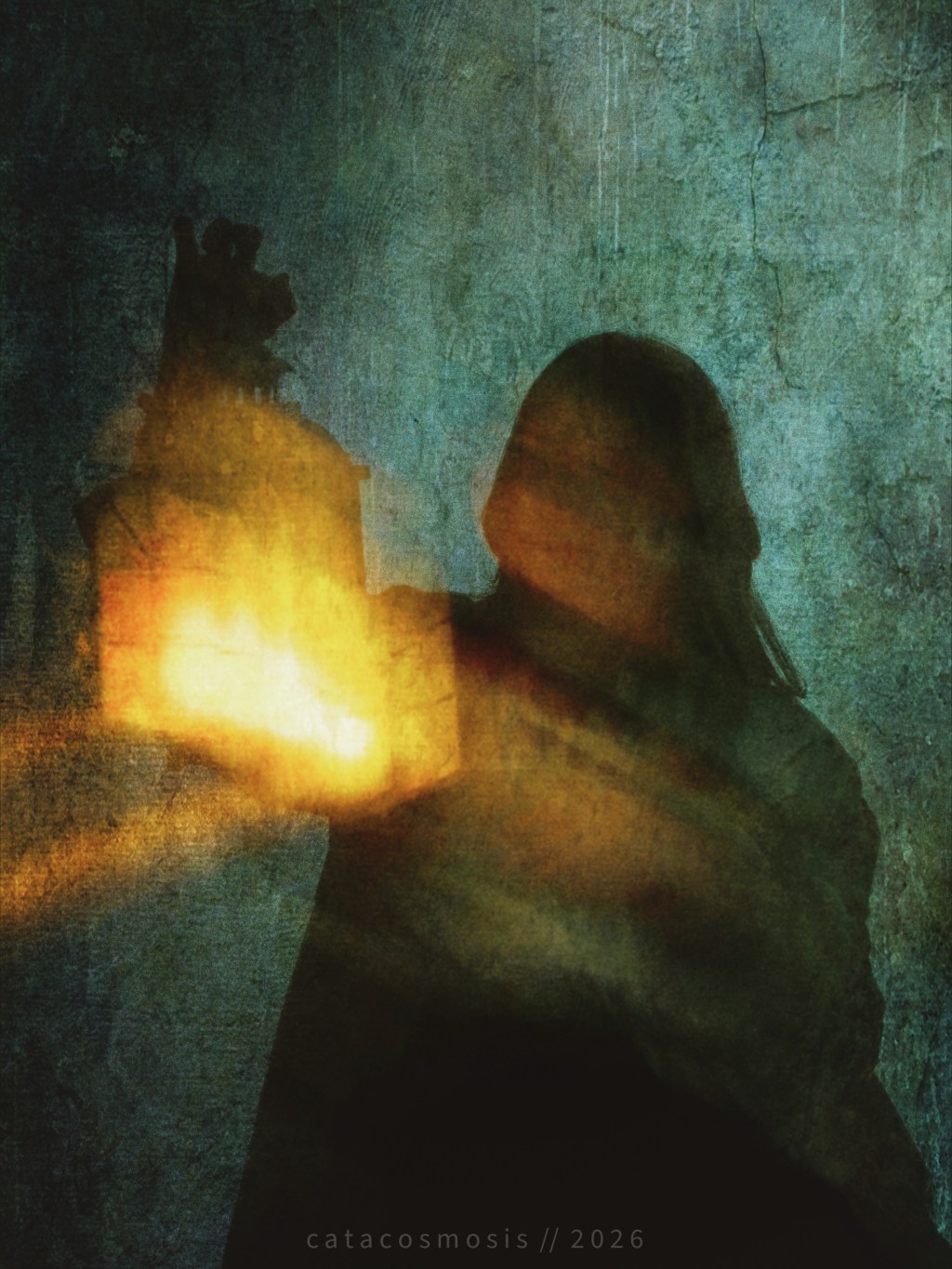
Hold the light anyway.
Even when it makes you a silhouette instead of a spectacle. Even when it costs you comfort, applause, or belonging. Especially when it exposes what others are desperate to keep hidden.
Light doesn’t scream. It doesn’t beg. It doesn’t perform.
It reveals.
And that, more than anything, is why it’s feared.
So keep carrying it through the cracks and decay. Not to save the world. Not to convince the masses. But because surrendering it would mean becoming what’s poisoning everything.
Haze blurs his profile. I grip the thin stem of hope. Current keeps moving.
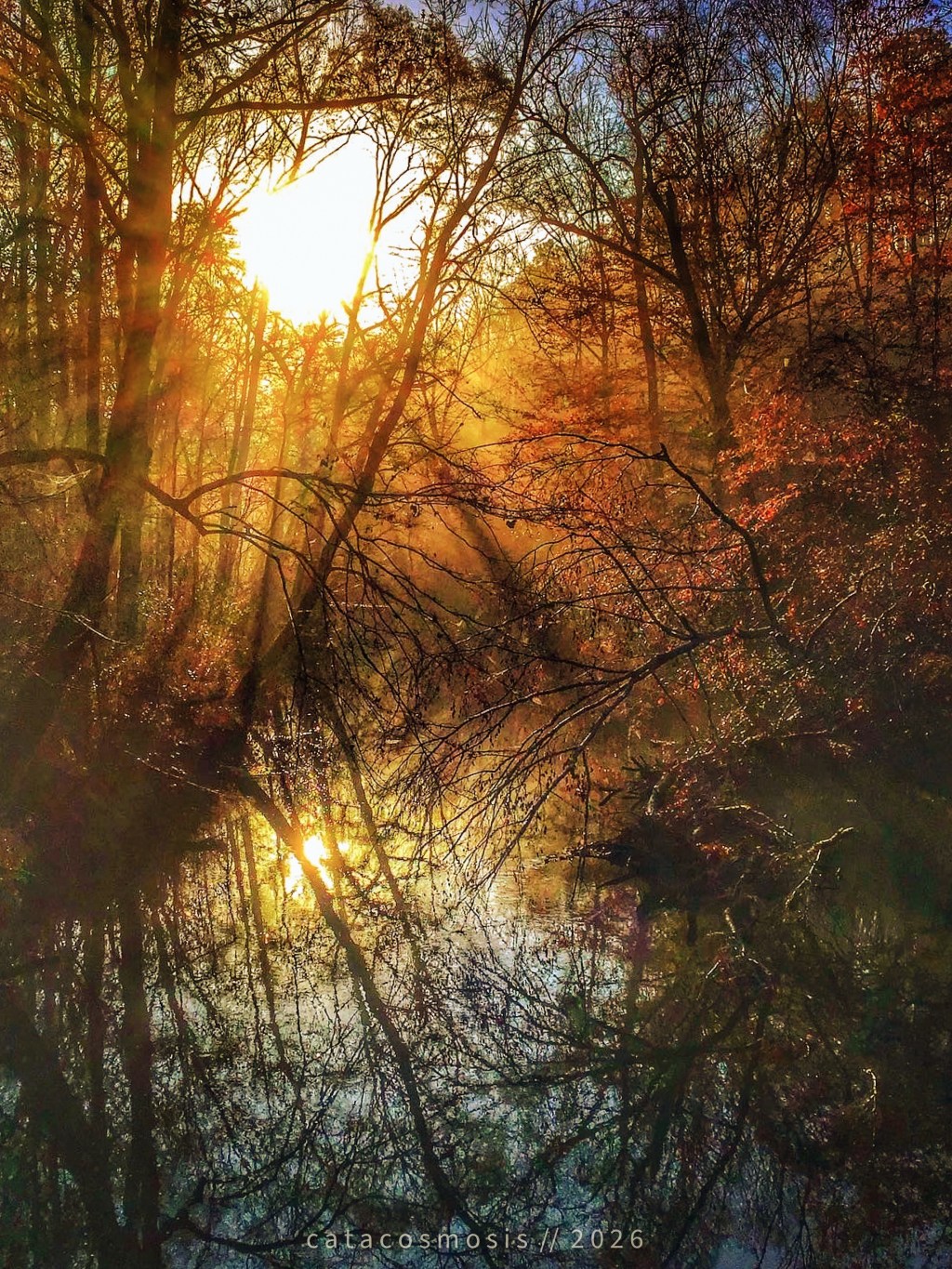
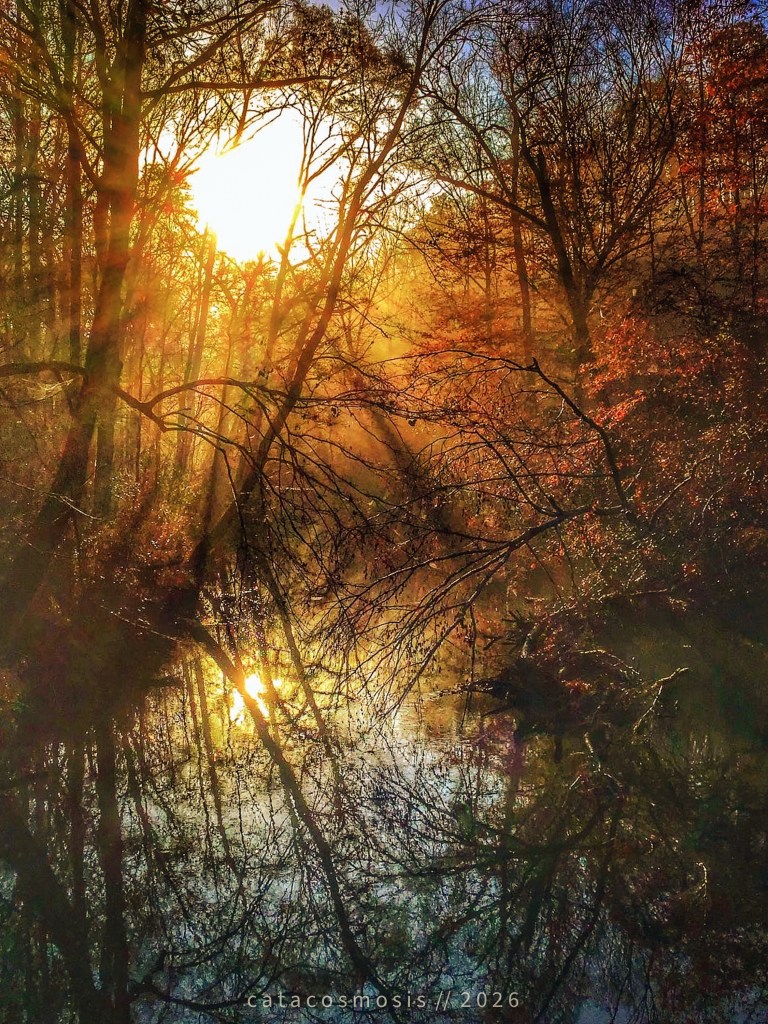
I came across this photo from a camping/hiking weekend in December 2018 this morning, and it opened something in me… or awakened it.
In the photo, the woods are one giant lens flare: the late-fall sun punches clean holes in the canopy, throws every leaf into over-saturated neon, while the creek becomes a mirror so sharp you feel you could step through it into another forest.
That’s what this last year with my son has been doing to the dial inside me. Faith cranked so high it hums, reality just as loud, and me caught in the bright slash between. I used to soften one side or the other: pray the hard parts dimmer, work until the wonder felt manageable. But the creek refuses to choose between glare and reflection; it holds both, lets them ricochet until you can’t tell which side of the surface is real.
I can see now that I am – or prefer to be – the creek. I practice that same double exposure of my roles, but it has all blurred and blinded me in recent days. In reality, all it adds up to is the fierce mother part of me – scheduling therapies, ordering visual timers, and trying to learn an entirely new language that has no words – and the gentler, whole me. The part of me that still leaves room for hope and comfort in the impossible color of his laugh when a dragonfly lands on his sleeve.
Balance isn’t compromise; it’s letting the light stay blinding and the shadows stay knife-edged, trusting the picture only makes sense when neither is edited out.
Every so often, I experience what I call the freeze.
Artists will know exactly what I mean. It is that moment right before you begin a new piece, canvas blank and supplies ready, when something inside you locks up. You want to move, but you don’t. You know what to do, but suddenly you can’t do it.
It’s not laziness and it’s not a lack of ideas. It’s more like a quiet paralysis, the sense that whatever you do first will somehow be wrong, wasteful, or irreversible.
I experienced that tonight, and it surprised me. I haven’t frozen like that in a long time.
Maybe it is holiday stress. Maybe it is the cumulative weight of life, reality, and empathy for a world that feels perpetually on edge. Maybe it is something smaller, or something that would sound completely absurd to anyone watching from the outside. But absurd does not mean invalid.
Any time we experience something like this, there is a reason… and I am the kind of person who looks for it. I look inward and outward, I sit with the discomfort instead of trying to bulldoze through it, and I pay attention to what is actually happening in my body and mind.
I find that process purposeful, and sometimes even enjoyable, not because it’s comfortable but because it gives me agency. When I understand what is happening and why, anxiety loses its grip. I can experience it and coexist with it at the same time. More often than not, that approach resolves the issue in a deeper and longer-lasting way than simply forcing myself forward.
So this is the internal conversation I had tonight, and how I talked myself through it once I reached a clearer understanding of what was really going on. This is where my professional training in psychology meets my self-taught training in art, I suppose.
If you have similar experiences to what I’ve described above, I hope some part of this is useful to you.
Step 1. Pause for a moment. Not to analyze or fix anything, just to name what is happening. Once something is named, it tends to lose a surprising amount of its power.
What you’re feeling when you experience “the freeze” as soon as you pick up a brush or a palette knife, or face whatever in life it is that makes you freeze in a similar way, is not a personal flaw. For artists and creatives, it’s not proof that you are bad at being creative.
It’s a very specific nervous-system response, and it shows up most often in people who actually care about what they are making. In psychology, this response is often described in a few overlapping ways.
It can be understood as a conditioned approach and avoidance conflict within you, where the part of you that wants to create is simultaneously held back by fear of loss or failure.
Funny story: I wrote an entire 23-page research paper on this in my junior year of undergrad. In my opinion, it was incredibly boring, personally insulting, and the worst three months of my life at the age of 21, but somehow I shockingly got an A.
I digress.
It can also appear as performance anxiety, though not in the social sense, more as an internal pressure to do it right. For me, it is absolutely perfectionism as a defensive strategy, a way of protecting myself from imagined mistakes or wasted effort (thanks, Mom, may you rest in peace). In many cases, it can even be the brain or your physiology responding to dorsal vagal activation, which includes fight, flight, freeze, or fawn, but we will not go that deep here.
To put it in easy, normal language, this reaction almost always appears right before commitment. Any commitment, but especially one that means “if it goes wrong it’ll really cost me.”
In the art scenario, up until this point, the work has existed only in imagination. In that space it is infinite, perfect, and safe. The moment you are about to touch the canvas, it becomes finite and real. Something is chosen. Other possibilities fall away. Your (my) system hears that as loss, and it tries to protect you by freezing you in place.
That feeling that it has to be a certain way to be right is not creativity. It is internalized surveillance. Somewhere early on, many of us learned that mistakes mean waste, mess means failure, and a wrong choice causes permanent damage. Even when those rules no longer apply, the body remembers them. So when you are free, your body does not quite believe it.
That is not weakness, or incompetence. It is conditioning that has simply outlived its usefulness.
At the center of this response is a quiet lie: “If this turns out bad, the supplies are ruined.”
That is just not true. Acrylic can be scraped, painted over, sanded, cut up, or turned into texture. A canvas can become a foundation rather than a final statement. Materials are meant to be used. That is their purpose. Paint that sits untouched out of fear is already wasted.
Canvas is not sacred. You are. Please remind yourself of that immediately, and lock it in.
Another lie slips in just as easily: “It has to be a certain way to be right.”
Right for whom? There is no audience in the room, no rubric, no grade. There is only motion, pressure, color, and the physical relief of making contact with the surface. Art does not exist to behave! Remember?
This kind of freeze does not happen to people who do not care. People who are shallow about creativity do not spiral like this. It tends to happen to people with depth and sensitivity, to people who were corrected more often than they were encouraged, and to people who learned how to perform before they learned how to play.
The nervous system is not sabotaging anything. It’s trying to protect something precious: the ability to feel and express. It’s simply using outdated rules.
Step 2. A small reframe helps here. You are not making a painting right now. You are making the first layer of a surface. Nothing more. Not meaning, not outcome, not art with a capital A. Just noticing what happens when color moves downward. That layer is allowed to be ugly. It is allowed to be scraped away. It is allowed to disappear entirely under the next thing. You are allowed to stop at any time.
There is one gentle but important rule I follow that can helps me quiet the pressure. Say out loud that nothing you do in the next fifteen minutes counts. Set a timer. When it ends, you can walk away with no obligation to continue, fix, or judge. This is not about pushing through fear. It is about making fear irrelevant.
And finally, this matters. The experience, the art, and your simply being. But also, the fact that you sometimes freeze. It’s not invalid. You do not need to get over it already. That voice was built over years. It softens through safe repetition, not self-attack. Every time you begin anyway, tentatively and imperfectly, you rewrite it.
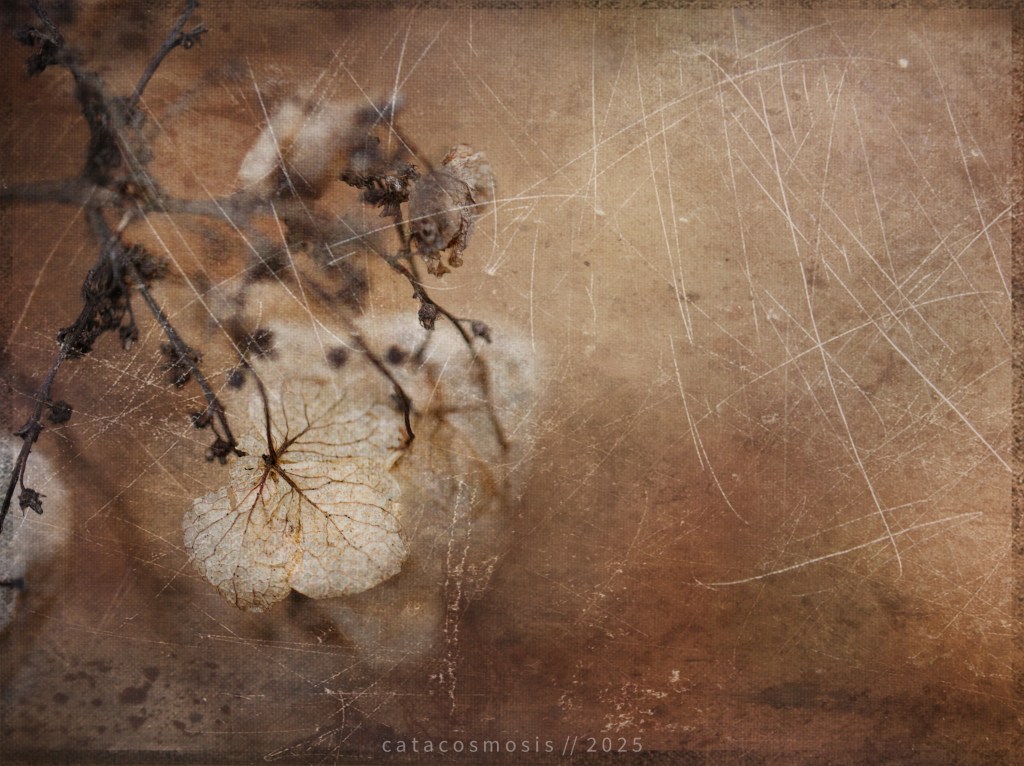
entry twenty — scattered light, fractured grace: a quiet archive of light, loss, and what remains.
Lumix GX7 + DistressedFX + Mextures
I’ve been thinking about how easily we overlook what does not bloom on command. How quickly we decide something is less valuable when its rhythms are quiet or unusual or slow to reveal themselves. How we are conditioned by convenience to turn away from what requires a different or more tender kind of attention, unless we are its mother.
As mothers, the expectations begin to pile up, even as the help quietly disappears… if it ever shows up to begin with. It showed up for me recently, with my son’s diagnosis of autism, and then the weight shifted again. The label alone added a layer of juggling and balancing that feels impossible, even in ways that his father may never fully know…
…but these small remnants of #lovelydeadcrap in my backyard have been teaching me how to package it all and express what’s inside.
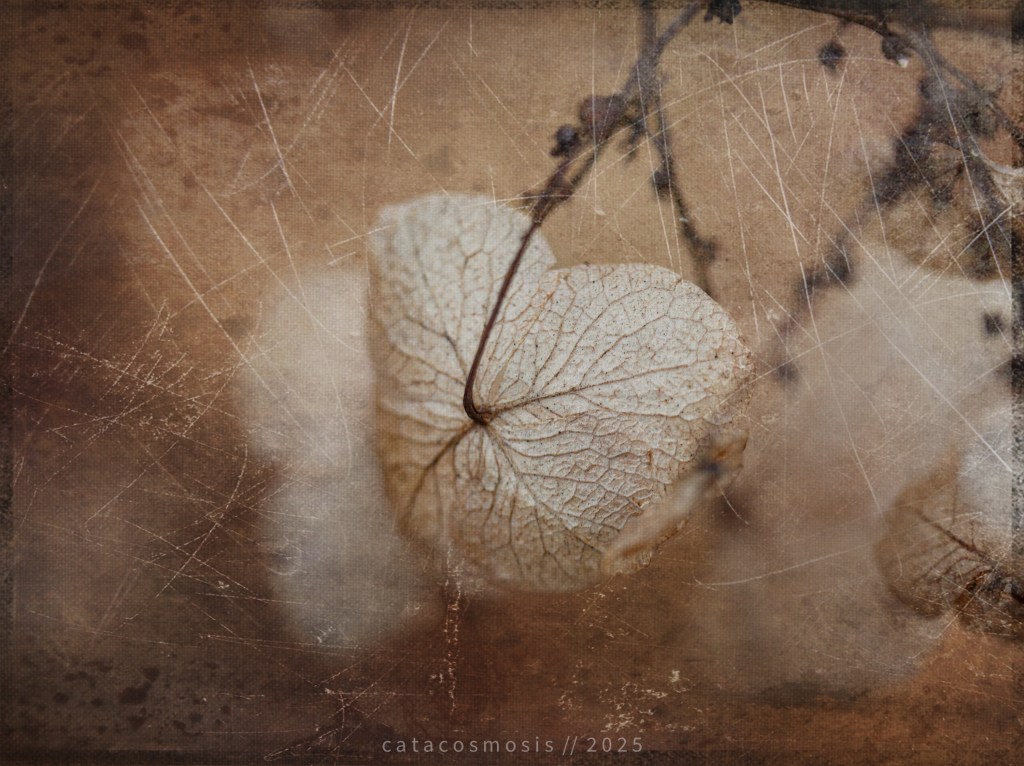
Lumix GX7 + DistressedFX + Mextures
In their faded textures and fragile lines, I find a gentler truth. Beauty is not always loud, nor peace immediate. Sometimes neither are easily interpreted. Sometimes they appear in the very things the world has already dismissed as unremarkable because they do not fit the desire or expectation.
When my son was diagnosed with moderate to severe autism, the world tried to hand me a script of loss and limitation. But the more I sit with the reality of who he is and what I know he has experienced in his life, the more I understand that nothing essential has been diminished.
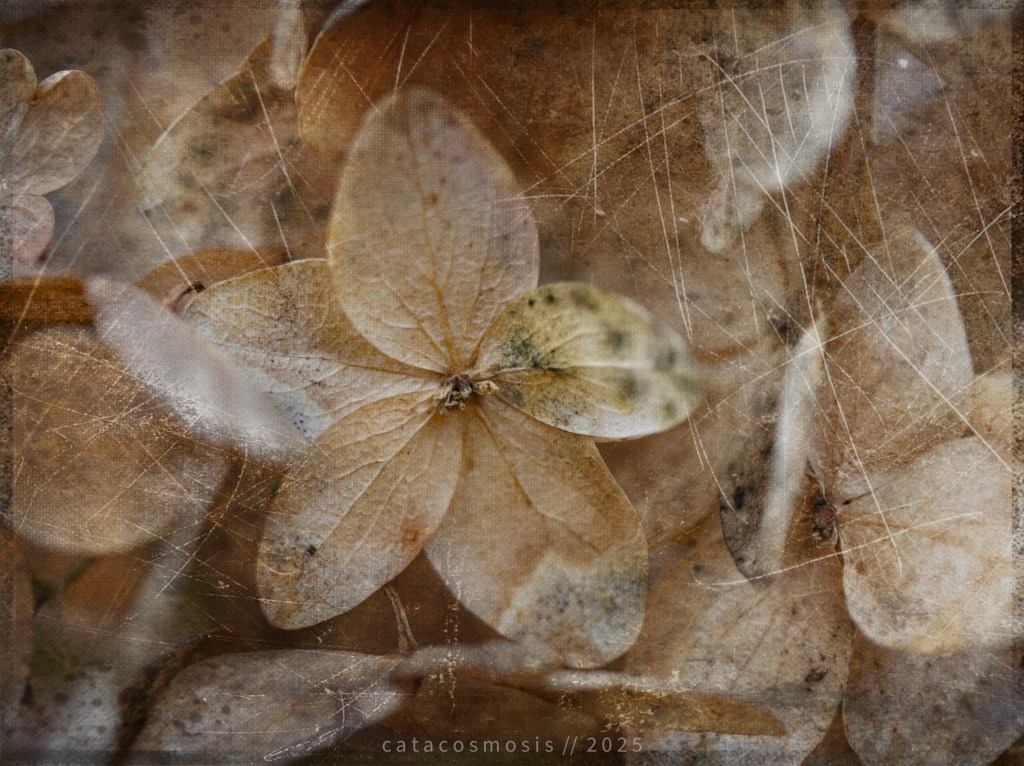
Lumix GX7 + DistressedFX + Mextures
Not unlike #lovelydeadcrap, the reality of his story simply asks to be read with a different kind of seeing. The light lands from another direction. The beauty moves at its own pace. That is what this winter season is teaching me:
To honor what does not conform. To stay open to the quiet forms of life and value that do not perform for anyone’s comfort. To recognize that some truths require presence rather than projection.
Lumix GX7 + DistressedFX + Mextures
My son is not less. He is not broken. He is not something to mourn. He is fully himself, unfiltered and unhidden, and there is a sacred beauty in that.
May we all learn to truly see what stands before us, not merely what we were taught to expect.
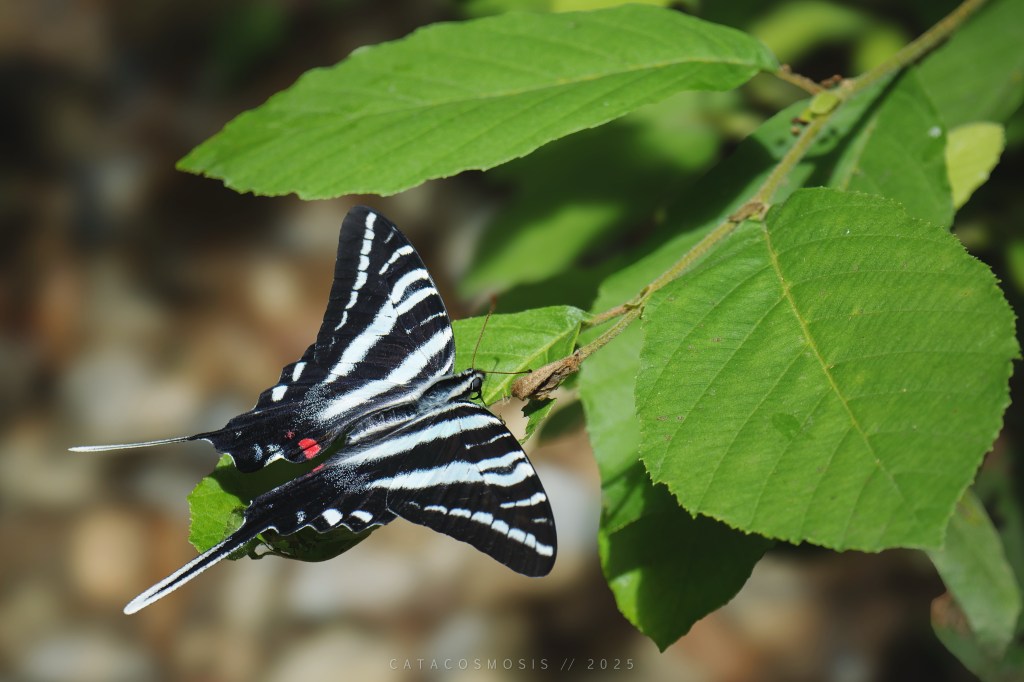
Yesterday on my hike, I paused for a long while. I gave nearly an hour of stillness and reverence to the nature around me, watching as butterflies moved over water and earth, dancing with the light in a way that spoke of freedom and trust. I sat with it — what felt like hours, though really only about thirty minutes — before stepping back onto the trail, camera in hand. As I rose from the creek to walk on, almost by instinct — more a photographer’s habit than intent — I pressed record.
Later, on the drive home, I found myself reflecting on that time as I listened to one of my favorite songs — one I’ve leaned on heavily in recent years, especially since the decline and death of the last of my human teachers and spiritual guides: “Oceans (Where Feet May Fail).” The two moments merged together in my heart.
After Ralph’s death, I finally understood where I should have been leaning all along. He — and my dad — had both tried to guide me toward this truth while alive in human form, but I depended too heavily on them. And if not on my mother in person, then on her prayers. It wasn’t until they were all gone, when I no longer had any “training wheels” to lean on, that it fully clicked at a conscious level:
I had been depending on God all along, hearing Him, even resisting His direct guidance. I just hadn’t been consciously aware of it. That’s when I realized my faith had never left me — it had only been muted, even scapegoated, by my dependence on the faith others carried.
It was only when I allowed this song to become a foundational prayer of my heart that His presence became tangible in a way I could no longer deny. The veil fell from my heart and my eyes, and through His grace I saw with a clarity I had once resisted — the kind of knowing that hurts, yet somehow makes the truth easier to embrace.
The lyrics of this song speak of stepping out into places where our own strength isn’t enough, and trusting God to steady us anyway. That truth became real to me after Ralph died — especially about a year later, when I found myself in a moment of decision: to choose what I merely wanted to believe, or to stand in what I knew was real.
I understood the magnitude of that choice. I knew it would break my human heart, and I knew it might stir misunderstanding, anger, and hurt in those around me. It was the hardest place I had ever stood. But I also knew it was time. Time to trust Him not only with my conscious mind, but with my open soul — my entire being. Time to leap.
So I did. I quietly — nay, silently — forgave all that needed forgiveness, and I let go of everything: past, present, and future… even the things I still and always will love, but that I knew could never take root in this life. For just over a year, all that mattered outside of physical survival — food, shelter — and caring for my son was solitude in His presence.
I chose God. I surrendered everything. And in that surrender, I rebuilt and reinforced boundaries — not only to protect what was holy from the evils that I knew would seek destroy it, but also to shield those who weren’t ready to walk the path of full and true surrender from the consequences of my choice to do so.
Almost immediately, things began to unfold around me — things I had long since lost hope for, or had no idea how to overcome or achieve, in my life. None of it happened exactly as I would have liked, nor in the timing I would have chosen, and almost nothing came about in the way I would have planned or orchestrated it. But that was the entire point of surrender.
And in that realization, I understood something deeper: I had spent years trying to explain surrender to others with words, but the example — living it out, letting God’s hand write the story — was far more important, and a far more powerful testimony for Him.
Butterflies have always been a reminder to me of my grandmother, and of the simplest analogies of metamorphosis and transformation. But now? What I see most prominently in their flight is this — so fragile, yet so fearless in the air:
They carry the story of loss and love, of veils lifted and prayers surrendered — of a journey where survival gives way to presence, and presence gives way to peace. And for all of us, just like these butterflies, it is only through full surrender to the grace and truth of something higher than ourselves that we can be — and will be — fully loved, fully supported, and able to flourish.
Here, I’ve paired them with the piano playing of the song and these reflections as a reminder to myself, and to anyone who reads this, that even when we feel small, it is faith that keeps us aloft. I share this in hope that it might offer whoever sees it a nudge of encouragement as we continue the journey God has given us — the one He has called us to submit to and surrender.
After decades of seeking, struggling, and trying to show and teach others (while really teaching myself), here’s what I know:
If we ever want to find purposeful growth or true peace, we must fully surrender to the creator and orchestrator of it all — to His will, not our own.
xo,
c.
🦋💜🕊️
You call me out upon the waters… The great unknown, where feet may fail. And there I find You in the mystery. in oceans deep my faith will stand.
And I will call upon Your Name, and keep my eyes above the waves. When oceans rise, my soul will rest in Your embrace… for I am Yours, and You are mine.
Your grace abounds in deepest waters. Your sovereign hand will be my guide. Where feet may fail and fear surrounds me, you’ve never failed, and You won’t start now.
So I will call upon Your Name, and keep my eyes above the waves. When oceans rise, my soul will rest in Your embrace. For I am Yours, and You are mine…
Spirit lead me where my trust is without borders. Let me walk upon the waters, wherever You would call me. Take me deeper than my feet could ever wander, and my faith will be made stronger in the presence of my Savior.
Oceans (Where Feet May Fail), written by Joel Houston / Matt Crocker / Salomon Lighthelm.
“So you think you’re an artist, but you haven’t been to art school?”
Well, then yes. You are.
That’s exactly the right mindset — especially if you’re building skill and intuition at the same time.
I say this both as a person with a Master’s in Arts (which I mention only to say, “I’ve been through your system, I know how it works, and I still reject the gatekeeping!”), and as an absolutely NON-PROFESSIONAL, non-conforming artist who also rarely shares any of their actual work:
You’re not just “playing artist,” and being recognized as one is not the point. Those people trying to convince you of anything otherwise are wrong.
Whatever you’re creating is absolutely valid.
Don’t let anyone — especially those offering discouraging, destructive feedback rather than genuine critique — convince you otherwise. Just because some believe the creative or applied arts diploma they hold in one hand somehow validates the brush or pencil they hold in their other, along with the harsh judgments and negative opinions they’re vomiting all over you, doesn’t make it the truth.
Regardless of who you are or where and how you learn, when you approach art as both a learning experience and an emotionally expressive therapy, you’re doing it right — not failing. You’re not just slopping paint on paper, scribbling in a sketchbook, or gluing down collage scraps at random.
The difference is night and day — especially with watercolor (the medium I see people abandon most) — when you’re doing things like:
• Consciously learning the muscle memory for how each brush moves.
• Recognizing how the spring, belly, and tip affect water control.
• Having fewer “happy accidents” and more intentional effects
Painting is not just the act of moving pigment across a surface. It is the deliberate conversation between your hand, your tools, and your vision. It’s problem-solving in real time, learning how water, pigment, and paper (or canvas) respond to each other, and adjusting with both skill and instinct.
It’s as much about restraint as it is about expression, and as much about observation as creation. When you understand that, every stroke becomes intentional, even in your loosest, most playful work.
Watercolor especially rewards this kind of discipline because it’s less forgiving than acrylic or oil. You can’t just pile on more paint to hide a mistake — in a way, you have to work in reverse.
No medium, but especially watercolor, is as easy as “the professionals” make it look. But if you keep going, keep learning, and keep focusing on technique and purpose — no matter what the art-school elite try to tell you — the control you gain over water, pigment, and paper will make even your loose, expressive or abstract work stronger. It will be loose or abstract by choice, not necessity.
That deep dive into technique is probably why so many of you express so often how your art process is helping you mentally and emotionally, and why many artists pick up a pen, pencil, or brush in the first place. It’s meditative — but also empowering — to know exactly what your tools can do.
So keep learning. Keep practicing. Keep playing! Keep a balance between the fun and the serious aspects. Sure, we all appreciate skill and technique. But what is the point if it’s just a job and not a fun expressive process with purpose?
Nobody owns art as a process — and if anyone tries to tell you otherwise, they’re not talking about art. It’s still a free world, regardless of how it may seem on the surface and no matter what the uppity, judgmental types try to say.
Keep making art. Because your kind of art — the kind that comes from soul combined with technique rather than straight line, hard rules — is what art should still be all about.
There’s this list — never written down in one place, but always hanging over me like the hum of an old fluorescent light. It’s made of things that should be straightforward:
Back up the photos.
Untangle the art supplies.
Organize the sketchbooks.
Move the ideas from my head to a place they can breathe.
Put the words onto the pages.
Clean the brushes.
Organize the books.
Organize the ideas.
But they are never straightforward. Not for me. Not for anyone whose mind has a thousand open windows and refuses to shut them just because the world prefers tidy blinds.
Society has found a name for this: ADD. ADHD. Neurodivergence. The diagnosis may be true for some, but here’s what I believe — it’s not a flaw. It’s the original wiring of the artist, the philosopher, the restless creative soul. It’s the part of the mind that won’t collapse into the assembly-line cadence of “normal life.” And that refusal has always been a threat to the people who rely on compliance.
This is why so many people who are miserable in the 9–5 grind feel like they’re constantly drowning. They fight from one day to the next just to keep their priorities in order, forgetting things, feeling scattered, wondering why life feels like a treadmill they can’t get off. It’s not because they’re lazy or incapable — it’s because they’ve been convinced, by family, by school, by the whole machinery of society, that their purpose is something other than what their soul already knows it to be.
They’re creatives, not conformers. But they’ve spent their entire lives pouring all their energy into staying afloat in a stormy, chaotic sea they were never meant to swim in. And not only has the world’s rules kept them from living their purpose, they don’t even remember what that purpose is… and they certainly haven’t been taught how to manage or maintain reality as a creative.
The problem is, the tools that work for type A people don’t work for type B people — and vice versa. But the world, the powers that be? They don’t want any creatives to thrive. Why? Because thriving creatives don’t line their pockets, and they can’t control what they can’t contain.
By the late ’90s and early 2000s, the strategy had shifted. They started medicating us into focus, pressing Adderall into palms while preaching “Say no to drugs” in the same breath. It wasn’t just hypocrisy; it was the perfect kind of doublethink. They couldn’t get my generation — Gen X, especially — to trade curiosity for clock-punching, so they tried to sedate the wonder right out of us.
It had started long before my generation. From the ’60s onward, every decade had its rebellion, but something about our era cracked the pattern wide open. We remembered how to slip back into our creative current, to say — without apology — that the system wasn’t built for us, and we weren’t going to rewire ourselves to suit it.
The boomer generation fell for it enough to punch the clock and hold the grind in both hands. But my generation? The ones who were school-aged in the ’80s and especially high school/college aged in the ’90s, raised as latchkey kids, left to our own devices? We had just enough space to keep our own ideas and double down on our self-expression. We rejected the rhetoric outright, but we still had the foundational work ethic, the grit, the stubborn drive to show up.
Unfortunately, that refusal was met with more control, more noise. By 2012, the hum had become a low, constant pressure. By 2016, the unexpected and unorthodox split the air like lightning, and nothing went back to sleep after that. By 2020 — and certainly by 2022 — largely thanks to Covid (which I will forever believe was a purposeful attempt to tighten the reins of control), the result wasn’t the obedience they hoped for. It was the opposite. People were waking up in numbers that mattered.
And here we are. And here I am.
Sitting with a computer that holds hundreds of gigabytes of uncataloged photographs, each one a memory or a moment, all of them waiting for me to find them a home, if not on someone’s wall then in beautiful posts they can enjoy on their computer screens. Art supplies scattered in a way that makes them impossible to ignore and yet impossible to start sorting. Projects that live half in the physical world and half in my head, where they multiply faster than any app or planner could contain.
Digital tools have not tamed the chaos — they’ve only given it better hiding places. They’ve bred a new kind of loathing, a quieter form of procrastination and lethargy, one that makes the struggles of pre-technology life feel almost romantic in hindsight — like a fairy tale we didn’t know we were living, a beautiful dream we only learned to miss once it was gone.
This morning, I pulled a book from my shelf. It’s been there since Ralph died:
How to Be an Explorer of the World — Portable Art Life Museum.
I haven’t opened it yet. The title alone feels like someone has tossed me a rope, and I’m still deciding whether to pull. Even without turning a page, I intuitively, automatically know — as every creative does — what waits for me inside. The “Art” in the title has been struck through and replaced with “Life” for a reason: because that’s what it truly is. A reminder that we’re not here to live as curators of someone else’s museum, dusting off exhibits we never chose. We’re here to explore — to step into new rooms, to rearrange them until they make sense to us, to claim the space as our own.
And yet, here’s the truth I keep circling: maintenance is the perpetual loop where I always seem to get stuck.
Not the dreaming, not the making, but the keeping. The tending. The part where you have to hold the door open for what you’ve already made so it doesn’t fall apart while you’re off chasing the next thing. Somewhere in the tug-of-war between vision and upkeep, I drop threads. And when enough threads fall, the rest of my life starts tangling with them — homeschooling, daily meals, the way the pantry and the jumble of household chores scribbled on random scraps of paper looks like a metaphor for my brain.
This is the quiet battle no one talks about: how to keep creating without losing the things you’ve already created. How to tend your work without caging your mind. How to make room for the next idea without letting the last one turn to dust.
For people like us, maintenance is never just maintenance. It’s a negotiation between the world’s idea of order and the wild way our minds are built to move. And maybe the truth is that we aren’t the ones in need of repair.
Maybe the wiring was never the problem. Maybe it’s the world that’s broken.
And what does all of this lead to? Yet another idea tossed onto the pile: maybe I should explore it in an in-depth series of articles here.
Ha.
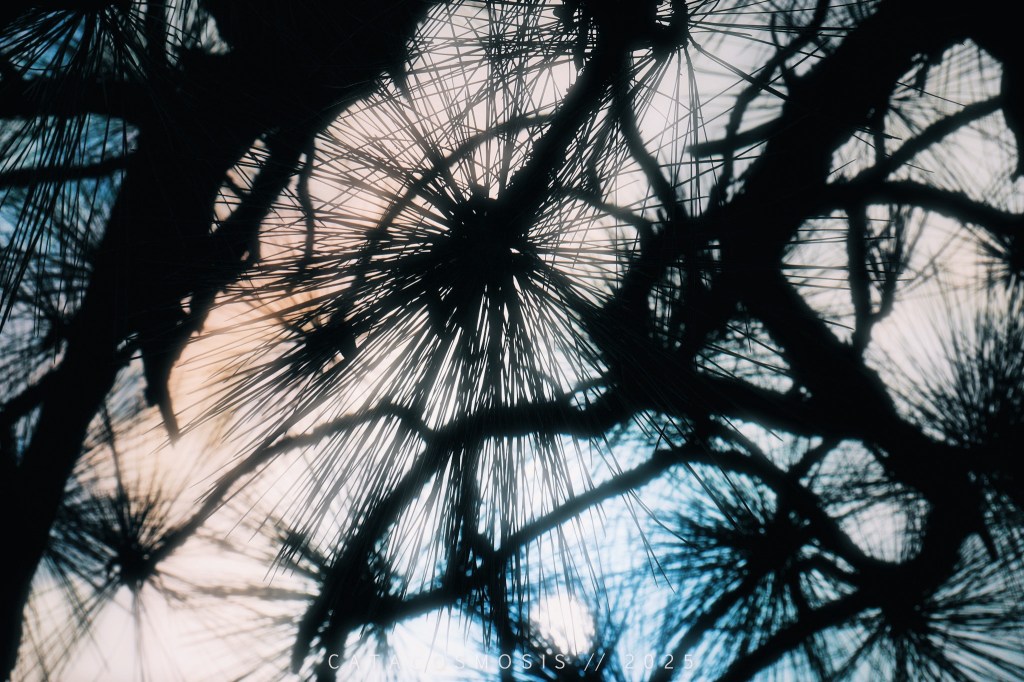
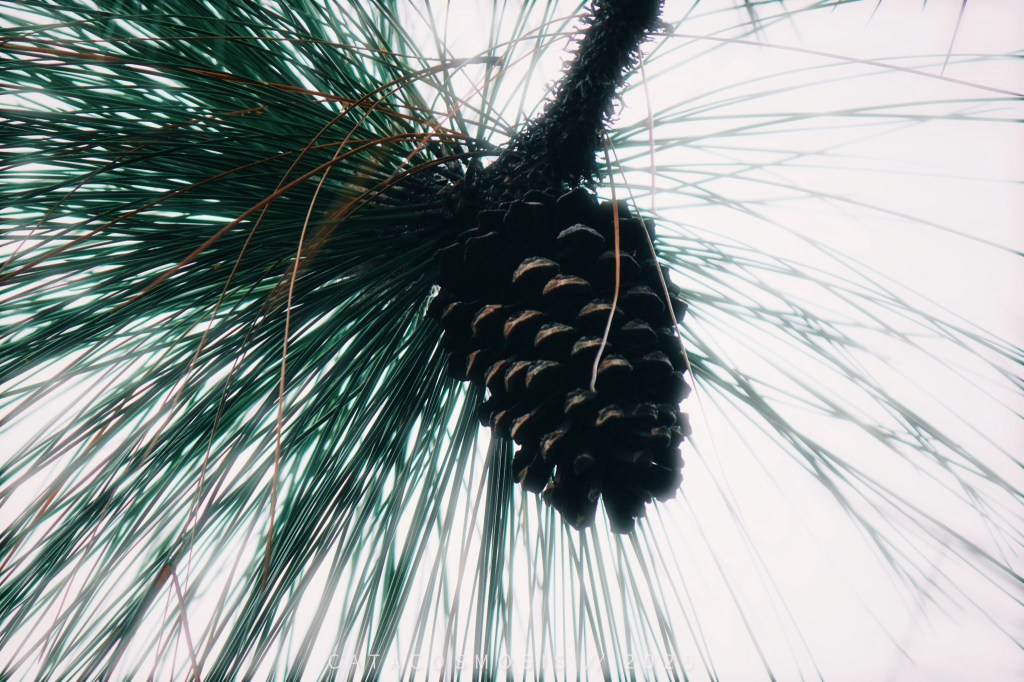
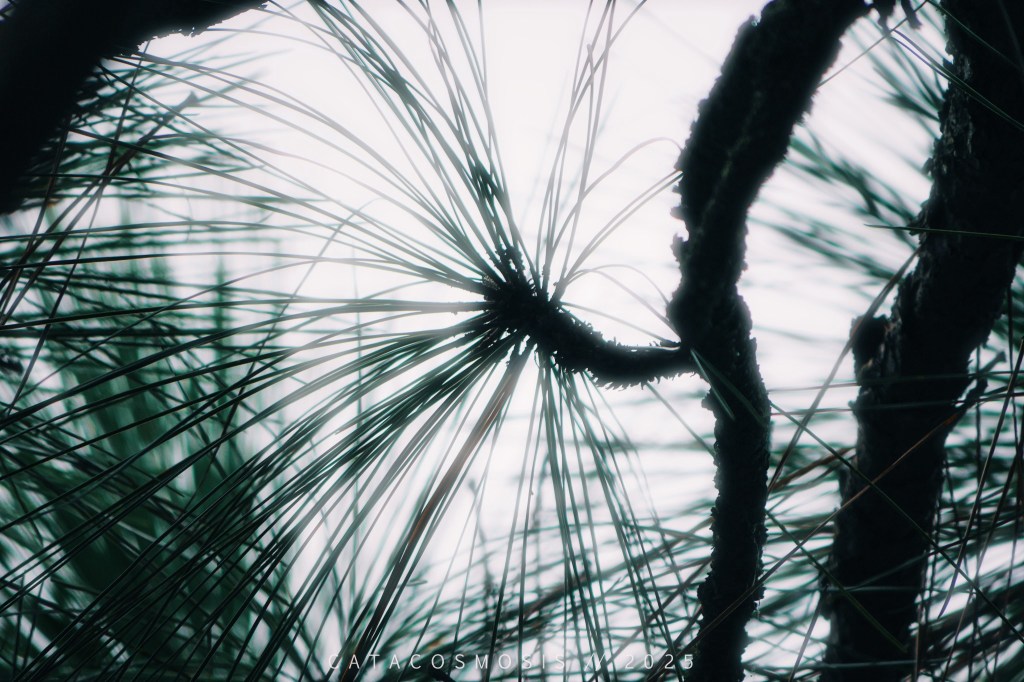
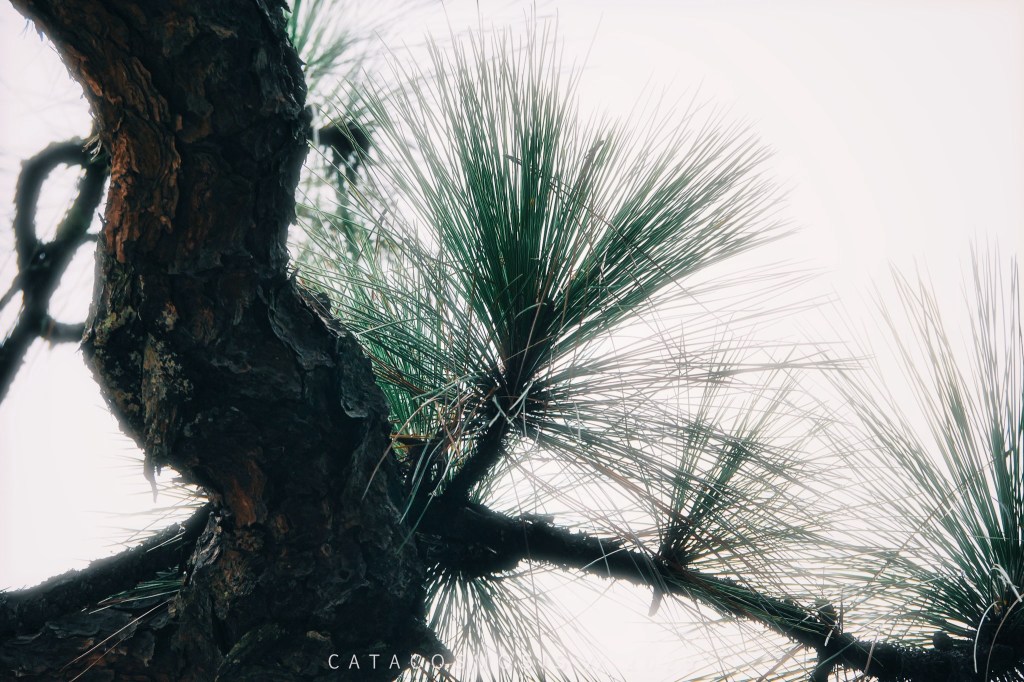
For now, though, here’s a brief gallery of shots of my favorite tree — the oldest in my state, and one I’ve found myself referencing often lately. A couple are completely blown out. One feels especially dull to me. But while they may seem ordinary, even boring, to the casual observer, my passion for this incredible 400+ year-old short-leaf pine runs deeper than any skill or lens could ever capture.
And that’s exactly the point — this tree is the living embodiment of what I’ve been trying to say above. The uncreative soul may never understand the pull, the quiet reverence, or the way beauty lives in the details that can’t be measured or monetized. But to those who do understand, no explanation is needed.
I hope you enjoy these images as much as I enjoyed the process of shooting and processing them.
It’s the end of the world as we know it…and I do not, in fact, feel fine.
I just heard that song on the radio. It inspired introspection, which is more than I can say for most current popular radio. Bill, Peter, Michael and Mike may have felt fine when the world ended in 1987—but 2025’s version? It’s a different beast entirely.
I’m not disassociating to the beat of their catchy chorus. No chorus, really…
No matter what music I play, what books I lose myself in, or how many hours I spend painting, collaging, shooting and processing images, praying, meditating, or absorbing art—I can’t not pay attention.
It’s like God has made it impossible for me to look away.
No matter how many creative rabbit holes I disappear into, my soul keeps returning to the same painful truth: I still see the world clearly. And I still care.
I’ve already finished 31 books this year. Some I began a year ago and it’s taken that long to finish them, but still. I’ve read a lot this year (speaking of which, what are you reading? Here’s my list, if you’d like some suggestions…).
I’ve listen to over 200 albums, all told (2.717 tracks, according to LastFM).
Watched 50+ documentaries—science, history, mythology, medicine, art, folklore, theology, religion, all sorts (according to my watch history on Amazon and YouTube).
But no matter what I consume or create throughout these days and nights spent in the studio or my own den or bedroom, my heart always circles back to the chaos we’re living in.
The blame shifting. The addiction and obsession and lack of self-control. The emotional manipulation—by the media, by governments, by people you thought you could trust.
The hatred. The division. The apathy.
Even the weather feels weaponized now—whether by nature or man, we may never know. And most days? It feels like we’re collapsing. Not just politically or economically—but spiritually.
When children’s deaths are celebrated, when cruelty trends, when people are told, “it’s OK to mask your real pain by pretending to be someone you’re really not,” and/or real pain is ignored in favor of performance and profit…how do you call that anything but collapse?
And still…I feel their pain, too.
The ones lashing out. The ones clinging to false power. Even the ones I disagree with or who’ve attacked me—and the ones in real life who wish I would “just die”—I can feel the torment beneath their rage. Because it takes serious misdirected conditioning and trauma to become someone who cheers for suffering.
I know what it is. I know myself and so many others have been purposely called to employ it. “Charged” with it, if you will. But I also understand now that that number is mighty small.
It’s empathy.
It’s spiritual discernment.
It’s energy.
And it’s real. That’s the loudest truth in me. I preach it, in comments and voiceovers and prose, and I practice it through my actions. I continue to do this, even if it makes me seem “crazy” to a world that calls numbness normal (and to some, that makes me a “glutton for punishment”).
I cry with strangers on the internet more than I ever admit. Sometimes when I log on just to post art or check an email, I’m immediately met with headlines about another shooting, another suicide, another senseless death. And still, I pray. Because Spirit won’t let me stop seeing—and won’t let me stop loving, either.
Prayer isn’t useless. Many feel that it is, and I understand why. But they’re wrong. Prayer isn’t useless—especially not when more than one person is praying.
It creates ripples. It fuels the art, the writing, the stillness, the hope. It’s a frequency of resistance that can’t be monetized or hijacked.
And maybe, as the world is in an overwhelming energy of doubt, fear, and anger, that’s the most powerful rebellion of all right now: to stay in the vibration of love, even when everything begs you to sink into rage or despair.
So if you’re not feeling fine either—but you’re still holding on to your humanity, still radiating clarity, still praying or creating or showing up gently?
You’re not alone.
There’s sacred clarity in this discomfort. Keep not-feeling-fine. It means you’re still awake. And just in case nobody’s said it today:
I love you. I’d like to bring goodness into your world. I’m sending it out to you whether you like it, or me, or not. I hope you’ll receive it.



 catacosmosis