entry twenty two — scattered light, fractured grace: a quiet archive of light, loss, and what remains.
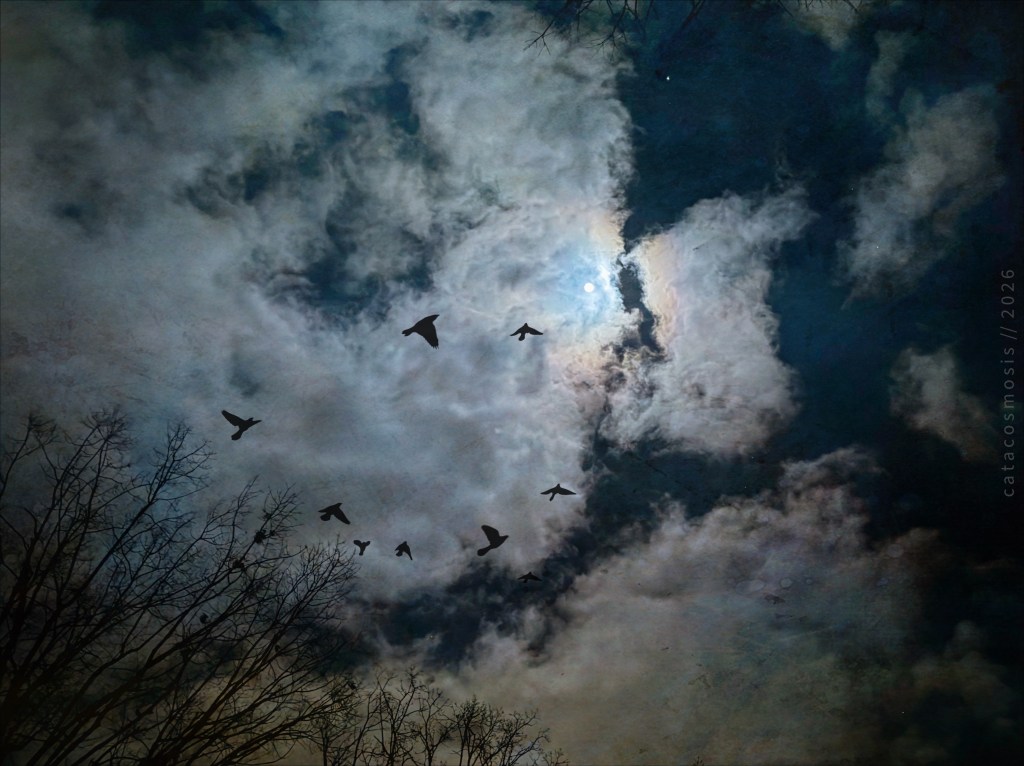
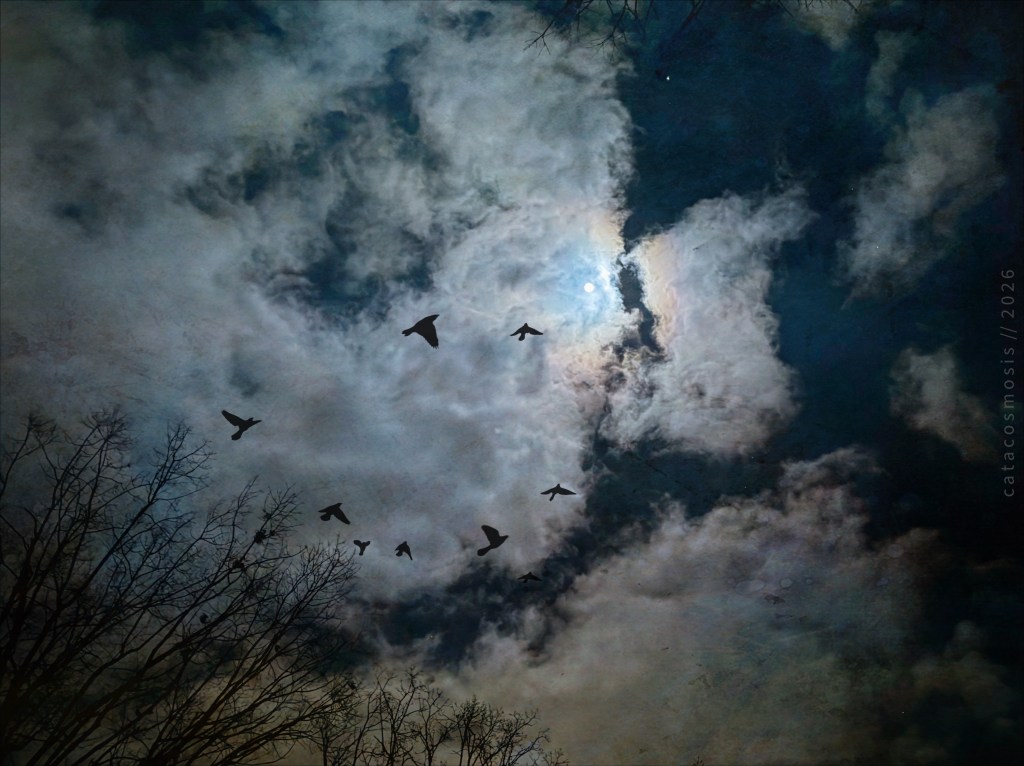
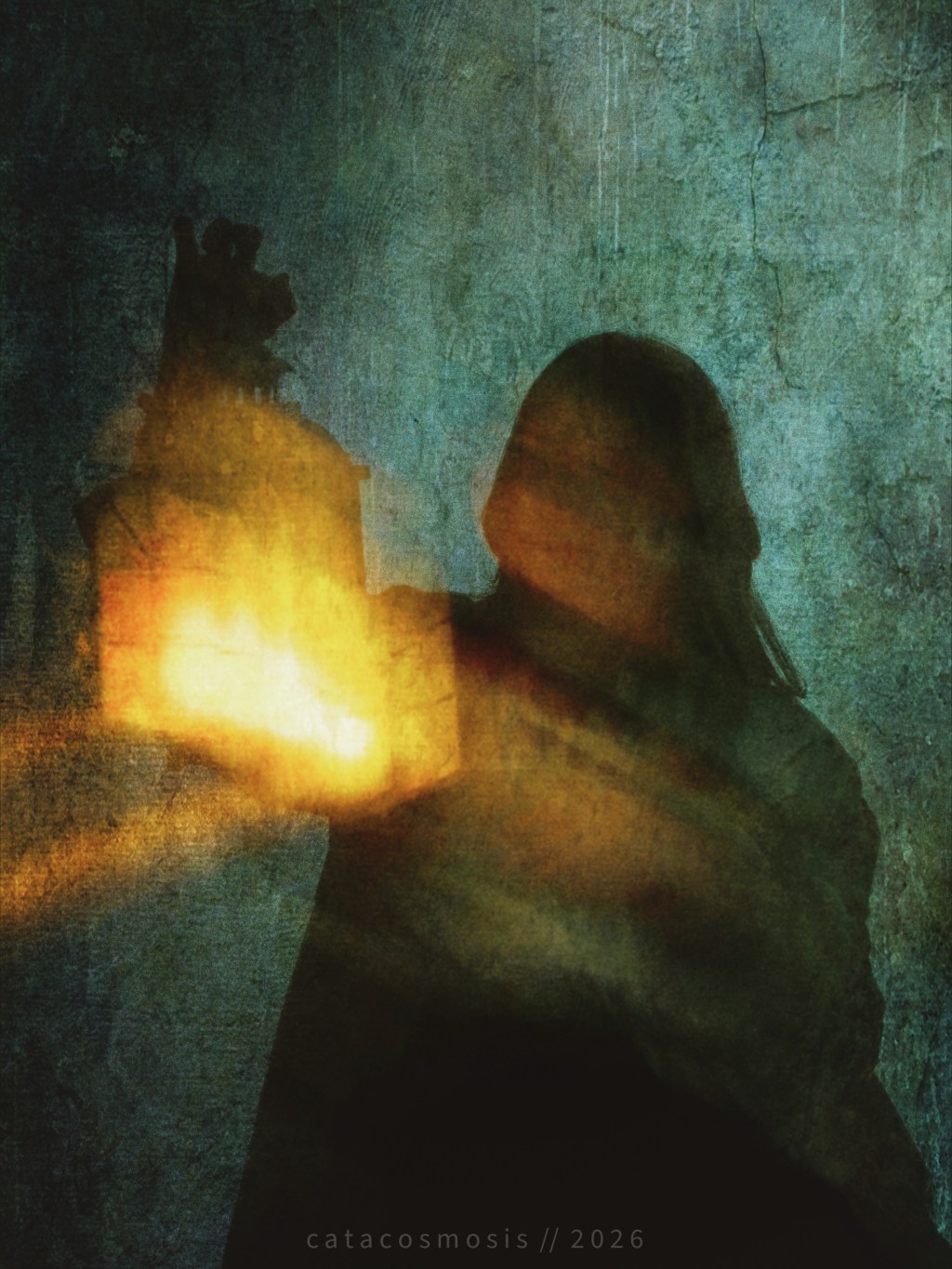
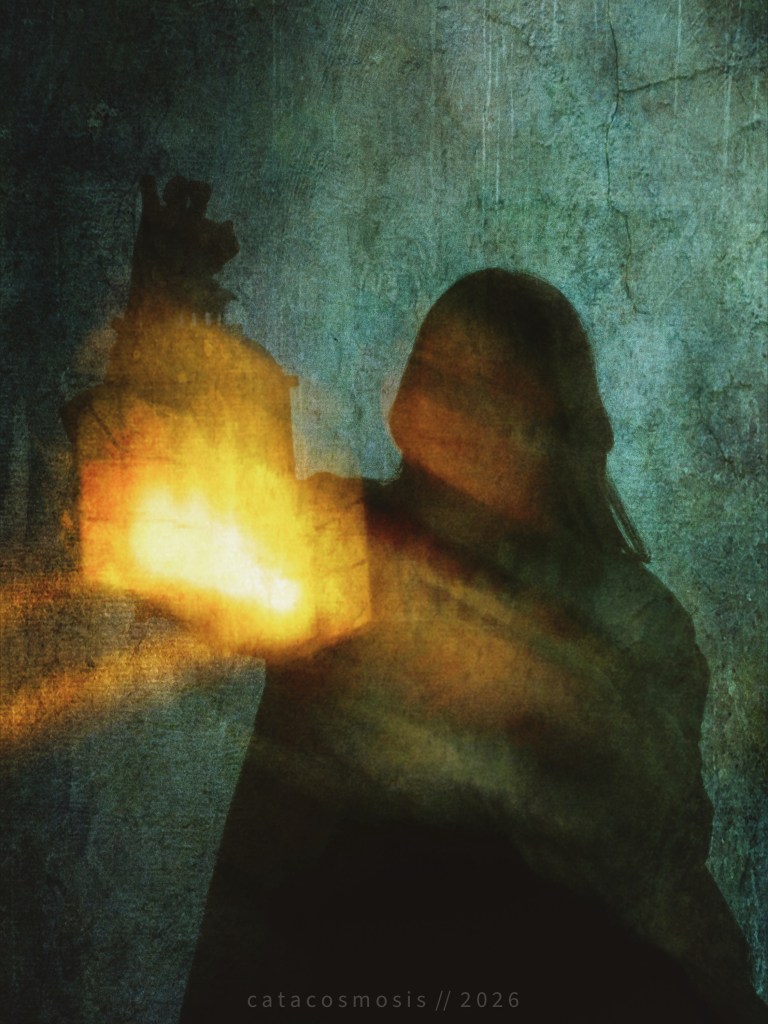
iPhone 17 Pro + DistressedFX (Final Edit)
Sometimes it feels like there is a different, almost literal space between seconds. A pause the world does not announce.
There is intimacy in those spaces. Love. Beauty. A kind of quiet permission.
There is me, and the moon, and what I remember without remembering. Something about home. Something about spirit. Something about soul.
In those spaces, which turn into a place, then into awareness, then into something conscious without warning, I find myself again. Not arriving. Not searching. Just remembering how to be.
It feels like standing in a doorway I have crossed a thousand times but cannot name. Familiar without history. Known without proof.
And always, even when I wish it were not so, there she is too.
There are all of them. The pieces of my life that have already returned to Source, leaving me here to feel them but never hold them, to love without helping, to remember without any hope of their human realities returning.
Home, not as a location, but as a frequency. And for a moment, I am inside it.
catacosmosis // 2026
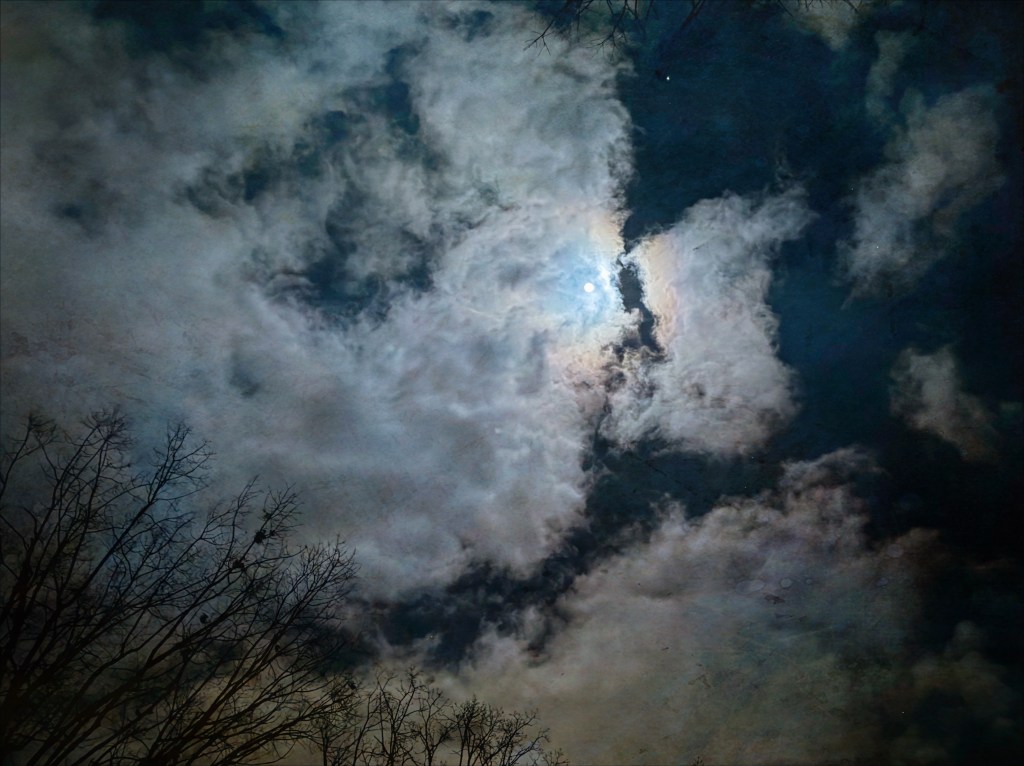
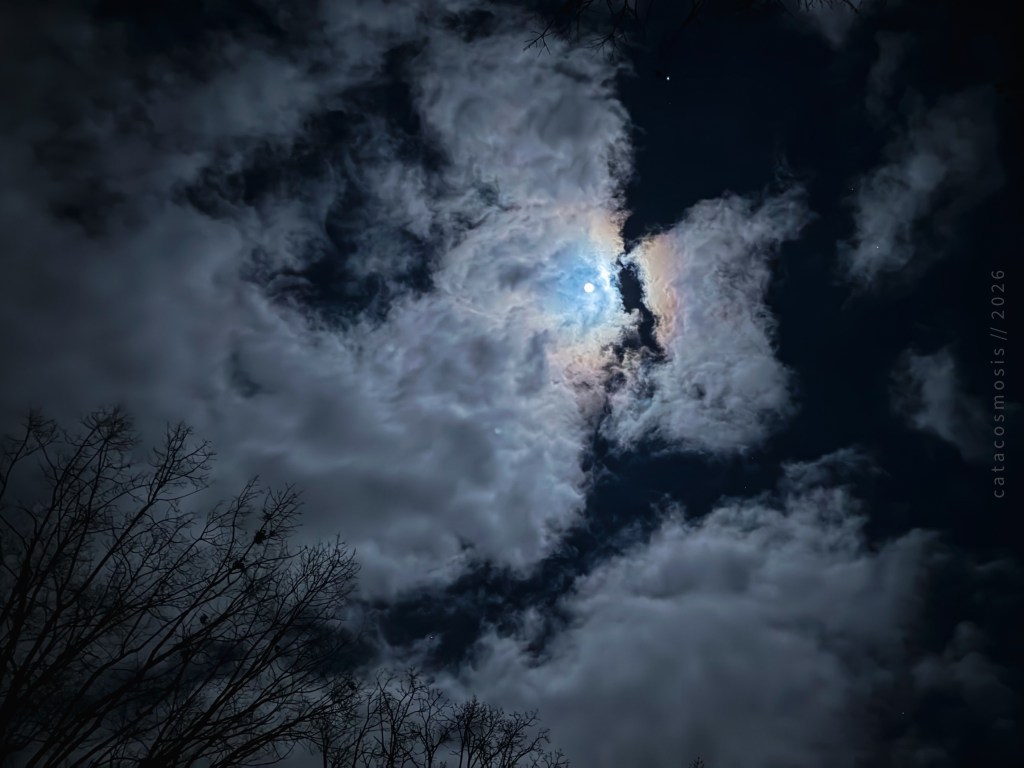
iPhone 17 Pro + DistressedFX (Final Edit)iPhone 17 Pro + DistressedFX (Textures Only)iPhone 17 Pro (Original, shot with ProCamera)
Not the sanitized, monetized version. Not the hollow “good vibes” lie designed to keep everyone comfortable and nothing honest.
I mean the kind of light that exists because the world has become grungy, nasty, ridiculous, and addicted to consuming whatever still has a pulse.
Truth should be efficient. In a sane world, it is. But this isn’t a sane world.
Here, efficiency belongs to distortion. To slogans instead of substance. To repetition instead of verification. To emotional leverage instead of reality.
Truth requires something costly: attention, humility, memory, accountability. It forces people to stop, reassess, sometimes admit they were wrong, sometimes change. And that makes it inefficient in a culture built to move fast, feel loudly, and never look inward.
So truth is treated as an obstacle. As “problematic.” As dangerous. As something to be managed, softened, buried, or rebranded until it no longer threatens the illusion.
Hold the light anyway.
Even when it makes you a silhouette instead of a spectacle. Even when it costs you comfort, applause, or belonging. Especially when it exposes what others are desperate to keep hidden.
Light doesn’t scream. It doesn’t beg. It doesn’t perform.
It reveals.
And that, more than anything, is why it’s feared.
So keep carrying it through the cracks and decay. Not to save the world. Not to convince the masses. But because surrendering it would mean becoming what’s poisoning everything.
entry twenty — scattered light, fractured grace: a quiet archive of light, loss, and what remains.
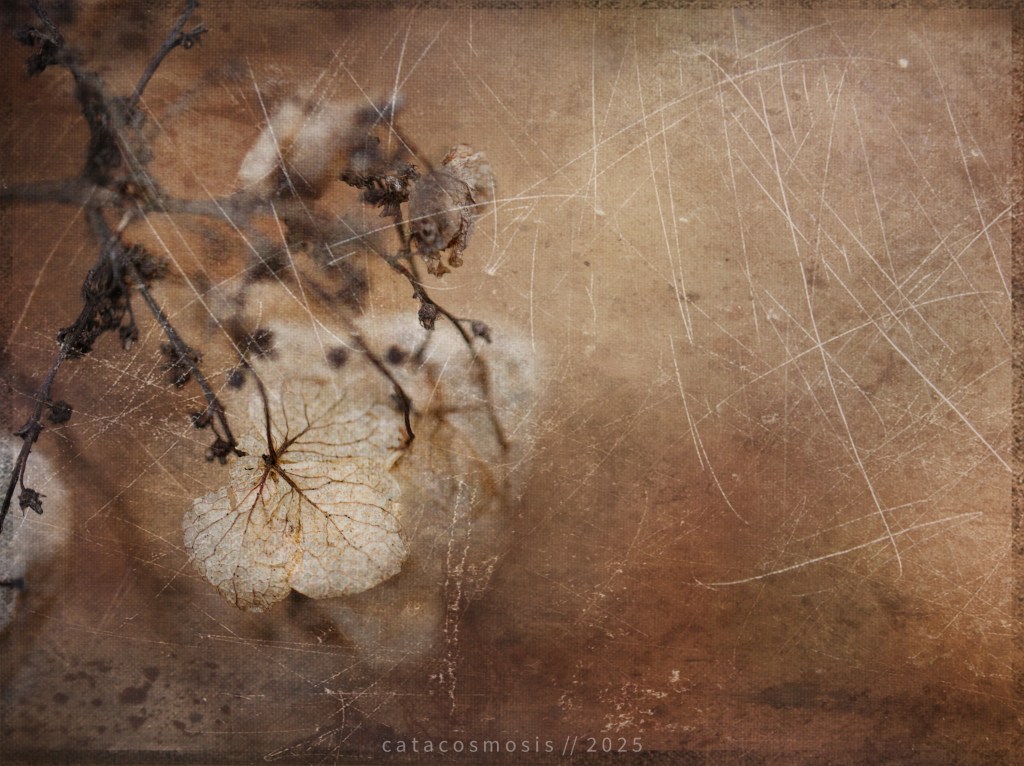
Lumix GX7 + DistressedFX + Mextures
I’ve been thinking about how easily we overlook what does not bloom on command. How quickly we decide something is less valuable when its rhythms are quiet or unusual or slow to reveal themselves. How we are conditioned by convenience to turn away from what requires a different or more tender kind of attention, unless we are its mother.
As mothers, the expectations begin to pile up, even as the help quietly disappears… if it ever shows up to begin with. It showed up for me recently, with my son’s diagnosis of autism, and then the weight shifted again. The label alone added a layer of juggling and balancing that feels impossible, even in ways that his father may never fully know…
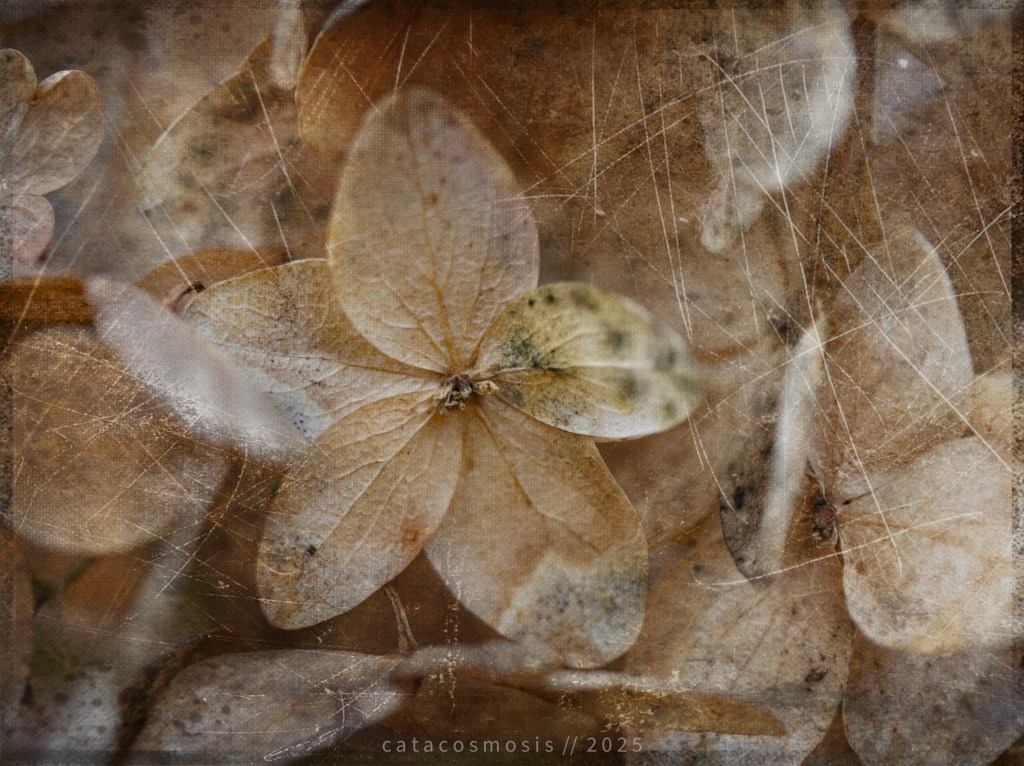
…but these small remnants of #lovelydeadcrap in my backyard have been teaching me how to package it all and express what’s inside.
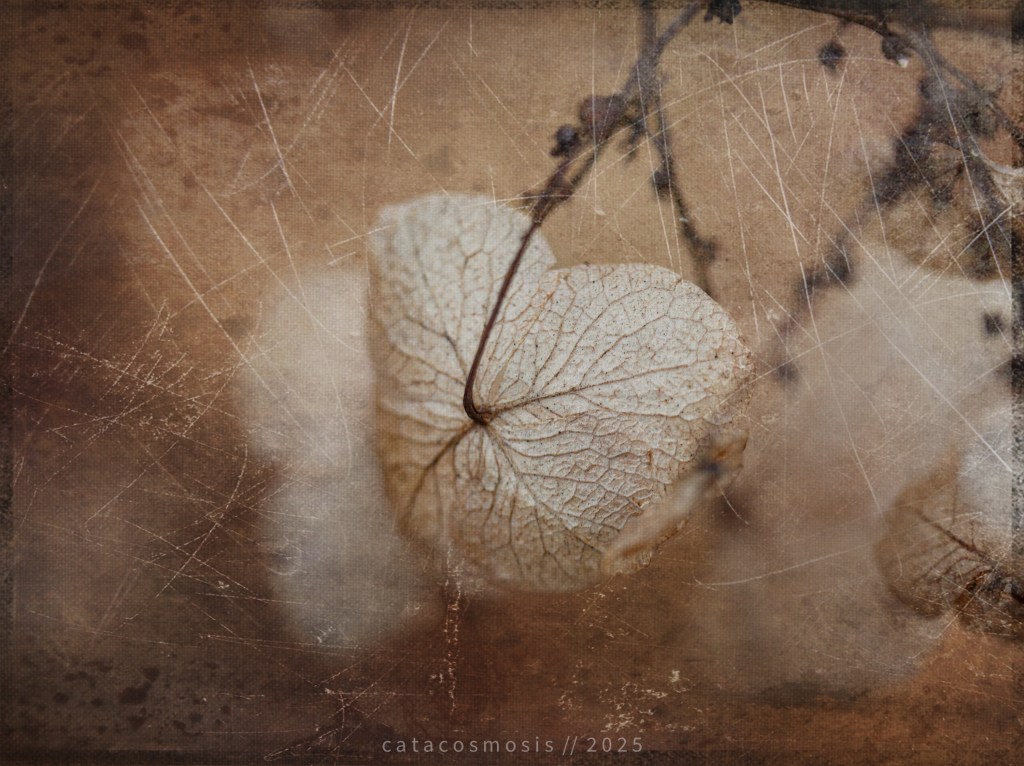
Lumix GX7 + DistressedFX + Mextures
In their faded textures and fragile lines, I find a gentler truth. Beauty is not always loud, nor peace immediate. Sometimes neither are easily interpreted. Sometimes they appear in the very things the world has already dismissed as unremarkable because they do not fit the desire or expectation.
When my son was diagnosed with moderate to severe autism, the world tried to hand me a script of loss and limitation. But the more I sit with the reality of who he is and what I know he has experienced in his life, the more I understand that nothing essential has been diminished.
Lumix GX7 + DistressedFX + Mextures
Not unlike #lovelydeadcrap, the reality of his story simply asks to be read with a different kind of seeing. The light lands from another direction. The beauty moves at its own pace. That is what this winter season is teaching me:
To honor what does not conform. To stay open to the quiet forms of life and value that do not perform for anyone’s comfort. To recognize that some truths require presence rather than projection.
Lumix GX7 + DistressedFX + Mextures
My son is not less. He is not broken. He is not something to mourn. He is fully himself, unfiltered and unhidden, and there is a sacred beauty in that.
May we all learn to truly see what stands before us, not merely what we were taught to expect.
Twenty twenty-five bleeds into me like a half-lit nightmare,
Stephen King and Tim Burton laughing in the corners.
AI hums in the air, a static pulse I cannot unhear.
I want to scream and break the sky…
…but the real and the familiar fragments of me rein temperance in, in quiet revolt.
Twenty twenty-six waits like a shadowed carnival, and I am here,
trembling with light in a society fractured by entropy…
…still standing.
When I started exploring textures and analog styles using mobile camera and editing apps like Mextures and DistressedFX a decade ago and Hipstamatic closer to two decades ago, I remember the beef among photographers about how it was cheating.
Even when shooting DSLR or scanning 35mm negatives and importing to iPhone to manually edit creations, on deviantART it was utter blasphemy to call that work photography… which is the majority of the reason I left that site (alongside the unnecessary drama, petty competition and childishness of it all).
I remember the same attitudes when the DSLR was introduced as a more convenient option for shooting (as compared to film) back in the nineties, and even more strongly opposed by what I like to call the “haughty and holier than thou professional” photographers (many of whom had never been published, mind you).
It was all just a whole lot of projection… yet here we are in 2025’s much broader version of those things, getting ready to wake up to a 2026 that looks like a Stephen King and Tim Burton co-conspired reality, and I now find myself itching to raise the same ruckus about AI. I fight the daily urge to scream at the top of my lungs that I hate AI, and that it will absolutely be the death of raw human creativity, not a help or a tool for it.
Mark my words, and I say this not just from the creative part of myself but from the psychology and computer science educated and experienced parts, from the professor in me, and from the emotionally and spiritually evolved pieces of myself, from my entire being and from the depths of my soul:
AI is a mistake of biblical proportions, and not just for creatives.
I have watched what it does to attention, to imagination, to the inner world, to the very scaffolding of how a human becomes themselves. I have already watched it practically eat my child alive, and I banned it from our sphere entirely. I will die on this hill if necessary.
AI may not be evil incarnate, though I have my suspicions that it is, but it will certainly cause more evil than we can stand or cope with to manifest in this already imploding world.
The ASMR, the funny animal and parody videos, and the art may be cute today, but tomorrow it will look like proverbial mushroom clouds around the globe.
With AI more prominently in the mix, the end of true freedom is nearer than you might think… and it is allby design.
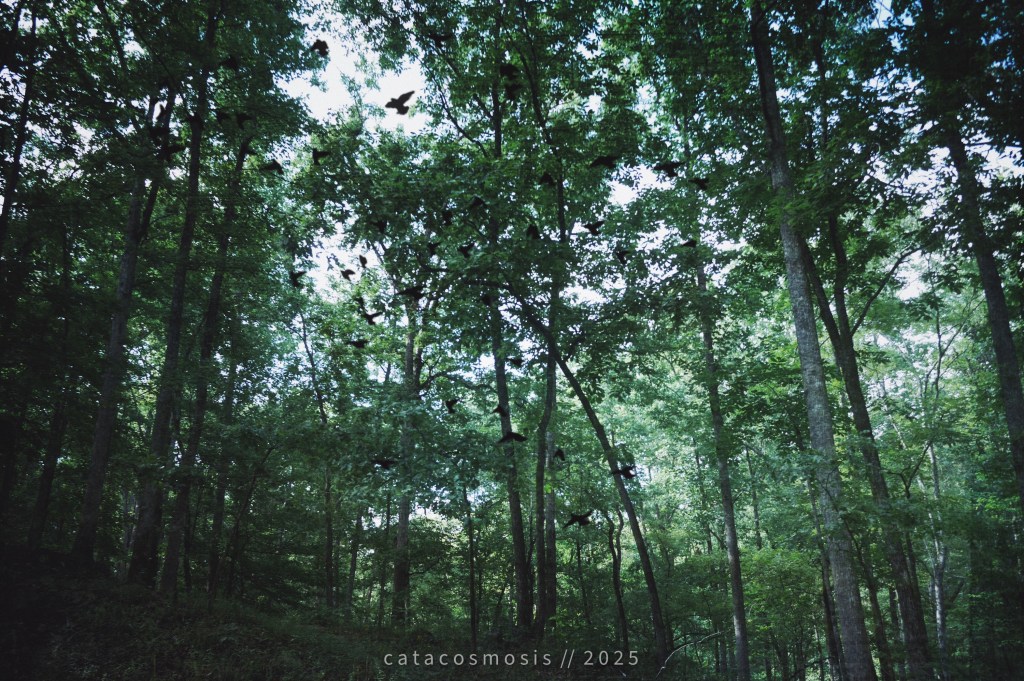
Have you ever been sitting in the woods, in the quiet and minding your own business , just breathing it all in, when out of nowhere the birds seem to spring into motion?
One moment, they’re scattered through the trees, singing softly into the hush; the next, they take flight as one, their calls vanishing into a deathly silence. All that remains is the trembling of wings and the echo of something unspoken moving through the air.
It’s strange how quickly stillness can shift, how a single gust or unseen presence can ripple through an entire forest. You can feel it, even if you can’t name it. The temperature drops, the light changes, and the ordinary world folds itself back like a curtain.
And then you’re left sitting there, swallowed by wonder. Not fear, not exactly, but that beautiful, unnerving awareness that something else is here. Something wild and watching.
For days afterward, it stays with you, that soundless moment when the forest seemed to remember itself. It makes you question what else is living in the margins, what other forms of life or spirit move just beyond the limits of our hearing.
I think that’s when I understood that silence is not absence. It’s presence, waiting to be known.
The forest wasn’t empty. It was full of attention.
It would seem I’ve waken up to yet another extreme of the obvious hypocrisy in what’s being demanded as “reality.” Some people genuinely still do not “get it,” while others still willfully refuse to see.
Either way, and from all sides, there is an overarching question: Has society reached a true tipping point?
Based on the reaction to a black man in white face, it would seem double standards have finally outstayed their welcome overall.
Notice the general pattern of double standards over the last several years:
Women can mock men. Trans can mock cis. Non-whites can mock whites. Gay can mock straight.
Flip any of that around and you’re cooked.
Look at the standards a little more deeply:
The most obvious example is how men putting on “woman-face” or women putting on “man-face” isn’t just accepted — it’s demanded that everyone affirm it as their literal reality and “respect” it.
So, logically, if that’s celebrated and that’s “reality,” then picking on any culture in jest for their quirks, failures, or oddities should be just as acceptable.
That sums up what people are really upset about re: this skit that’s been circulating the last couple of days: it’s the double standards.
And it’s not just white people who have had it.
Yes, this particular skit has a lot of white people speaking out — they’re tired of being singled out as the only group not permitted to joke back, and then accused of lacking a sense of humor when it’s done to them.
But consider society as a whole:
Non-whites and whites alike are fed up with their own people acting like ungrateful, entitled fools — wasting the opportunities their ancestors fought to provide them and destroying the respectability they strove for.
By now becoming loud, lazy, and disrespectful criminals, people make a mockery not only of their rights and the many opportunities they have if they would simply show up, but of their entire communities.
Whites are fed up with Karens and Chads.
Legal immigrants feel the same way about illegals trashing the opportunities they earned by doing things the right way — respecting the privilege of coming to another country, rebuilding responsibly, and treating that privilege with honor.
Instead, illegals cause even legal immigrants to take the flak, lose opportunities, and be punished for things they didn’t even do.
Masculine men are tired of being told they’re assholes instead of protectors, simply because masculinity is constantly mistaken for toxicity.
Men of every race and personality type are sick of women parading around declaring they don’t need men, accusing and blaming men for everything wrong in the world — while in the same breath lamenting absent fathers, complaining that men don’t “show up” in general, and then demanding applause and respect for a world women absolutely didn’t build without the strength and masculinity of men.
Women of all races and personality types are sick of being pressured to accept men in dresses not only mocking them and what it means to be a woman, but especially a mother, and having their spaces invaded and reclaimed as “everyone’s space,” only to be labeled ‘phobic’ or hateful for feeling that way.
This isn’t only racial. It’s far broader than that, and these are only a few of many examples.
Most, if not all, “everyday people” — all of us who are not filthy rich or sitting in positions of power — are fed up with war, crime, cruelty, and double standards. We just want to work hard, add meaning to the world, and reap the fruits of our labor: enough to survive, and enough to live — to enjoy a healthy, peaceful, happy existence.
When did that become an unrealistic or unacceptable dream to have? It’s one that has echoed through the ages.
Society as a whole is at a tipping point — fed up with hypocrisy, nonsense, and the double standards that no longer make sense.
The solution, as I keep attempting to remind people, is simple across every aspect of society — yet seemingly impossible for most: for all people to embody empathy for others while taking accountability for themselves, existing in and acting from discernment.
It is to embody some semblance of morality overall, respect nature, the planet and all its people, but especially ourselves. If we do that first — embody true self-love and self-respect — the depths of it, and not merely the mask — all the rest falls into place on its own.
Will that be impossible for you? Or will you make it possible for yourself, and thus for others?
Good luck out in the world today. Much love from me to you (no matter who you are).
“So you think you’re an artist, but you haven’t been to art school?”
Well, then yes. You are.
That’s exactly the right mindset — especially if you’re building skill and intuition at the same time.
I say this both as a person with a Master’s in Arts (which I mention only to say, “I’ve been through your system, I know how it works, and I still reject the gatekeeping!”), and as an absolutely NON-PROFESSIONAL, non-conforming artist who also rarely shares any of their actual work:
You’re not just “playing artist,” and being recognized as one is not the point. Those people trying to convince you of anything otherwise are wrong.
Whatever you’re creating is absolutely valid.
Don’t let anyone — especially those offering discouraging, destructive feedback rather than genuine critique — convince you otherwise. Just because some believe the creative or applied arts diploma they hold in one hand somehow validates the brush or pencil they hold in their other, along with the harsh judgments and negative opinions they’re vomiting all over you, doesn’t make it the truth.
Regardless of who you are or where and how you learn, when you approach art as both a learning experience and an emotionally expressive therapy, you’re doing it right — not failing. You’re not just slopping paint on paper, scribbling in a sketchbook, or gluing down collage scraps at random.
The difference is night and day — especially with watercolor (the medium I see people abandon most) — when you’re doing things like:
• Consciously learning the muscle memory for how each brush moves.
• Recognizing how the spring, belly, and tip affect water control.
• Having fewer “happy accidents” and more intentional effects
Painting is not just the act of moving pigment across a surface. It is the deliberate conversation between your hand, your tools, and your vision. It’s problem-solving in real time, learning how water, pigment, and paper (or canvas) respond to each other, and adjusting with both skill and instinct.
It’s as much about restraint as it is about expression, and as much about observation as creation. When you understand that, every stroke becomes intentional, even in your loosest, most playful work.
Watercolor especially rewards this kind of discipline because it’s less forgiving than acrylic or oil. You can’t just pile on more paint to hide a mistake — in a way, you have to work in reverse.
No medium, but especially watercolor, is as easy as “the professionals” make it look. But if you keep going, keep learning, and keep focusing on technique and purpose — no matter what the art-school elite try to tell you — the control you gain over water, pigment, and paper will make even your loose, expressive or abstract work stronger. It will be loose or abstract by choice, not necessity.
That deep dive into technique is probably why so many of you express so often how your art process is helping you mentally and emotionally, and why many artists pick up a pen, pencil, or brush in the first place. It’s meditative — but also empowering — to know exactly what your tools can do.
So keep learning. Keep practicing. Keep playing! Keep a balance between the fun and the serious aspects. Sure, we all appreciate skill and technique. But what is the point if it’s just a job and not a fun expressive process with purpose?
Nobody owns art as a process — and if anyone tries to tell you otherwise, they’re not talking about art. It’s still a free world, regardless of how it may seem on the surface and no matter what the uppity, judgmental types try to say.
Keep making art. Because your kind of art — the kind that comes from soul combined with technique rather than straight line, hard rules — is what art should still be all about.
There’s this list — never written down in one place, but always hanging over me like the hum of an old fluorescent light. It’s made of things that should be straightforward:
Back up the photos.
Untangle the art supplies.
Organize the sketchbooks.
Move the ideas from my head to a place they can breathe.
Put the words onto the pages.
Clean the brushes.
Organize the books.
Organize the ideas.
But they are never straightforward. Not for me. Not for anyone whose mind has a thousand open windows and refuses to shut them just because the world prefers tidy blinds.
Society has found a name for this: ADD. ADHD. Neurodivergence. The diagnosis may be true for some, but here’s what I believe — it’s not a flaw. It’s the original wiring of the artist, the philosopher, the restless creative soul. It’s the part of the mind that won’t collapse into the assembly-line cadence of “normal life.” And that refusal has always been a threat to the people who rely on compliance.
This is why so many people who are miserable in the 9–5 grind feel like they’re constantly drowning. They fight from one day to the next just to keep their priorities in order, forgetting things, feeling scattered, wondering why life feels like a treadmill they can’t get off. It’s not because they’re lazy or incapable — it’s because they’ve been convinced, by family, by school, by the whole machinery of society, that their purpose is something other than what their soul already knows it to be.
They’re creatives, not conformers. But they’ve spent their entire lives pouring all their energy into staying afloat in a stormy, chaotic sea they were never meant to swim in. And not only has the world’s rules kept them from living their purpose, they don’t even remember what that purpose is… and they certainly haven’t been taught how to manage or maintain reality as a creative.
The problem is, the tools that work for type A people don’t work for type B people — and vice versa. But the world, the powers that be? They don’t want any creatives to thrive. Why? Because thriving creatives don’t line their pockets, and they can’t control what they can’t contain.
By the late ’90s and early 2000s, the strategy had shifted. They started medicating us into focus, pressing Adderall into palms while preaching “Say no to drugs” in the same breath. It wasn’t just hypocrisy; it was the perfect kind of doublethink. They couldn’t get my generation — Gen X, especially — to trade curiosity for clock-punching, so they tried to sedate the wonder right out of us.
It had started long before my generation. From the ’60s onward, every decade had its rebellion, but something about our era cracked the pattern wide open. We remembered how to slip back into our creative current, to say — without apology — that the system wasn’t built for us, and we weren’t going to rewire ourselves to suit it.
The boomer generation fell for it enough to punch the clock and hold the grind in both hands. But my generation? The ones who were school-aged in the ’80s and especially high school/college aged in the ’90s, raised as latchkey kids, left to our own devices? We had just enough space to keep our own ideas and double down on our self-expression. We rejected the rhetoric outright, but we still had the foundational work ethic, the grit, the stubborn drive to show up.
Unfortunately, that refusal was met with more control, more noise. By 2012, the hum had become a low, constant pressure. By 2016, the unexpected and unorthodox split the air like lightning, and nothing went back to sleep after that. By 2020 — and certainly by 2022 — largely thanks to Covid (which I will forever believe was a purposeful attempt to tighten the reins of control), the result wasn’t the obedience they hoped for. It was the opposite. People were waking up in numbers that mattered.
And here we are. And here I am.
Sitting with a computer that holds hundreds of gigabytes of uncataloged photographs, each one a memory or a moment, all of them waiting for me to find them a home, if not on someone’s wall then in beautiful posts they can enjoy on their computer screens. Art supplies scattered in a way that makes them impossible to ignore and yet impossible to start sorting. Projects that live half in the physical world and half in my head, where they multiply faster than any app or planner could contain.
Digital tools have not tamed the chaos — they’ve only given it better hiding places. They’ve bred a new kind of loathing, a quieter form of procrastination and lethargy, one that makes the struggles of pre-technology life feel almost romantic in hindsight — like a fairy tale we didn’t know we were living, a beautiful dream we only learned to miss once it was gone.
This morning, I pulled a book from my shelf. It’s been there since Ralph died:
How to Be an Explorer of the World — Portable Art Life Museum.
I haven’t opened it yet. The title alone feels like someone has tossed me a rope, and I’m still deciding whether to pull. Even without turning a page, I intuitively, automatically know — as every creative does — what waits for me inside. The “Art” in the title has been struck through and replaced with “Life” for a reason: because that’s what it truly is. A reminder that we’re not here to live as curators of someone else’s museum, dusting off exhibits we never chose. We’re here to explore — to step into new rooms, to rearrange them until they make sense to us, to claim the space as our own.
And yet, here’s the truth I keep circling: maintenance is the perpetual loop where I always seem to get stuck.
Not the dreaming, not the making, but the keeping. The tending. The part where you have to hold the door open for what you’ve already made so it doesn’t fall apart while you’re off chasing the next thing. Somewhere in the tug-of-war between vision and upkeep, I drop threads. And when enough threads fall, the rest of my life starts tangling with them — homeschooling, daily meals, the way the pantry and the jumble of household chores scribbled on random scraps of paper looks like a metaphor for my brain.
This is the quiet battle no one talks about: how to keep creating without losing the things you’ve already created. How to tend your work without caging your mind. How to make room for the next idea without letting the last one turn to dust.
For people like us, maintenance is never just maintenance. It’s a negotiation between the world’s idea of order and the wild way our minds are built to move. And maybe the truth is that we aren’t the ones in need of repair.
Maybe the wiring was never the problem. Maybe it’s the world that’s broken.
And what does all of this lead to? Yet another idea tossed onto the pile: maybe I should explore it in an in-depth series of articles here.
Ha.
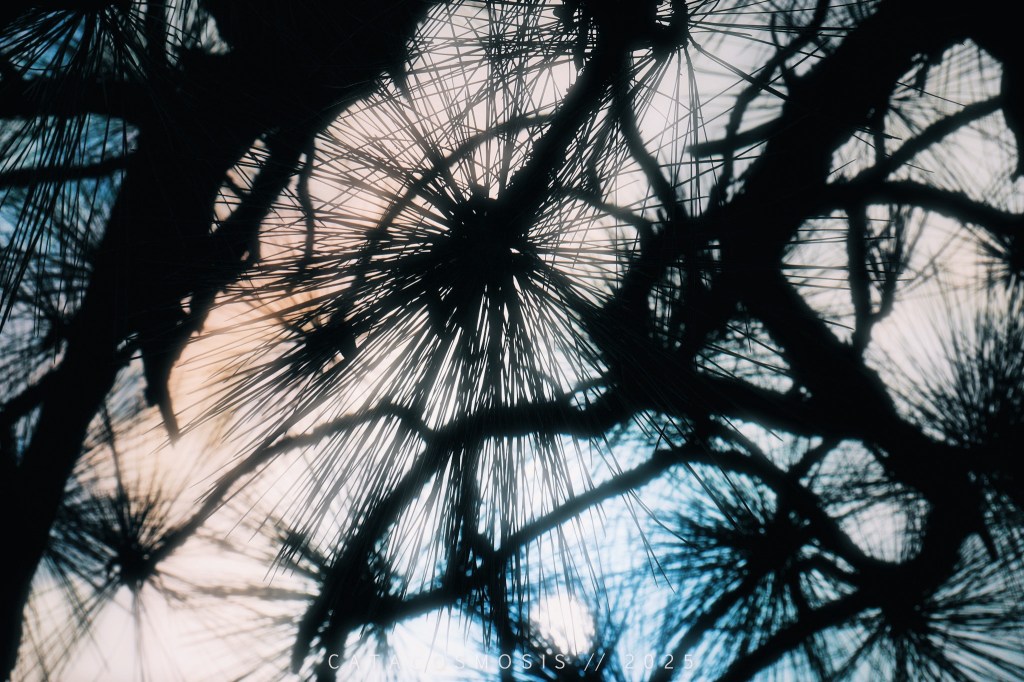
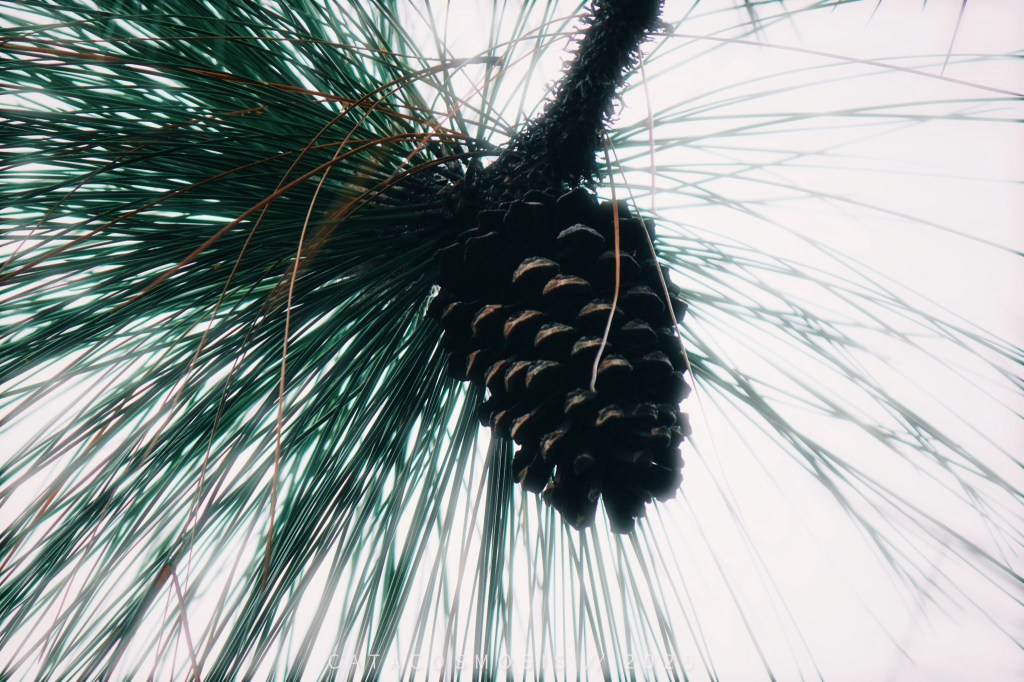
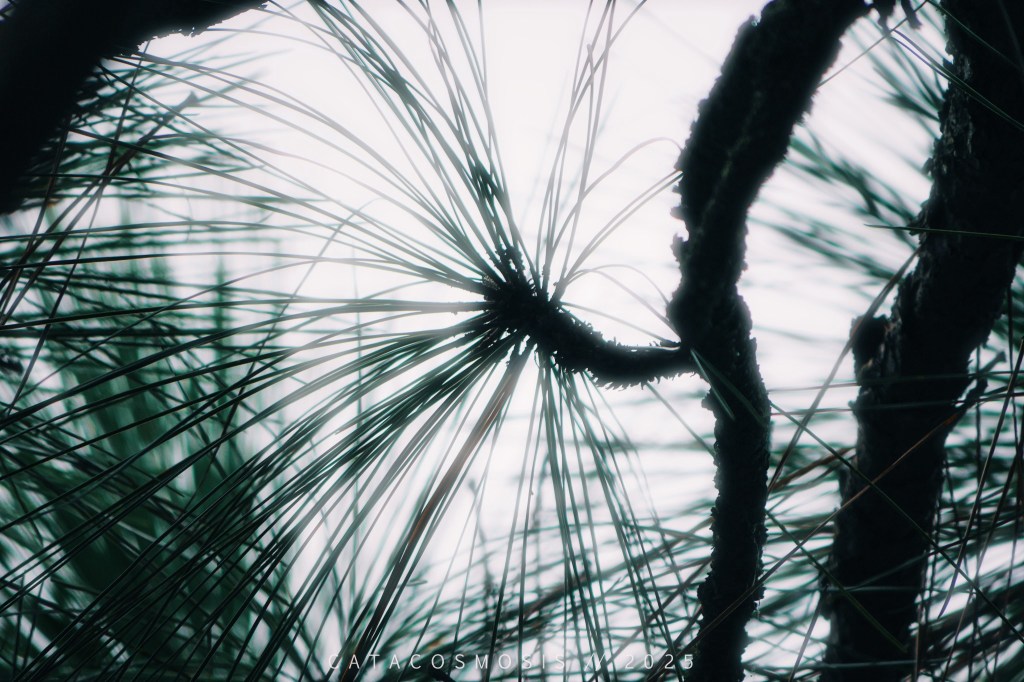
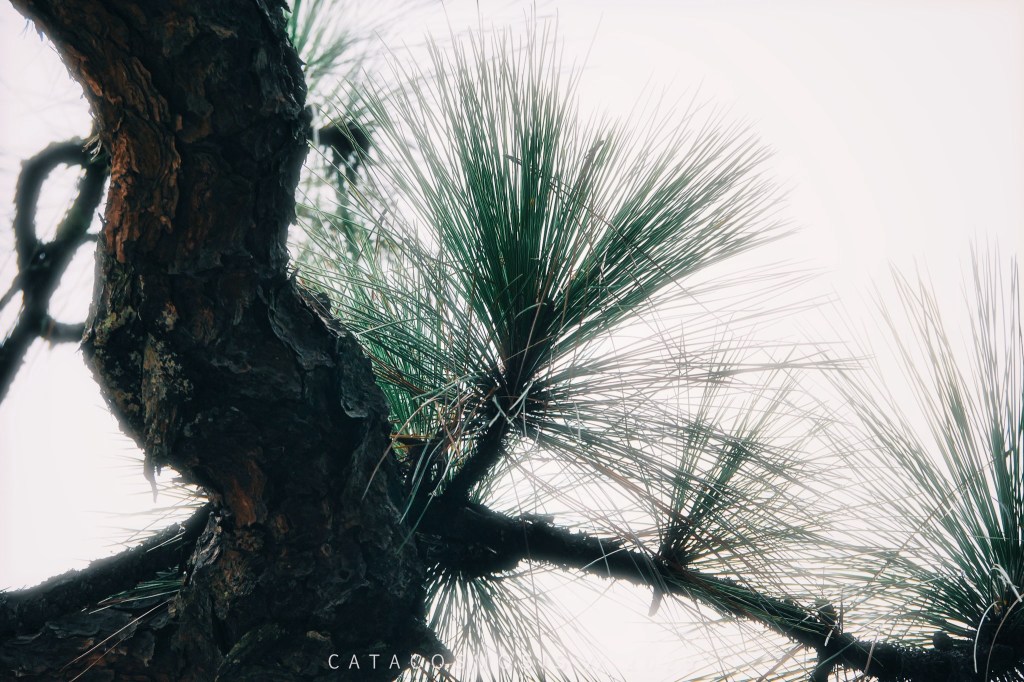
For now, though, here’s a brief gallery of shots of my favorite tree — the oldest in my state, and one I’ve found myself referencing often lately. A couple are completely blown out. One feels especially dull to me. But while they may seem ordinary, even boring, to the casual observer, my passion for this incredible 400+ year-old short-leaf pine runs deeper than any skill or lens could ever capture.
And that’s exactly the point — this tree is the living embodiment of what I’ve been trying to say above. The uncreative soul may never understand the pull, the quiet reverence, or the way beauty lives in the details that can’t be measured or monetized. But to those who do understand, no explanation is needed.
I hope you enjoy these images as much as I enjoyed the process of shooting and processing them.
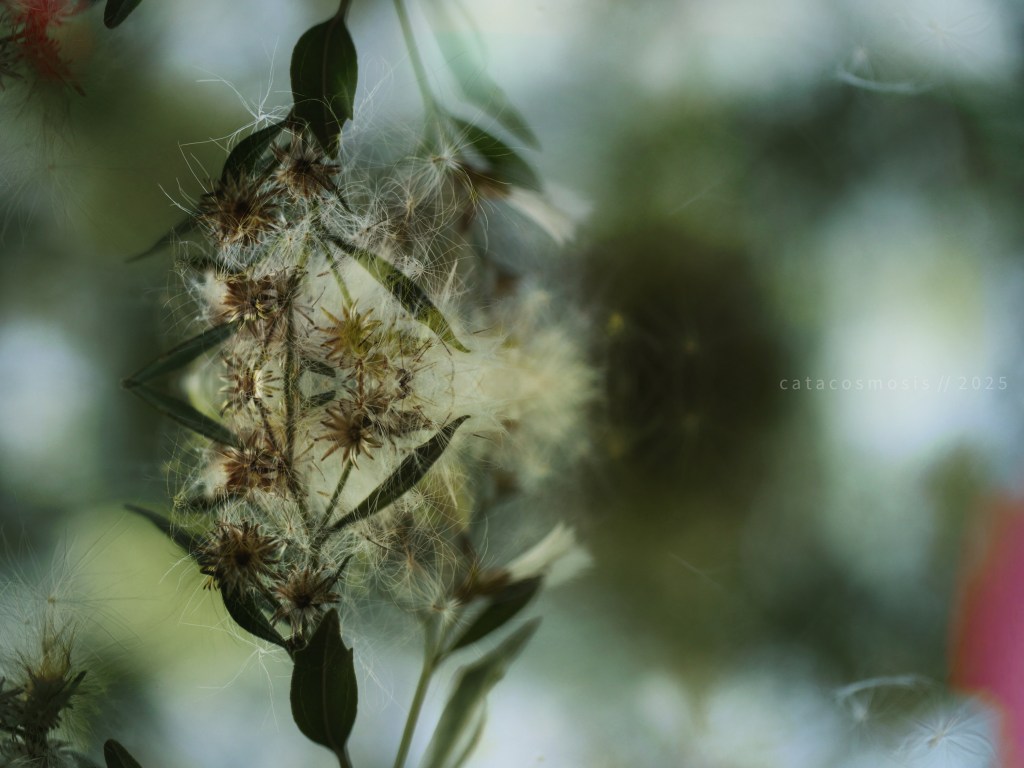
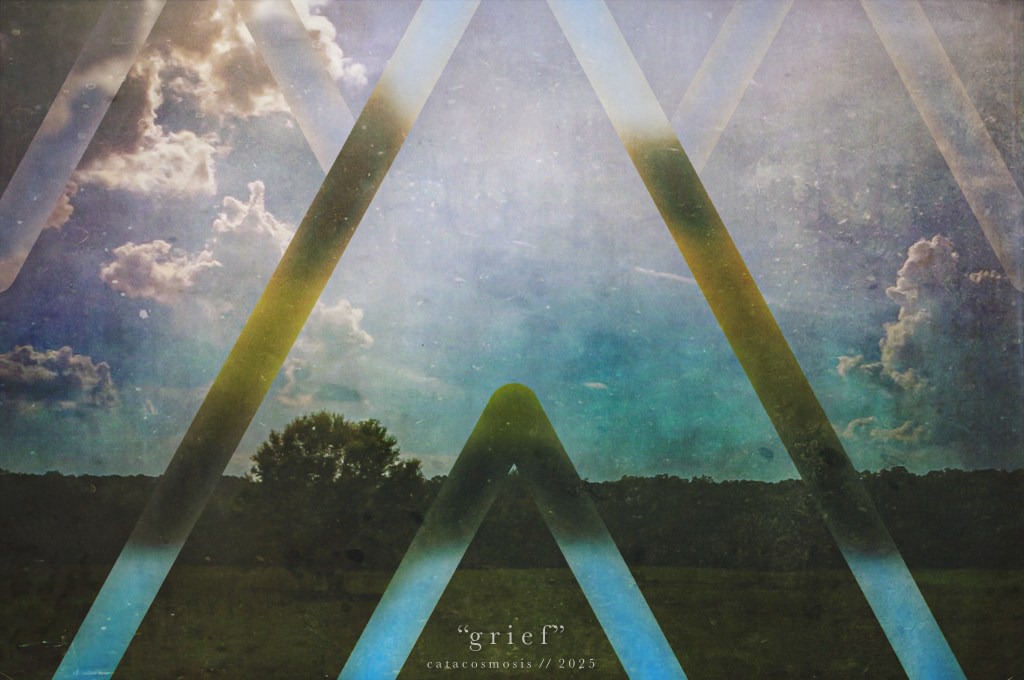
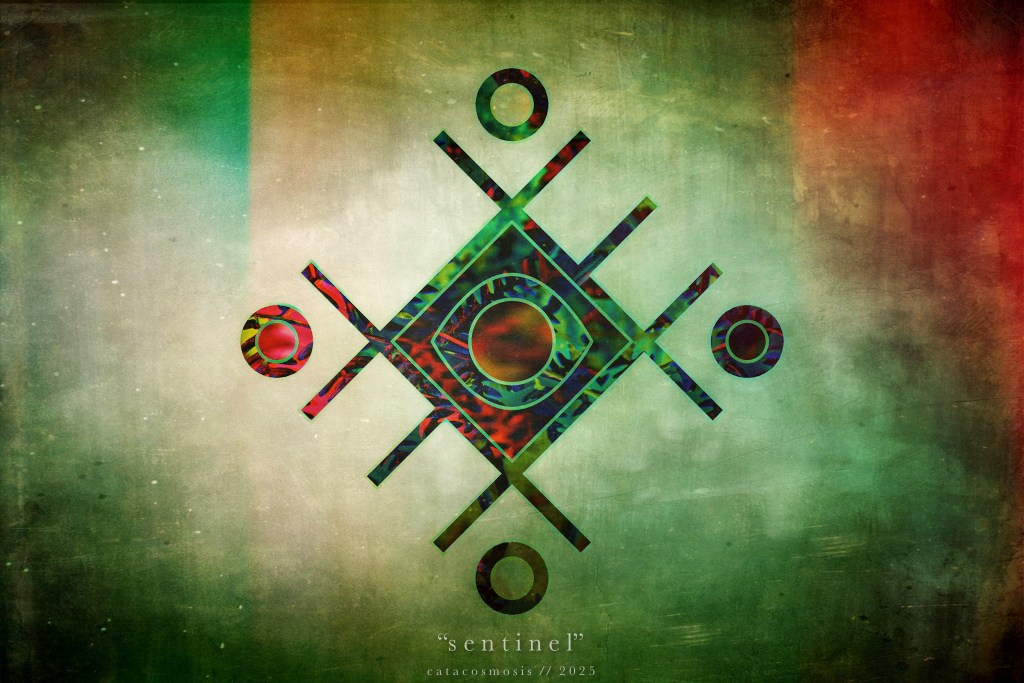
A random, inexplicable flux. That insatiable need to create. Some unseen force guiding me to conjure, to express, to birth something.
It happened again last night, but in the same instant that I felt the proverbial tap on my shoulder, a heaviness threatened to settle there. Born and bred creatives know this experience, all the way into their bones.
It comes with a dread, and creates a dangerous, self-sabotaging pre-regret. It manifests from a complete lack of vision:
No concept. No plan. No brilliant idea waiting to be realized. Certainly, no idea where to begin.
Lost but not lacking awareness, and determined to win over the weight of what really boils down to fear of failure, I asked, “what do we want? What is the spark?”
As expected, the silence answered with more of the same cryptic transmission: “Just ‘do.’ Ripples turn into waves.”
So, I rummaged.
I plundered through the old tools and the old toys. You know the ones—the “Ghosts of Projects Past,” our artistic Scrooge’s worst nightmares. The ones tucked away in dusty, overflowing “Likely Garbage” photography folders and long forgotten apps.
The ancient, the analog, the abandoned fragments of another era.
I pulled out the remnants of what once inspired me, not because I knew what I was doing, but because whatever had stirred was creating a riot within me.
These moments are never a question of choice, so I just…explored. Guessed. Played. Flowed.
s e n t i n e lg r i e f
Sometimes, perhaps most often, that is the best option. Even if the outcome feels unfamiliar or strange, or doesn’t resemble the “usual” desired outcome. Even if the result is wildly imperfect or impossible to explain…
It is in this uncertain, instinctual process that magic lives and breathes. This is where it sizzles and crackles and arcs, like a furious current from Tesla’s coil—except in this case we don’t need Faraday’s cage.
Creatives—artists, writers, dreamers, philosophers—need the opposite. We need this chaotic energy to touch, and to consume, us. It is the rejection, the not allowing it to, that kills us…and that is always a slow, excruciating death, from the inside out.
In art and creativity, exciting results are not found in safety. They’re not found in perfection. Organic process is not found in planning. Everything in and about the Creative archetype is found in the act of simply showing up.
Creative inspiration doesn’t ask for permission. It asks for presence. It asks that you show up and let it burn through you. The only wrong move is not moving at all.
📷 Lumix GX7 + Panasonic Leica DG Macro-Elmarit 45mm f/2.8 ASPH Mega OIS ⚒️ Fragment + Mextures + Lightroom
entry nine — scattered light, fractured grace: a quiet archive of light, loss, and what remains.
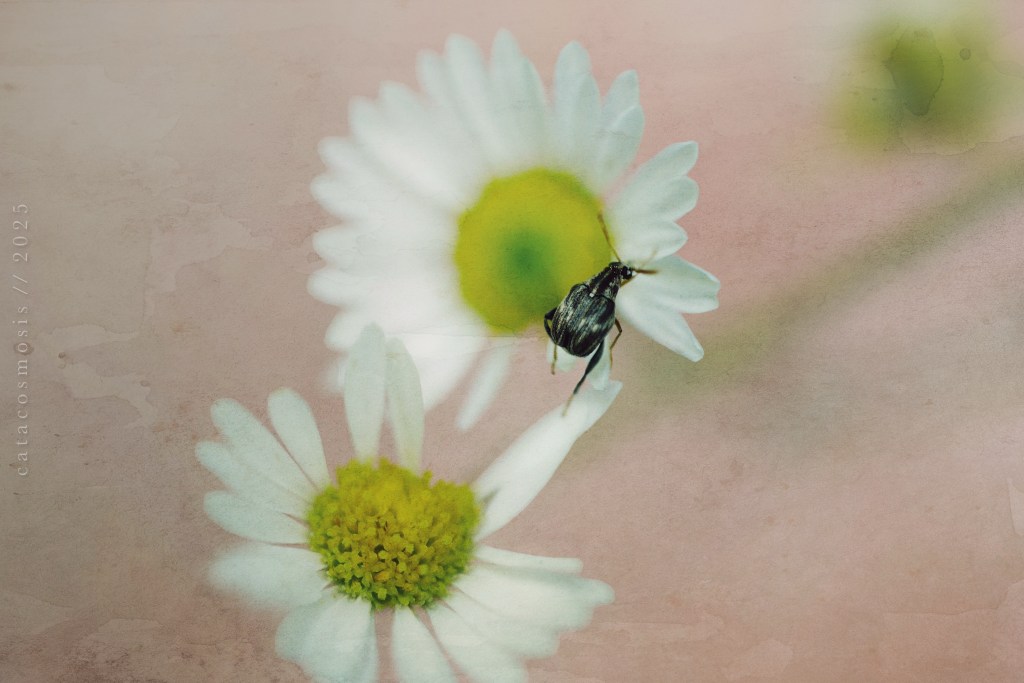
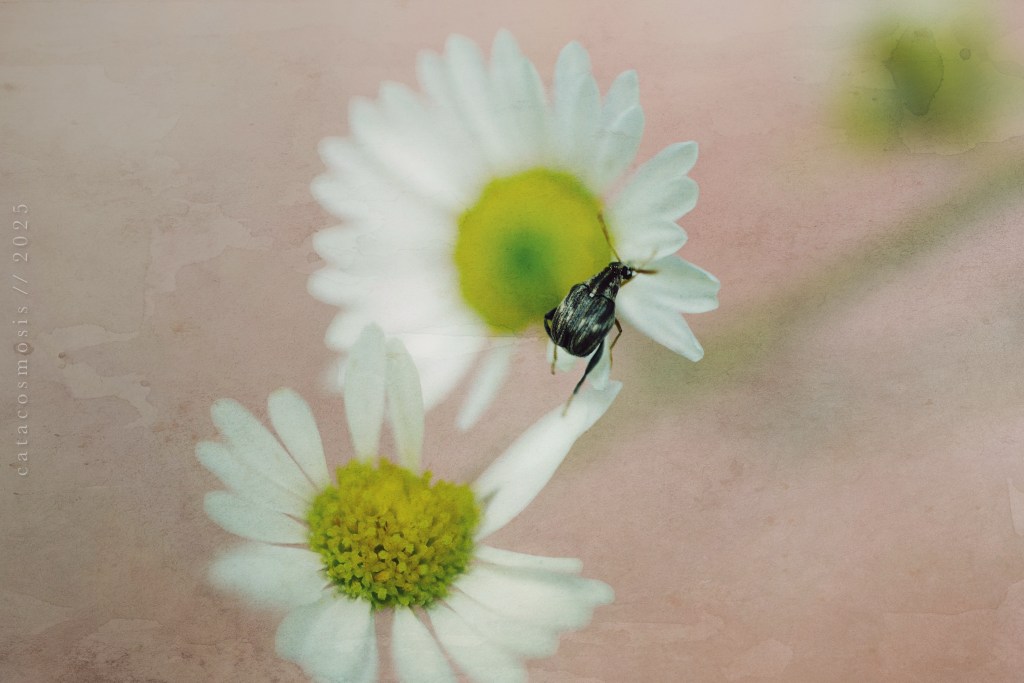
Weevil (Meibomeus musculus), a quiet laborer of the forest and the fields…carrying the weight of being, petal by petal. Vision: Lumix GX7 + Panasonic Leica DG Macro-Elmarit 45mm f/2.8 ASPH. MEGA O.I.S. Tools: VSCO (KP3), Mextures (personalized texture formula: QBHASZK), Lightroom Mobile (watermark only).
There is a kind of presence that doesn’t announce itself.
No sound. No shimmer. No need to be noticed. Just a body doing what it does.
Clinging to a petal, breathing the moment, belonging to the quiet. Sometimes, that is the work.
Not saving, not proving. Just being.
And somehow…it shifts the entire forest, the entire field.
For some souls, there is a burden in being seen —not the fear of visibility, but the ache of being misread when presence itself was the offering.


 catacosmosis