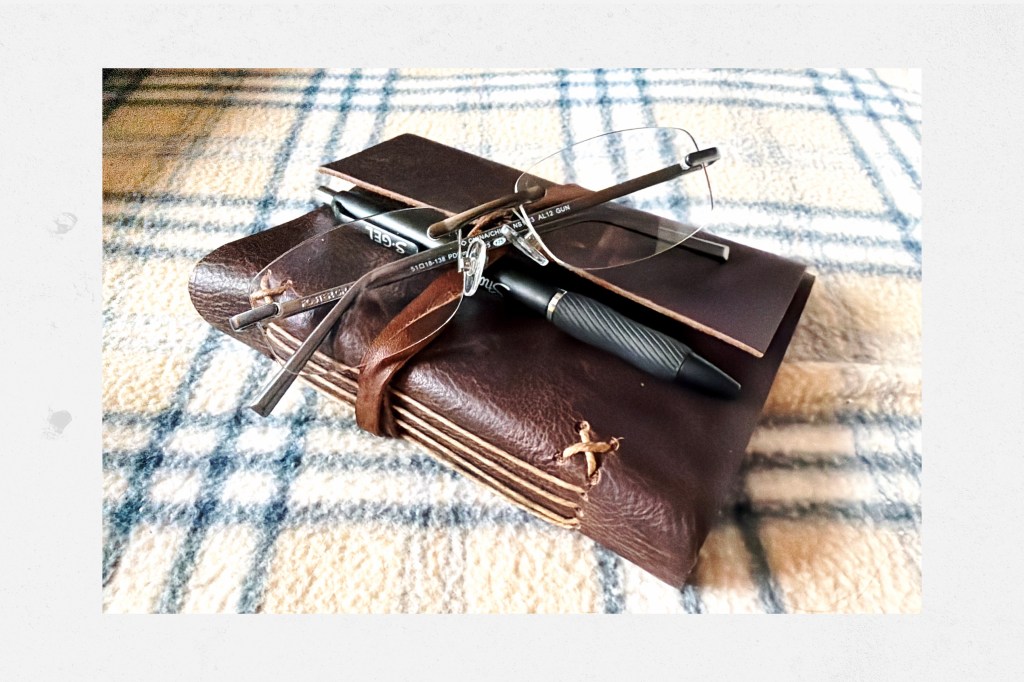
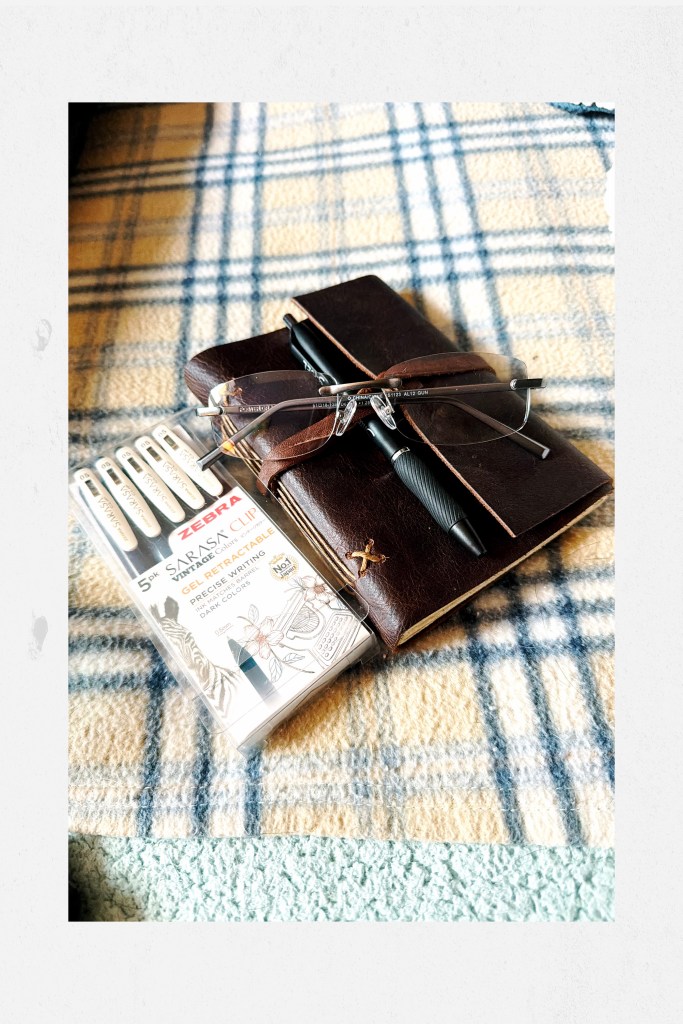
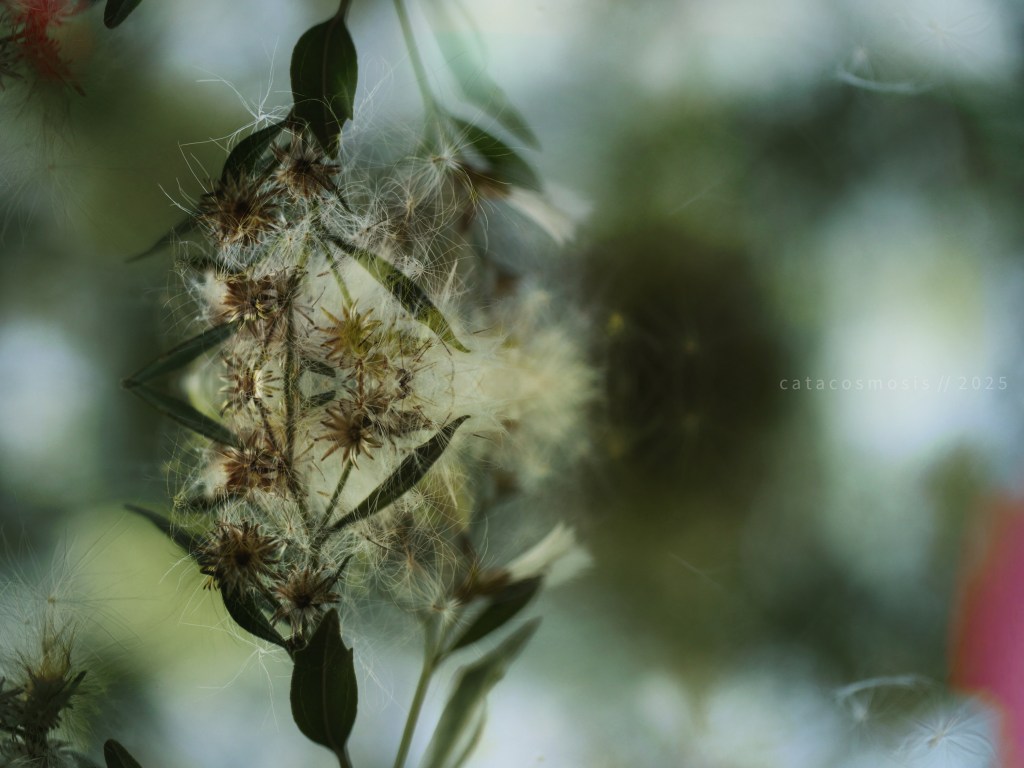
Rediscovering an old, forgotten treasure – barely touched, but quietly waiting – is a comforting gift as I learn to wait patiently for my body to heal and be ready to move back into the studio.
iPhone 17 Pro + Hipstamatic X
This morning I sat with that truth for a long, still moment. As the steady ticking of the clock kept gentle cadence with the rising sun, something settled over me like grace instead of regret:
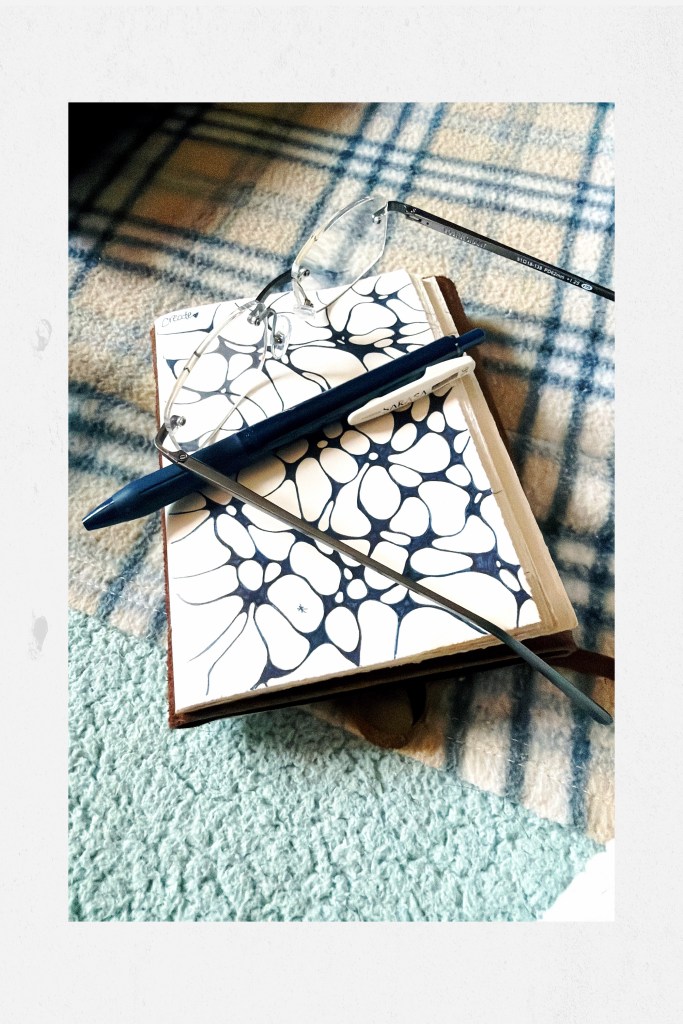
I have always loved and collected journals and sketchbooks. I own many, yet only a few are filled and several remain untouched – so many sitting in limbo for years, held back by the fear driven fallacy of “messing them up.”
iPhone 17 Pro + Hipstamatic X
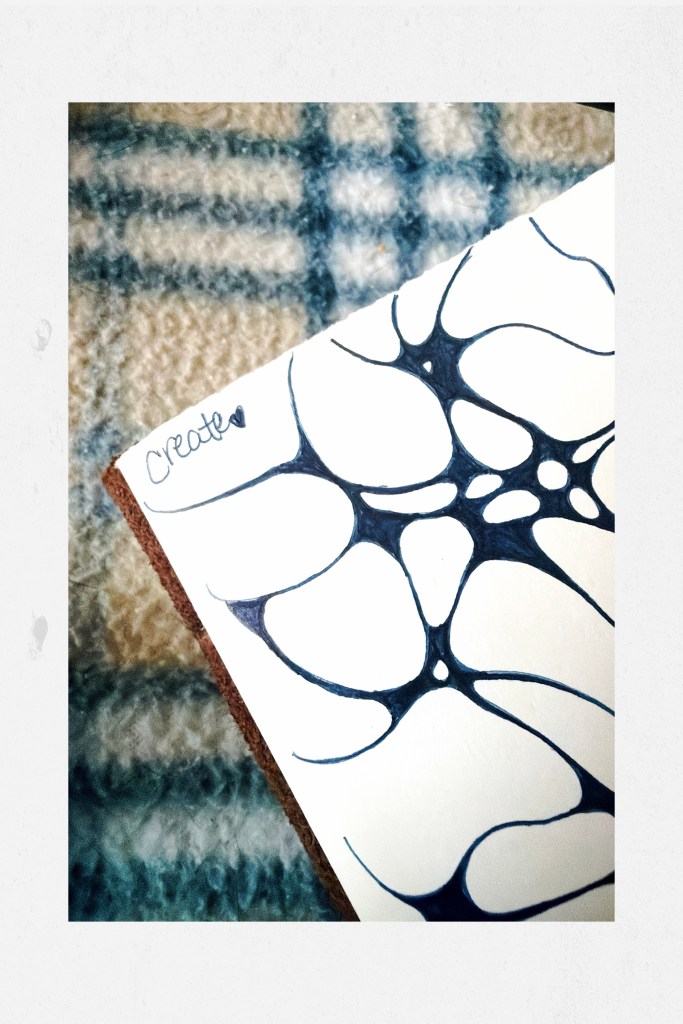
With age, I am gently defeating that lie. Life is brief, tomorrow is never promised, and no act of creativity is ever wasted – even when the product of the process doesn’t match the vision that first called it forth.
Now, as I grow older and look back on the many years gone by, I feel far more sorrow for all the moments I never recorded than I ever felt for any imperfect line, any handwriting that wasn’t lovely enough, or any watercolor that fell short of my imagination or my dreams.
iPhone 17 Pro + Hipstamatic X
Moments, art supplies, and blank pages are only wasted when we aren’t present with them… when we overlook and leave them blank for fear of messing them up.
The only thing that messes anything up is letting fear, doubt or insecurity drive us in the first place.
Tonight I wrote a prose/journal piece for AllPoetry.com, and I couldn’t help sharing it here. Some pieces are just… well, you want to save them in your little treasure shoebox. I suppose, in many ways, that’s what this space has become for me. My treasure shoebox, like the ones we had when we were kids. And that’s where this post begins, so that’s a more fitting analogy than it may seem.
I’ve been writing a lot of poetry again lately. I don’t know what brought that back into such an intense level of focus; nothing in particular, except maybe the health and heart scares of late. Moments like that at any age tend to send us on a reminiscent journey, don’t they… those introspective moments in life where everything matters, and we simultaneously realize that very little of what we have for years focused on or worried about actually does. It’s distinguishing what does, I suppose, that brought the poetry back to life. The poetry, as much as the prose, has always mattered deeply to me.
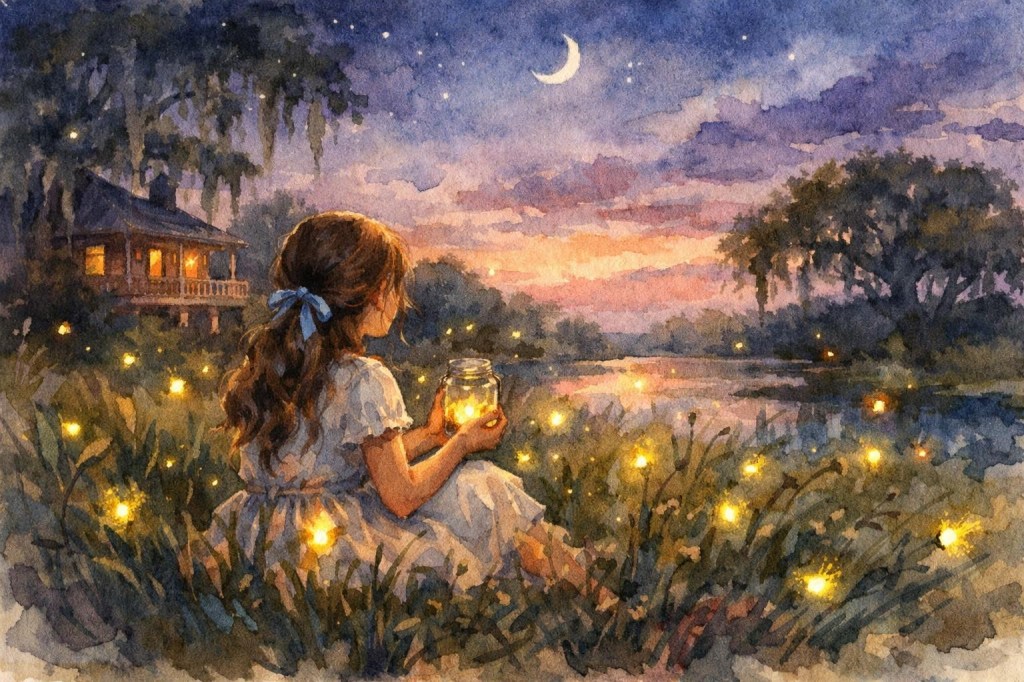
There is something about a Southern summer night that gets into you young. The air sits heavy and close, warm even after the sun goes down, and the woods at the edge of the yard breathe with it. I was a child who noticed things — the way light changed before a storm, the sound leaves made when no wind had been announced. And, in those summers, every evening brought the fireflies.
They came at dusk. First one or two like punctuation, then more, and then all at once they were everywhere, blinking out of the dark in their hundreds, their thousands. Legion, though I did not think of it that way then. That word belonged to something else entirely. It had been pressed into me through scripture and sermon as a name for the unclean, for the swarming darkness that could take up residence in a person and multiply. Legion, said the demon, for we are many.
So the fireflies blinked their quiet light, and somewhere underneath the beauty was a word I had been given to be afraid of.
Then I found Alan Watts. Or, rather, was introduced…
I was twenty-three, in graduate school, teaching computer classes at a community college for a department head called Ralph who had bent the rules a little to bring me in. He had seen something in me before I had fully seen it in myself. That is the particular gift of certain people; they hold the mirror at just the right angle.
One day he handed me a book. Alan Watts. “The Book: On the Taboo Against Knowing Who You Are.” He did not make a ceremony of it. He gave it the way people give things when they know exactly what they are doing — quietly, like it was obvious.
It was not obvious to me yet. But I took it home, and I read it. I had to read it multiple times to finally grasp the method to Watts’ madness, and by the third time something that had been holding its breath inside me for twenty-three years slowly let it out.
Watts did not ask me to abandon what I believed. He asked me to look at it more honestly. To ask who had handed me my fear alongside my faith, and whether those two things were always meant to arrive together. He wrote about the universe not as a collection of separate objects but as one enormous, continuous flowering, and he moved between the language of science and the language of spirit without apology or explanation.
And I thought of the fireflies.
Legion, but not demons. Never demons. Just light, doing what light does in the dark.
Ralph is gone now, and in a strange twist of fate, or perhaps the perfect design of it, it was our home in which he hospiced and passed on. But that book remains, and so does everything it opened.
I had known much of Watts’ philosophy before I knew Watts, subconsciously, without knowing I knew anything at all… in the wordless way children know things before language has a chance to organize them into beliefs.
There were nights, and to child-me they all feel like midnight, the grown world asleep and the dark belonging entirely to you, when I would slip outside and sit in the yard while the fireflies did their quiet work around me. I did not have a name for what I was doing. I only knew that something in me needed the dark and the stillness and the small lights blinking in and out like thoughts I hadn’t found words for yet.
Sometimes I brought a notebook. Sometimes I just sat and let whatever was moving in me move, uninterrupted. The night felt alive in a way the daytime didn’t. More honest, somehow. Less performed. In the day you were somebody’s daughter, somebody’s student, somebody being watched and measured. In the dark you were just yourself, with the fireflies and the heavy Southern air and whatever God was doing in the quiet.
I did not know then that I was doing what writers do. I only knew it felt necessary.
Watts wrote often about the muse, about inspiration not as something you summon but as something that arrives when you stop trying to control the room. The midnight hour, literal or felt, is when the ego gets tired and steps aside. And in that stepping aside, something true gets through.
Tonight as I write this, it is close to midnight. Not child-midnight, not the felt sense of it, but the real thing, with the clock to prove it. I am not outside. I am in my bed, with my laptop, no fireflies in sight. The dark beyond the window is just dark. But something in me is exactly where it was in that Alabama yard decades ago, sitting with what needed to come through, waiting without quite waiting.
Earlier tonight I was tired and closing down, the way you get when the world has been louder than usual and something in you needs quiet it cannot seem to find. I was ready to disappear into sleep. And then something arrived. It always arrives this way, not when I go looking for it but when I have exhausted myself enough to stop.
A poem I had written about Alan Watts. A fellow poet’s encouragement to go deeper. A thread pulling me back to those childhood summers, to Ralph, to The Book, to the child in the yard who already knew.
Watts would not be surprised. He might laugh a little, warmly, in that way he had. He would say the muse was never yours to command, only to receive. That the midnight hour is generous precisely because you have stopped performing for the daylight.
Ralph knew this too. He saw it in me before I could name it. He handed me a book and said, in his quiet way, “you already know this. Go read it anyway.” I did. I am still reading.
I am still stepping outside into the dark, in whatever form the dark takes now. And the lights are still there, fewer perhaps, but holier for it. Now that is a piece of my freedom.
Not the sanitized, monetized version. Not the hollow “good vibes” lie designed to keep everyone comfortable and nothing honest.
I mean the kind of light that exists because the world has become grungy, nasty, ridiculous, and addicted to consuming whatever still has a pulse.
Truth should be efficient. In a sane world, it is. But this isn’t a sane world.
Here, efficiency belongs to distortion. To slogans instead of substance. To repetition instead of verification. To emotional leverage instead of reality.
Truth requires something costly: attention, humility, memory, accountability. It forces people to stop, reassess, sometimes admit they were wrong, sometimes change. And that makes it inefficient in a culture built to move fast, feel loudly, and never look inward.
So truth is treated as an obstacle. As “problematic.” As dangerous. As something to be managed, softened, buried, or rebranded until it no longer threatens the illusion.
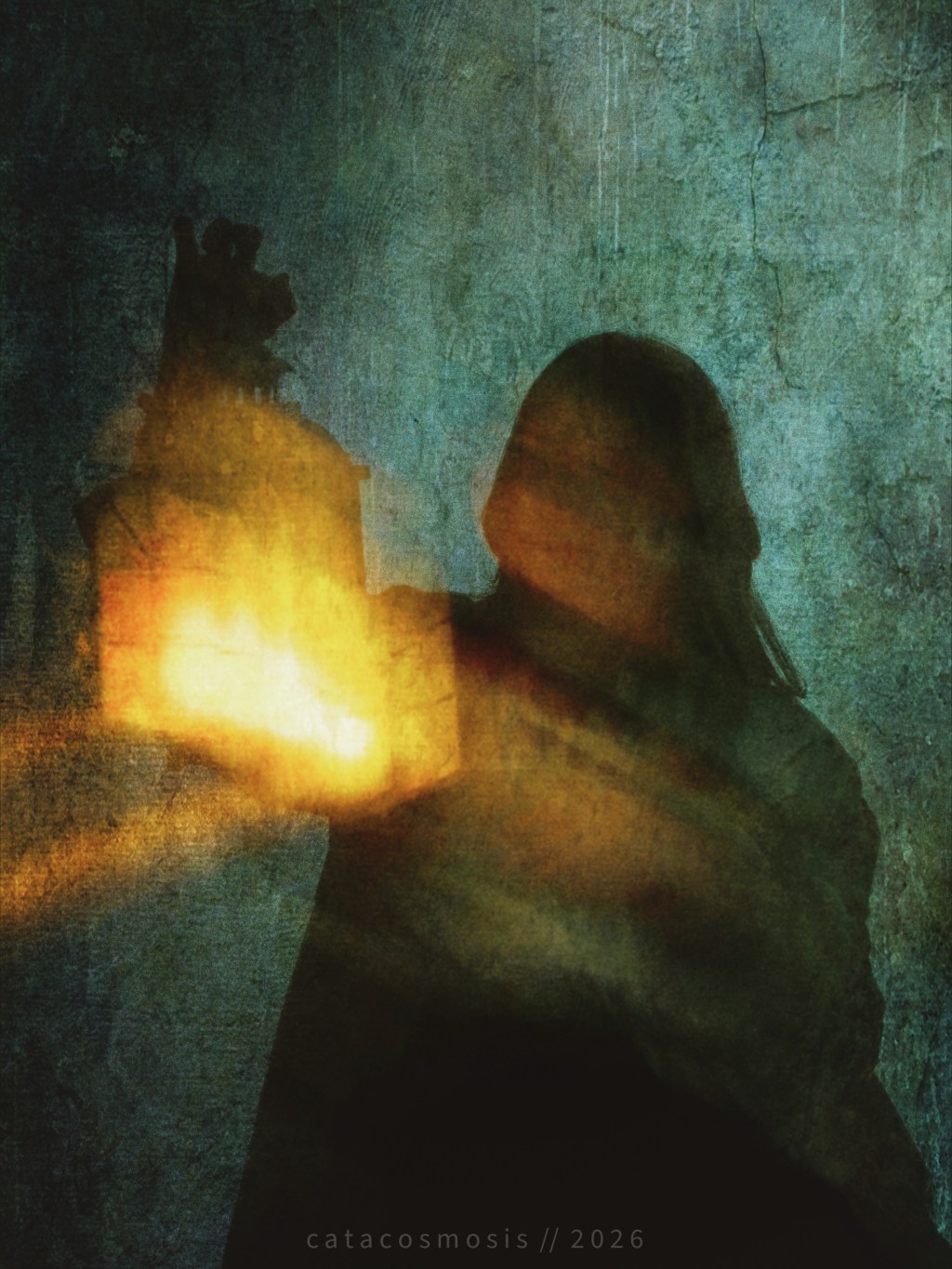
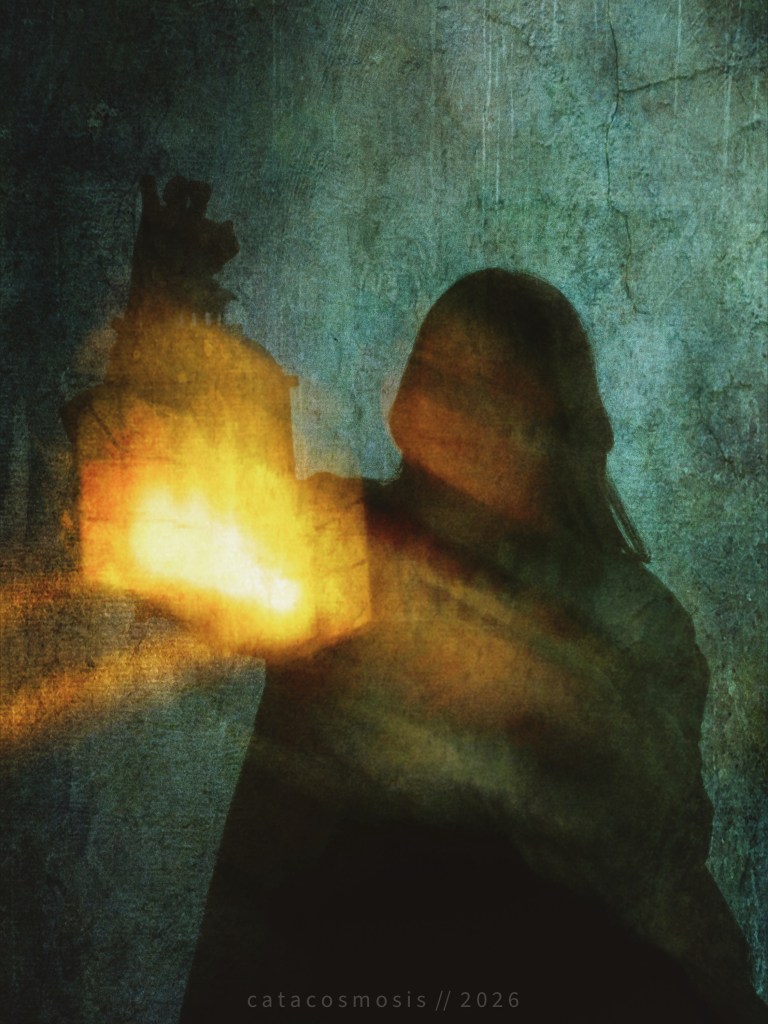
Hold the light anyway.
Even when it makes you a silhouette instead of a spectacle. Even when it costs you comfort, applause, or belonging. Especially when it exposes what others are desperate to keep hidden.
Light doesn’t scream. It doesn’t beg. It doesn’t perform.
It reveals.
And that, more than anything, is why it’s feared.
So keep carrying it through the cracks and decay. Not to save the world. Not to convince the masses. But because surrendering it would mean becoming what’s poisoning everything.
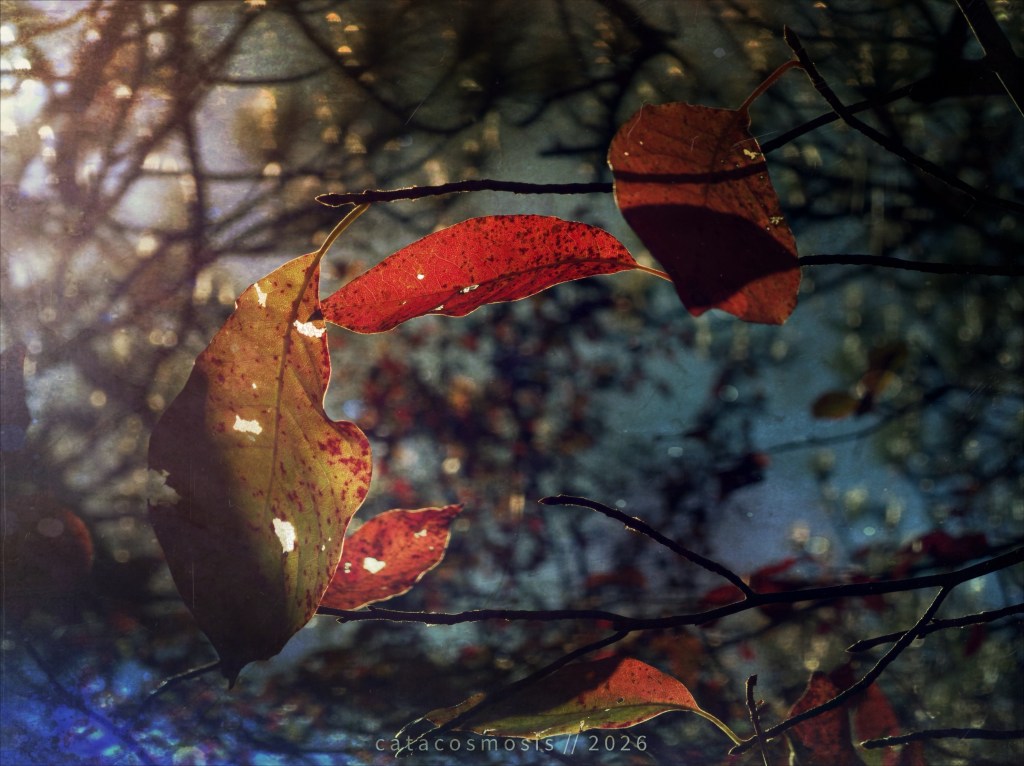
Looking down at those leaves, loosened from their season, clinging by the thinnest threads of stem… I see myself. They hover over moving water, suspended between staying and letting go, their edges softened and pulled apart by the trembling creek. The surface never stills long enough for clarity; it stretches every familiar thing into wavering uncertainty.
Since watching my teenage son slip backward, words he’d owned suddenly foreign in his mouth, routines he’d mastered dissolving overnight, and since the autism label arrived with its chorus of “you should have pushed harder, earlier, medicated sooner,” this is where I live:
Perched on a fragile edge, tangled in reflections I can’t seize, balancing on a stem that thins a little each day. I haven’t fallen, but I feel the current waiting to carry me off, a motion I never chose and can never control.
I have experienced sickness, the trauma of caregiving, the many horrors of diseases I pray not one of you ever meet in your life, death and loss and funerals… the last decade of my life has been a nightmare with beautiful trimmings. But of all the moments of utter lost-ness and grief during those experiences (a description which puts it lightly, in fact), this is the most difficult and complicated and heart-wrenching thing I have ever experienced in my life. Not my son, but battling a system far worse than the one I last met two years ago, with his Godfather. Pediatric medicine in the US in 2026.
His therapists and specialists tell me love wasn’t enough and never will be. I still think it was the only thing that kept us both from drowning.
I’m not sure what this blog, or other art sharing platforms, will look like for me in 2026 (let’s be real – when have I ever?), That’s why I have yet to write the yearly “first post.” So, tonight I begin the year with this, with the truth and with reality:
I don’t know what lies ahead, but I do know who is driving. I thank God daily it’s not me, but Him.
entry nineteen — scattered light, fractured grace: a quiet archive of light, loss, and what remains.
iPhone 17 Pro + DistressedFX + Mextures + VSCO
There’s a softness to this kind of morning light… the kind that slips in without ceremony and still manages to uncover what the heart has tried to tuck away. The silhouettes stand like witnesses, thin and unassuming, yet somehow they hold the whole ache of the season.
And maybe this the truest gift of December: that almost nothing blooms, yet everything speaks.
The sky daily turns itself into a quiet oracle, whispering that even in the stripped-back places, even in the stark-cold bare and in-between, there is still beauty gathering itself at the edges, waiting to rise every morning with the sun.
entry eighteen — scattered light, fractured grace: a quiet archive of light, loss, and what remains.
iPhone 17 Pro + DistressedFX + VSCO
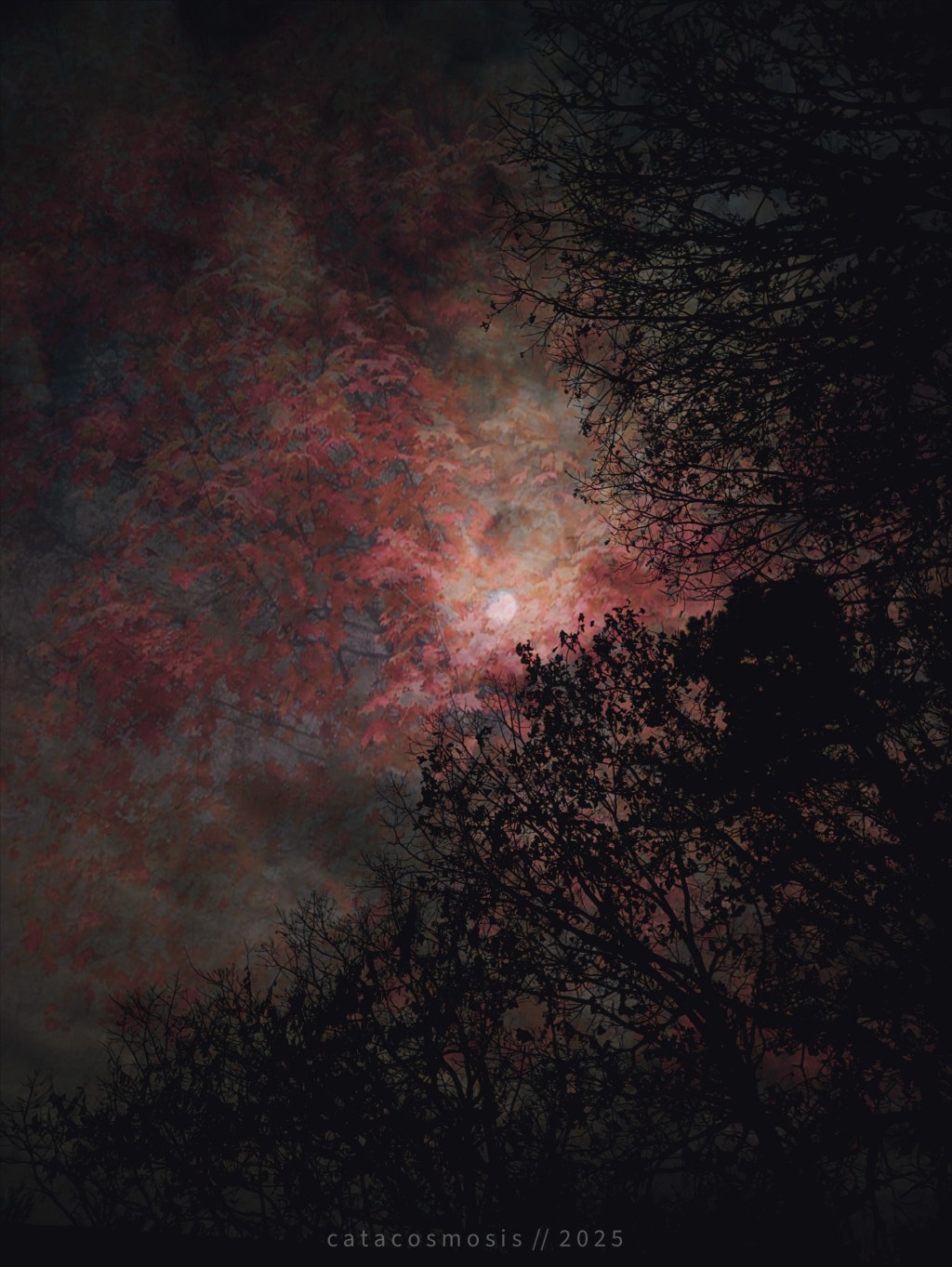
The full moon always finds me in that thin place between ache and awakening. The heart softens, the past stirs, and the light insists on touching what I thought I’d hidden.
It doesn’t shout. It simply rises. And in rising, it reveals.
This full moon of these last few days felt like a mirror tilted by something wiser than me: clear, unguarded, almost tender in the way it offers back the truth of who I am becoming.
Every full moon asks for release, but this one asked for understanding. It offered an opportunity for a quiet recognition of what’s been shed, what’s been carried, and what still longs to be held with gentler hands.
Under its glow, my fractures stopped pretending to be wounds. Instead, they shined… faint, but deliberate. And grace slipped in when I wasn’t looking.
Twenty twenty-five bleeds into me like a half-lit nightmare,
Stephen King and Tim Burton laughing in the corners.
AI hums in the air, a static pulse I cannot unhear.
I want to scream and break the sky…
…but the real and the familiar fragments of me rein temperance in, in quiet revolt.
Twenty twenty-six waits like a shadowed carnival, and I am here,
trembling with light in a society fractured by entropy…
…still standing.
When I started exploring textures and analog styles using mobile camera and editing apps like Mextures and DistressedFX a decade ago and Hipstamatic closer to two decades ago, I remember the beef among photographers about how it was cheating.
Even when shooting DSLR or scanning 35mm negatives and importing to iPhone to manually edit creations, on deviantART it was utter blasphemy to call that work photography… which is the majority of the reason I left that site (alongside the unnecessary drama, petty competition and childishness of it all).
I remember the same attitudes when the DSLR was introduced as a more convenient option for shooting (as compared to film) back in the nineties, and even more strongly opposed by what I like to call the “haughty and holier than thou professional” photographers (many of whom had never been published, mind you).
It was all just a whole lot of projection… yet here we are in 2025’s much broader version of those things, getting ready to wake up to a 2026 that looks like a Stephen King and Tim Burton co-conspired reality, and I now find myself itching to raise the same ruckus about AI. I fight the daily urge to scream at the top of my lungs that I hate AI, and that it will absolutely be the death of raw human creativity, not a help or a tool for it.
Mark my words, and I say this not just from the creative part of myself but from the psychology and computer science educated and experienced parts, from the professor in me, and from the emotionally and spiritually evolved pieces of myself, from my entire being and from the depths of my soul:
AI is a mistake of biblical proportions, and not just for creatives.
I have watched what it does to attention, to imagination, to the inner world, to the very scaffolding of how a human becomes themselves. I have already watched it practically eat my child alive, and I banned it from our sphere entirely. I will die on this hill if necessary.
AI may not be evil incarnate, though I have my suspicions that it is, but it will certainly cause more evil than we can stand or cope with to manifest in this already imploding world.
The ASMR, the funny animal and parody videos, and the art may be cute today, but tomorrow it will look like proverbial mushroom clouds around the globe.
With AI more prominently in the mix, the end of true freedom is nearer than you might think… and it is allby design.
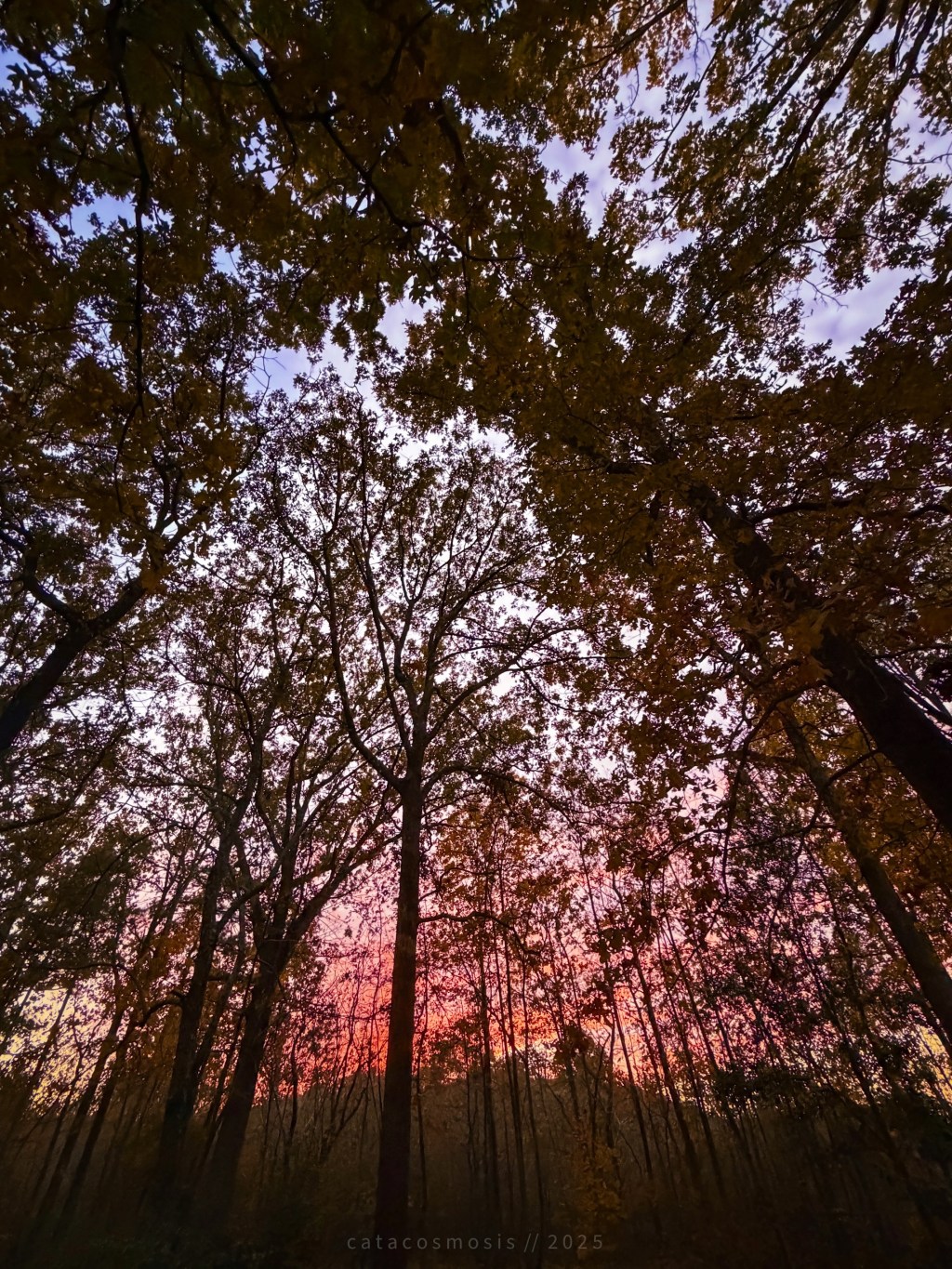
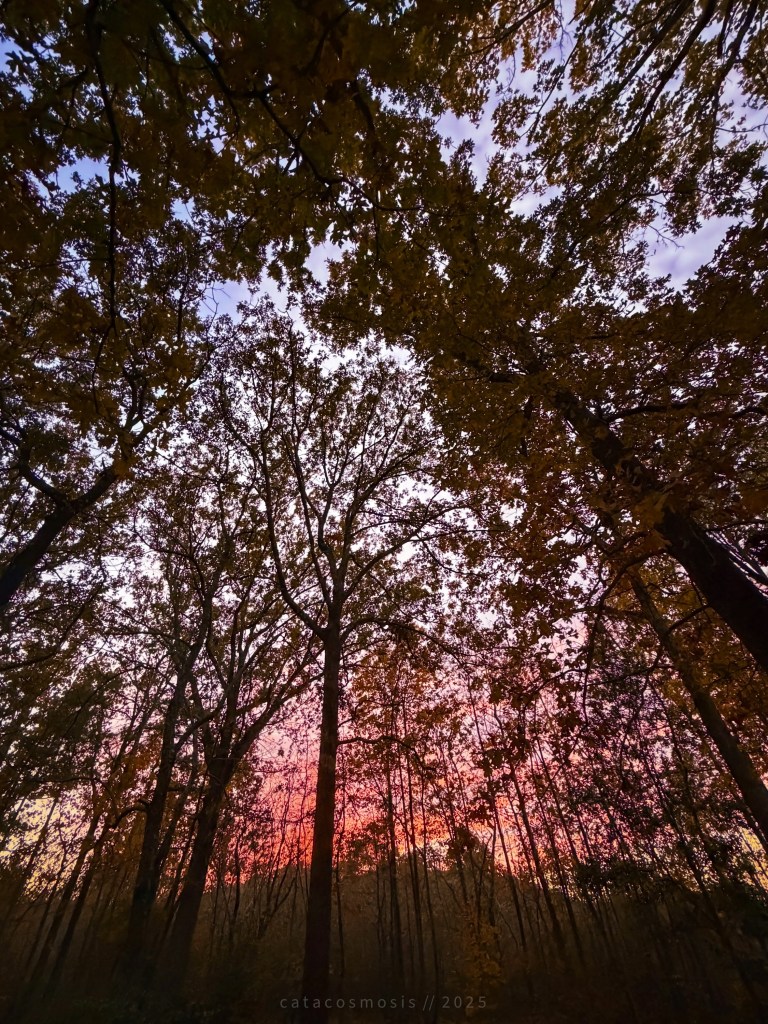
The sunset this evening caught my eye as I glanced up from the command prompt to rest my eyes.
“cmd —> DISM /Online /Cleanup-Image /RestoreHealth” be damned, I forgot the problematic machine.
I gravitated outside as though an unseen force beckoned me… and instead of me capturing a backyard moment, the moment froze me in place and then swallowed me whole.
It happened quietly, the way revelation always does: when the day was no longer sure of itself.
The horizon drew one long, trembling breath, and the sky exhaled light like a confession, soft and burning all at once.
For a few heartbeats, the forest became a cathedral. Oaks turned to stained glass, every vein of every leaf catching the final ember of the sun’s breath.
The air itself seemed to glow with a kind of surrender, as though heaven was remembering how to let go and reminding me all over again.
I stood beneath it, small but aware, suspended in that thin seam between the living, the leaving, and the memory of the already gone.
The colors didn’t ask to stay; they simply poured through the cracks of the canopy and into me, as if to say, “grace doesn’t vanish when the light fades. It only changes hue.”
When the sky went gray again, it felt less like an ending and more like an exhale finished.
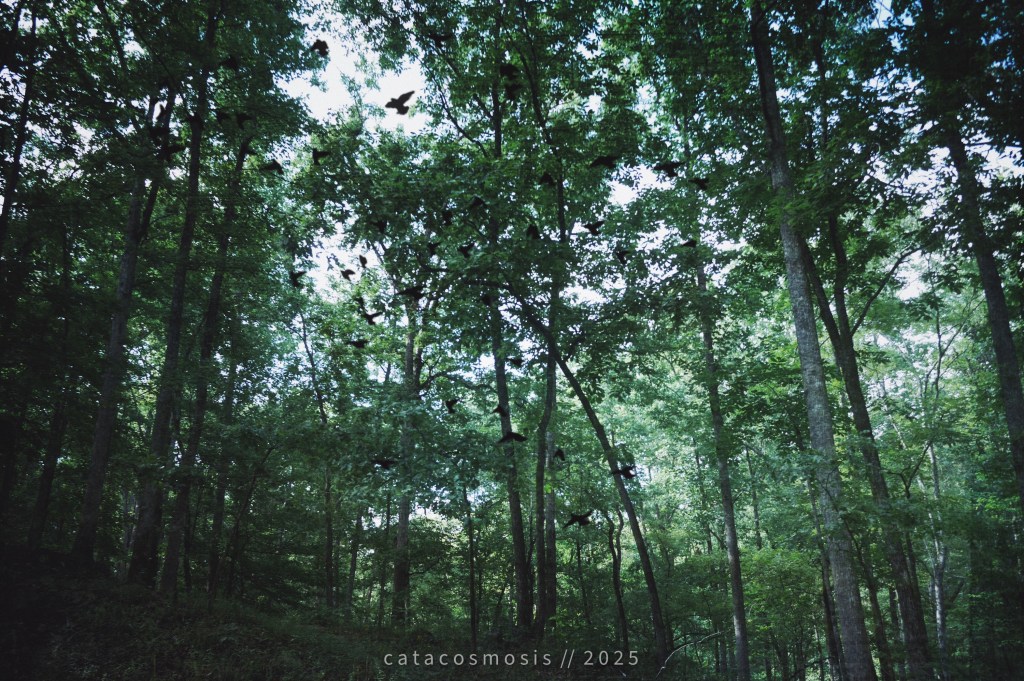
Have you ever been sitting in the woods, in the quiet and minding your own business , just breathing it all in, when out of nowhere the birds seem to spring into motion?
One moment, they’re scattered through the trees, singing softly into the hush; the next, they take flight as one, their calls vanishing into a deathly silence. All that remains is the trembling of wings and the echo of something unspoken moving through the air.
It’s strange how quickly stillness can shift, how a single gust or unseen presence can ripple through an entire forest. You can feel it, even if you can’t name it. The temperature drops, the light changes, and the ordinary world folds itself back like a curtain.
And then you’re left sitting there, swallowed by wonder. Not fear, not exactly, but that beautiful, unnerving awareness that something else is here. Something wild and watching.
For days afterward, it stays with you, that soundless moment when the forest seemed to remember itself. It makes you question what else is living in the margins, what other forms of life or spirit move just beyond the limits of our hearing.
I think that’s when I understood that silence is not absence. It’s presence, waiting to be known.
The forest wasn’t empty. It was full of attention.
There’s a quiet kind of healing that happens when no one is watching. It doesn’t perform. It doesn’t announce itself. It doesn’t need a platform. That is where I was when I was away—not just from social media, but from this space and this blog.
A young woman named Jillian, in a YouTube video I stumbled across recently, captured this so simply and so beautifully: what life looks and feels like when you’ve stepped away from social media—and stayed away long enough to actually notice the difference. What struck me most, though, was hearing her perspective as someone going through this process for the first time.
It’s lived in my thoughts and I’ve contemplated this post ever since. It was so interesting to me because I’ve taken breaks from the internet many times over the past two decades, always for the same reasons—and always with this same depth of understanding about the psychology of it, and why those breaks were necessary.
This most recent (and longest) season of removal hit different. After the last caregiving stretch, after Roshi Ralph’s death, after the silence that came when others (who had no real understanding of the compound caregiving and loss I’d just lived through—and in many cases, never will) rushed in with attacks and projections and judgments, as if my grief was theirs to dissect—I pulled all the way back. And I’ve stayed back.
I’ve stayed away from social media not because I needed a break, but because I reached the point where it just doesn’t matter to me. The truth is, it never really did. The performance of it all—the curated personas, the noise, the performative alliances, the hollow outrage, the likes-as-validation—means less than nothing. I never played the game anyway, and when I tried to be real, I was punished for it—called out for oversharing instead of respected for being honest. So now, I simply choose not to engage.
That’s the decision, and it’s permanent. I stick to my own space—my blog(s)—now. I share some of my creative work on YouTube and Instagram, but I don’t engage socially. The work is there for anyone who wishes to enjoy it, just like my writing: simply because I’ve made it—and it feels like a waste to let it collect digital dust on my hard drive or memory cards. That’s it.
And what I’ve learned—what I’ve earned—is this:
Own your own thoughts. Own your own opinions. Stop looking to the crowd to inform you of what you feel, believe, or need. If you want to share your truth, explore your voice, or process your experience—do it in your own space. Even if that space is digital.
Quiet is not the same as silent. Solitude is not absence. Privacy is not erasure. And just because the crowd isn’t clapping doesn’t mean the work isn’t working—or that it’s not sacred, necessary, and deeply alive.
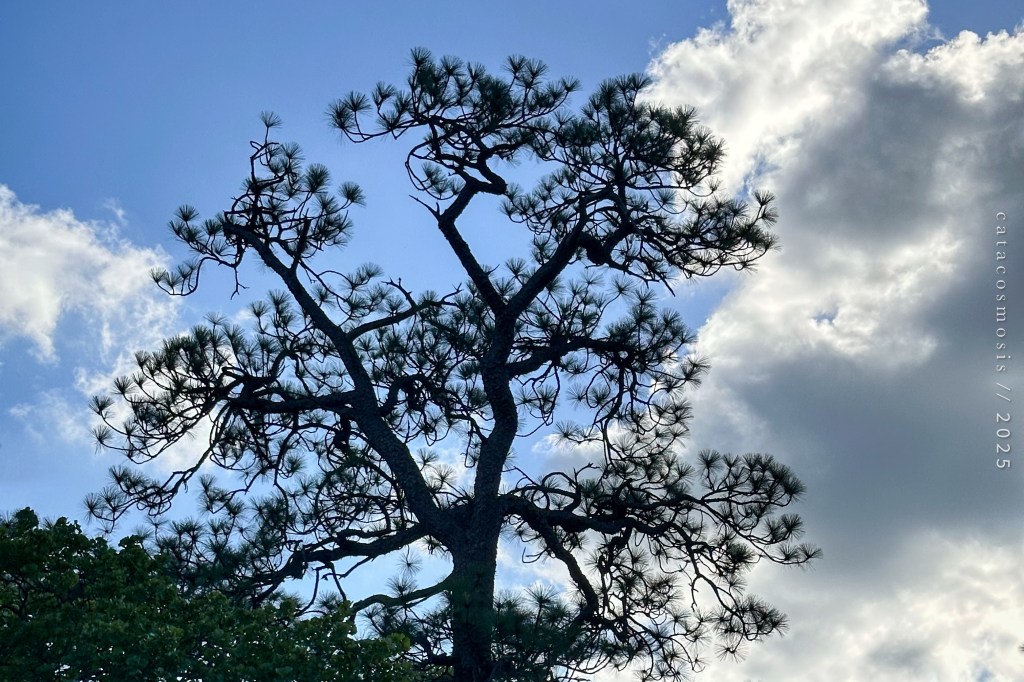
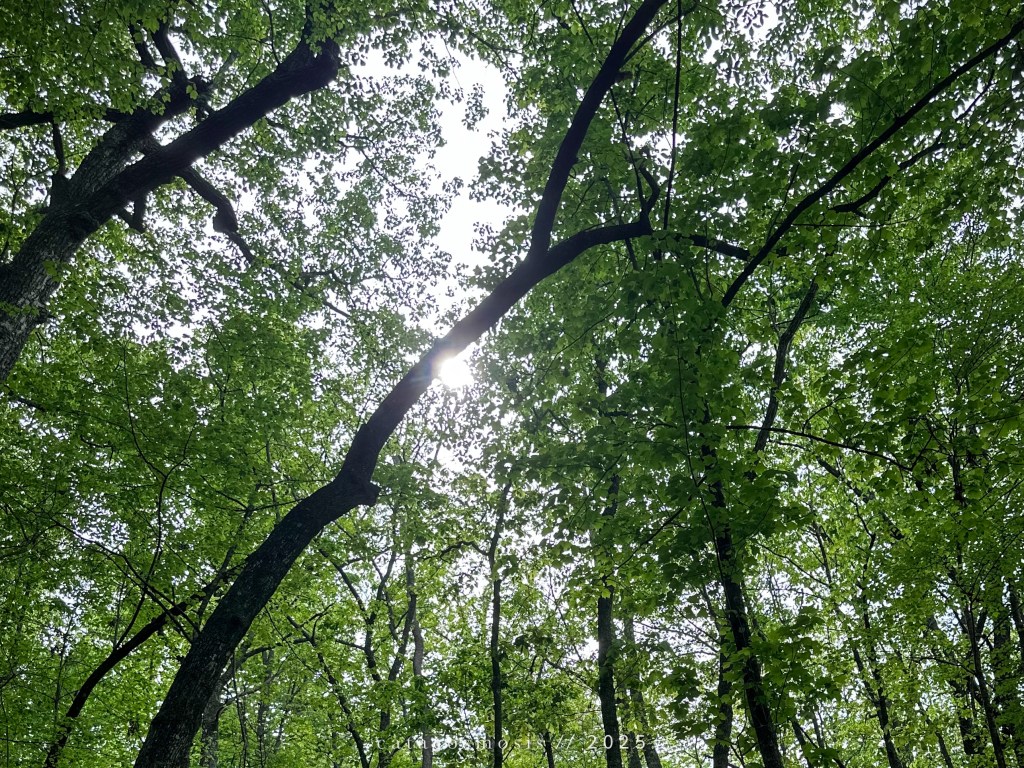
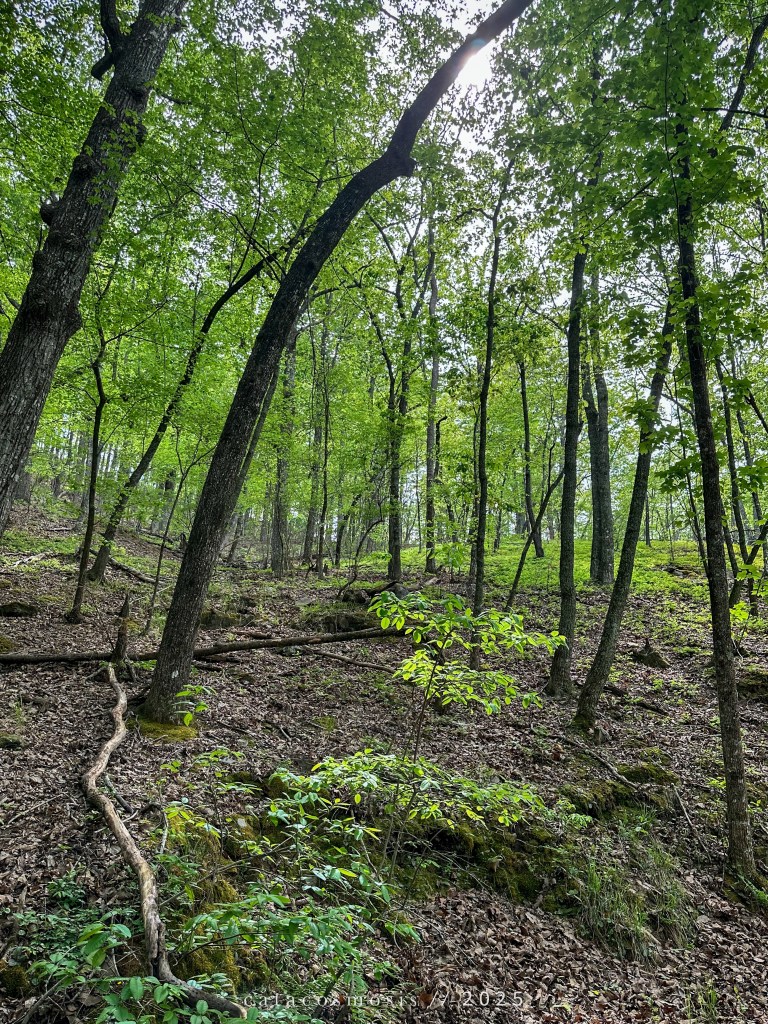
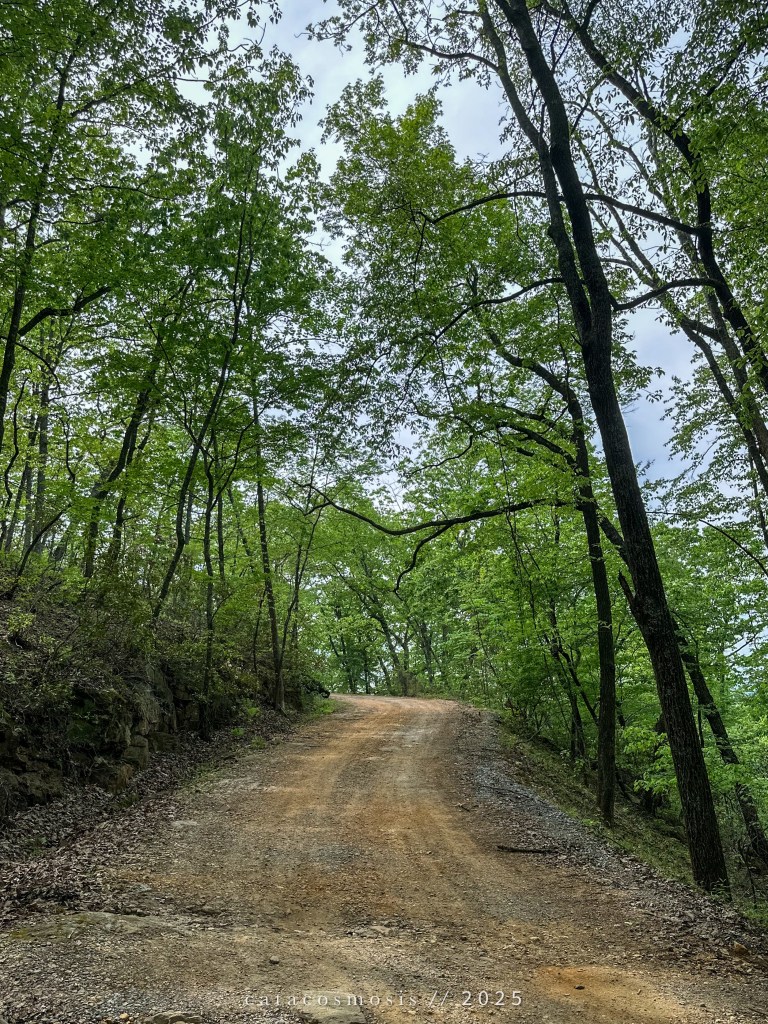
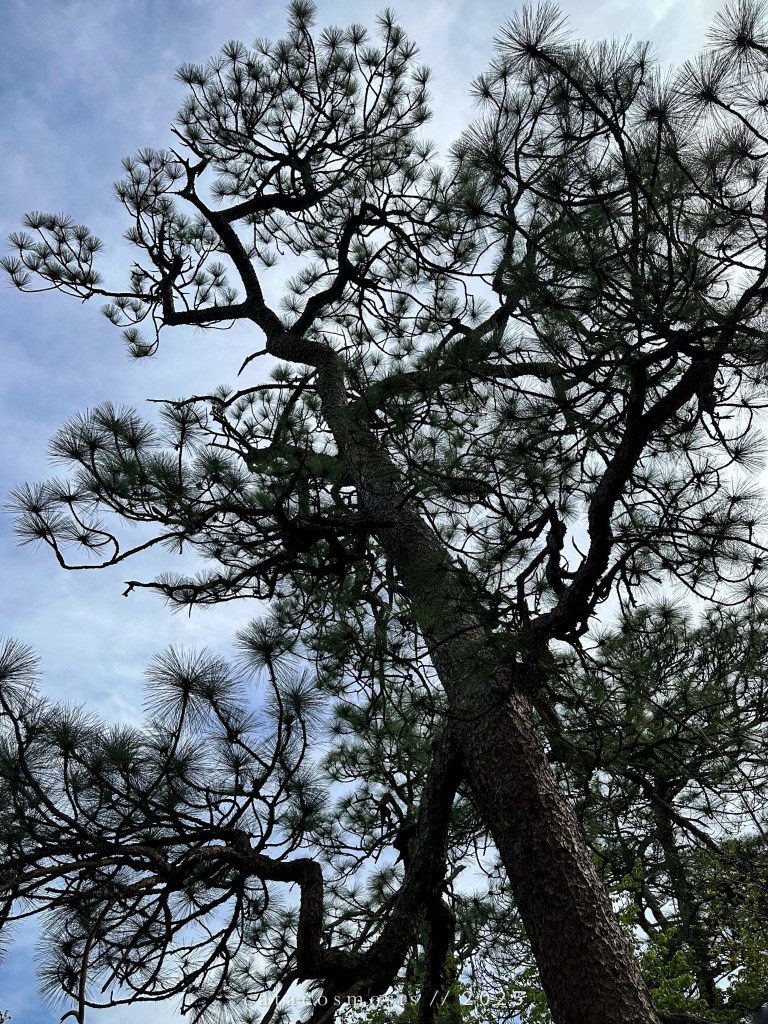
A hike on Flagg Mountain.Flagg Mountain is part of Weogufka State Forest.My favorite place in these woods……is where you’ll find my favorite tree (a post all about her is coming soon).A few photos from where I’ve been this past year, instead of online…
Mirrors, Screens, and Silent Knowing: Personal Reflections after Watching Jillian’s Journey
Part One: The Slowness That Saves You
Jillian talked about how, in the silence of that first year offline, she realized she wasn’t who she thought she was. That her sense of self had been filtered through algorithms and aesthetics for so long that she didn’t know what parts were her and what parts were just performance.
She said she didn’t want to be a cottagecore girl, or a vanilla-beach-aesthetic girl, or even a tomato queen—she just wanted to be Jillian. And that’s what life offline gave her space to rediscover: the Jillian aesthetic. Not a genre. Not a trend. A person.
That kind of reclamation doesn’t happen in front of a ring light. It happens when you’re still. When the feedback loop breaks. When your body and soul finally stop bracing for the next notification, the next birthday story repost, the next dopamine drip that doesn’t land right.
She didn’t pretend her life suddenly looked different. In fact, she said:
“Does my life look any different from this… to this? No. But how I live is what’s different.”
That line stuck with me because it’s the same thing I’ve experienced. The world outside didn’t change. The people didn’t change. The pain didn’t vanish. But something in me stopped handing over power to what others might think—or worse, what they might not think if I didn’t stay visible.
Part Two: The Real Cynicism Is a Smile That Lies
There was a comment I wrote recently in response to someone who was tired—tired of being called negative for telling the truth. Tired of being cast as cynical for not dressing pain up as purpose. I told them this:
“People will call the truth pessimism and negativity because they’ve either never seen true rock bottom—or they’ve never experienced it (yet).”
Because the people who have known real loss, real chaos, real collapse?
We don’t need false light. We need real clarity.
That’s why toxic positivity is so insidious—it masquerades as hope, but it’s really just fear dressed in bright colors. It says: Don’t go there. Don’t feel that. Don’t name it. But the truth? The truth sits with the mess. The truth makes a chair for the grief and the rage and the complexity and says: stay as long as you need.
“It’s madness to try to be sane in this crazed world… You can just quietly speak your truth.”
That’s it right there. That’s why I’m not interested in “engaging” anymore, and why I’ve stopped posting where people feel entitled to misunderstand. This world has enough noise. Enough image management. Enough hollow back-patting in the name of “support.”
Part Three: Stillness Is Not Stagnation
Jillian said she thought she was going to return to social media after a year. She even looked forward to it. She imagined her big return, her “look how I’ve changed” content. But then the new year rolled around… and she didn’t want to go back. Because the more she paid attention to her real life—the one where she wasn’t performing for anyone—the less she needed to curate it.
That’s a shift I understand at a soul level.
Sometimes we don’t need reinvention. We need to not be witnessed for a while, so we can see ourselves clearly again.
And no, it doesn’t mean becoming some pure, evolved aesthetic monk who never has insecure days. Jillian was honest about that too—she still compares timelines, still feels the pressure. But she said something I think most people miss:
“I still have those moments. But I’m learning. And that’s enough. I’m having a great time.”
A great time—not because everything is perfect, but because she’s present. Because she’s not outsourcing her attention, affection, or identity anymore. And because she gave herself the gift of being nobody for a while, so she could become somebody real again.
Closing Thoughts: Your Life, Your Lens
So no—this isn’t a how-to guide. This isn’t a five-step digital detox plan. This is just a reflection on what it means to live inward in a world obsessed with being outward.
It’s a reminder that your worth isn’t measured in visibility. That your healing doesn’t have to be documented to be real. That privacy isn’t a lack of connection—it’s a form of spiritual hygiene.
Social media isn’t evil. But it’s not sacred, either. Use it if it serves your soul. Leave it if it steals your peace. And if you ever wonder whether your absence would be noticed, ask this instead:
“Would I still feel whole if no one saw me for a while?”
If the answer is no, then maybe it’s time to come home to yourself—quietly and on purpose.