entry twenty one — scattered light, fractured grace: a quiet archive of light, loss, and what remains.
Lumix GX7 + DistressedFX + VSCO
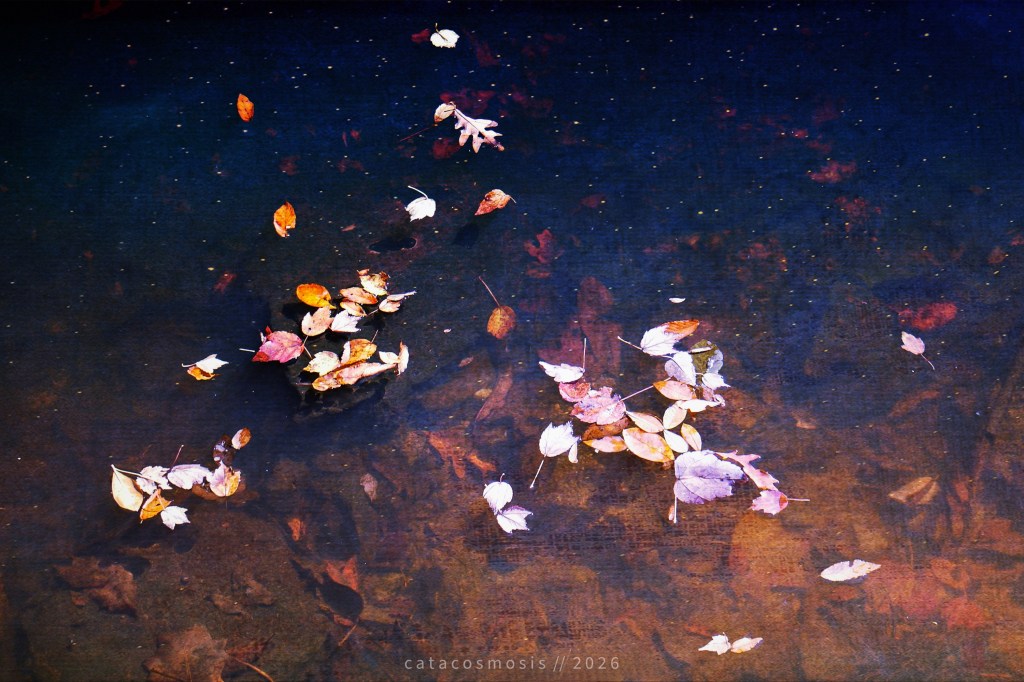
At first glance, it looks like the night sky. Stars caught in dark water, light splintered and scattered across a depth that won’t quite give itself away. But it isn’t the sky.
It’s dead things in the night, drifting on reflections. What’s beneath them still visible in places, obscured in others, the creek bed watching quietly through the murk.
This is what avoidance looks like.
We tell ourselves we are being practical. Responsible. Efficient. We say we can’t afford to stay. That we don’t have the time. That the weight would crush us if we lingered too long in the place where everything ended.
Sometimes those things are true. But truth has layers, and there is always another one underneath the one we say out loud.
I didn’t leave because I couldn’t manage it. I left because staying would have required me to face the finality of it all… and I wasn’t ready to let it be final unless I controlled the ending.
So I doubled down.
If this was the last chapter, I would slam the book shut myself. Sell the house. Let it go. Never look back. Shut myself away from it in the fullest, most tangible way that I could. And I did.
Except that isn’t how grief works. Not in real life. Not in spirit. Not in the psyche or the heart.
What we try to bury doesn’t disappear. What we try to drown learns how to breathe underwater. The things we refuse to look at don’t stop existing. They just wait.
They become shapes beneath the surface. Creek monsters tucked under rocks. Ghouls that don’t announce themselves, only shift when the light hits the water just right.
Running feels like relief at first. It masquerades as strength. As forward motion. As survival.
But it isn’t courage. It isn’t healing. And it certainly isn’t wisdom. It is postponement.
Eventually, the piper comes.
This winter has been that reckoning for me. A season of stillness I didn’t choose, where the water stopped moving long enough for everything to rise.
Regret. Guilt. Shame. The ache of what I didn’t tend to when I still had the chance.
It has been heavy.
But I am here. And I am mid-process of the exhumation.
Instead of running, I am learning (again) to release. To let what I tried to sink float to the surface. To watch it drift, or linger, or soften and break apart with time. To observe rather than flee. To witness rather than erase.
Because drowning it never made it disappear. It only darkened the water.
There is grace even here. Fractured, scattered, refracted through loss, but still light. Still honest. Still mine, in memory and in soul.
I sold my childhood home, and I regret it. Not because it is gone, but because I believed distance could undo what shaped me. It couldn’t. I didn’t forget it. I didn’t erase it. And now I face the ghost of it… even if I must do so from far, far away.
Not the sanitized, monetized version. Not the hollow “good vibes” lie designed to keep everyone comfortable and nothing honest.
I mean the kind of light that exists because the world has become grungy, nasty, ridiculous, and addicted to consuming whatever still has a pulse.
Truth should be efficient. In a sane world, it is. But this isn’t a sane world.
Here, efficiency belongs to distortion. To slogans instead of substance. To repetition instead of verification. To emotional leverage instead of reality.
Truth requires something costly: attention, humility, memory, accountability. It forces people to stop, reassess, sometimes admit they were wrong, sometimes change. And that makes it inefficient in a culture built to move fast, feel loudly, and never look inward.
So truth is treated as an obstacle. As “problematic.” As dangerous. As something to be managed, softened, buried, or rebranded until it no longer threatens the illusion.
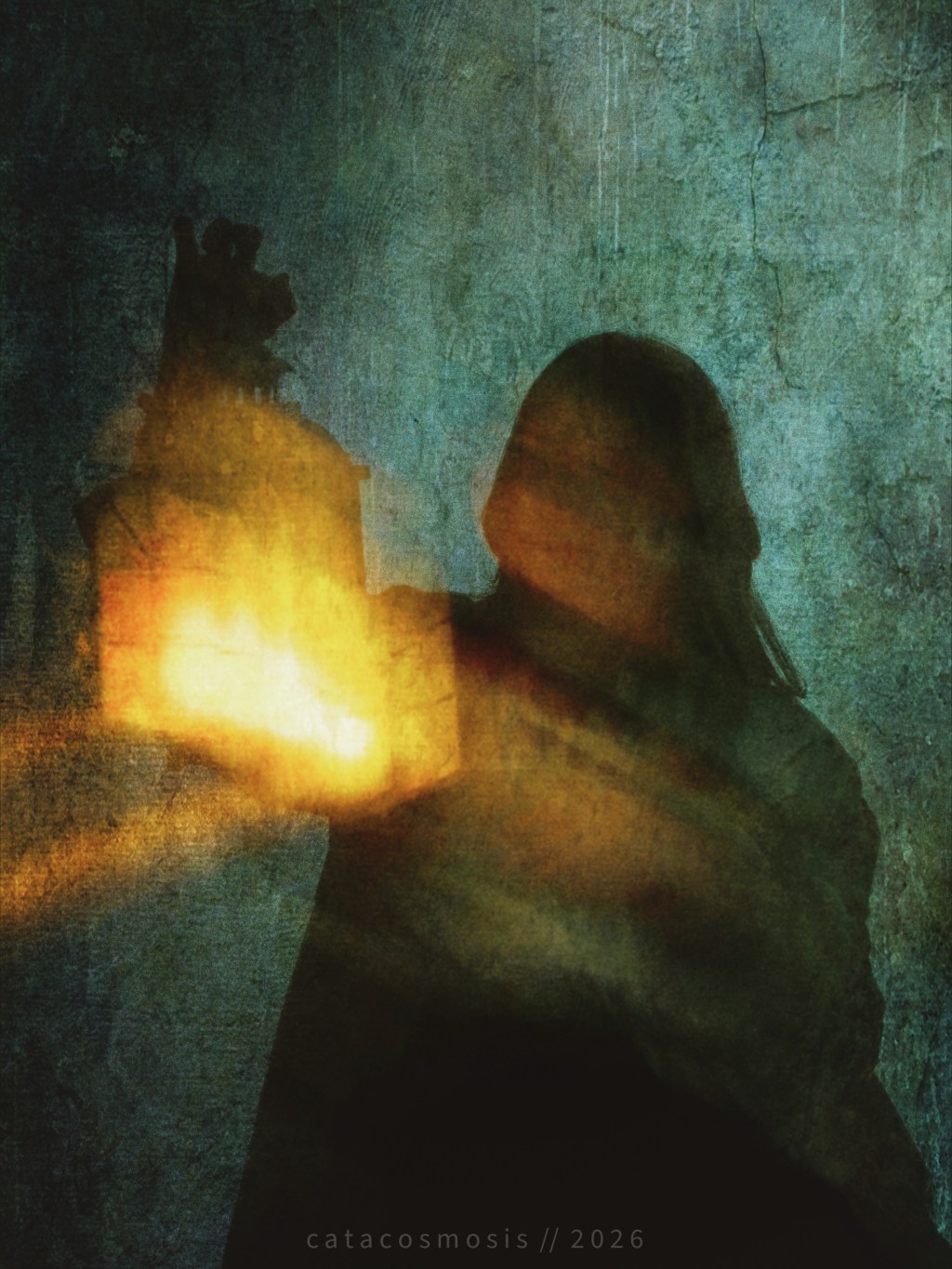
Hold the light anyway.
Even when it makes you a silhouette instead of a spectacle. Even when it costs you comfort, applause, or belonging. Especially when it exposes what others are desperate to keep hidden.
Light doesn’t scream. It doesn’t beg. It doesn’t perform.
It reveals.
And that, more than anything, is why it’s feared.
So keep carrying it through the cracks and decay. Not to save the world. Not to convince the masses. But because surrendering it would mean becoming what’s poisoning everything.
Looking down at those leaves, loosened from their season, clinging by the thinnest threads of stem… I see myself. They hover over moving water, suspended between staying and letting go, their edges softened and pulled apart by the trembling creek. The surface never stills long enough for clarity; it stretches every familiar thing into wavering uncertainty.
Since watching my teenage son slip backward, words he’d owned suddenly foreign in his mouth, routines he’d mastered dissolving overnight, and since the autism label arrived with its chorus of “you should have pushed harder, earlier, medicated sooner,” this is where I live:
Perched on a fragile edge, tangled in reflections I can’t seize, balancing on a stem that thins a little each day. I haven’t fallen, but I feel the current waiting to carry me off, a motion I never chose and can never control.
I have experienced sickness, the trauma of caregiving, the many horrors of diseases I pray not one of you ever meet in your life, death and loss and funerals… the last decade of my life has been a nightmare with beautiful trimmings. But of all the moments of utter lost-ness and grief during those experiences (a description which puts it lightly, in fact), this is the most difficult and complicated and heart-wrenching thing I have ever experienced in my life. Not my son, but battling a system far worse than the one I last met two years ago, with his Godfather. Pediatric medicine in the US in 2026.
His therapists and specialists tell me love wasn’t enough and never will be. I still think it was the only thing that kept us both from drowning.
I’m not sure what this blog, or other art sharing platforms, will look like for me in 2026 (let’s be real – when have I ever?), That’s why I have yet to write the yearly “first post.” So, tonight I begin the year with this, with the truth and with reality:
I don’t know what lies ahead, but I do know who is driving. I thank God daily it’s not me, but Him.
Not because it was an easy year. Personally, it has been a year of intermittent, great difficulty. The most challenging thing has been the unexpected diagnosis for my son – this, alongside compound grief that included more than death, and varying massive changes to daily life.
It was a year of seemingly ceaselessly reorganizing, reframing, recalibrating, and managing circumstances and emotions for all of us, at different levels – while continuing to show up every day whether forward progress was visible or not.
For me and my family, it has been a year of awesome trial and challenge. At times, a battle with doubt. Always, a falling back into and onto faith. And so, regardless, peace.
It has obviously not been a year of peace in the way the word is usually used. Not peace because the world was quiet or gentle or healed. The world, broadly speaking, has been at war in myriad ways. Loudly. Relentlessly. At times, blatantly resisting.
iPhone 17 Pro + DistressedFX FX (Aella, Multiply)
The world suffers only because it engages. Because it resists reality, which is that the only truth is love. And the world does not understand love, or much else, as it truly exists or is meant to behave or work.
The world struggles only because it consents to the noise, the fear, the constant pull toward reaction, and because it values personal comfort and ego over soul.
2025 was, cosmically, a 9 year. A year of endings. Of completion. Of letting things finish instead of dragging them forward out of habit, guilt, or fear. A year of cleaning up.
A year of letting go. A year of allowing what was already done to actually be done. There is a strange, almost holy peace that comes with that kind of self-honesty.
2026 rolls into a 10, or a 1 year. A reset. New beginnings. A slate wiped well and fully clean, whether we are ready for it or not. Our inner secrets and shadows brought into the light. Truths revealed that can no longer be denied, avoided, reframed, or buried.
It is going to be a hell of a year, personally and collectively. Not because it is cruel, but because it is clarifying.
iPhone 17 Pro + DistressedFX FX (Aella, Hard Light)
Every time I share what I see, thus expect to see going forward, simply by paying attention and quietly experiencing (as I have above), people tend to squash it. Dismiss it. Explain it away. Excuse it away. Laugh it away. That is fine. Squash this too, if you must or need to.
But I speak only what needs to be heard, not what is comfortable:
Do not fight it, whatever the “it” is at any given moment for you. Do not engage with the distractions. Do not take the bait.
Do not allow society, media, or collective panic to manipulate you into believing that this manufactured “reality” is solid, fixed, or inevitable. Most of it is noise. Most of it only has power because we keep feeding it our attention and our fear.
Peace lives on the other side of that misconception.
iPhone 17 Pro + DistressedFX FX (Aella, Screen)
Not passive peace. Not numbness. Not spiritual bypassing or pretending everything is fine. Real peace. The kind that comes from clarity. From discernment. From choosing where your energy actually belongs.
Choosing these readily available alternatives, through mindfulness and conscious being, through choosing God/Soul over self and ego, is the only reason such an exceedingly difficult year was not merely laced with peace, but filled with it for me.
I hope and pray that you find and live in peace in 2026. Your own peace, first and foremost. Because that has to come first. That is what matters before it can ever combine, ripple outward, and become something shared. Collective peace is built from individual truth, not the other way around.
Blessed are the poor in spirit, for theirs is the kingdom of heaven. Blessed are they that mourn, for they shall be comforted. Blessed are the meek, for they shall inherit the earth. Blessed are they which do hunger and thirst after righteousness, for they shall be filled. Blessed are the merciful, for they shall obtain mercy. Blessed are the pure in heart, for they shall see God. Blessed are the peacemakers, for they shall be called the children of God. Blessed are they which are persecuted for righteousness’ sake, for theirs is the kingdom of heaven.
(Matthew 5:3–10)
One important note, since this is so often misunderstood:
“Peacemakers” does not mean peacekeepers.
It does not mean avoiding conflict. It does not mean keeping things comfortable, quiet, or polite. It means actively making peace. Often at cost. Often through truth. Often through disruption, reconciliation, and righteousness.
Peace is not the absence of tension. It is the presence of integrity.
Every so often, I experience what I call the freeze.
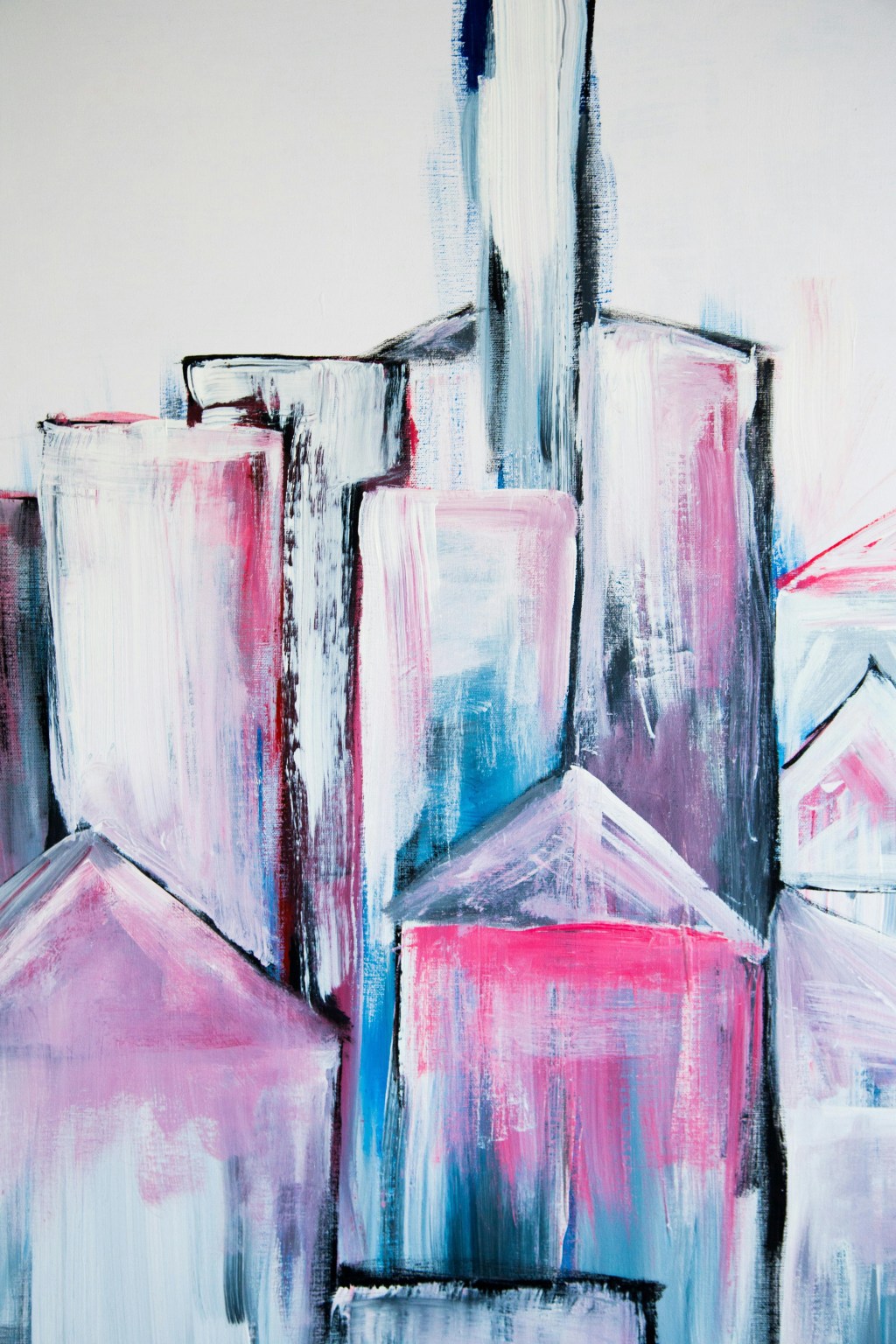
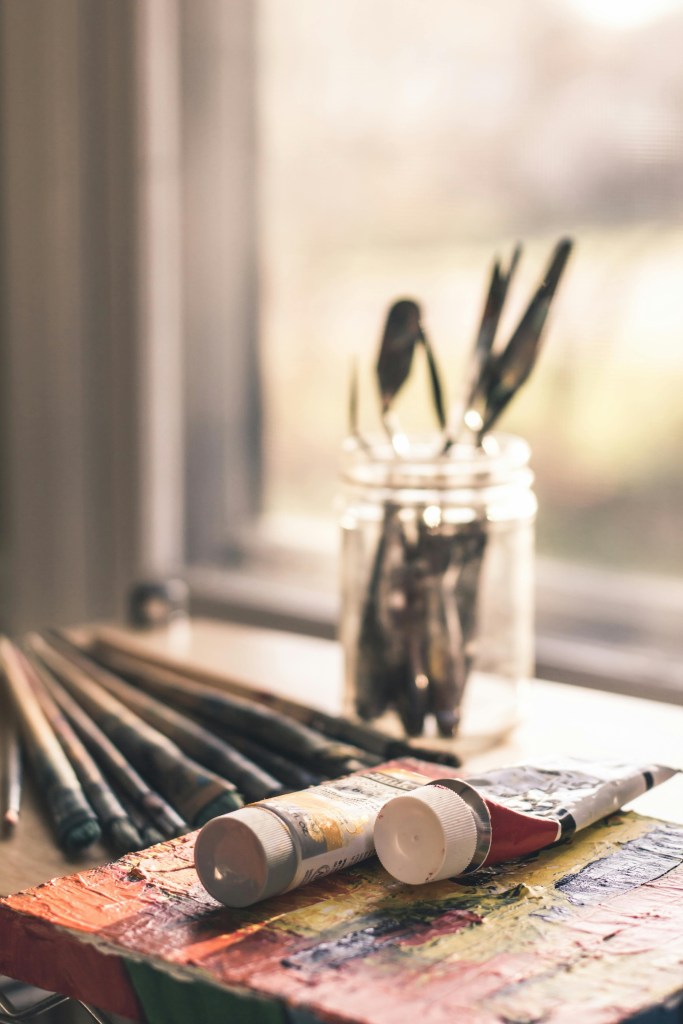
Artists will know exactly what I mean. It is that moment right before you begin a new piece, canvas blank and supplies ready, when something inside you locks up. You want to move, but you don’t. You know what to do, but suddenly you can’t do it.
It’s not laziness and it’s not a lack of ideas. It’s more like a quiet paralysis, the sense that whatever you do first will somehow be wrong, wasteful, or irreversible.
I experienced that tonight, and it surprised me. I haven’t frozen like that in a long time.
Maybe it is holiday stress. Maybe it is the cumulative weight of life, reality, and empathy for a world that feels perpetually on edge. Maybe it is something smaller, or something that would sound completely absurd to anyone watching from the outside. But absurd does not mean invalid.
Any time we experience something like this, there is a reason… and I am the kind of person who looks for it. I look inward and outward, I sit with the discomfort instead of trying to bulldoze through it, and I pay attention to what is actually happening in my body and mind.
I find that process purposeful, and sometimes even enjoyable, not because it’s comfortable but because it gives me agency. When I understand what is happening and why, anxiety loses its grip. I can experience it and coexist with it at the same time. More often than not, that approach resolves the issue in a deeper and longer-lasting way than simply forcing myself forward.
So this is the internal conversation I had tonight, and how I talked myself through it once I reached a clearer understanding of what was really going on. This is where my professional training in psychology meets my self-taught training in art, I suppose.
If you have similar experiences to what I’ve described above, I hope some part of this is useful to you.
Step 1. Pause for a moment. Not to analyze or fix anything, just to name what is happening. Once something is named, it tends to lose a surprising amount of its power.
What you’re feeling when you experience “the freeze” as soon as you pick up a brush or a palette knife, or face whatever in life it is that makes you freeze in a similar way, is not a personal flaw. For artists and creatives, it’s not proof that you are bad at being creative.
It’s a very specific nervous-system response, and it shows up most often in people who actually care about what they are making. In psychology, this response is often described in a few overlapping ways.
It can be understood as a conditioned approach and avoidance conflict within you, where the part of you that wants to create is simultaneously held back by fear of loss or failure.
Funny story: I wrote an entire 23-page research paper on this in my junior year of undergrad. In my opinion, it was incredibly boring, personally insulting, and the worst three months of my life at the age of 21, but somehow I shockingly got an A.
I digress.
It can also appear as performance anxiety, though not in the social sense, more as an internal pressure to do it right. For me, it is absolutely perfectionism as a defensive strategy, a way of protecting myself from imagined mistakes or wasted effort (thanks, Mom, may you rest in peace). In many cases, it can even be the brain or your physiology responding to dorsal vagal activation, which includes fight, flight, freeze, or fawn, but we will not go that deep here.
To put it in easy, normal language, this reaction almost always appears right before commitment. Any commitment, but especially one that means “if it goes wrong it’ll really cost me.”
In the art scenario, up until this point, the work has existed only in imagination. In that space it is infinite, perfect, and safe. The moment you are about to touch the canvas, it becomes finite and real. Something is chosen. Other possibilities fall away. Your (my) system hears that as loss, and it tries to protect you by freezing you in place.
That feeling that it has to be a certain way to be right is not creativity. It is internalized surveillance. Somewhere early on, many of us learned that mistakes mean waste, mess means failure, and a wrong choice causes permanent damage. Even when those rules no longer apply, the body remembers them. So when you are free, your body does not quite believe it.
That is not weakness, or incompetence. It is conditioning that has simply outlived its usefulness.
At the center of this response is a quiet lie: “If this turns out bad, the supplies are ruined.”
That is just not true. Acrylic can be scraped, painted over, sanded, cut up, or turned into texture. A canvas can become a foundation rather than a final statement. Materials are meant to be used. That is their purpose. Paint that sits untouched out of fear is already wasted.
Canvas is not sacred. You are. Please remind yourself of that immediately, and lock it in.
Another lie slips in just as easily: “It has to be a certain way to be right.”
Right for whom? There is no audience in the room, no rubric, no grade. There is only motion, pressure, color, and the physical relief of making contact with the surface. Art does not exist to behave! Remember?
This kind of freeze does not happen to people who do not care. People who are shallow about creativity do not spiral like this. It tends to happen to people with depth and sensitivity, to people who were corrected more often than they were encouraged, and to people who learned how to perform before they learned how to play.
The nervous system is not sabotaging anything. It’s trying to protect something precious: the ability to feel and express. It’s simply using outdated rules.
Step 2. A small reframe helps here. You are not making a painting right now. You are making the first layer of a surface. Nothing more. Not meaning, not outcome, not art with a capital A. Just noticing what happens when color moves downward. That layer is allowed to be ugly. It is allowed to be scraped away. It is allowed to disappear entirely under the next thing. You are allowed to stop at any time.
There is one gentle but important rule I follow that can helps me quiet the pressure. Say out loud that nothing you do in the next fifteen minutes counts. Set a timer. When it ends, you can walk away with no obligation to continue, fix, or judge. This is not about pushing through fear. It is about making fear irrelevant.
And finally, this matters. The experience, the art, and your simply being. But also, the fact that you sometimes freeze. It’s not invalid. You do not need to get over it already. That voice was built over years. It softens through safe repetition, not self-attack. Every time you begin anyway, tentatively and imperfectly, you rewrite it.
entry twenty — scattered light, fractured grace: a quiet archive of light, loss, and what remains.
Lumix GX7 + DistressedFX + Mextures
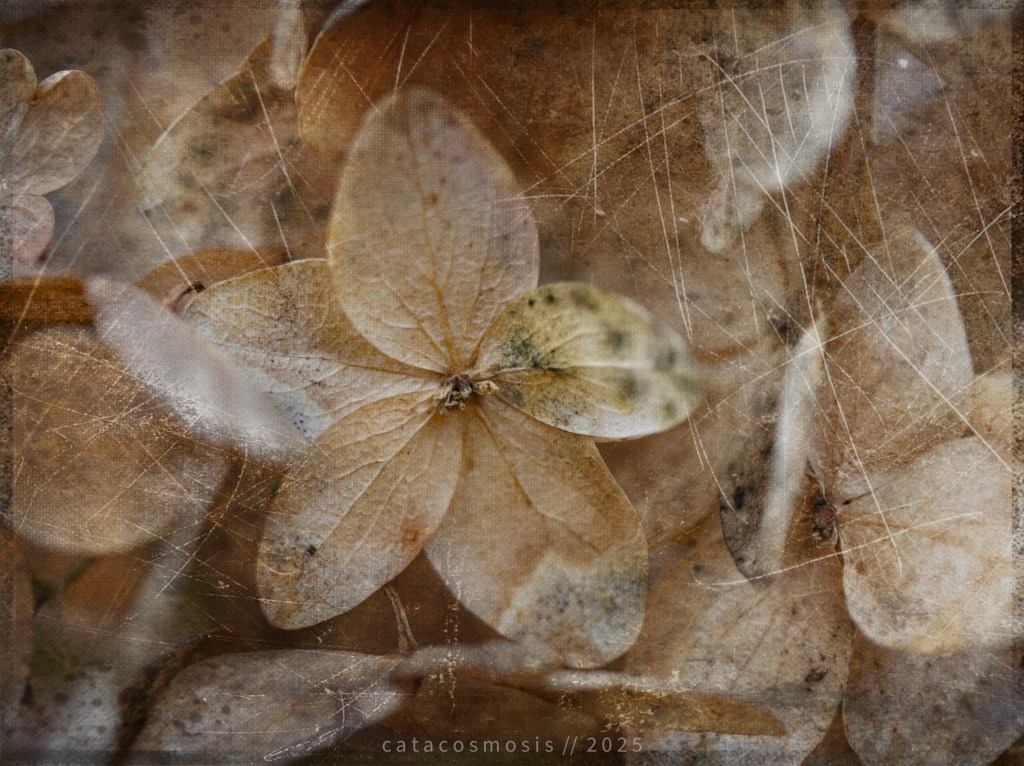
I’ve been thinking about how easily we overlook what does not bloom on command. How quickly we decide something is less valuable when its rhythms are quiet or unusual or slow to reveal themselves. How we are conditioned by convenience to turn away from what requires a different or more tender kind of attention, unless we are its mother.
As mothers, the expectations begin to pile up, even as the help quietly disappears… if it ever shows up to begin with. It showed up for me recently, with my son’s diagnosis of autism, and then the weight shifted again. The label alone added a layer of juggling and balancing that feels impossible, even in ways that his father may never fully know…
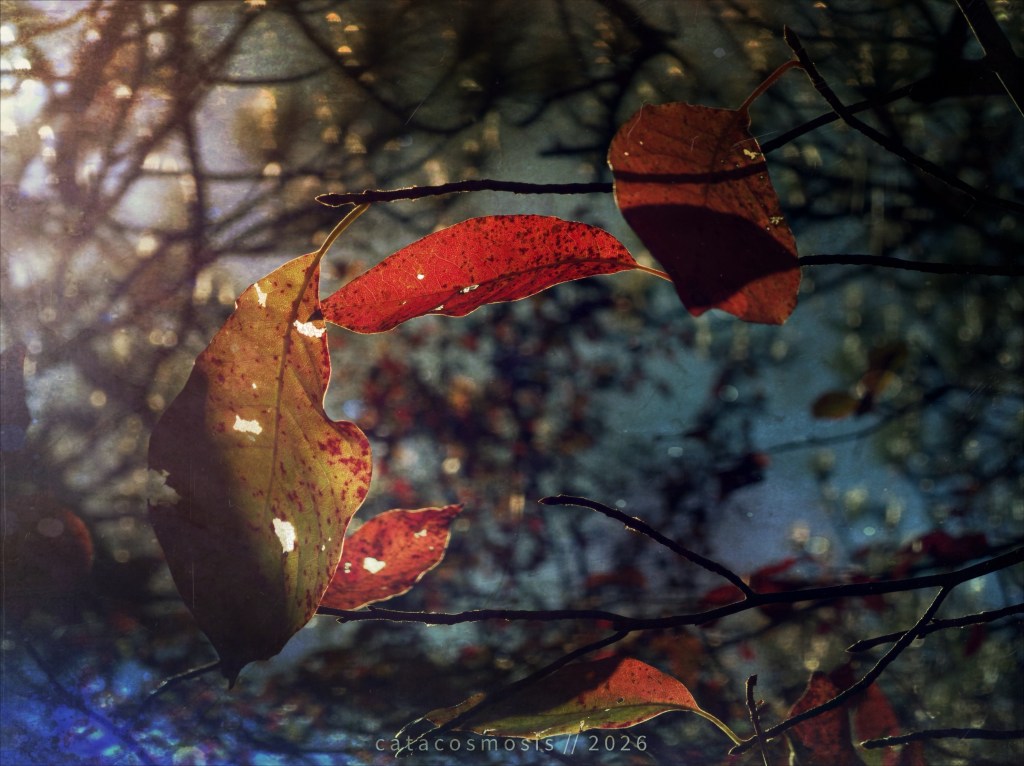
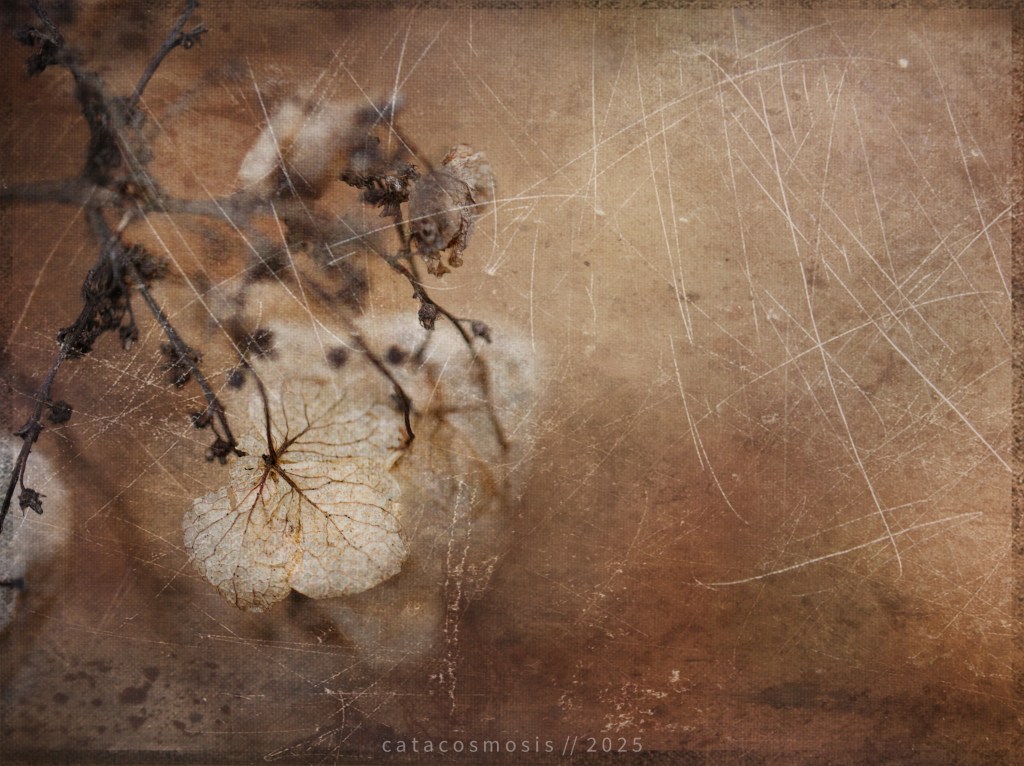
…but these small remnants of #lovelydeadcrap in my backyard have been teaching me how to package it all and express what’s inside.
Lumix GX7 + DistressedFX + Mextures
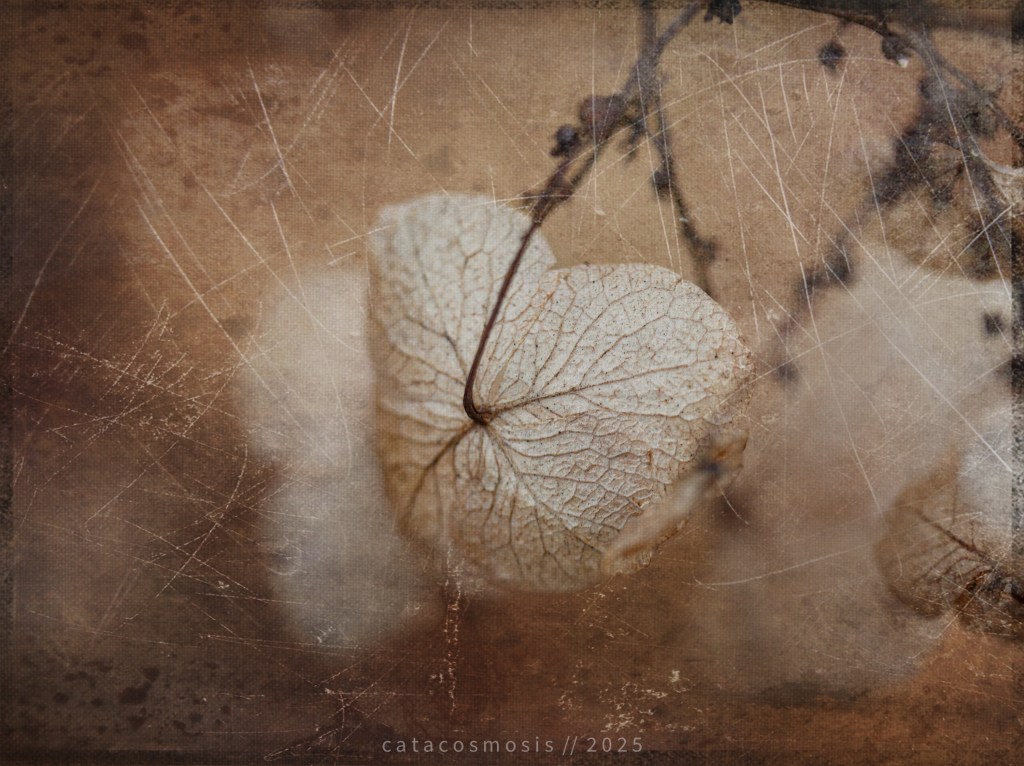
In their faded textures and fragile lines, I find a gentler truth. Beauty is not always loud, nor peace immediate. Sometimes neither are easily interpreted. Sometimes they appear in the very things the world has already dismissed as unremarkable because they do not fit the desire or expectation.
When my son was diagnosed with moderate to severe autism, the world tried to hand me a script of loss and limitation. But the more I sit with the reality of who he is and what I know he has experienced in his life, the more I understand that nothing essential has been diminished.
Lumix GX7 + DistressedFX + Mextures
Not unlike #lovelydeadcrap, the reality of his story simply asks to be read with a different kind of seeing. The light lands from another direction. The beauty moves at its own pace. That is what this winter season is teaching me:
To honor what does not conform. To stay open to the quiet forms of life and value that do not perform for anyone’s comfort. To recognize that some truths require presence rather than projection.
Lumix GX7 + DistressedFX + Mextures
My son is not less. He is not broken. He is not something to mourn. He is fully himself, unfiltered and unhidden, and there is a sacred beauty in that.
May we all learn to truly see what stands before us, not merely what we were taught to expect.
entry eighteen — scattered light, fractured grace: a quiet archive of light, loss, and what remains.
iPhone 17 Pro + DistressedFX + VSCO
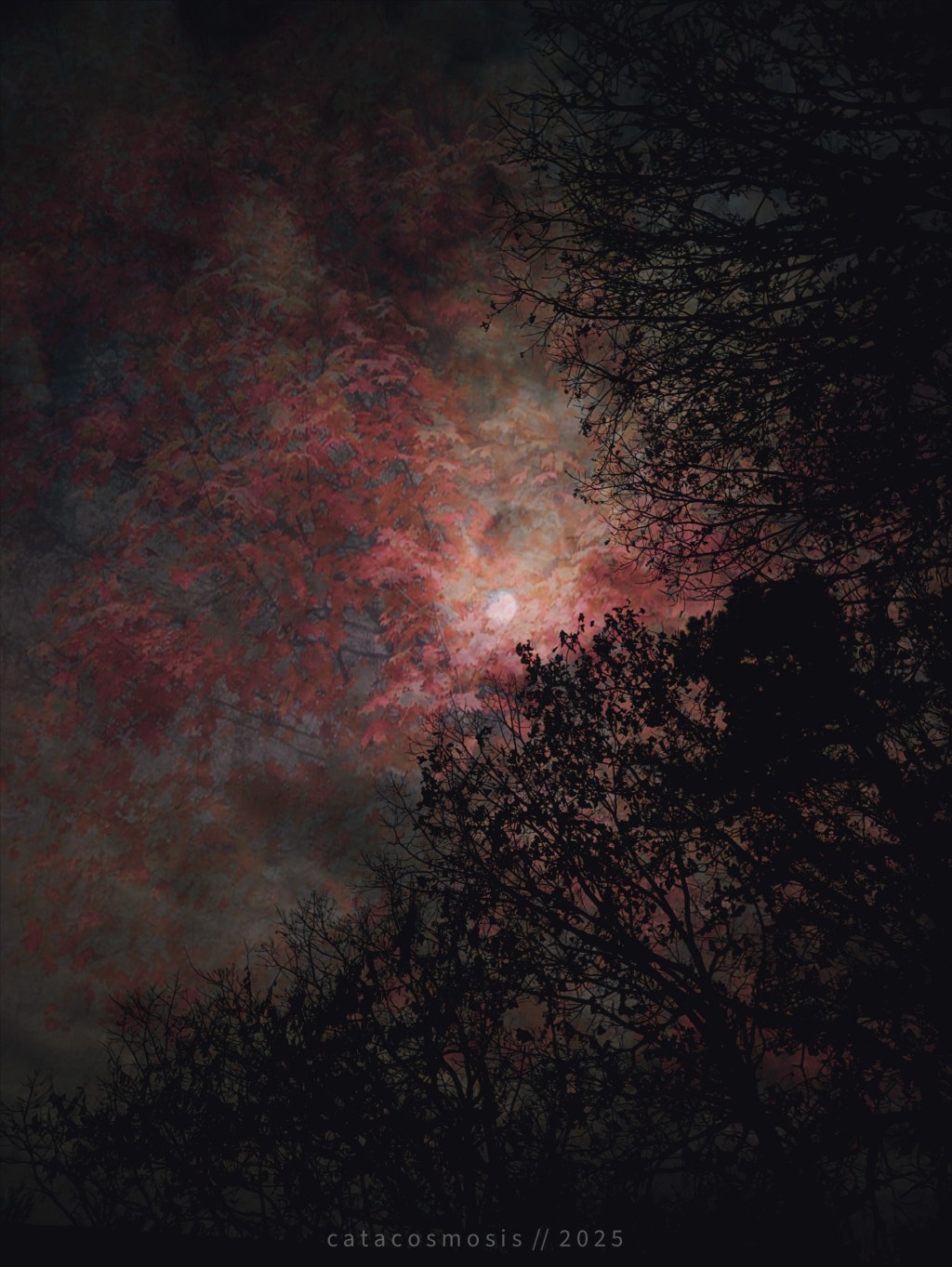
The full moon always finds me in that thin place between ache and awakening. The heart softens, the past stirs, and the light insists on touching what I thought I’d hidden.
It doesn’t shout. It simply rises. And in rising, it reveals.
This full moon of these last few days felt like a mirror tilted by something wiser than me: clear, unguarded, almost tender in the way it offers back the truth of who I am becoming.
Every full moon asks for release, but this one asked for understanding. It offered an opportunity for a quiet recognition of what’s been shed, what’s been carried, and what still longs to be held with gentler hands.
Under its glow, my fractures stopped pretending to be wounds. Instead, they shined… faint, but deliberate. And grace slipped in when I wasn’t looking.
Coldness has arrived and with it the pull to go inward, to rest in the quiet places that rarely see the sun. Winter has always been the hardest season for me. It settles deep and stirs up everything I have tried to set down, everything that has followed me long after the caregiving ended. Two years have passed and I am still carrying the weight of those long nights, the vigilance, the grief that lives in the body long after the moment of loss.
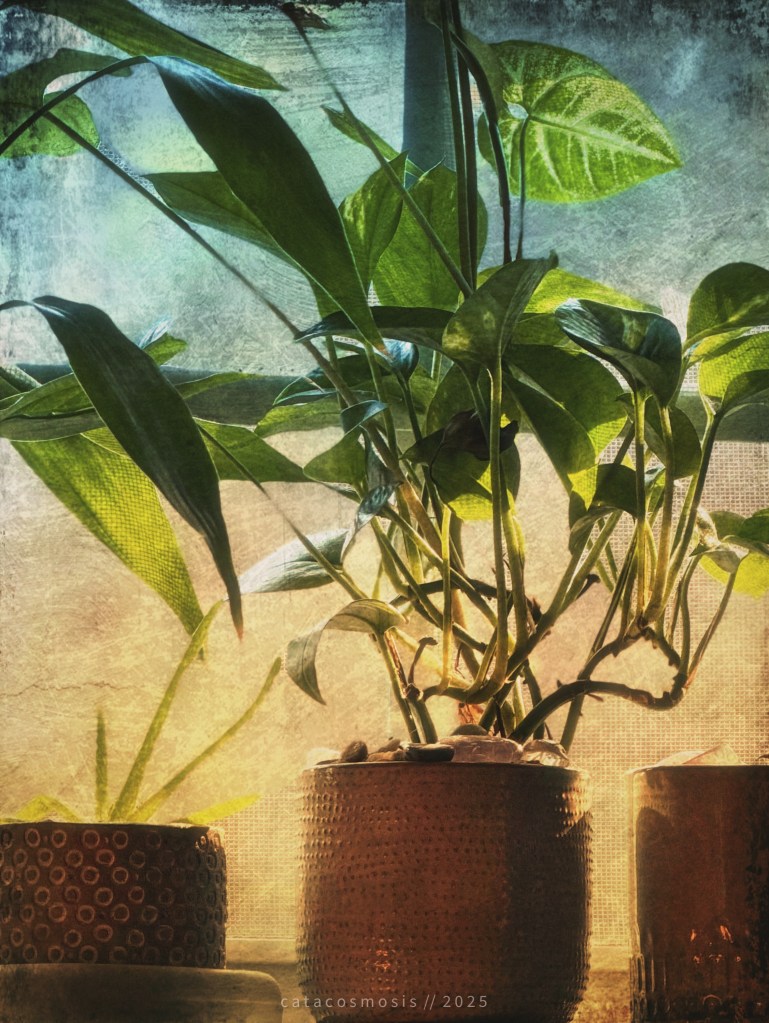
iPhone 17 Pro + DistressedFX + VSCO
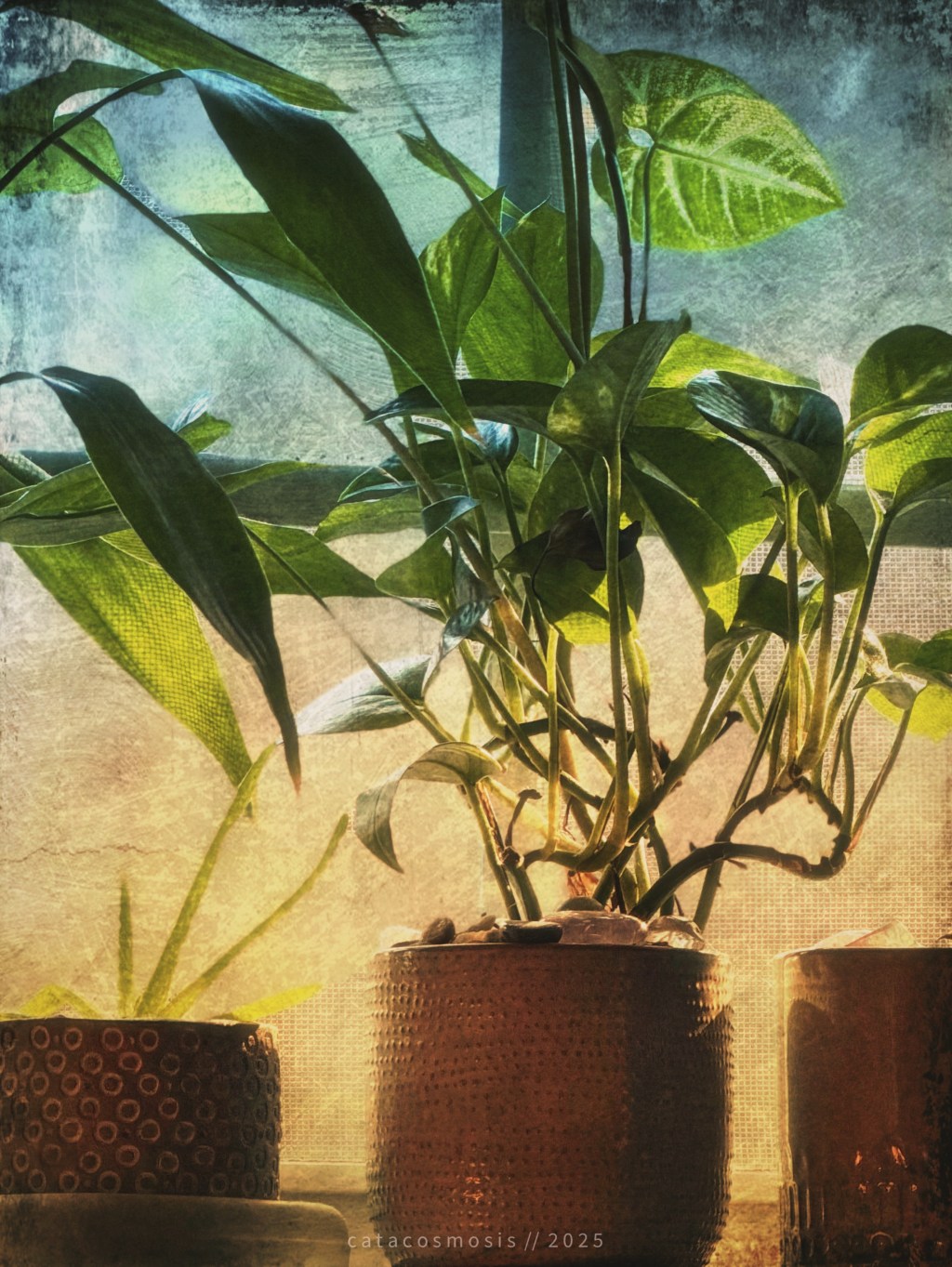
Yet even now there are small reminders of life that keeps reaching for the light. These plants on my windowsill keep growing with a kind of quiet courage. The morning sun touches them and they respond without hesitation, without guilt, without a single thought about the expectations of others. They lean toward whatever warmth they can find and allow that to be enough.
I am trying to learn from them. I am trying to believe that rest is not weakness. It is restoration. It is the slow and necessary work of returning to myself after years of tending to everyone else. Winter makes that lesson feel sharper, but it also makes it feel truer.
Some days I am tired in a way that feels ancient, but I keep growing in small ways. I keep reaching for light in whatever form it finds me. If these green and fragile things can thrive in the coldest season, maybe I can too.
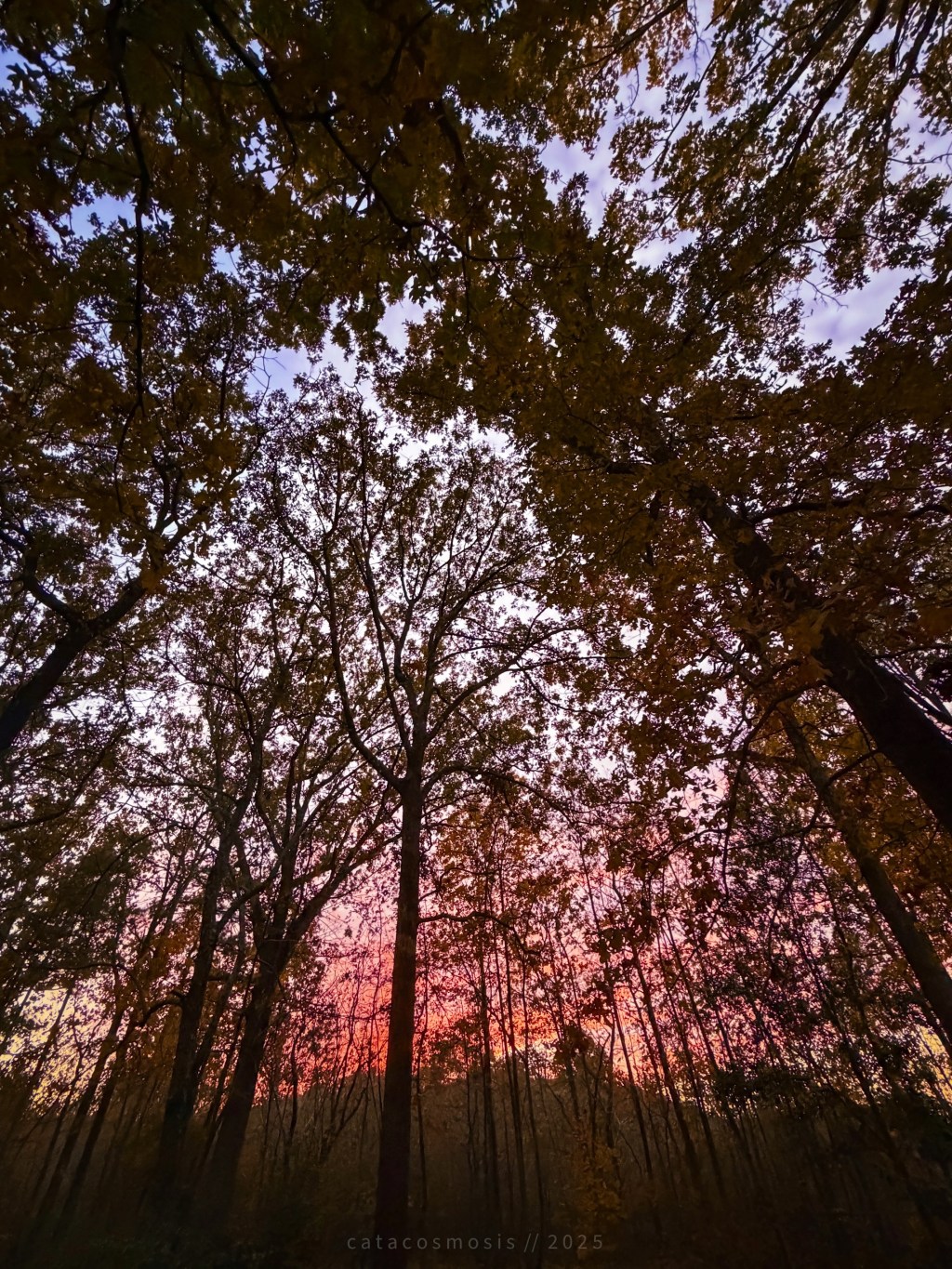
The sunset this evening caught my eye as I glanced up from the command prompt to rest my eyes.
“cmd —> DISM /Online /Cleanup-Image /RestoreHealth” be damned, I forgot the problematic machine.
I gravitated outside as though an unseen force beckoned me… and instead of me capturing a backyard moment, the moment froze me in place and then swallowed me whole.
It happened quietly, the way revelation always does: when the day was no longer sure of itself.
The horizon drew one long, trembling breath, and the sky exhaled light like a confession, soft and burning all at once.
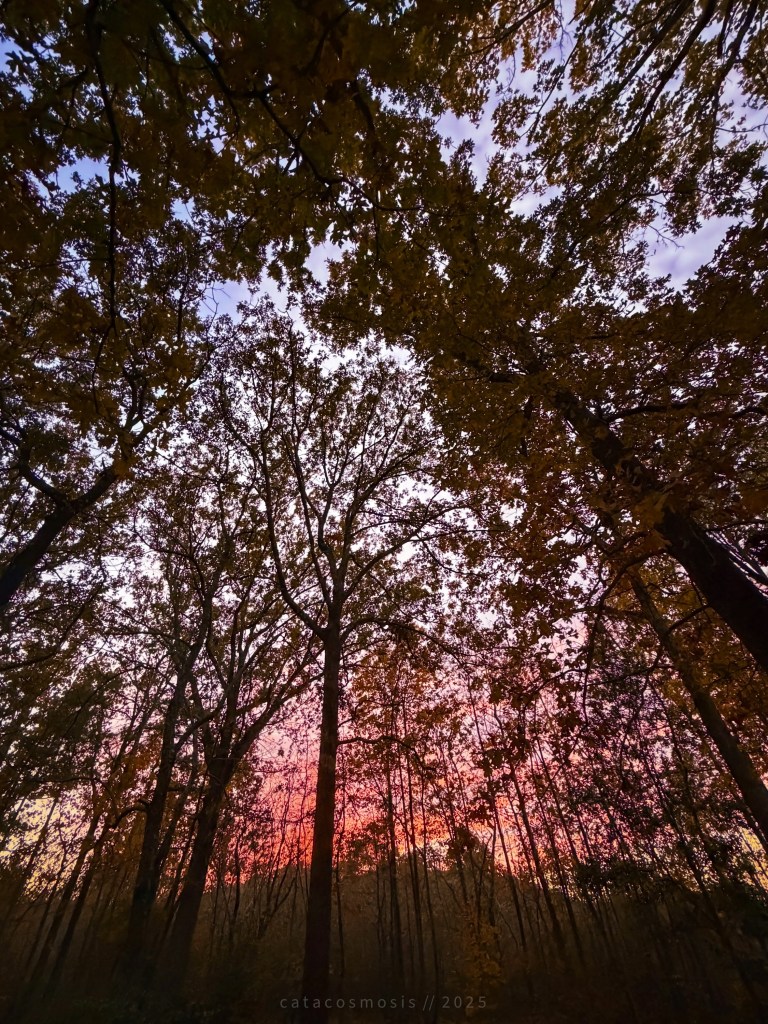
For a few heartbeats, the forest became a cathedral. Oaks turned to stained glass, every vein of every leaf catching the final ember of the sun’s breath.
The air itself seemed to glow with a kind of surrender, as though heaven was remembering how to let go and reminding me all over again.
I stood beneath it, small but aware, suspended in that thin seam between the living, the leaving, and the memory of the already gone.
The colors didn’t ask to stay; they simply poured through the cracks of the canopy and into me, as if to say, “grace doesn’t vanish when the light fades. It only changes hue.”
When the sky went gray again, it felt less like an ending and more like an exhale finished.
It would seem I’ve waken up to yet another extreme of the obvious hypocrisy in what’s being demanded as “reality.” Some people genuinely still do not “get it,” while others still willfully refuse to see.
Either way, and from all sides, there is an overarching question: Has society reached a true tipping point?
Based on the reaction to a black man in white face, it would seem double standards have finally outstayed their welcome overall.
Notice the general pattern of double standards over the last several years:
Women can mock men. Trans can mock cis. Non-whites can mock whites. Gay can mock straight.
Flip any of that around and you’re cooked.
Look at the standards a little more deeply:
The most obvious example is how men putting on “woman-face” or women putting on “man-face” isn’t just accepted — it’s demanded that everyone affirm it as their literal reality and “respect” it.
So, logically, if that’s celebrated and that’s “reality,” then picking on any culture in jest for their quirks, failures, or oddities should be just as acceptable.
That sums up what people are really upset about re: this skit that’s been circulating the last couple of days: it’s the double standards.
And it’s not just white people who have had it.
Yes, this particular skit has a lot of white people speaking out — they’re tired of being singled out as the only group not permitted to joke back, and then accused of lacking a sense of humor when it’s done to them.
But consider society as a whole:
Non-whites and whites alike are fed up with their own people acting like ungrateful, entitled fools — wasting the opportunities their ancestors fought to provide them and destroying the respectability they strove for.
By now becoming loud, lazy, and disrespectful criminals, people make a mockery not only of their rights and the many opportunities they have if they would simply show up, but of their entire communities.
Whites are fed up with Karens and Chads.
Legal immigrants feel the same way about illegals trashing the opportunities they earned by doing things the right way — respecting the privilege of coming to another country, rebuilding responsibly, and treating that privilege with honor.
Instead, illegals cause even legal immigrants to take the flak, lose opportunities, and be punished for things they didn’t even do.
Masculine men are tired of being told they’re assholes instead of protectors, simply because masculinity is constantly mistaken for toxicity.
Men of every race and personality type are sick of women parading around declaring they don’t need men, accusing and blaming men for everything wrong in the world — while in the same breath lamenting absent fathers, complaining that men don’t “show up” in general, and then demanding applause and respect for a world women absolutely didn’t build without the strength and masculinity of men.
Women of all races and personality types are sick of being pressured to accept men in dresses not only mocking them and what it means to be a woman, but especially a mother, and having their spaces invaded and reclaimed as “everyone’s space,” only to be labeled ‘phobic’ or hateful for feeling that way.
This isn’t only racial. It’s far broader than that, and these are only a few of many examples.
Most, if not all, “everyday people” — all of us who are not filthy rich or sitting in positions of power — are fed up with war, crime, cruelty, and double standards. We just want to work hard, add meaning to the world, and reap the fruits of our labor: enough to survive, and enough to live — to enjoy a healthy, peaceful, happy existence.
When did that become an unrealistic or unacceptable dream to have? It’s one that has echoed through the ages.
Society as a whole is at a tipping point — fed up with hypocrisy, nonsense, and the double standards that no longer make sense.
The solution, as I keep attempting to remind people, is simple across every aspect of society — yet seemingly impossible for most: for all people to embody empathy for others while taking accountability for themselves, existing in and acting from discernment.
It is to embody some semblance of morality overall, respect nature, the planet and all its people, but especially ourselves. If we do that first — embody true self-love and self-respect — the depths of it, and not merely the mask — all the rest falls into place on its own.
Will that be impossible for you? Or will you make it possible for yourself, and thus for others?
Good luck out in the world today. Much love from me to you (no matter who you are).





 catacosmosis