Category: Musings

  • Aperture

    Aperture

    entry five — scattered light, fractured grace: a quiet archive of light, loss, and what remains.

    “He who has peace of mind disturbs neither himself nor another.” —Epicurus
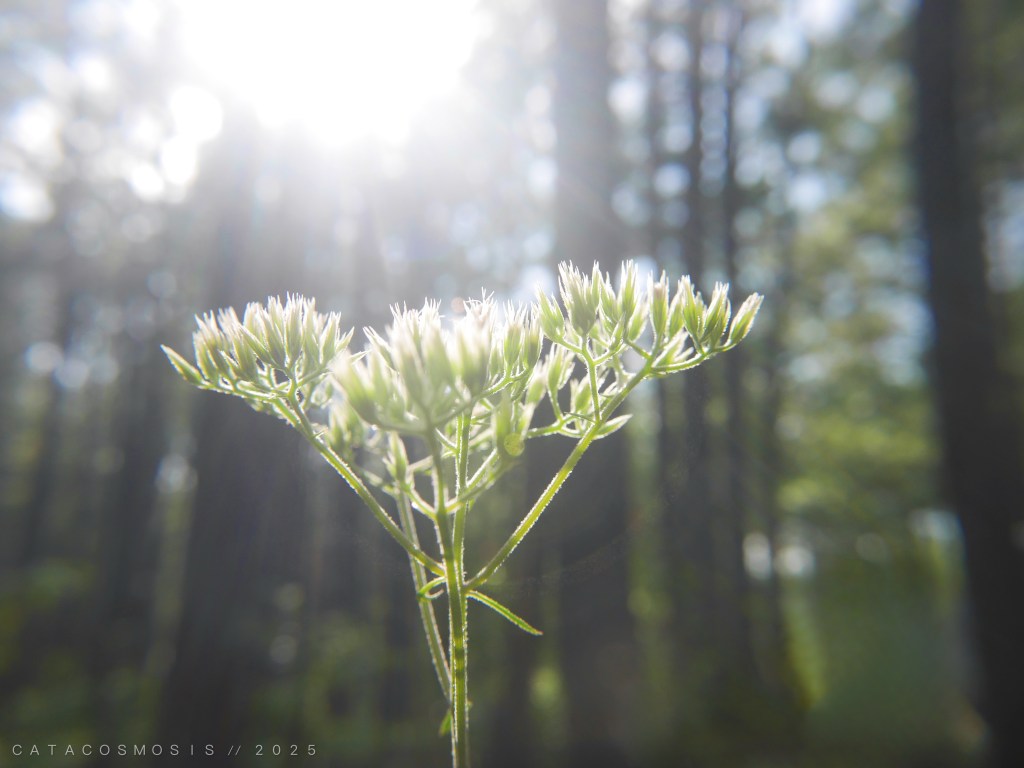
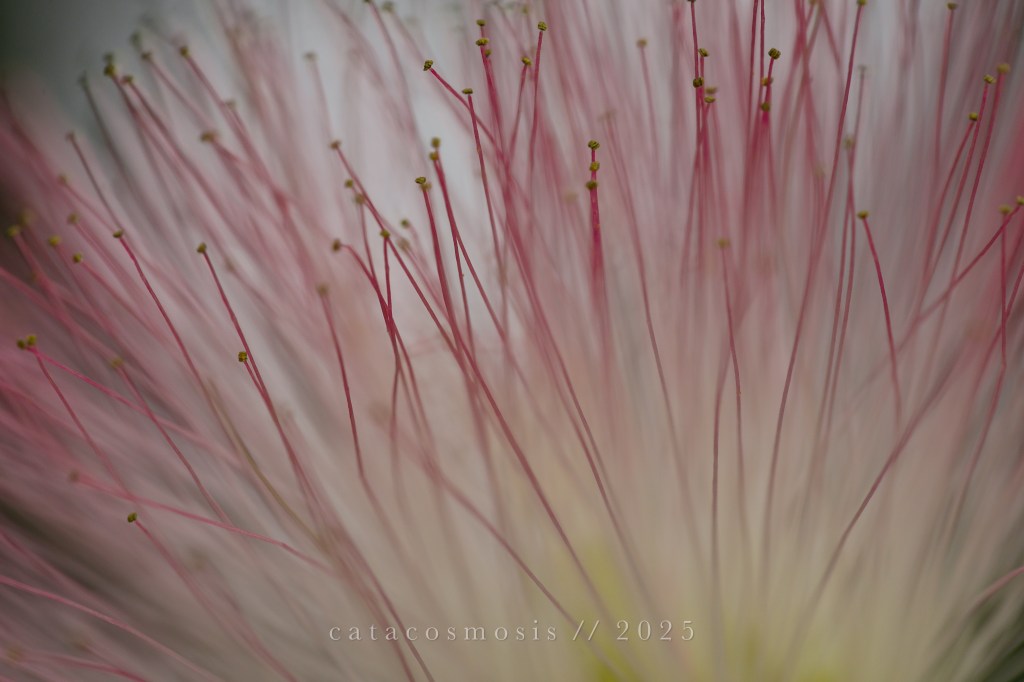
    Lumix GX7 + Panasonic 14mm f/2.5 pancake lens + macro filter stack (QuantaRay +10, Bower +4, Bower +2) mounted w/46–52mm step-up ring.

    VSCO (SS1 Pro), Lightroom Mobile (watermark only).

    Aperture

    There is a kind of light that doesn’t just shine, but also fractures.

    It breaks open the moment with something softer than silence and more honest than certainty.

    You don’t chase it, you receive it.

    This image wasn’t planned.

    This frame wasn’t forced.

    There’s a stillness even the flowers seemed to know, and reflect back to me.

    It is not the stillness of silence, but of surrender.

    Not of bracing against beauty or the process of becoming-in-progress, or of apologizing for taking up space mid-bloom…but of letting the light have its way.

    I simply stood still long enough for the light to offer itself—scattered, wild, and full of grace.

    I saw what was really there:

    Buds preparing to bloom and light wafting in, yet also ambient and still.

    The entire moment was an aperture through which grace entered, unbothered and whole, needing no permission.

    And in that quiet moment, it became a mirror for all of us—one that perhaps none of us knew we needed, and that many would automatically overlook.

    How often do we chase clarity instead of becoming it?

    How often do we disturb ourselves, or disturb the world while attempting to distract ourselves, by blaming everyone else?

    How often are those moments merely us trying to be louder than what already speaks through us?

    There is no control in peace.

    No performance in healing.

    Only presence.

    And in that presence, we disturb no one—not even ourselves.

    We become the quiet offering.

    We become the still center in a world unraveling at the edges.

    Today, as I stood still in the midst of both internal and external war, peace didn’t arrive with fanfare.

    It arrived as fractured light through pine trees.

    As a silent, oft unnoticed breath.

    As a reminder that maybe the most sacred work is not to act, but merely to remain open.

    Not to close.

    Not to harden.

    Not to explain ourselves into exhaustion, but to become aperture.

    To simultaneously remain wide enough to hold what’s real and narrow enough to let illusion fall away.

    And, to be balanced enough in both intellect and empathy to know the difference.

    This is the answer: detachment.

    Not from emotion, but from illusion.

    It is not denial, not distance.

    Rather, it is the quiet rerouting of both emotion and cognition back to stillness.

    A return to clarity, not an absence of care.

    And somehow, by not reacting, by not reaching, we find we are already held.

  • Fragrance, Memory, and the Air Between

    Fragrance, Memory, and the Air Between

    The Quiet Power of Things That Don’t Stay

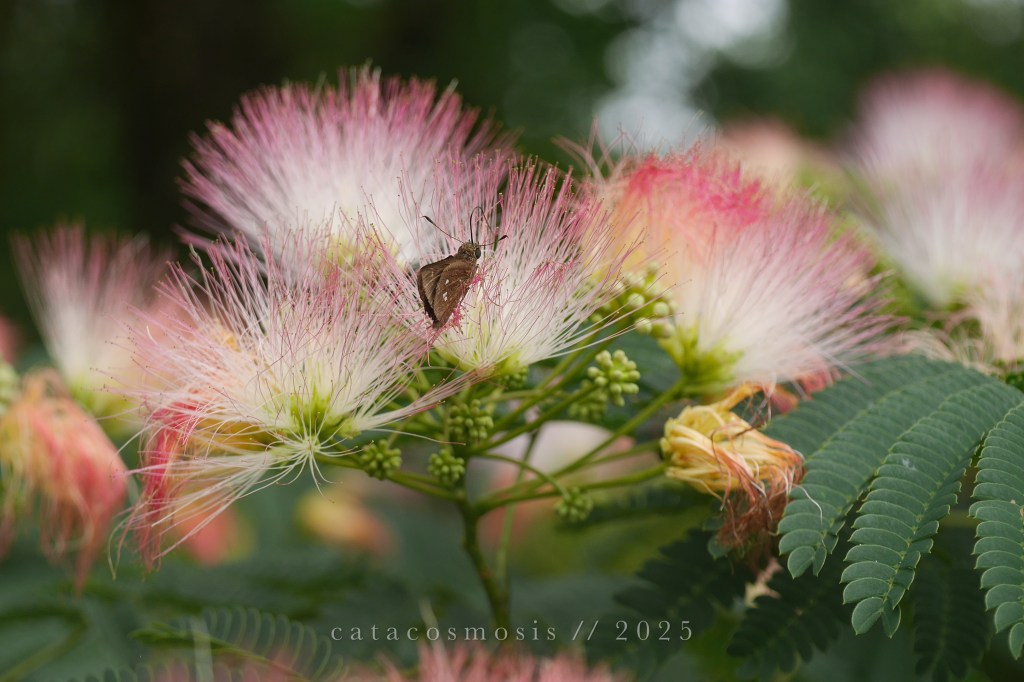
    Mimosa (Albizia julibrissin). Lumix GX7, Panasonic Leica DG Macro-Elmarit 45mm f/2.8 ASPH. MEGA O.I.S., Lightroom Mobile (watermark), VSCO.

    Not everything soft is weak.

    Not everything brief is forgotten.

    The mimosa blooms like a passing thought—pink, feathery, fragrant, gone before you’re ready. But even in its short season, it rewrites the air.

    And maybe that’s the point:

    To offer sweetness without needing permanence. To make magic in the margins.

    💚🌿✨

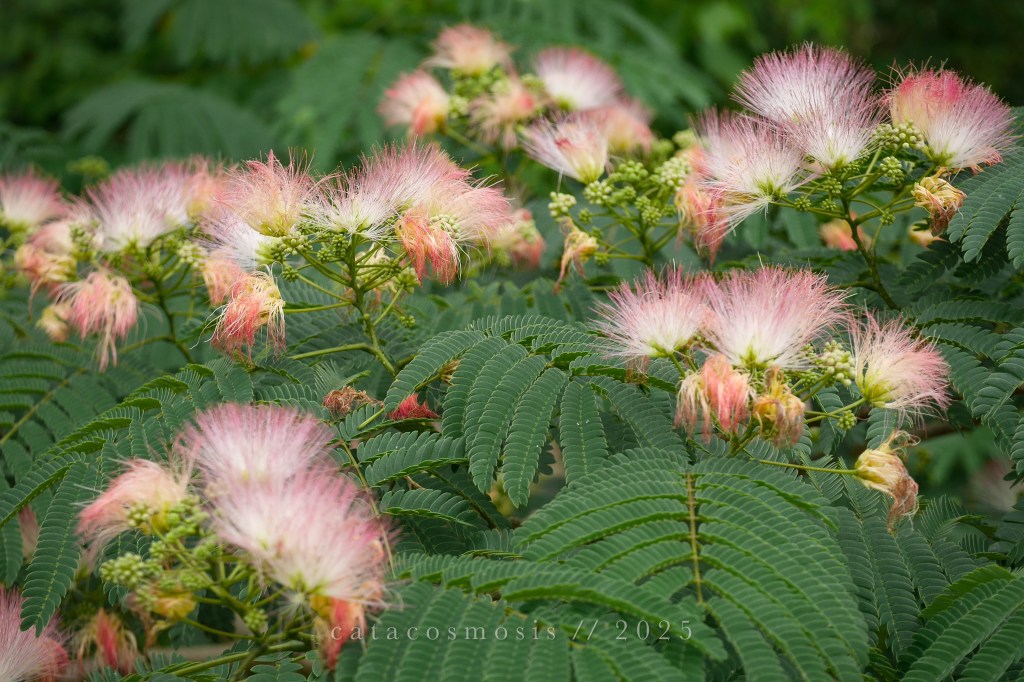
    Mimosa (Albizia julibrissin). Lumix GX7, Panasonic Leica DG Macro-Elmarit 45mm f/2.8 ASPH. MEGA O.I.S., Lightroom Mobile (watermark), VSCO.

    The Mimosa tree (Albizia julibrissin) is commonly known as the silk tree or Persian silk tree. Albizia julibrissin isn’t actually a true mimosa—though it’s been lovingly misnamed for generations. Native to Asia, this delicate tree has made its way into southern landscapes with grace and stubbornness alike.

    Its blooms are light as breath—powdery tufts that attract butterflies, bees, and human daydreamers. They bloom at dusk, shimmer in the wind, and drop silently—often leaving a petal-scattered sidewalk like a love note no one signed.

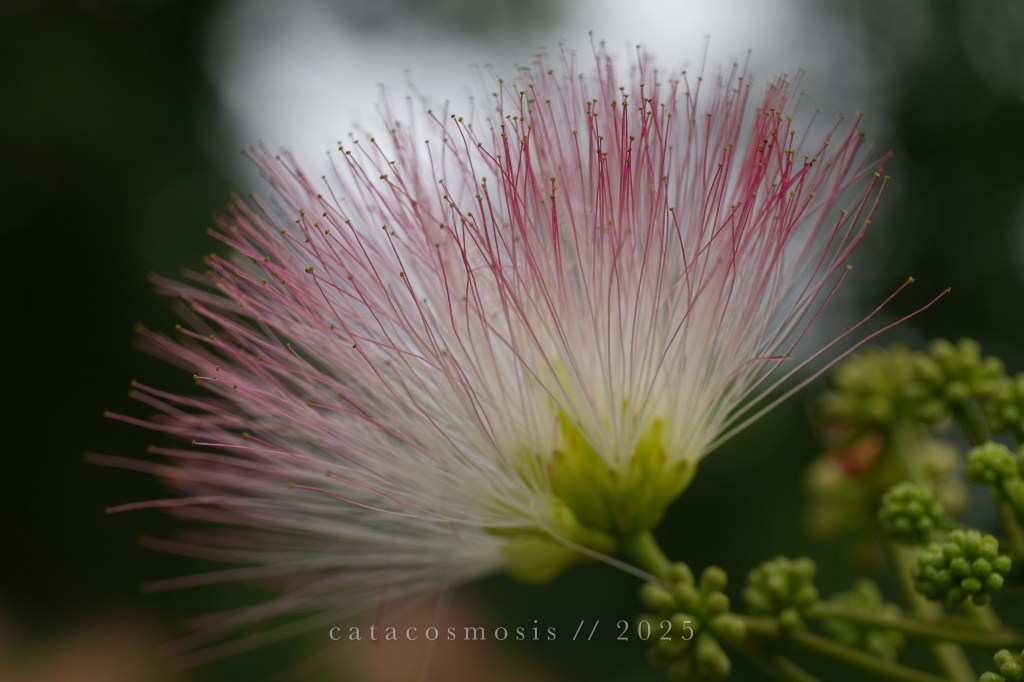
    Mimosa (Albizia julibrissin). Lumix GX7, Panasonic Leica DG Macro-Elmarit 45mm f/2.8 ASPH. MEGA O.I.S., Lightroom Mobile (watermark), VSCO.

    Though it’s sometimes called invasive, there’s no denying its presence feels like a portal: part nostalgia, part perfume, part dream.

    Its scientific name, julibrissin, comes from the Persian gul-i abrisham—“silk flower.” A name that suits it perfectly.

    Mimosa (Albizia julibrissin). Lumix GX7, Panasonic Leica DG Macro-Elmarit 45mm f/2.8 ASPH. MEGA O.I.S., Lightroom Mobile (watermark), VSCO.

    In folk medicine—especially within Traditional Chinese Medicine—the mimosa tree is known as the “Tree of Happiness.” Its fragrant pink blossoms and bark have long been used to lift the spirit, ease grief, calm the heart, and quiet a restless mind.

    The flowers are brewed into gentle teas, while the bark is sometimes tinctured for deeper emotional support. Often given to those moving through sorrow or heartbreak, the mimosa is considered a natural ally for joy, resilience, and emotional rebirth.

    #Nature // #Mimosa // #TreeOfHappiness