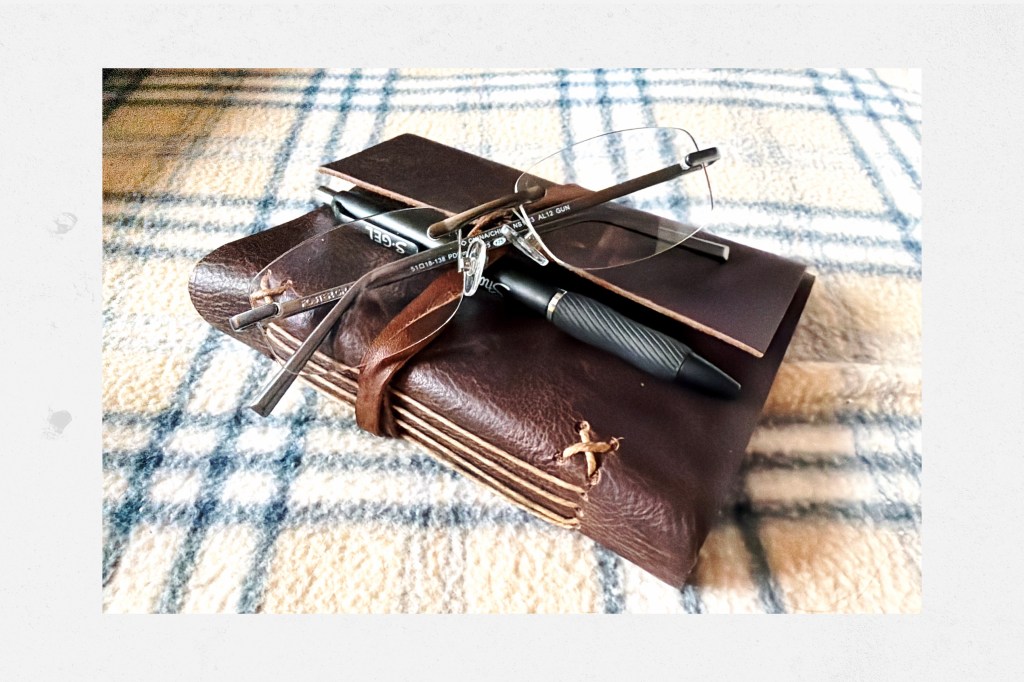
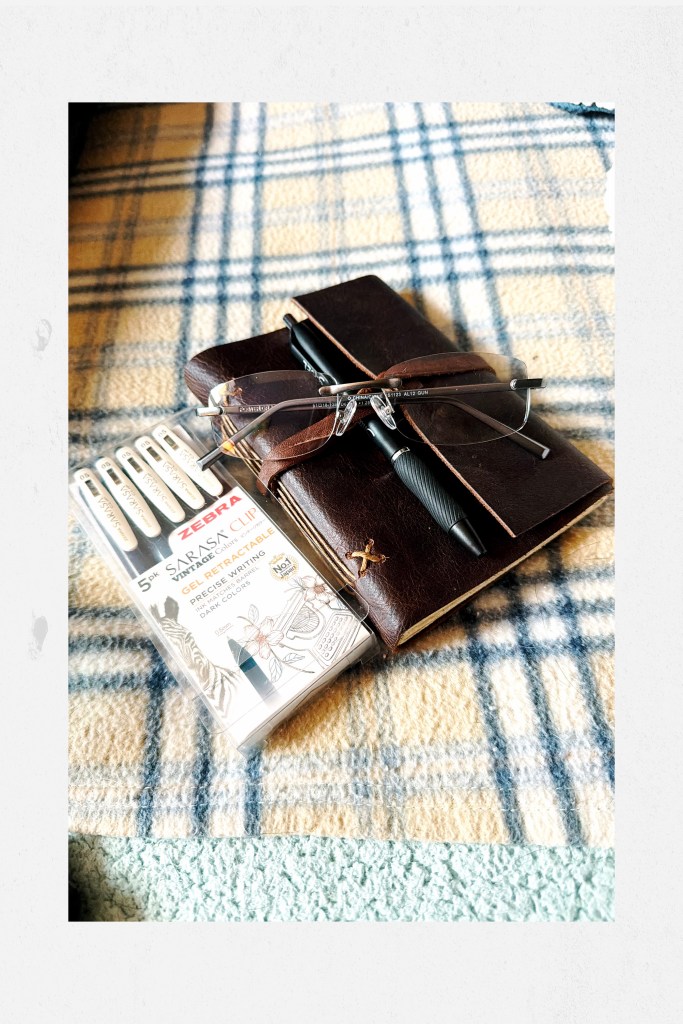
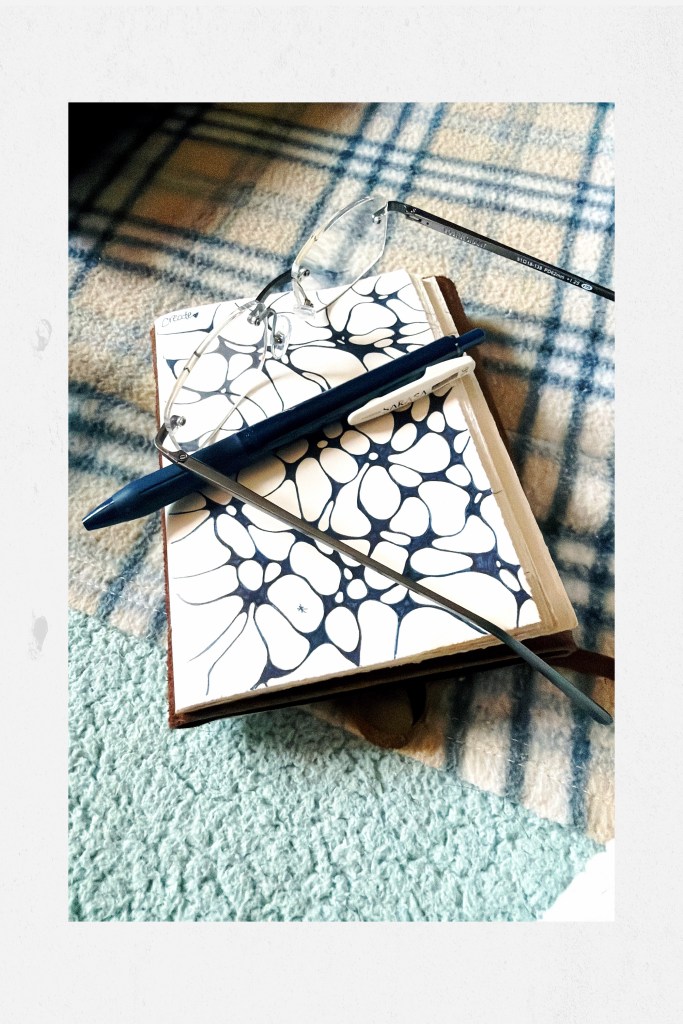
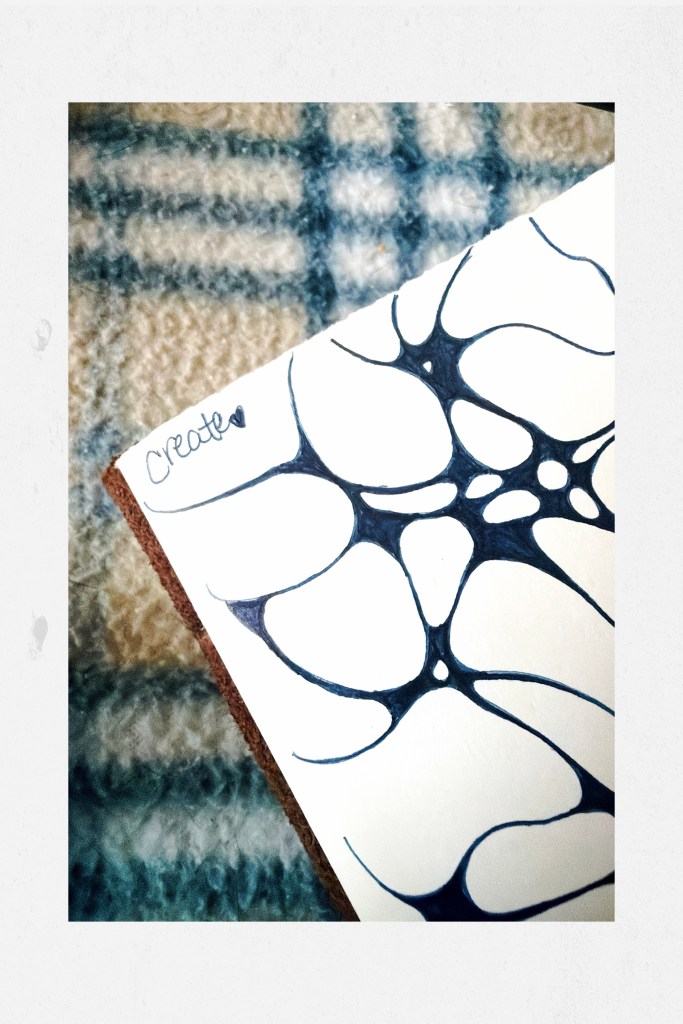
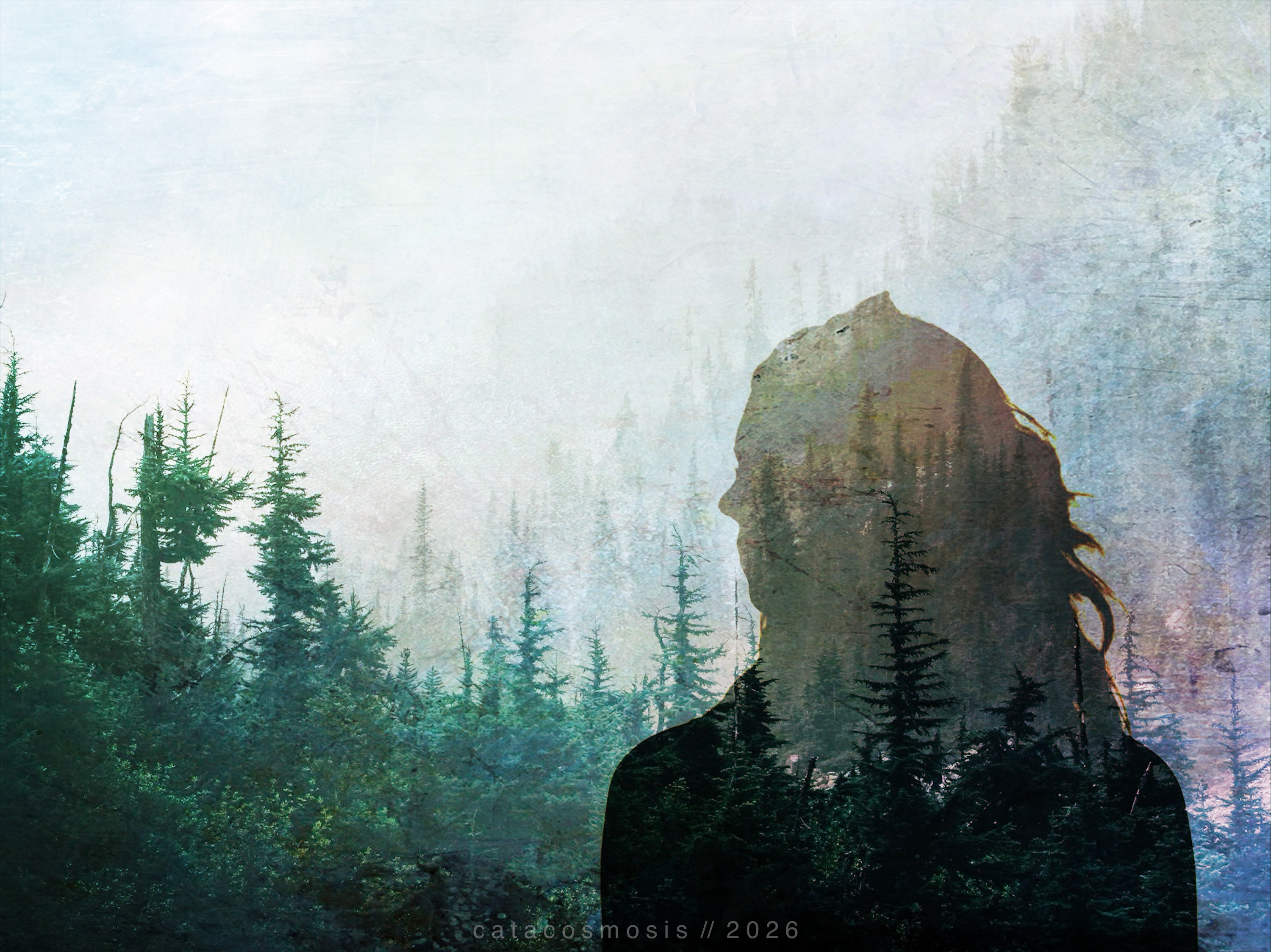
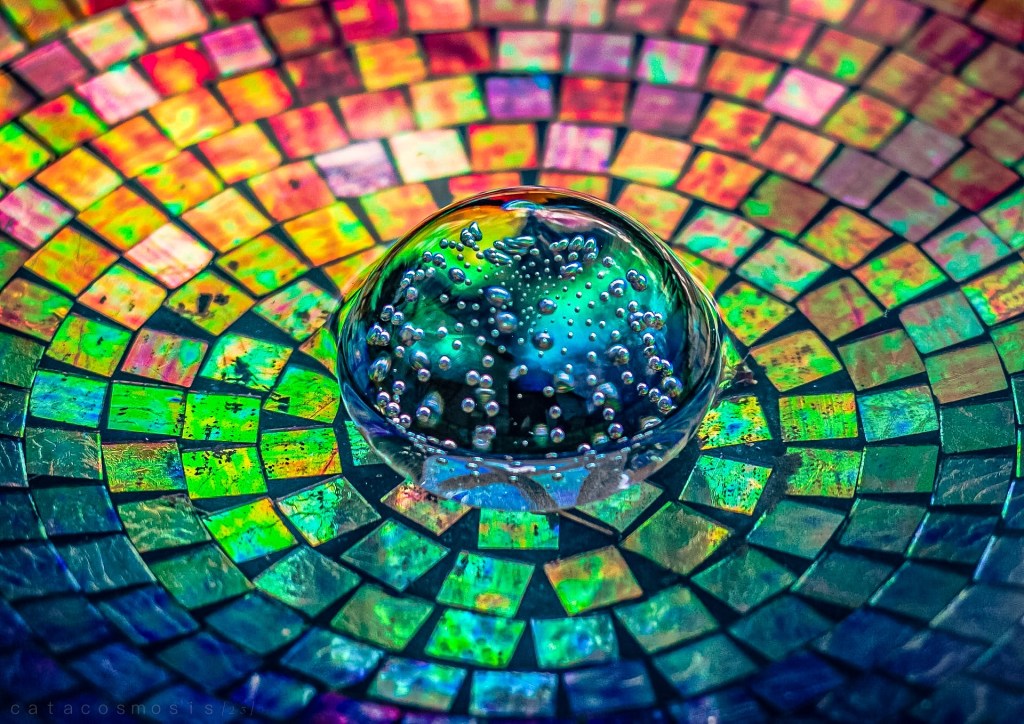
Rediscovering an old, forgotten treasure – barely touched, but quietly waiting – is a comforting gift as I learn to wait patiently for my body to heal and be ready to move back into the studio.
iPhone 17 Pro + Hipstamatic X
This morning I sat with that truth for a long, still moment. As the steady ticking of the clock kept gentle cadence with the rising sun, something settled over me like grace instead of regret:
I have always loved and collected journals and sketchbooks. I own many, yet only a few are filled and several remain untouched – so many sitting in limbo for years, held back by the fear driven fallacy of “messing them up.”
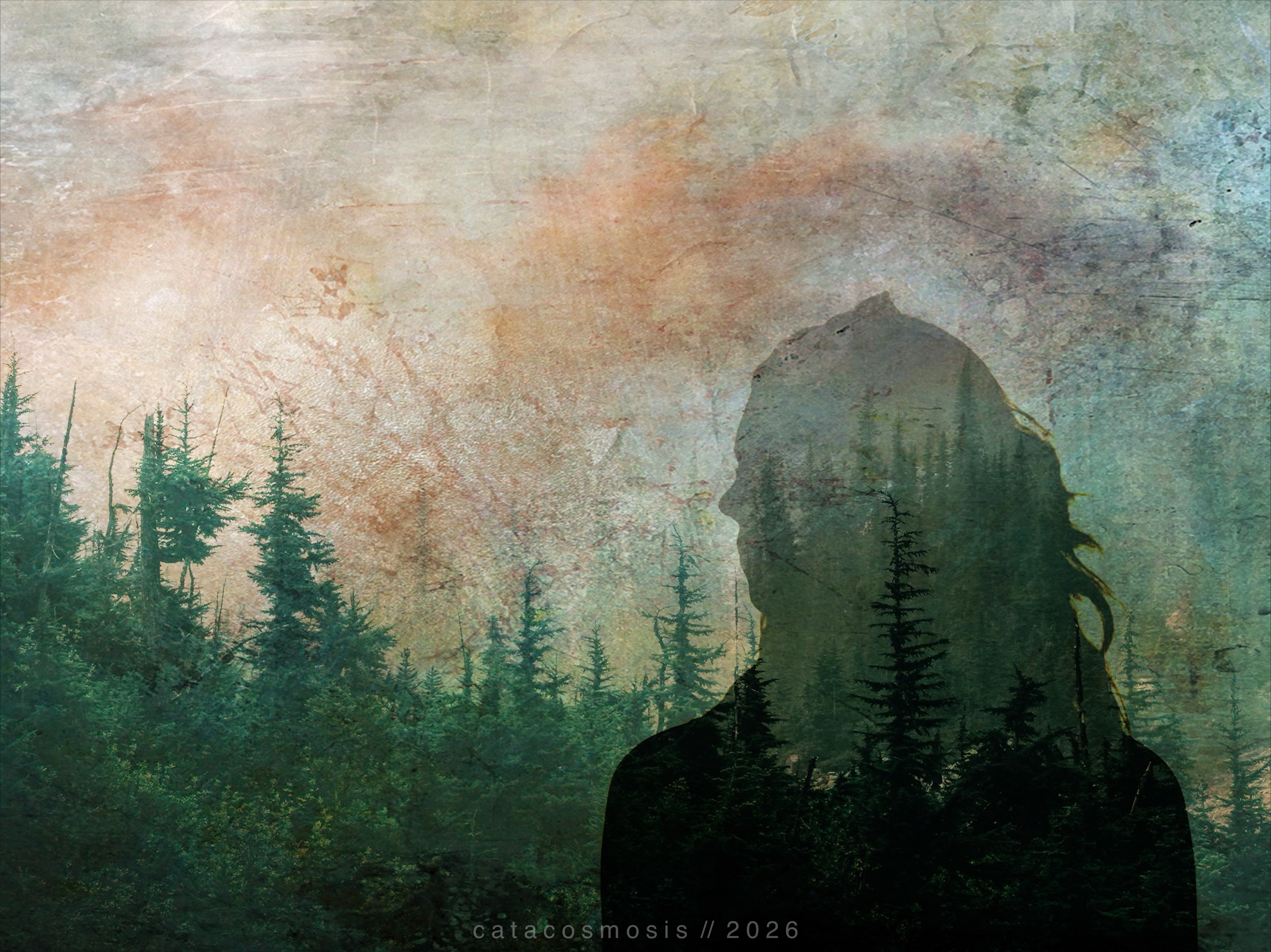
iPhone 17 Pro + Hipstamatic X
With age, I am gently defeating that lie. Life is brief, tomorrow is never promised, and no act of creativity is ever wasted – even when the product of the process doesn’t match the vision that first called it forth.
Now, as I grow older and look back on the many years gone by, I feel far more sorrow for all the moments I never recorded than I ever felt for any imperfect line, any handwriting that wasn’t lovely enough, or any watercolor that fell short of my imagination or my dreams.
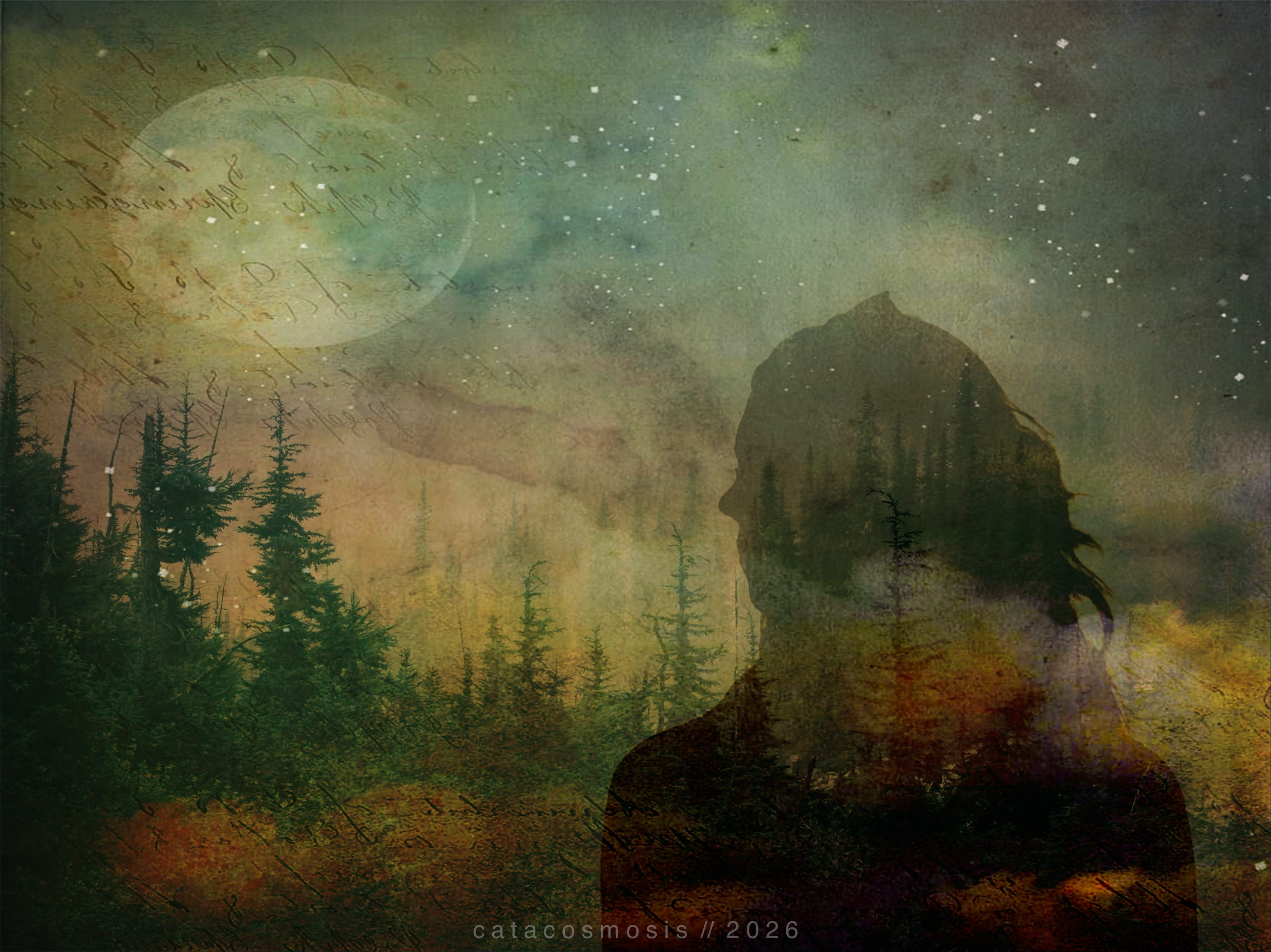
iPhone 17 Pro + Hipstamatic X
Moments, art supplies, and blank pages are only wasted when we aren’t present with them… when we overlook and leave them blank for fear of messing them up.
The only thing that messes anything up is letting fear, doubt or insecurity drive us in the first place.
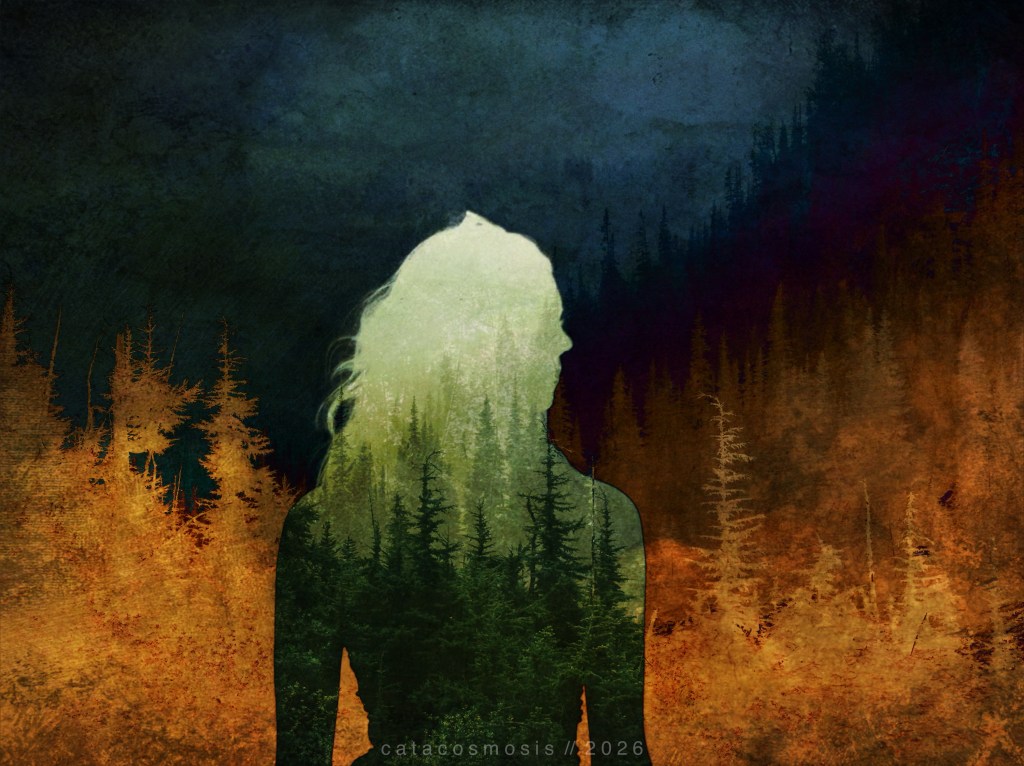
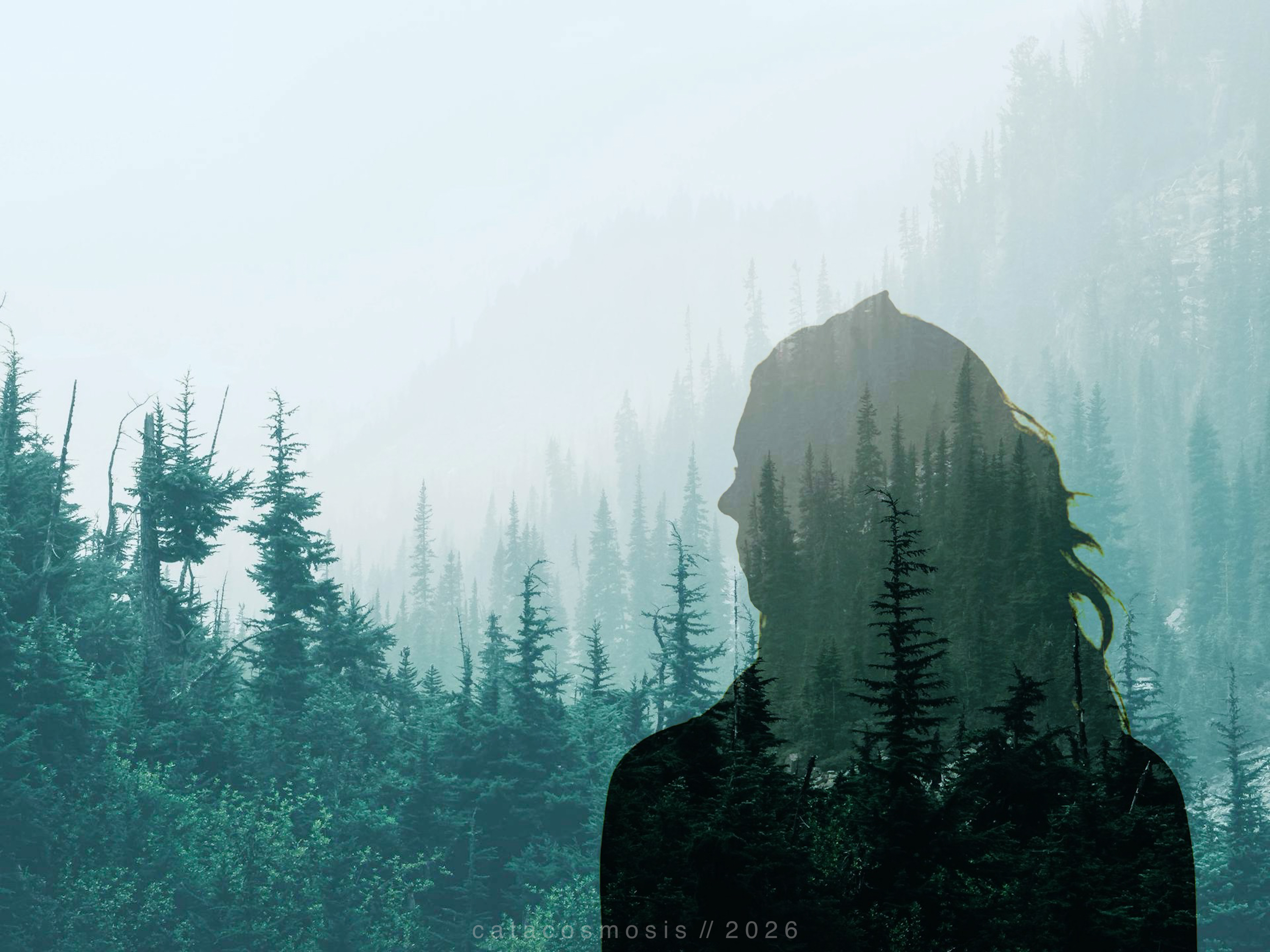
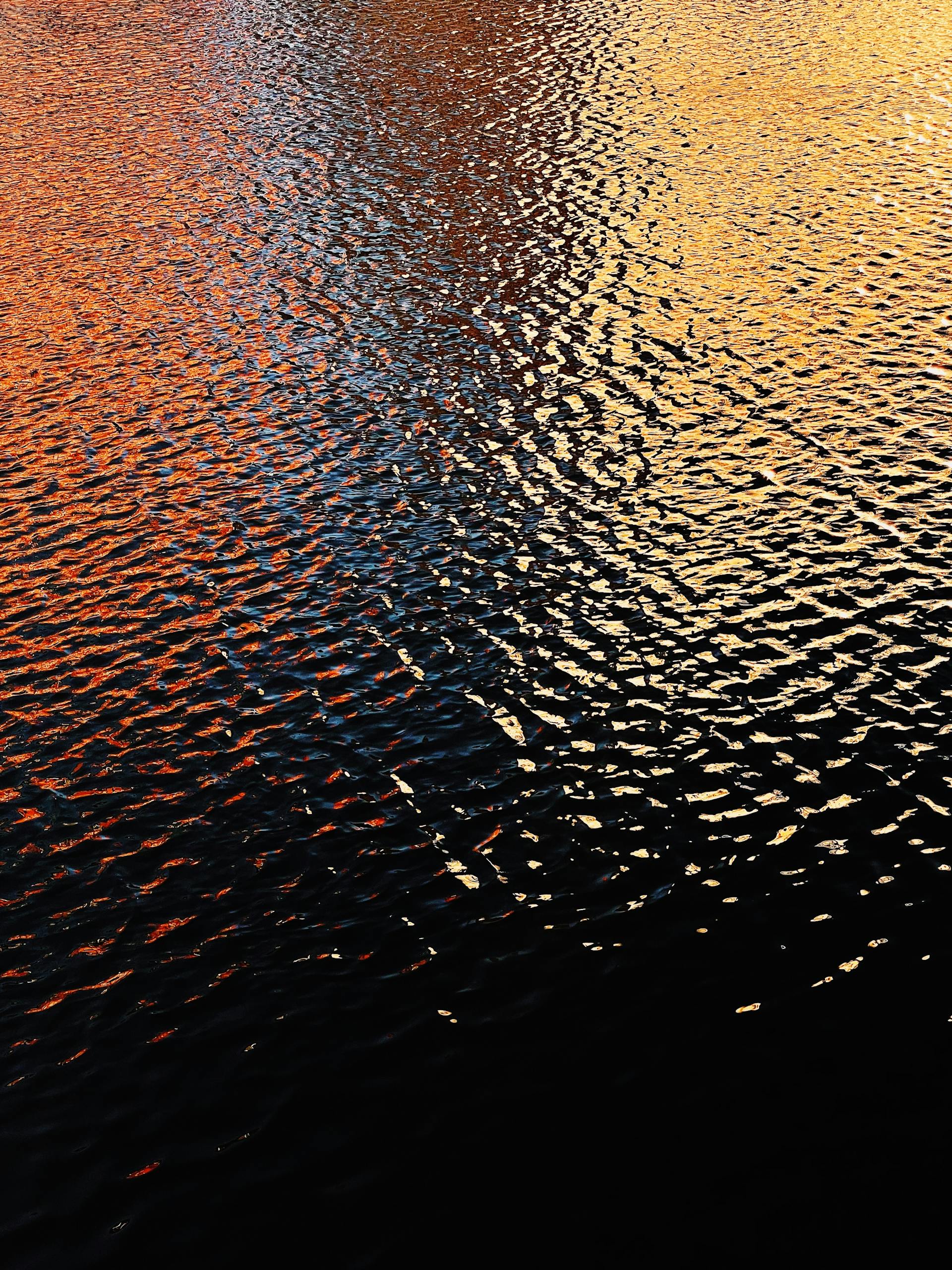
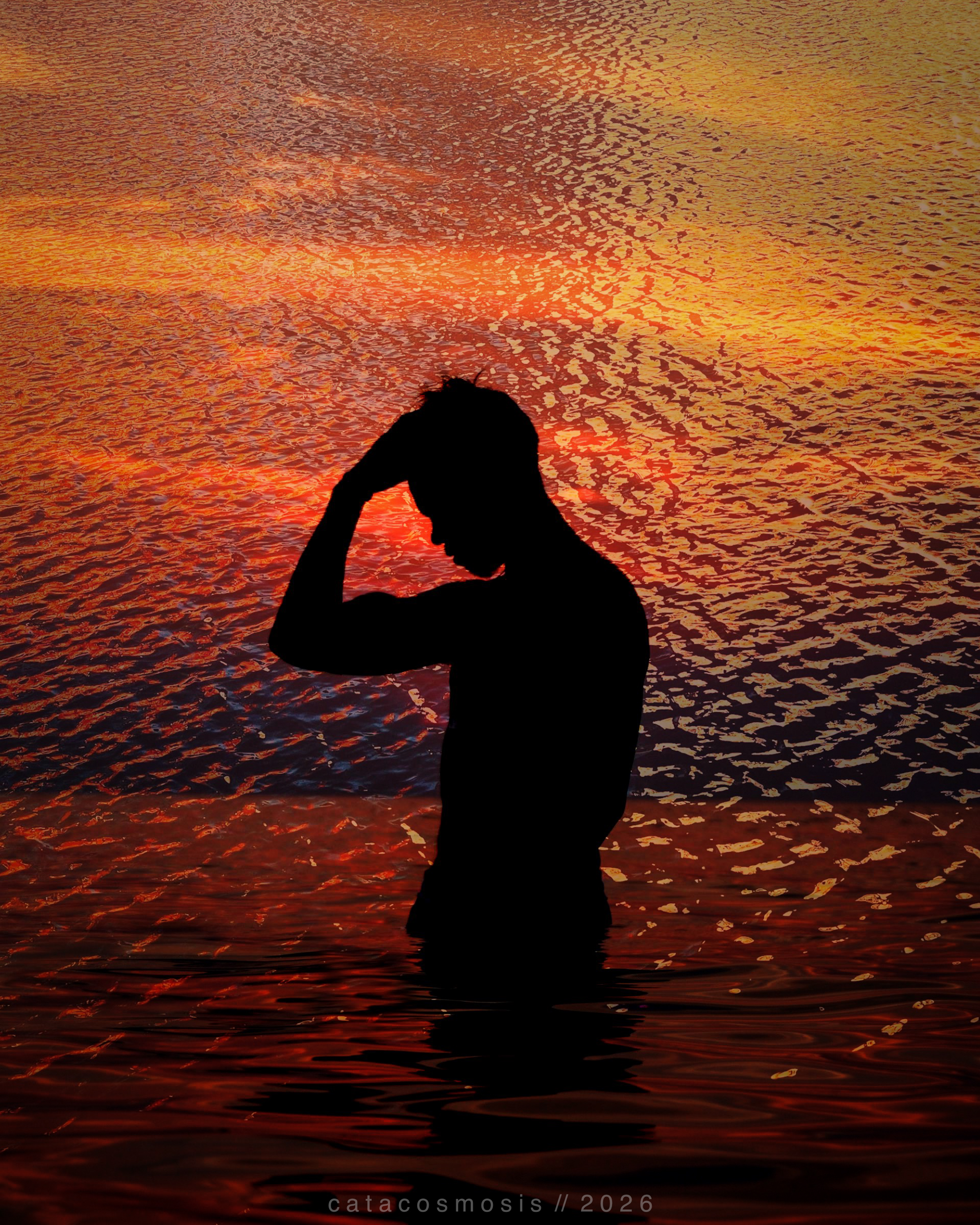
I have been horizontal more than I would like these past few days. In the midst of post-surgery recovery, there is a lot of lying still. There is also a strange and rare gift of unhurried time — the kind most of us don’t often get. In those slow stretches where you can’t do much but think, daydream, or remember, and the very real temptation of doom-scrolling beckons to distract you, I instead found myself revisiting some older work. In that process, I somehow ended up consumed by some double exposure pieces I had made and mostly forgotten. They were composites that reminded me how much I love this technique and how often I talk myself out of making time for it.
So, me being me, I made a few new composites, and then found myself inspired to share not only the work but the process. This post is part refresher, part honest walk-through of how I actually do it. Not the Photoshop-subscription version… more like the “everyday life one” with mostly free tools, and apps you may already have on your phone.
What Double Exposure Actually Is
The term “double exposure” comes from film photography, where you’d expose the same piece of film twice, burning two images into one another. Digitally, you’re doing the same thing with more control and far more forgiveness.
What makes a double exposure feel cinematic rather than just layered is intention. When your images are chosen carefully and the blend serves a mood rather than just a technique, it stops being a trick and becomes a story. Two things in conversation with each other inside a single frame.
“She Carries the Forest”
The Tools I Actually Use
I work in two stages: compositing first, then finishing. Here is how that breaks down.
Desktop and Browser Apps for Building a Composite: Photopea and GIMP
Photopea is the tool I reach for most often now when I want more control. It is free, browser-based, and works almost identically to Photoshop. No download, no subscription.
Try the Screen blend mode first. It lightens and ghosts one image over another beautifully. Multiply deepens and darkens. Overlay adds contrast and drama. Each one tells a different story with the same two images.
Add a layer mask with a soft brush to refine where the blend shows through and where it stays clean
Use adjustment layers on top, curves and hue/saturation especially, to pull everything into a unified mood
GIMP follows the same logic with a different interface. Both are free. That’s why I chose them.
Mobile Apps for Building a Composite: Union, Fragment, and Tangent
If you want to start quickly and stay on your phone, Union is the most direct route. It was built specifically for double exposure. You load two images, choose a blend mode, and use simple masking tools to control where each image shows through. It is intuitive enough to produce something genuinely beautiful in a short session, which matters when your energy is limited or you just want to experiment without committing to a long workflow.
Fragment (by the same Pixite team as Union) adds prism and dispersion effects. It is not a double exposure app on its own, but it layers beautifully on top of one, especially when you want a fractured or dreamlike quality to the final piece.
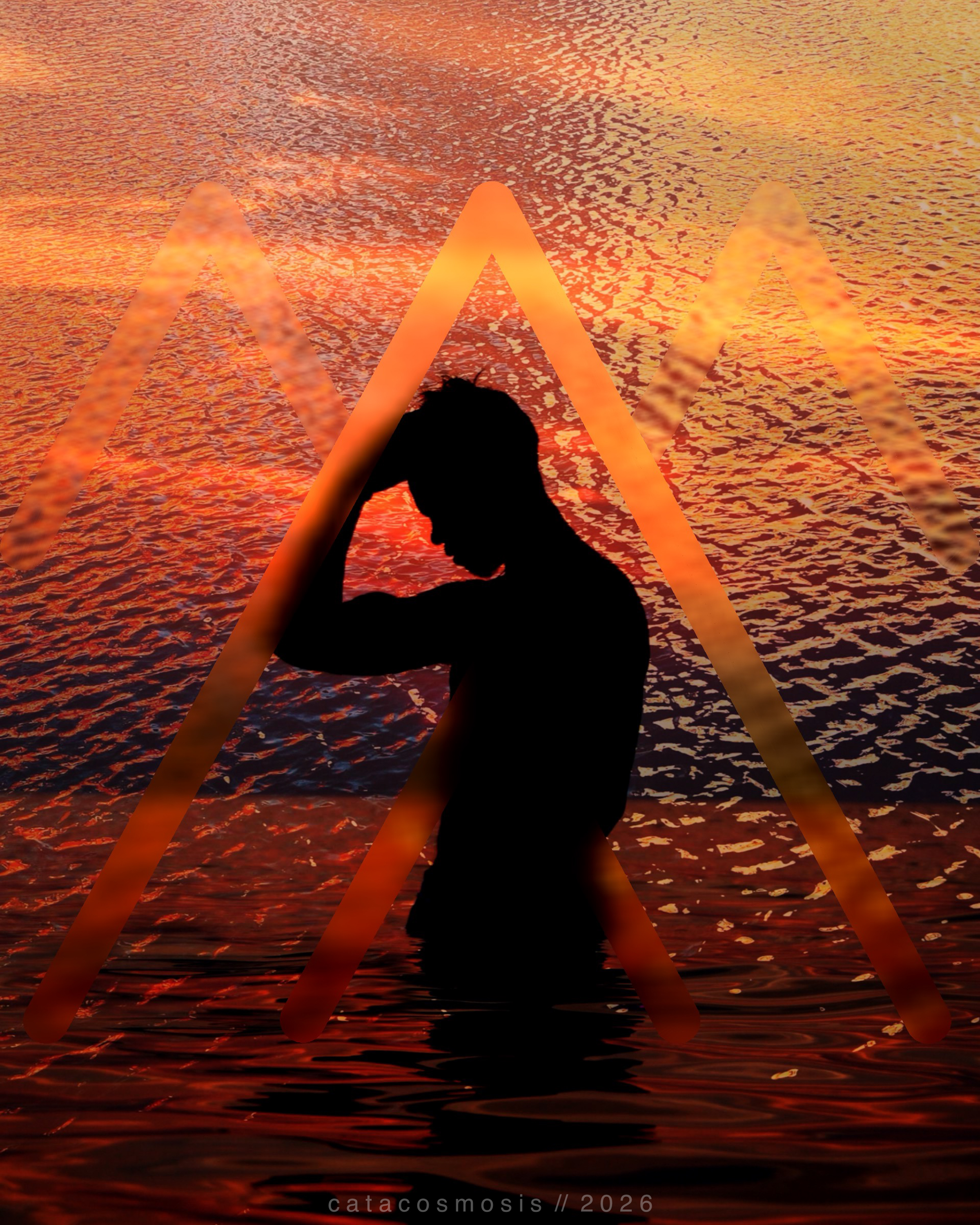
Tangent, also from Pixite, is no longer available in the App Store, but I still have it on my phone. It survived through iCloud backups and still works for now, though I expect it will stop working once iOS moves far enough along. I’m including it here because it’s genuinely part of how I work, not to send you on a hunt. If you want that same geometric, fragmented quality, Fragment by the same developers (mentioned and linked above) is still available, and lets you bring in geometric overlays and shapes beautifully. I’ve used it to add structure to a double exposure that would otherwise feel too loose.
Whether I build a composite on the desktop in Photopea or GIMP, or put it together entirely on my phone, I almost always bring it into mobile apps to finish it. The finishing stage is where an image stops being a technical exercise and starts feeling like something. It’s where mood gets locked in, color finds its voice, and the texture that makes a piece feel lived-in gets added.
I should also point out that I don’t generally use all of these apps together — I pick and choose them based on what I want to achieve in my final image. Some pieces need one pass through Lightroom and nothing else. Others get layered through three or four apps before they feel right.
Lightroom Mobile is where I do tonal control, color grading, and clean watermarking before anything goes public. It is not fully free, but it is available both as a mobile app and through a web-based library, which means your work is accessible across devices without losing anything — and that contributes to my reasoning for paying for the full version yearly. The multiple access points plus the free storage are as valuable to me as the tools themselves. What I love about Lightroom Mobile is the precision it offers without being intimidating. The tone curve alone can completely transform the emotional register of an image, pulling it toward shadow and mystery or opening it up into something luminous. The color grading tools let me shift the mood of highlights and shadows independently, which matters a lot when you are working with a composite that has multiple light sources trying to coexist.
VSCO has a library of film emulation presets that do something algorithms struggle to replicate cleanly: they make a digital image feel like it was touched by something physical. I use it when I want warmth, grain, or that slightly faded quality that makes an image feel like a memory rather than a photograph. It is subtle work, but subtlety is often what separates a finished piece from one that almost got there.
Hipstamatic works differently from most editing apps, including VSCO, because it is built around the actual experience of analog photography rather than digital correction. The lens and film combinations introduce unpredictable light, color shifts, and vignetting that feel genuinely accidental in the best way. When I want an image to feel less constructed and more discovered, Hipstamatic is usually where I end up.
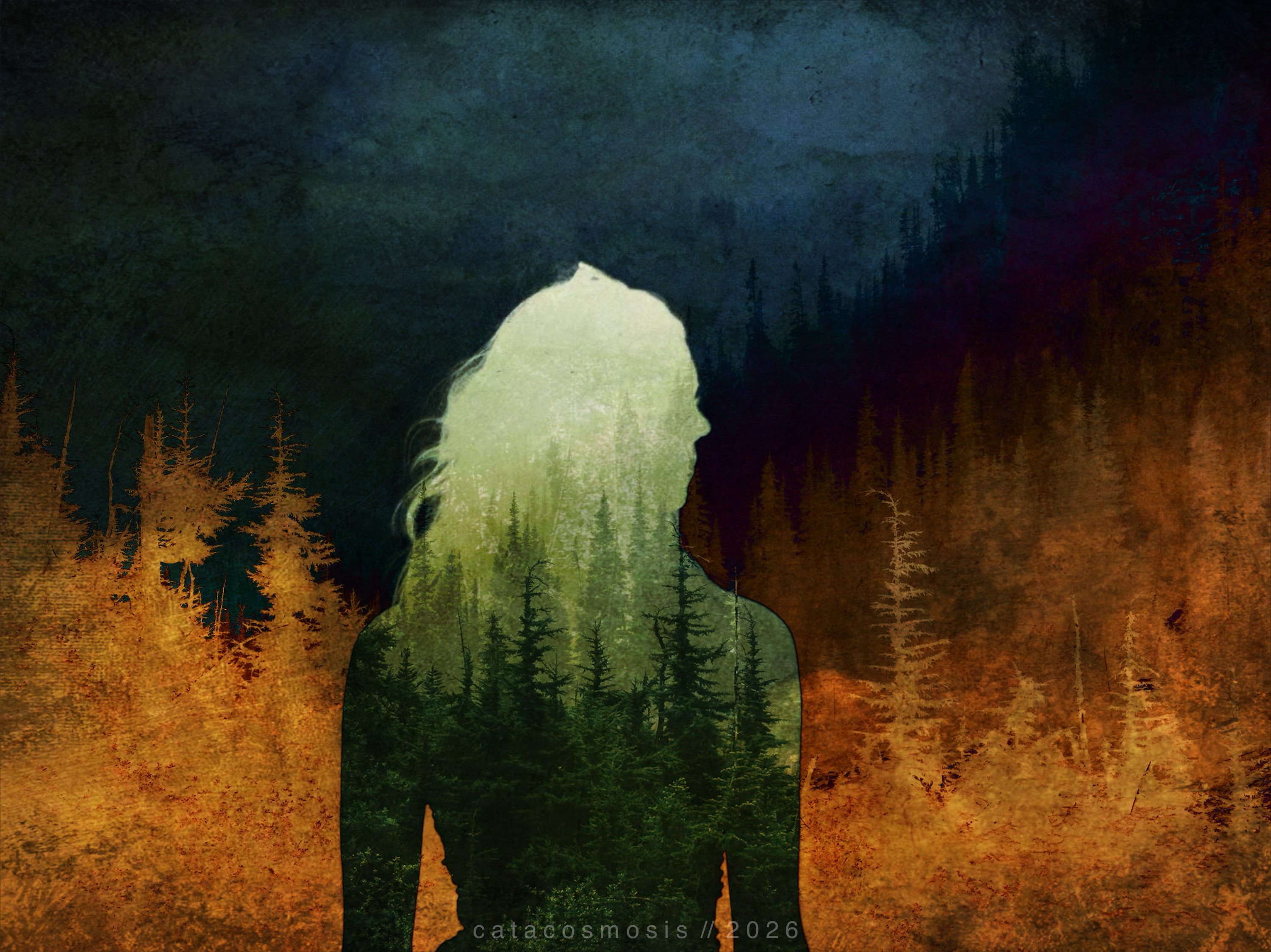
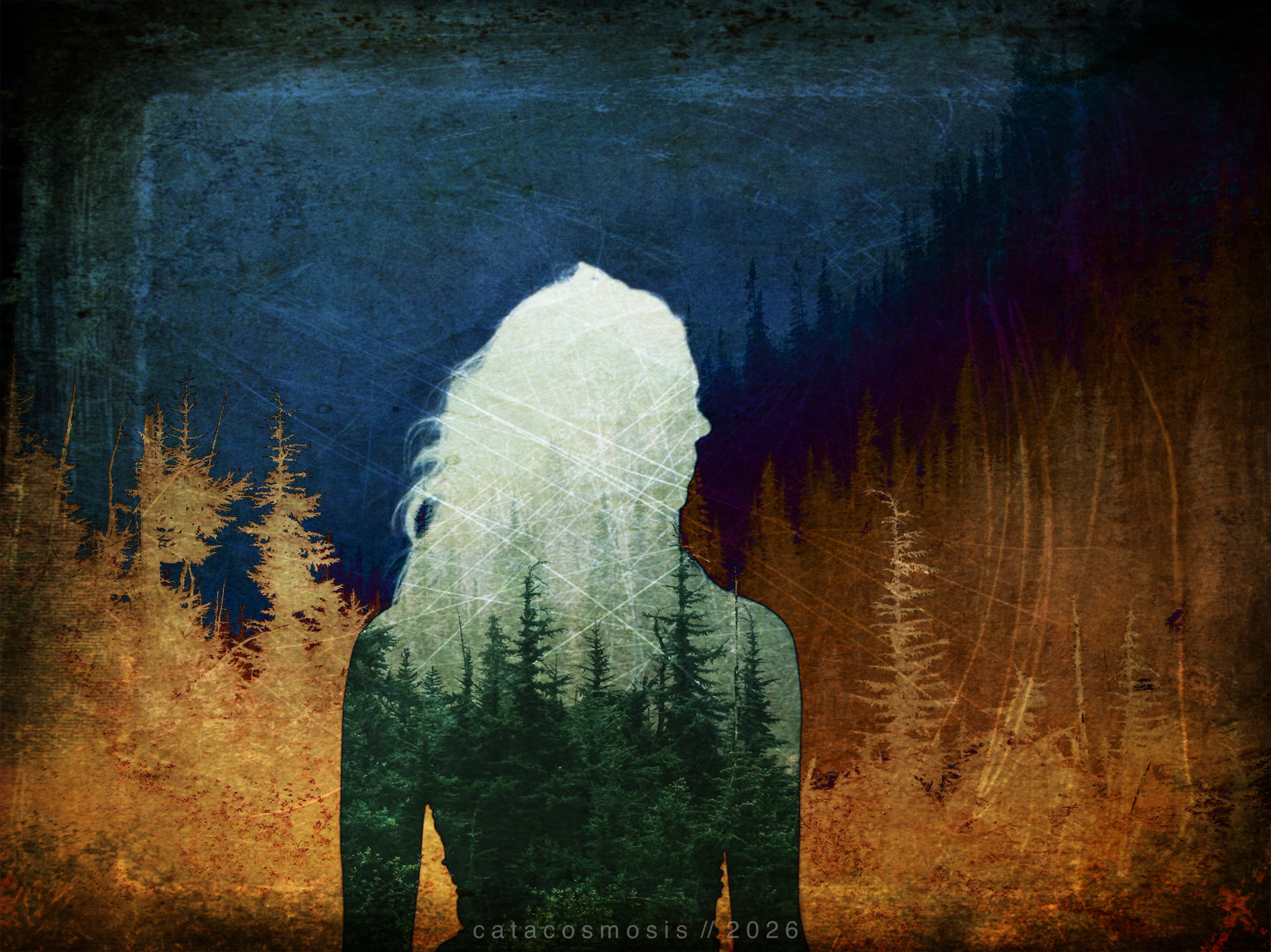
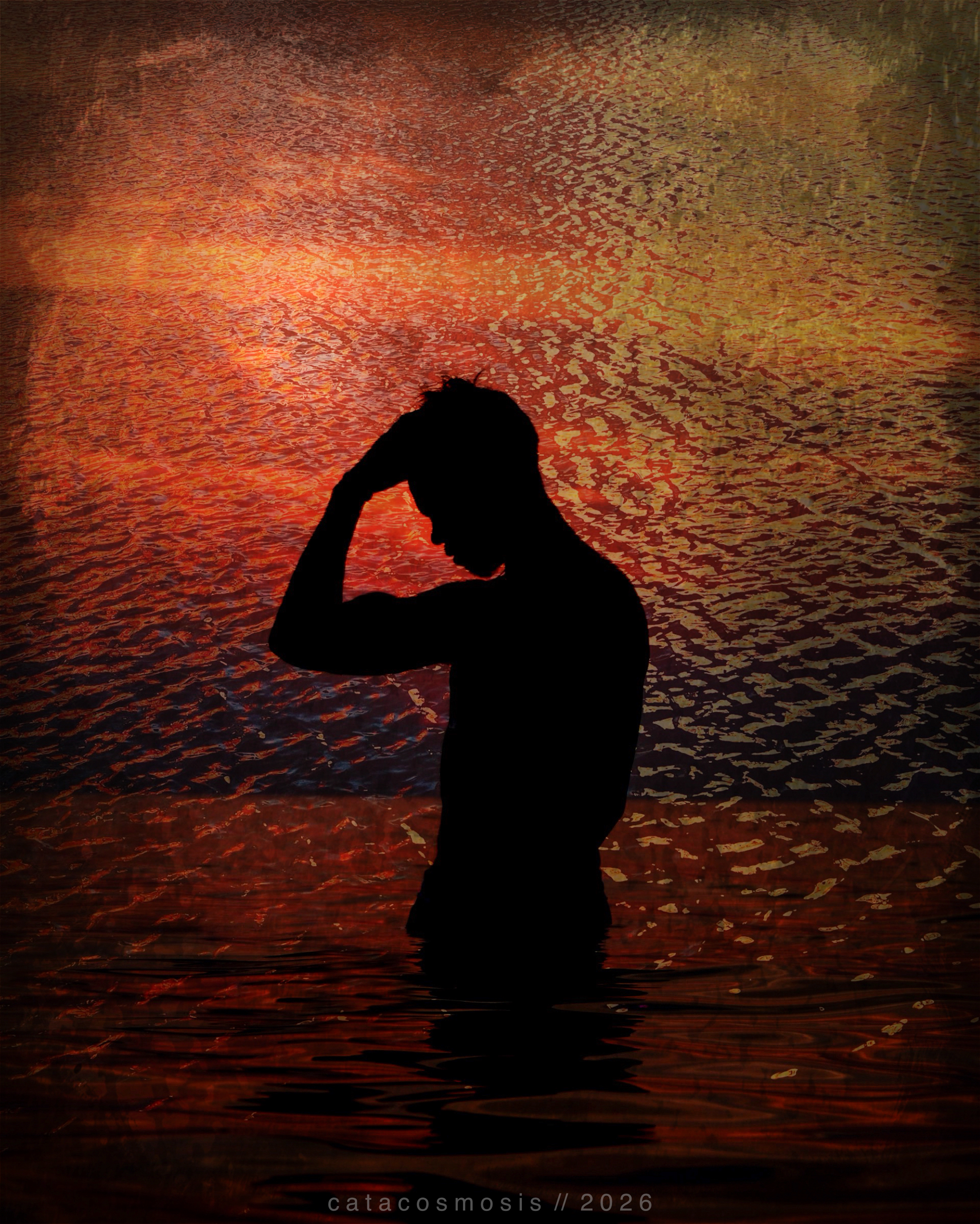
DistressedFX and Mextures are where I go for purposeful grain, texture, and weathering. DistressedFX leans toward grit (scratches, age, the feeling of something worn), while Mextures leans toward atmosphere (light leaks, painterly overlays, warmth that spreads across an image like morning fog). Together they cover a wide range of that quality that makes a final piece feel found rather than constructed. I rarely use both on the same image, but knowing what each one does well makes it easy to reach for the right one.
This two-stage approach — compositing first (whether desktop/browser based or mobile) and then finishing in mobile — gives you more flexibility than any single app alone. Each tool does what it does best.
Together, these apps form a surprisingly complete toolkit. In all honesty, the mobile apps alone are enough to take you further than you might expect. Union builds the foundation, Fragment adds structure and geometry. Apps like VSCO and Hipstamatic bring out mood and add aesthetic feel, DistressedFX and Mextures bring in texture and that weathered, painterly quality that makes a composite feel like art rather than just an edit, while Lightroom Mobile allows you to polish and watermark easily on the go. If you want more control or larger canvas work, Photopea and GIMP are both free and bring desktop-level power to the process without a subscription. You don’t need a lot of technical know-how — just your photos, a willingness to layer one thing on top of another, and a little time to see what happens.
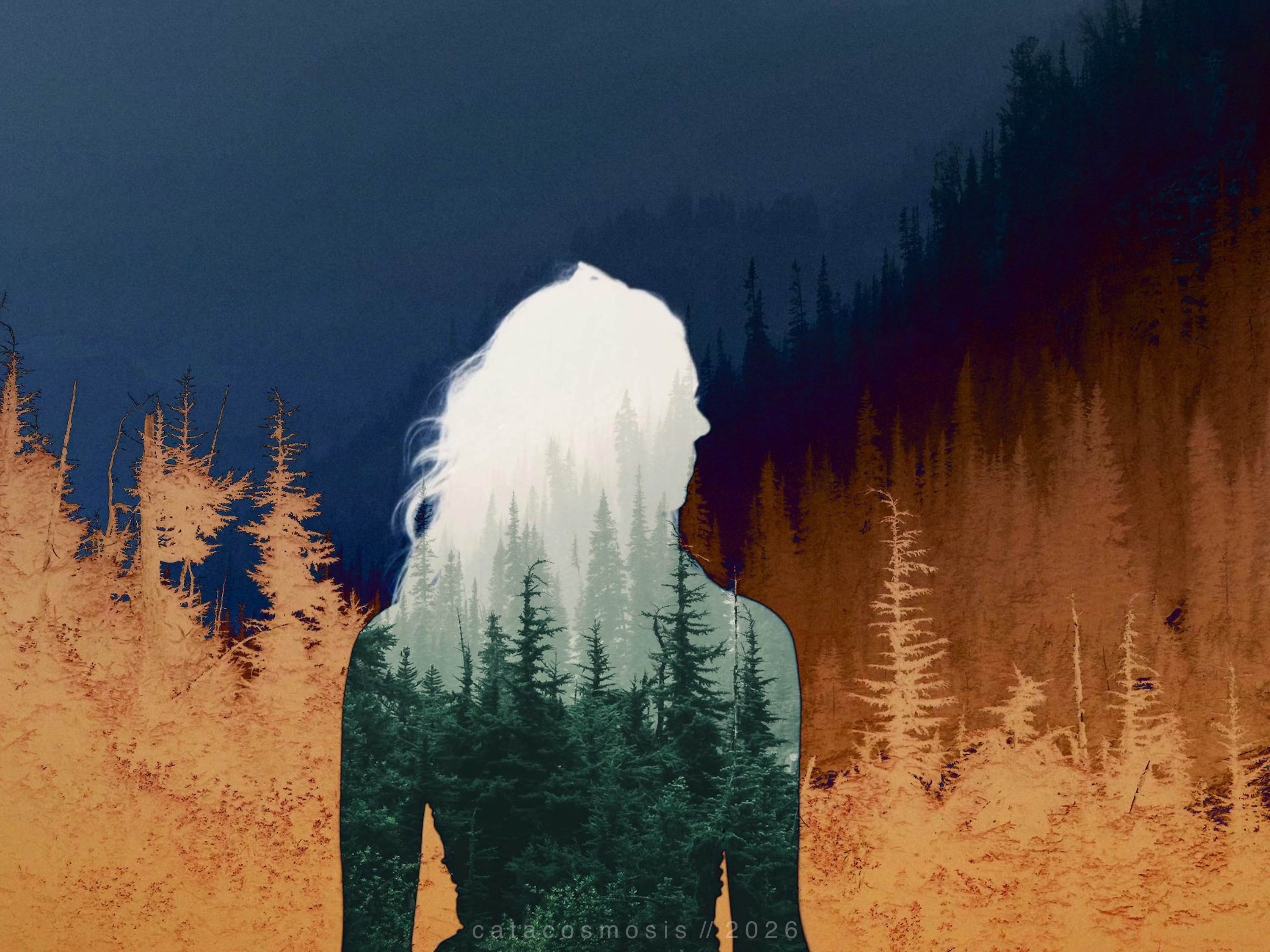
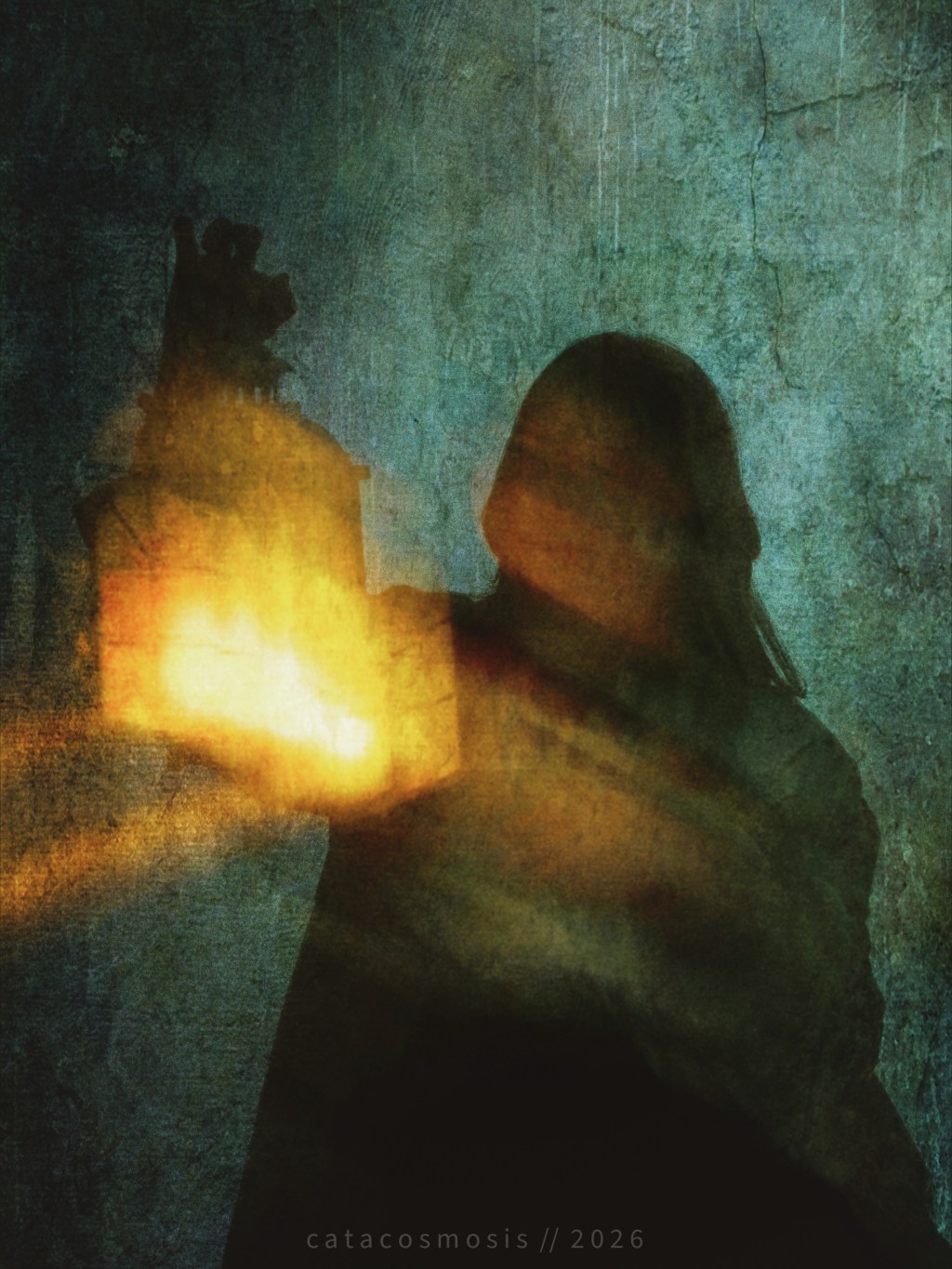
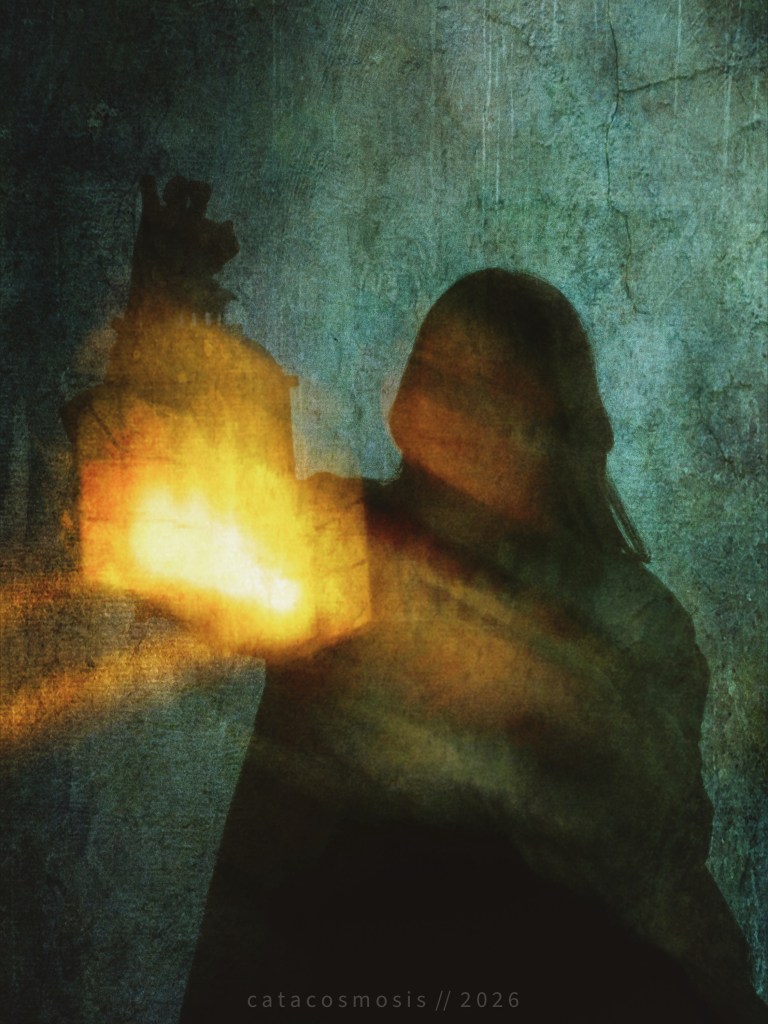
“The Burning Calm”
What Actually Makes It Work
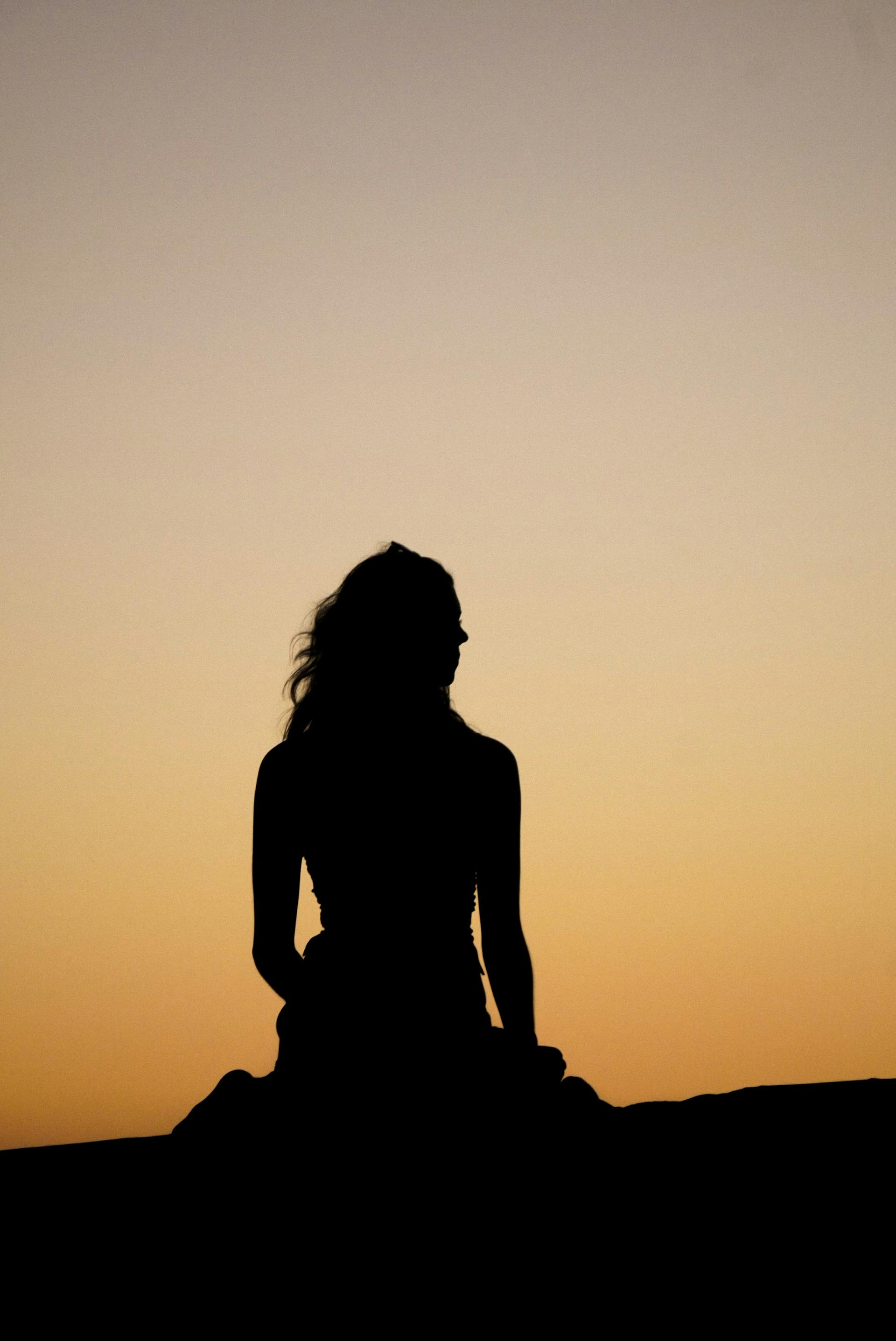
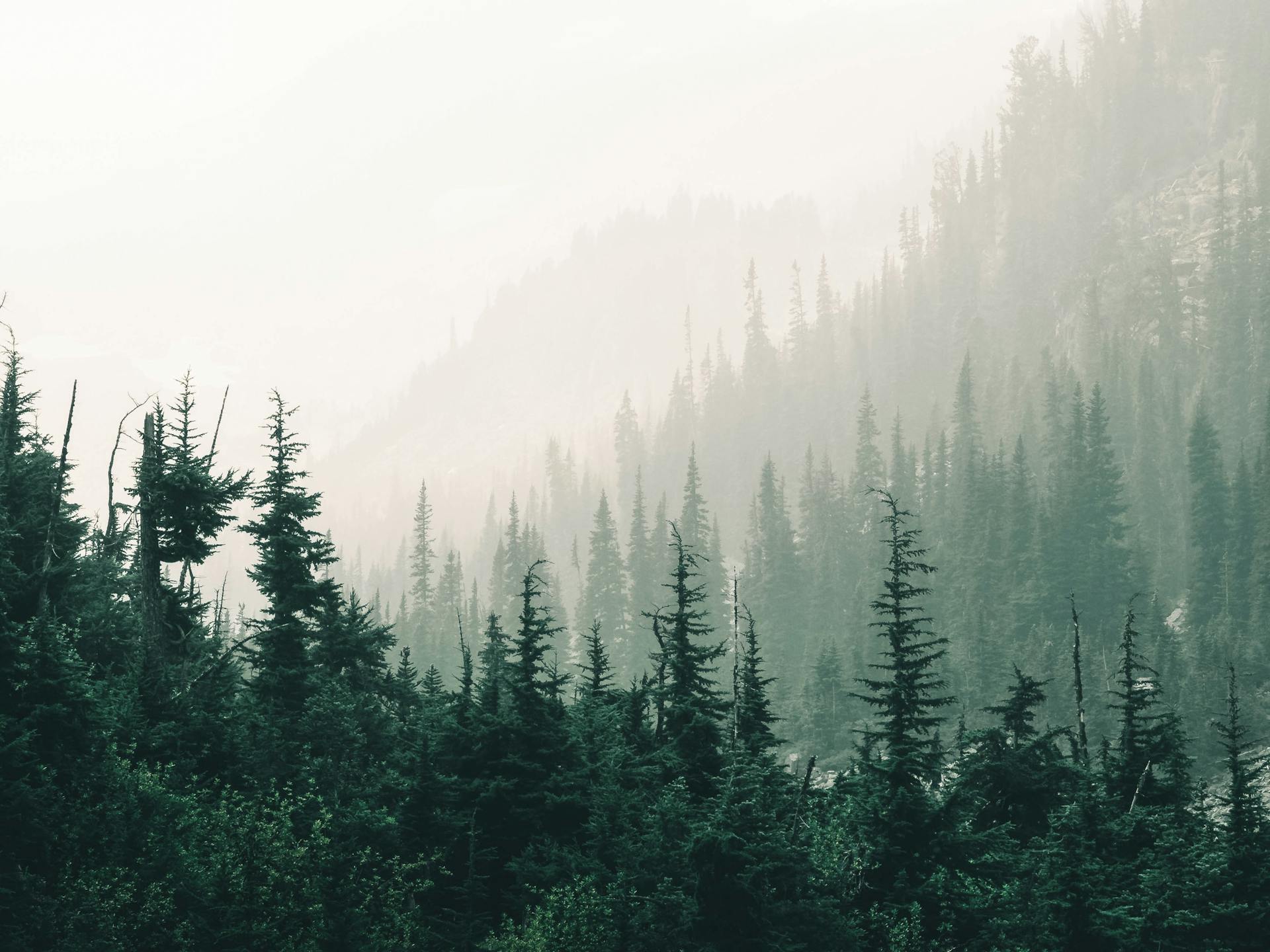
The biggest difference between a double exposure that sings and one that just looks muddy is image selection. Your two images need to have something to say to each other. At least one of them needs strong contrast and a clear subject. If both images are busy, they will fight. If one is simple and one is complex, they tend to dance.
Pay attention to lighting direction. When your light sources are coming from opposite sides in each image, the blend reads as accidental. When they roughly agree with each other, it reads as intentional.
Color harmony carries the mood. A muted, desaturated base with one strong color accent will do more atmospheric work than a full palette competing with itself. That is where your finishing apps earn their place.
And less is usually more. It is tempting to layer every texture and effect you love, but a strong double exposure often has restraint at its center. Let two things be in conversation, not a crowd.
A Few Directions Worth Exploring
Portrait with nature: a face emerging from or dissolving into trees, water, or open sky (this is my favorite and go-to style for double exposure work)
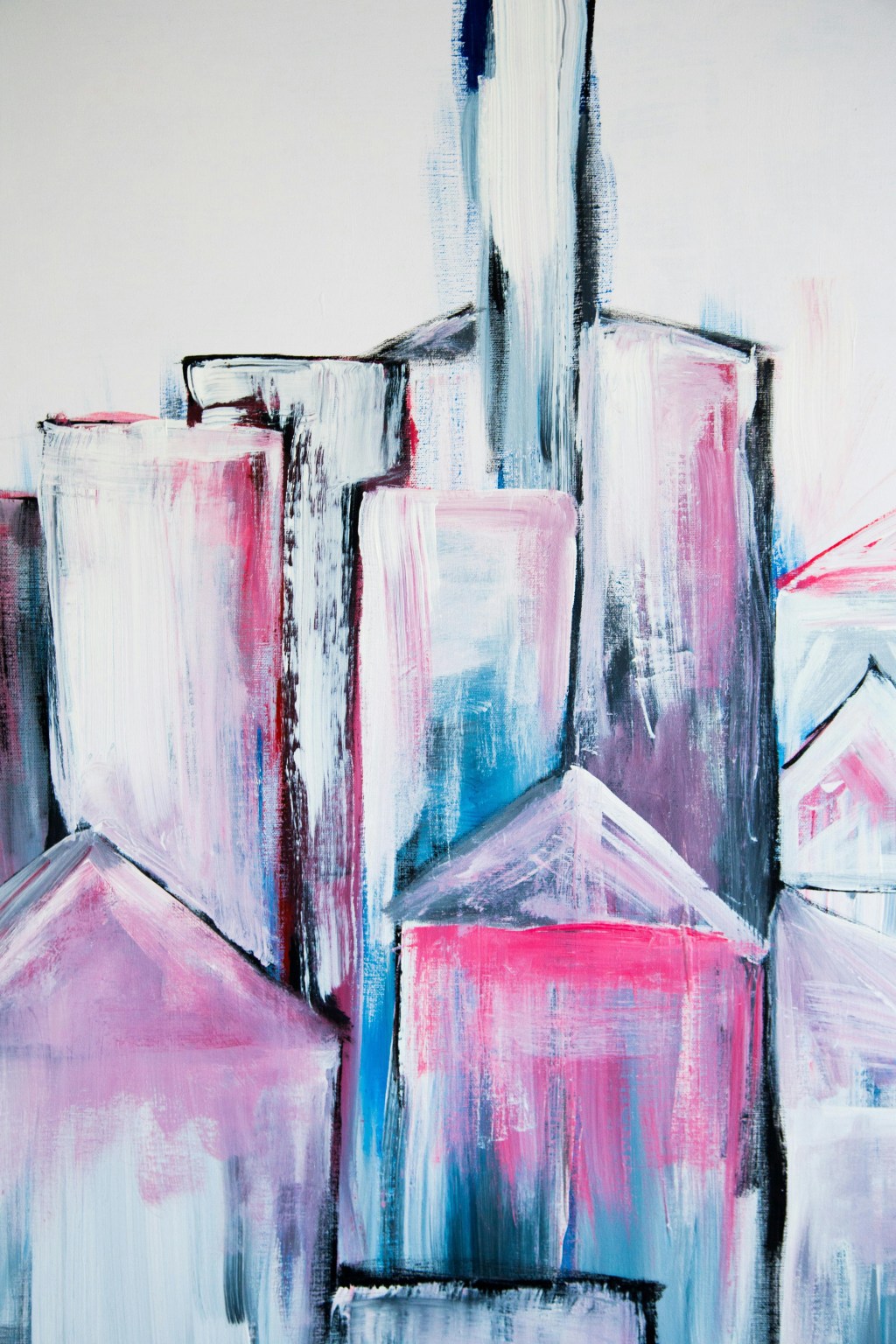
Nature layered over architecture: organic forms in conversation with structure
Light sources blended with a subject: sunlight, a window, a candle within another image
Scripture or text layered over photography using a Screen blend: subtle, stunning, and deeply personal
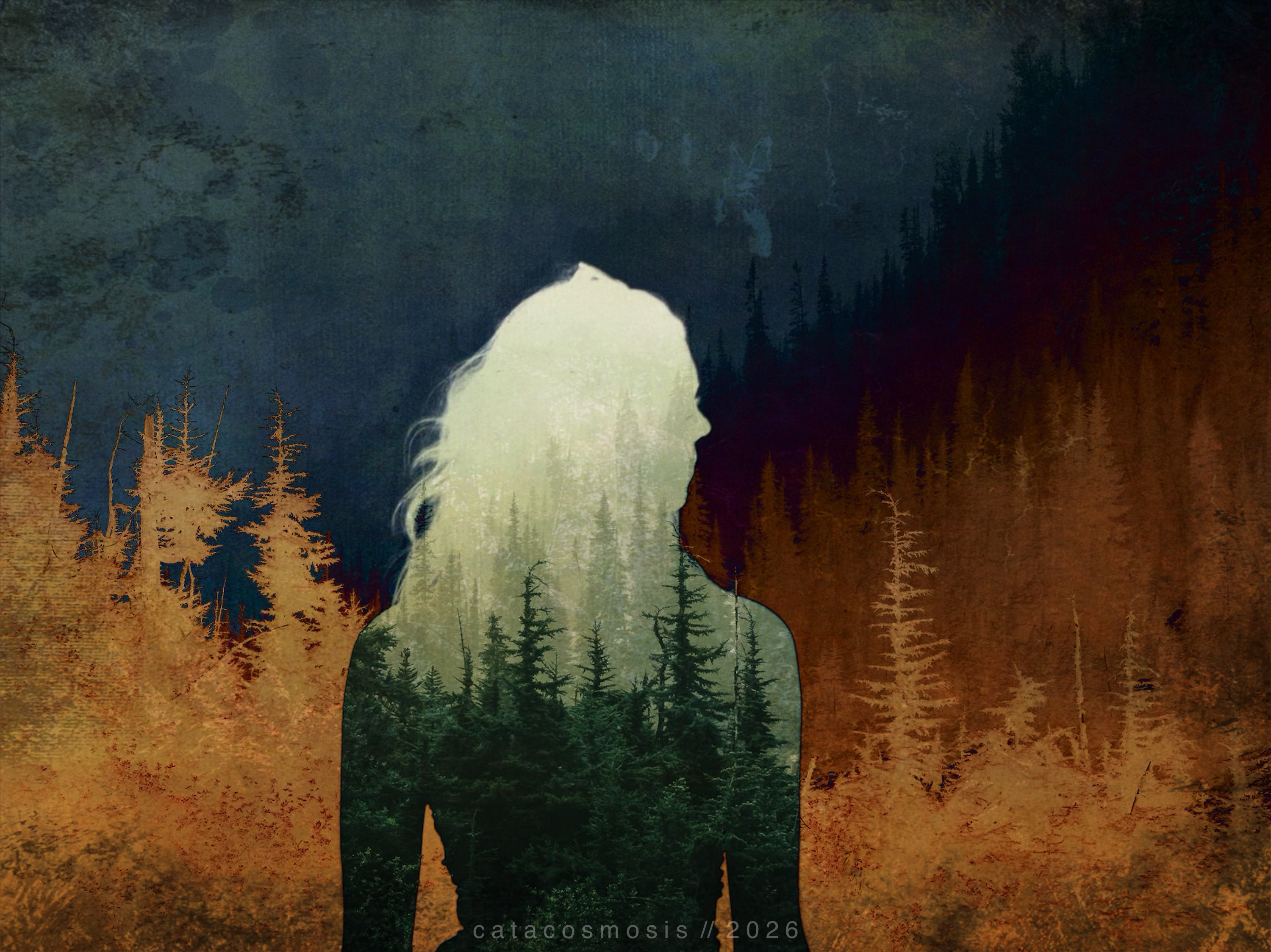
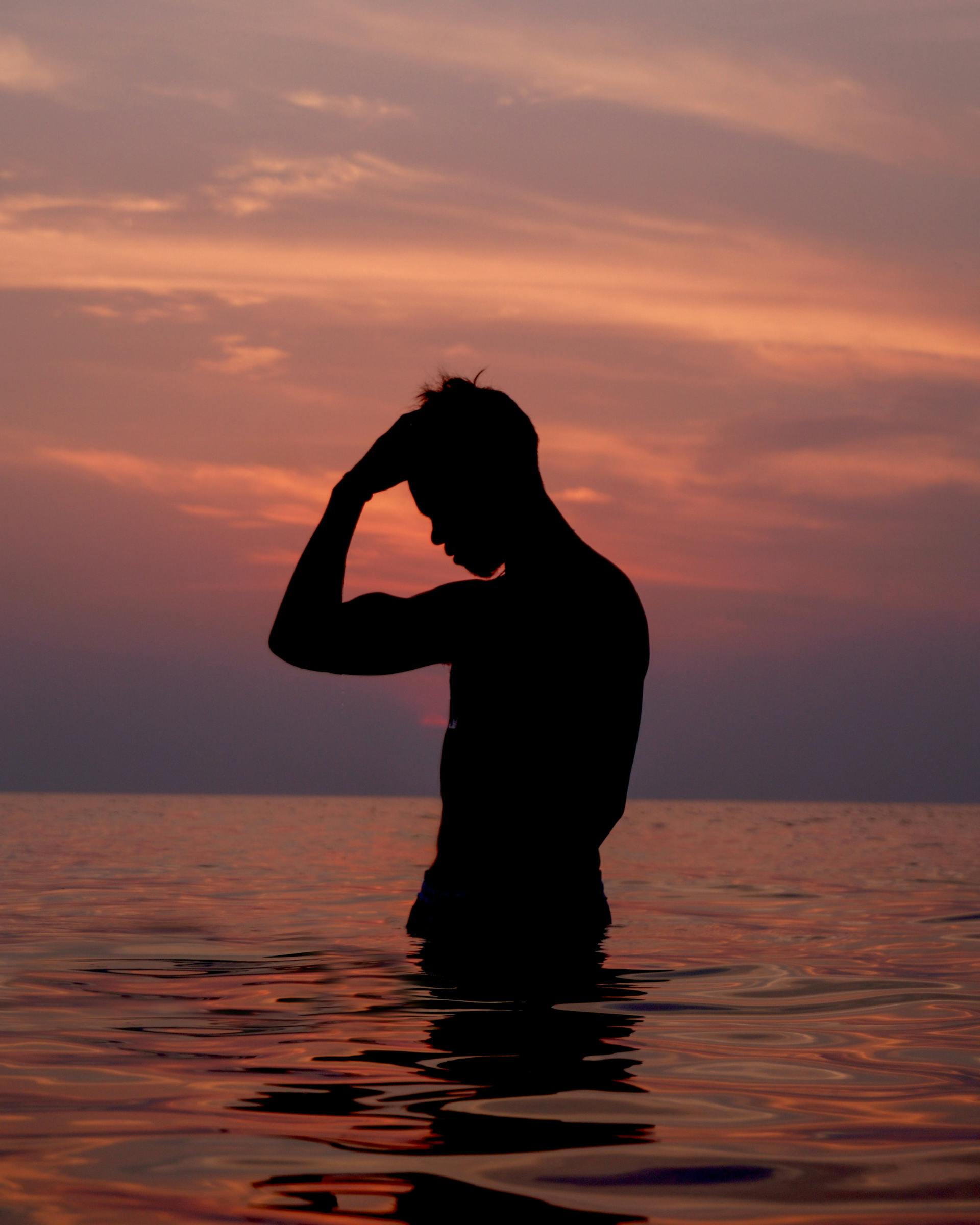
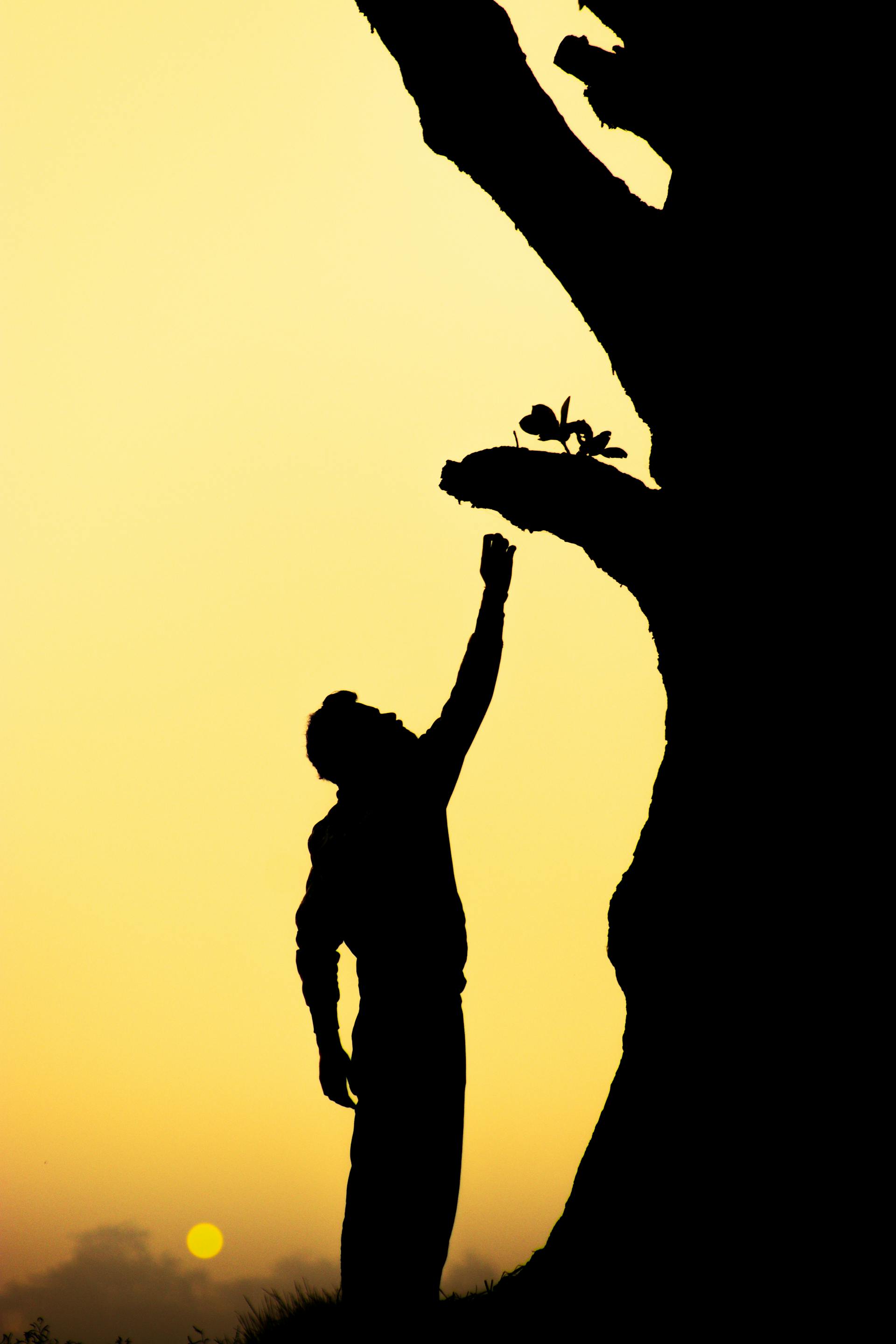
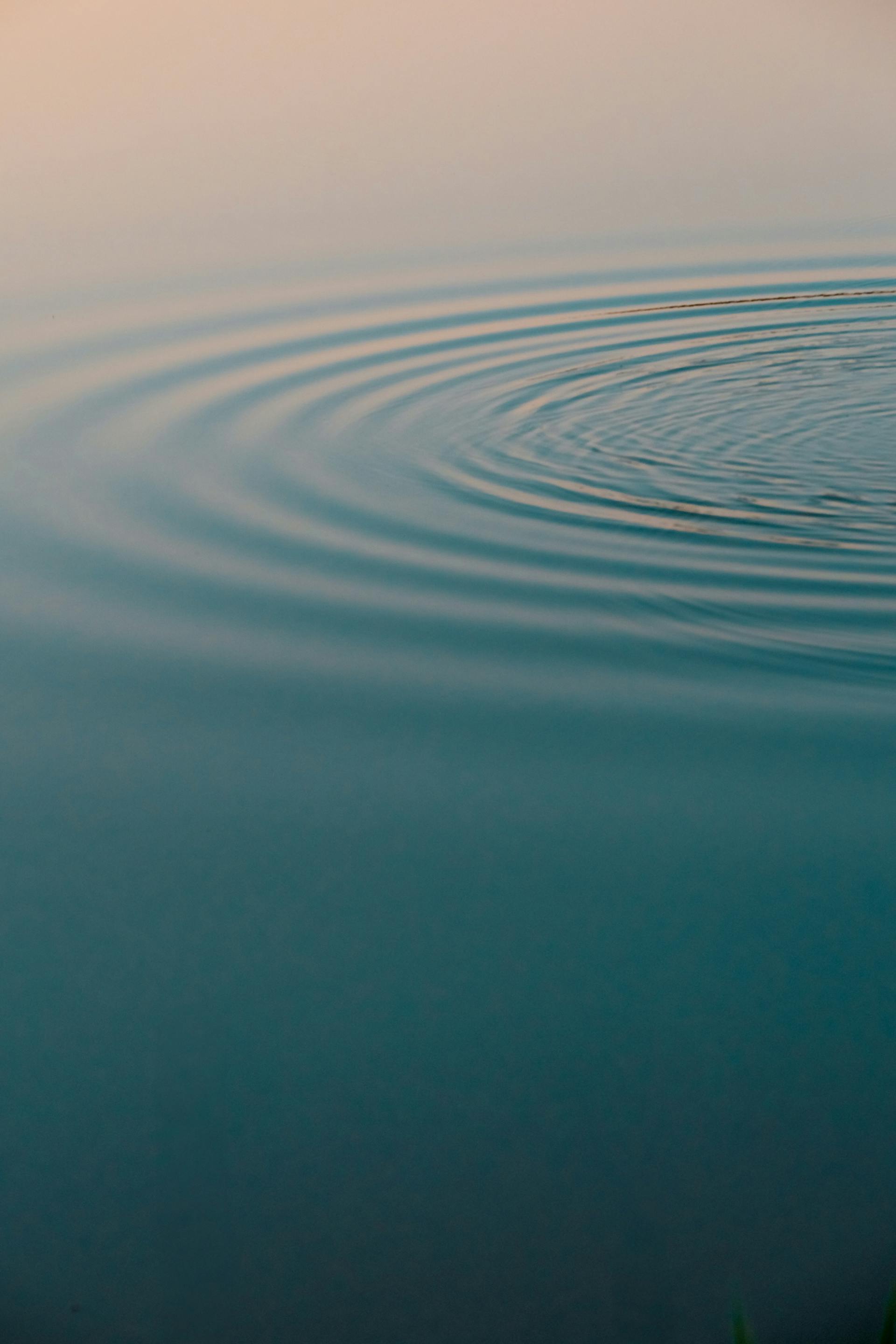
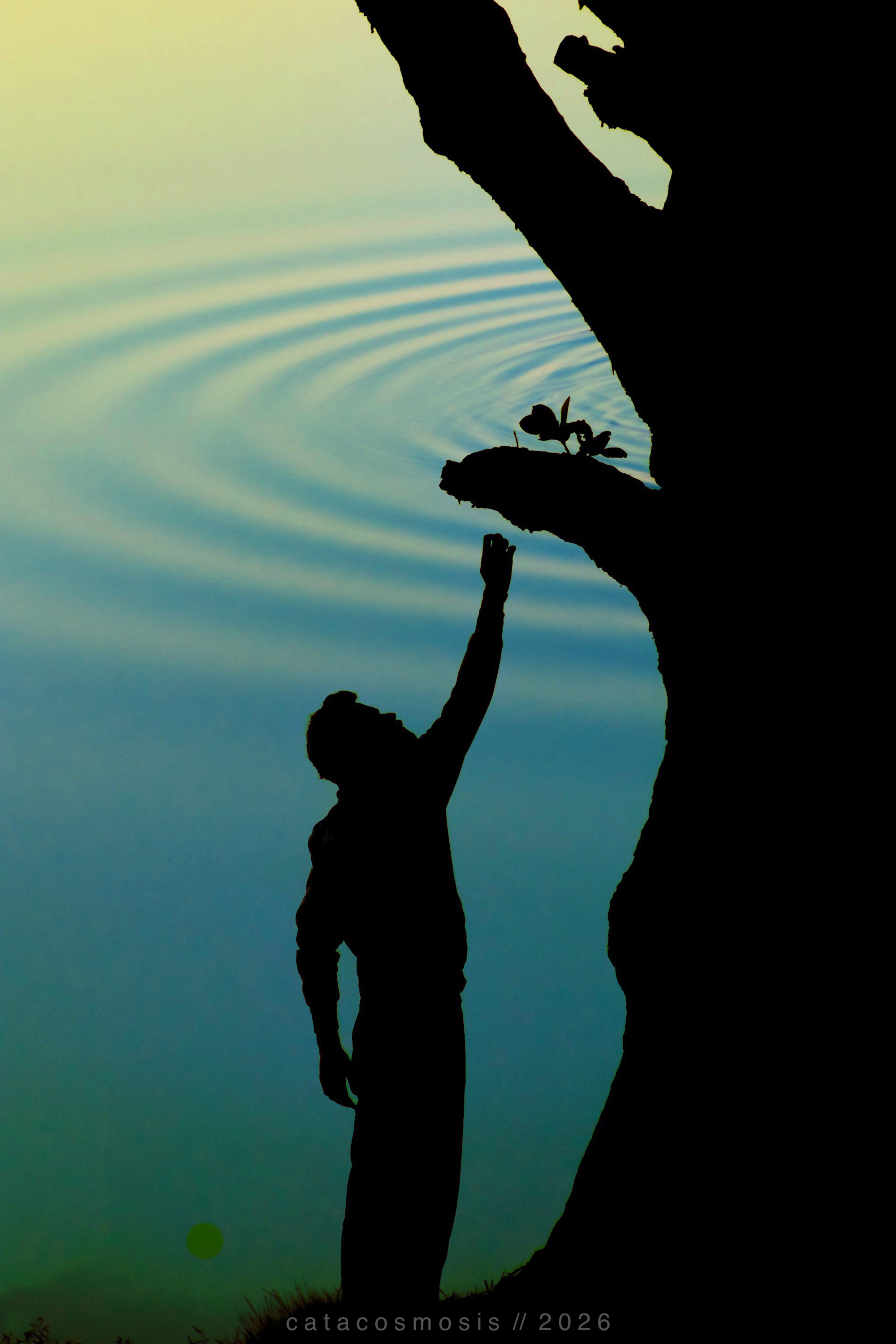
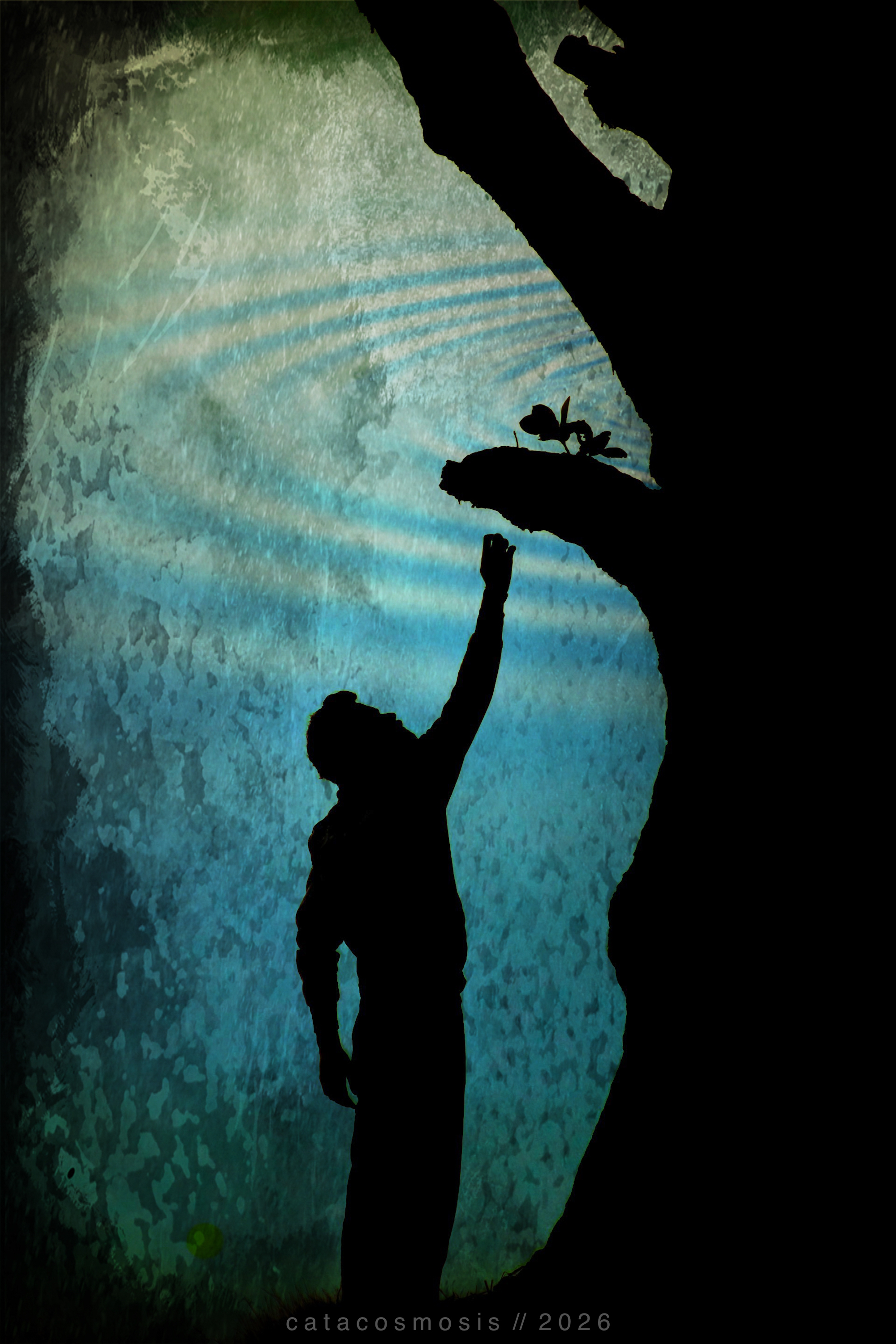
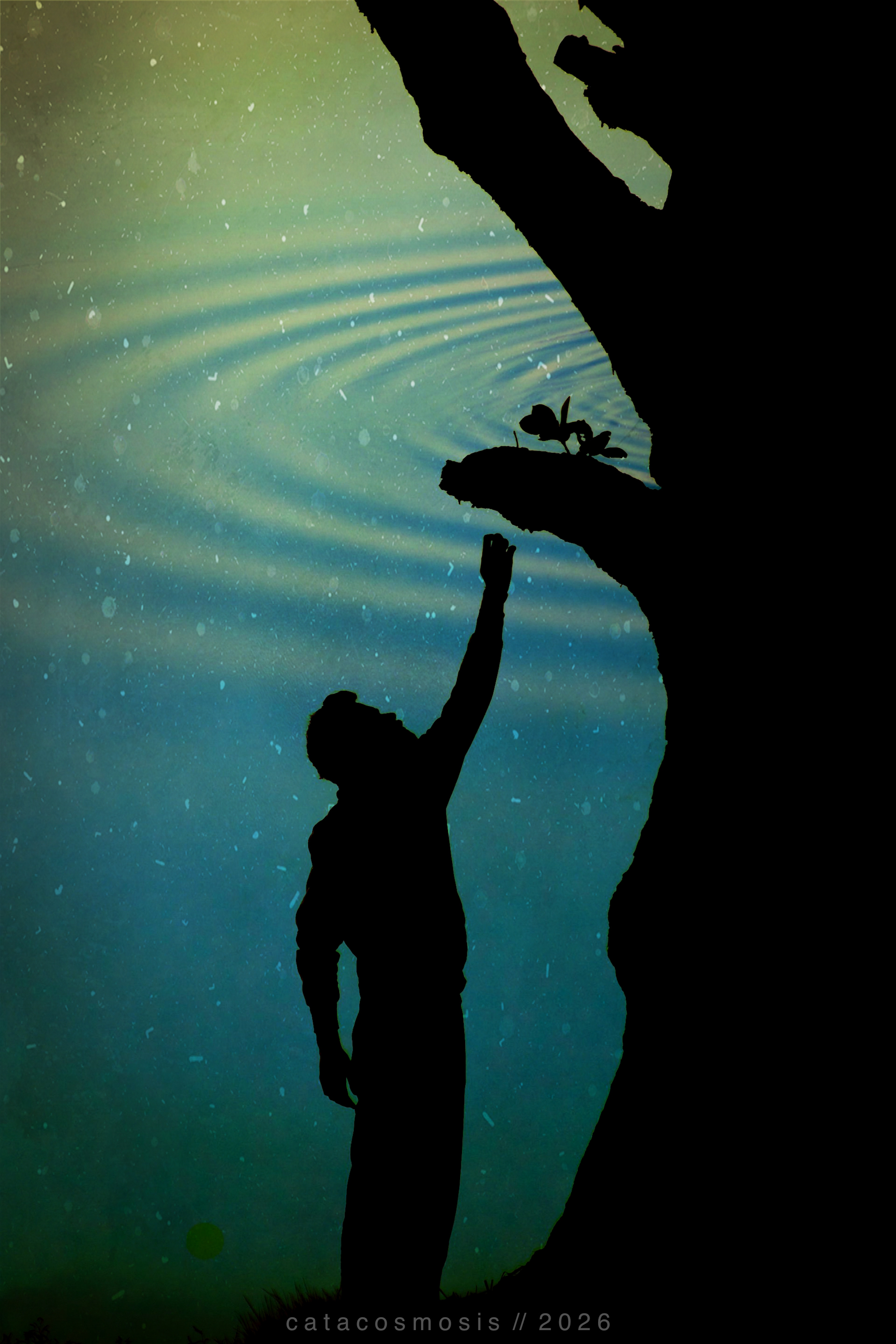
“Reaching”
Closing Thoughts
Double exposure rewards experimentation more than it rewards perfection. You will not always know what you are going to get, and that is part of what I love about it. Two things that exist separately become one thing that did not exist before.
There is something philosophical, and almost theological, and even spiritual in that, if you let yourself see it.
If you want to try it, start with Union on your phone and two photos you already love. See what they say to each other. That is usually where it begins.
Not the sanitized, monetized version. Not the hollow “good vibes” lie designed to keep everyone comfortable and nothing honest.
I mean the kind of light that exists because the world has become grungy, nasty, ridiculous, and addicted to consuming whatever still has a pulse.
Truth should be efficient. In a sane world, it is. But this isn’t a sane world.
Here, efficiency belongs to distortion. To slogans instead of substance. To repetition instead of verification. To emotional leverage instead of reality.
Truth requires something costly: attention, humility, memory, accountability. It forces people to stop, reassess, sometimes admit they were wrong, sometimes change. And that makes it inefficient in a culture built to move fast, feel loudly, and never look inward.
So truth is treated as an obstacle. As “problematic.” As dangerous. As something to be managed, softened, buried, or rebranded until it no longer threatens the illusion.
Hold the light anyway.
Even when it makes you a silhouette instead of a spectacle. Even when it costs you comfort, applause, or belonging. Especially when it exposes what others are desperate to keep hidden.
Light doesn’t scream. It doesn’t beg. It doesn’t perform.
It reveals.
And that, more than anything, is why it’s feared.
So keep carrying it through the cracks and decay. Not to save the world. Not to convince the masses. But because surrendering it would mean becoming what’s poisoning everything.
Every so often, I experience what I call the freeze.
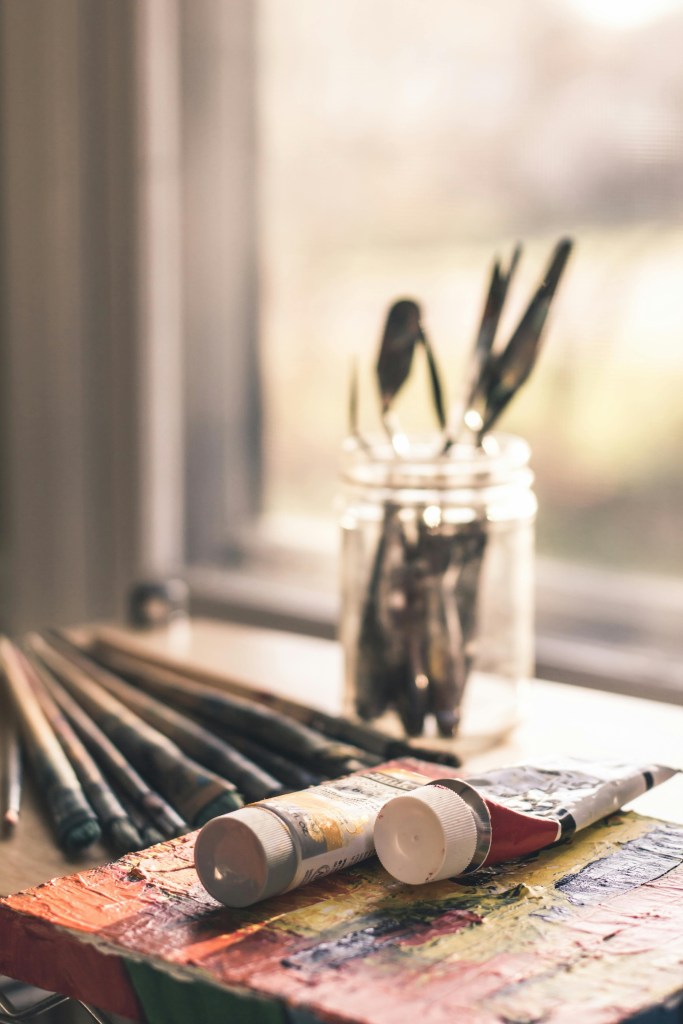
Artists will know exactly what I mean. It is that moment right before you begin a new piece, canvas blank and supplies ready, when something inside you locks up. You want to move, but you don’t. You know what to do, but suddenly you can’t do it.
It’s not laziness and it’s not a lack of ideas. It’s more like a quiet paralysis, the sense that whatever you do first will somehow be wrong, wasteful, or irreversible.
I experienced that tonight, and it surprised me. I haven’t frozen like that in a long time.
Maybe it is holiday stress. Maybe it is the cumulative weight of life, reality, and empathy for a world that feels perpetually on edge. Maybe it is something smaller, or something that would sound completely absurd to anyone watching from the outside. But absurd does not mean invalid.
Any time we experience something like this, there is a reason… and I am the kind of person who looks for it. I look inward and outward, I sit with the discomfort instead of trying to bulldoze through it, and I pay attention to what is actually happening in my body and mind.
I find that process purposeful, and sometimes even enjoyable, not because it’s comfortable but because it gives me agency. When I understand what is happening and why, anxiety loses its grip. I can experience it and coexist with it at the same time. More often than not, that approach resolves the issue in a deeper and longer-lasting way than simply forcing myself forward.
So this is the internal conversation I had tonight, and how I talked myself through it once I reached a clearer understanding of what was really going on. This is where my professional training in psychology meets my self-taught training in art, I suppose.
If you have similar experiences to what I’ve described above, I hope some part of this is useful to you.
Step 1. Pause for a moment. Not to analyze or fix anything, just to name what is happening. Once something is named, it tends to lose a surprising amount of its power.
What you’re feeling when you experience “the freeze” as soon as you pick up a brush or a palette knife, or face whatever in life it is that makes you freeze in a similar way, is not a personal flaw. For artists and creatives, it’s not proof that you are bad at being creative.
It’s a very specific nervous-system response, and it shows up most often in people who actually care about what they are making. In psychology, this response is often described in a few overlapping ways.
It can be understood as a conditioned approach and avoidance conflict within you, where the part of you that wants to create is simultaneously held back by fear of loss or failure.
Funny story: I wrote an entire 23-page research paper on this in my junior year of undergrad. In my opinion, it was incredibly boring, personally insulting, and the worst three months of my life at the age of 21, but somehow I shockingly got an A.
I digress.
It can also appear as performance anxiety, though not in the social sense, more as an internal pressure to do it right. For me, it is absolutely perfectionism as a defensive strategy, a way of protecting myself from imagined mistakes or wasted effort (thanks, Mom, may you rest in peace). In many cases, it can even be the brain or your physiology responding to dorsal vagal activation, which includes fight, flight, freeze, or fawn, but we will not go that deep here.
To put it in easy, normal language, this reaction almost always appears right before commitment. Any commitment, but especially one that means “if it goes wrong it’ll really cost me.”
In the art scenario, up until this point, the work has existed only in imagination. In that space it is infinite, perfect, and safe. The moment you are about to touch the canvas, it becomes finite and real. Something is chosen. Other possibilities fall away. Your (my) system hears that as loss, and it tries to protect you by freezing you in place.
That feeling that it has to be a certain way to be right is not creativity. It is internalized surveillance. Somewhere early on, many of us learned that mistakes mean waste, mess means failure, and a wrong choice causes permanent damage. Even when those rules no longer apply, the body remembers them. So when you are free, your body does not quite believe it.
That is not weakness, or incompetence. It is conditioning that has simply outlived its usefulness.
At the center of this response is a quiet lie: “If this turns out bad, the supplies are ruined.”
That is just not true. Acrylic can be scraped, painted over, sanded, cut up, or turned into texture. A canvas can become a foundation rather than a final statement. Materials are meant to be used. That is their purpose. Paint that sits untouched out of fear is already wasted.
Canvas is not sacred. You are. Please remind yourself of that immediately, and lock it in.
Another lie slips in just as easily: “It has to be a certain way to be right.”
Right for whom? There is no audience in the room, no rubric, no grade. There is only motion, pressure, color, and the physical relief of making contact with the surface. Art does not exist to behave! Remember?
This kind of freeze does not happen to people who do not care. People who are shallow about creativity do not spiral like this. It tends to happen to people with depth and sensitivity, to people who were corrected more often than they were encouraged, and to people who learned how to perform before they learned how to play.
The nervous system is not sabotaging anything. It’s trying to protect something precious: the ability to feel and express. It’s simply using outdated rules.
Step 2. A small reframe helps here. You are not making a painting right now. You are making the first layer of a surface. Nothing more. Not meaning, not outcome, not art with a capital A. Just noticing what happens when color moves downward. That layer is allowed to be ugly. It is allowed to be scraped away. It is allowed to disappear entirely under the next thing. You are allowed to stop at any time.
There is one gentle but important rule I follow that can helps me quiet the pressure. Say out loud that nothing you do in the next fifteen minutes counts. Set a timer. When it ends, you can walk away with no obligation to continue, fix, or judge. This is not about pushing through fear. It is about making fear irrelevant.
And finally, this matters. The experience, the art, and your simply being. But also, the fact that you sometimes freeze. It’s not invalid. You do not need to get over it already. That voice was built over years. It softens through safe repetition, not self-attack. Every time you begin anyway, tentatively and imperfectly, you rewrite it.
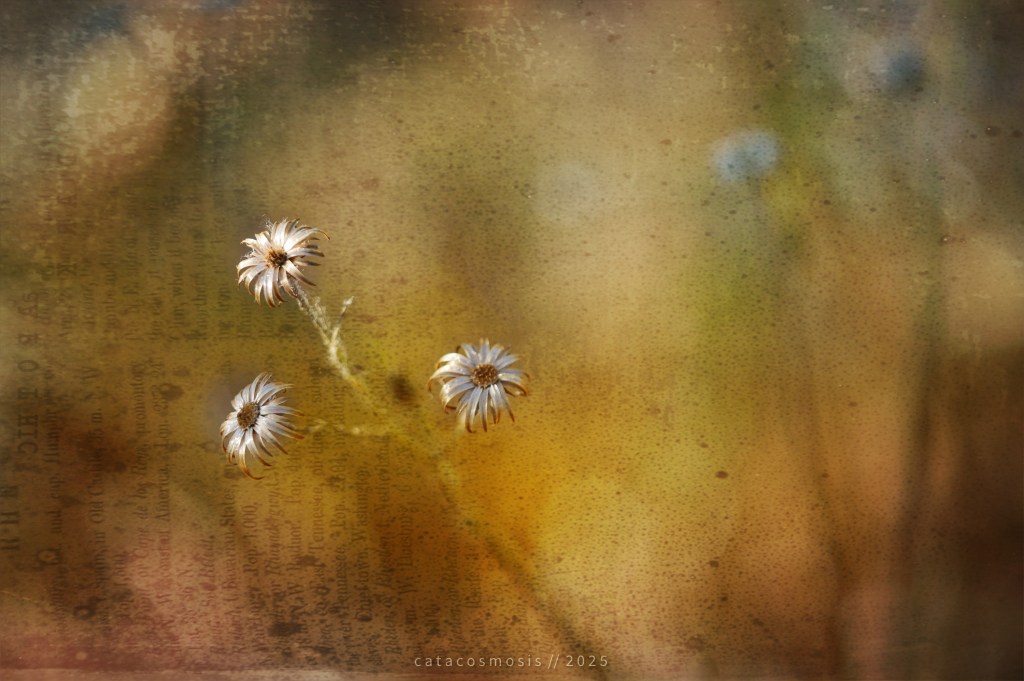
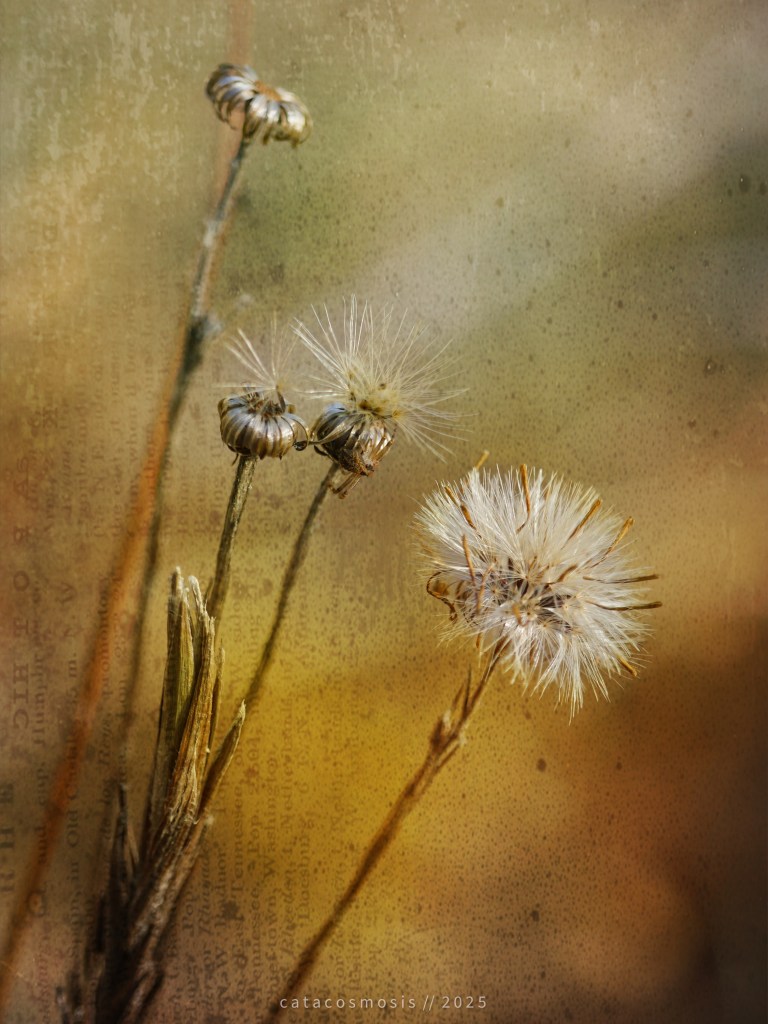
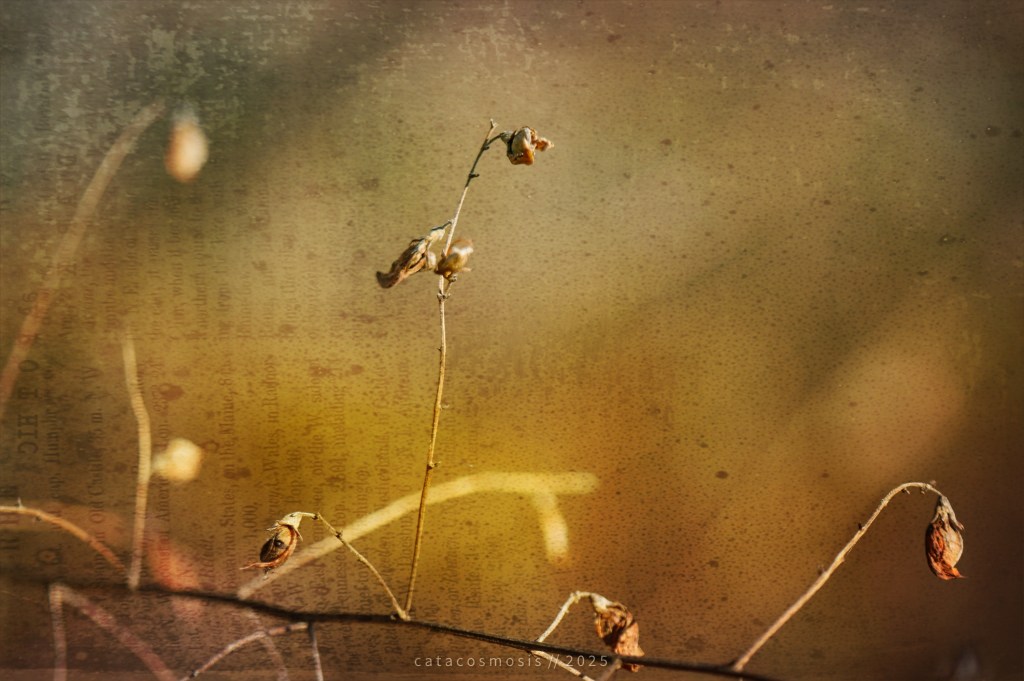
As most of you know, I have a strong familiarity with death and its unfolding, especially in humans, and a fondness for and kinship with death and dead things, all in the most holy, positive and beautiful sense… in the way one honors the combined soul and humanity of a teacher they have come to not only respect but to understand to such a depth that they recognize in them a truly kindred spirit.
iPhone 17 Pro + DistressedFX
Endings speak a language I have learned well: honest, unpretentious, and oddly comforting once you understand and accept that there is no escaping them. In fall and winter, I find that endings, at least in nature, also make for the most interesting and oddly beautiful subjects. Therefore, prepare to be lovingly spammed with my perspectives and perceptions. 😌
iPhone 17 Pro + DistressedFX
Death is our friend precisely because it brings us into absolute and passionate presence with all that is here.
— Rainer Maria Rilke, Letters to a Young Poet (1929)
“So you think you’re an artist, but you haven’t been to art school?”
Well, then yes. You are.
That’s exactly the right mindset — especially if you’re building skill and intuition at the same time.
I say this both as a person with a Master’s in Arts (which I mention only to say, “I’ve been through your system, I know how it works, and I still reject the gatekeeping!”), and as an absolutely NON-PROFESSIONAL, non-conforming artist who also rarely shares any of their actual work:
You’re not just “playing artist,” and being recognized as one is not the point. Those people trying to convince you of anything otherwise are wrong.
Whatever you’re creating is absolutely valid.
Don’t let anyone — especially those offering discouraging, destructive feedback rather than genuine critique — convince you otherwise. Just because some believe the creative or applied arts diploma they hold in one hand somehow validates the brush or pencil they hold in their other, along with the harsh judgments and negative opinions they’re vomiting all over you, doesn’t make it the truth.
Regardless of who you are or where and how you learn, when you approach art as both a learning experience and an emotionally expressive therapy, you’re doing it right — not failing. You’re not just slopping paint on paper, scribbling in a sketchbook, or gluing down collage scraps at random.
The difference is night and day — especially with watercolor (the medium I see people abandon most) — when you’re doing things like:
• Consciously learning the muscle memory for how each brush moves.
• Recognizing how the spring, belly, and tip affect water control.
• Having fewer “happy accidents” and more intentional effects
Painting is not just the act of moving pigment across a surface. It is the deliberate conversation between your hand, your tools, and your vision. It’s problem-solving in real time, learning how water, pigment, and paper (or canvas) respond to each other, and adjusting with both skill and instinct.
It’s as much about restraint as it is about expression, and as much about observation as creation. When you understand that, every stroke becomes intentional, even in your loosest, most playful work.
Watercolor especially rewards this kind of discipline because it’s less forgiving than acrylic or oil. You can’t just pile on more paint to hide a mistake — in a way, you have to work in reverse.
No medium, but especially watercolor, is as easy as “the professionals” make it look. But if you keep going, keep learning, and keep focusing on technique and purpose — no matter what the art-school elite try to tell you — the control you gain over water, pigment, and paper will make even your loose, expressive or abstract work stronger. It will be loose or abstract by choice, not necessity.
That deep dive into technique is probably why so many of you express so often how your art process is helping you mentally and emotionally, and why many artists pick up a pen, pencil, or brush in the first place. It’s meditative — but also empowering — to know exactly what your tools can do.
So keep learning. Keep practicing. Keep playing! Keep a balance between the fun and the serious aspects. Sure, we all appreciate skill and technique. But what is the point if it’s just a job and not a fun expressive process with purpose?
Nobody owns art as a process — and if anyone tries to tell you otherwise, they’re not talking about art. It’s still a free world, regardless of how it may seem on the surface and no matter what the uppity, judgmental types try to say.
Keep making art. Because your kind of art — the kind that comes from soul combined with technique rather than straight line, hard rules — is what art should still be all about.